On 31 May 2026, Egypt's Ministry of Tourism and Antiquities announced an unusual discovery at Heliopolis, the ancient Iunu, today absorbed into Cairo's Matariya and Ain Shams districts. Beneath a mudbrick burialBurialThe intentional deposition of a body, sometimes with offerings; a marker of symbolic behaviour.→ containing a human skeleton, the archaeological mission of the Supreme Council of Antiquities, led by Kotb Fawzy Kotb, unearthed a funerary cache of unprecedented richness for the site: the first near-complete funerary assemblage ever found at Heliopolis.
A copper mirror, alabaster and obsidian kohl pots, faience vessels containing gold-mounted scarabs, protective amulets and five pairs of gold earrings: the inventory released by Egyptian authorities sketches less the portrait of a single deceased person than that of an entire way of living, and dying, centred on appearance and bodily care.
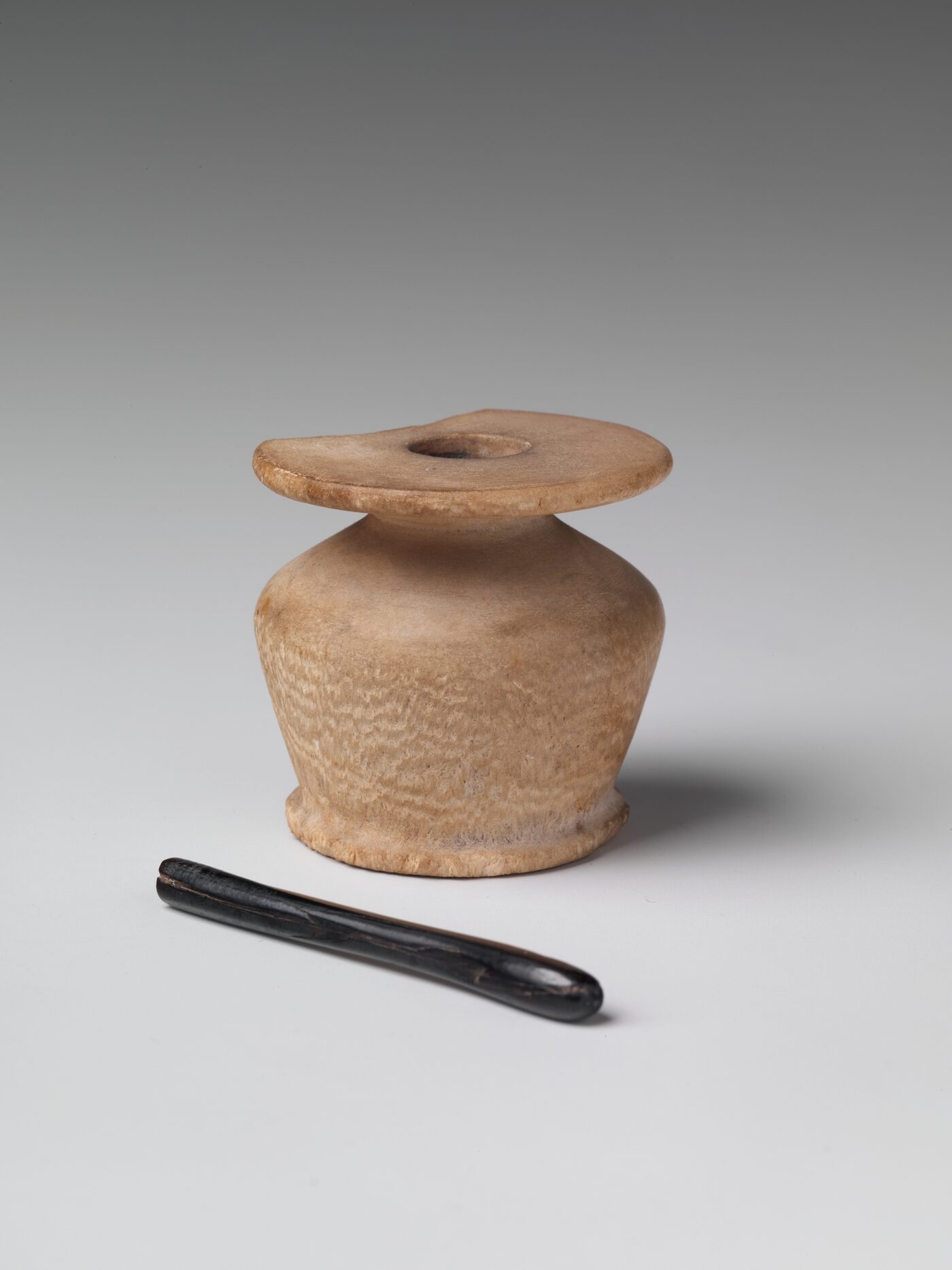
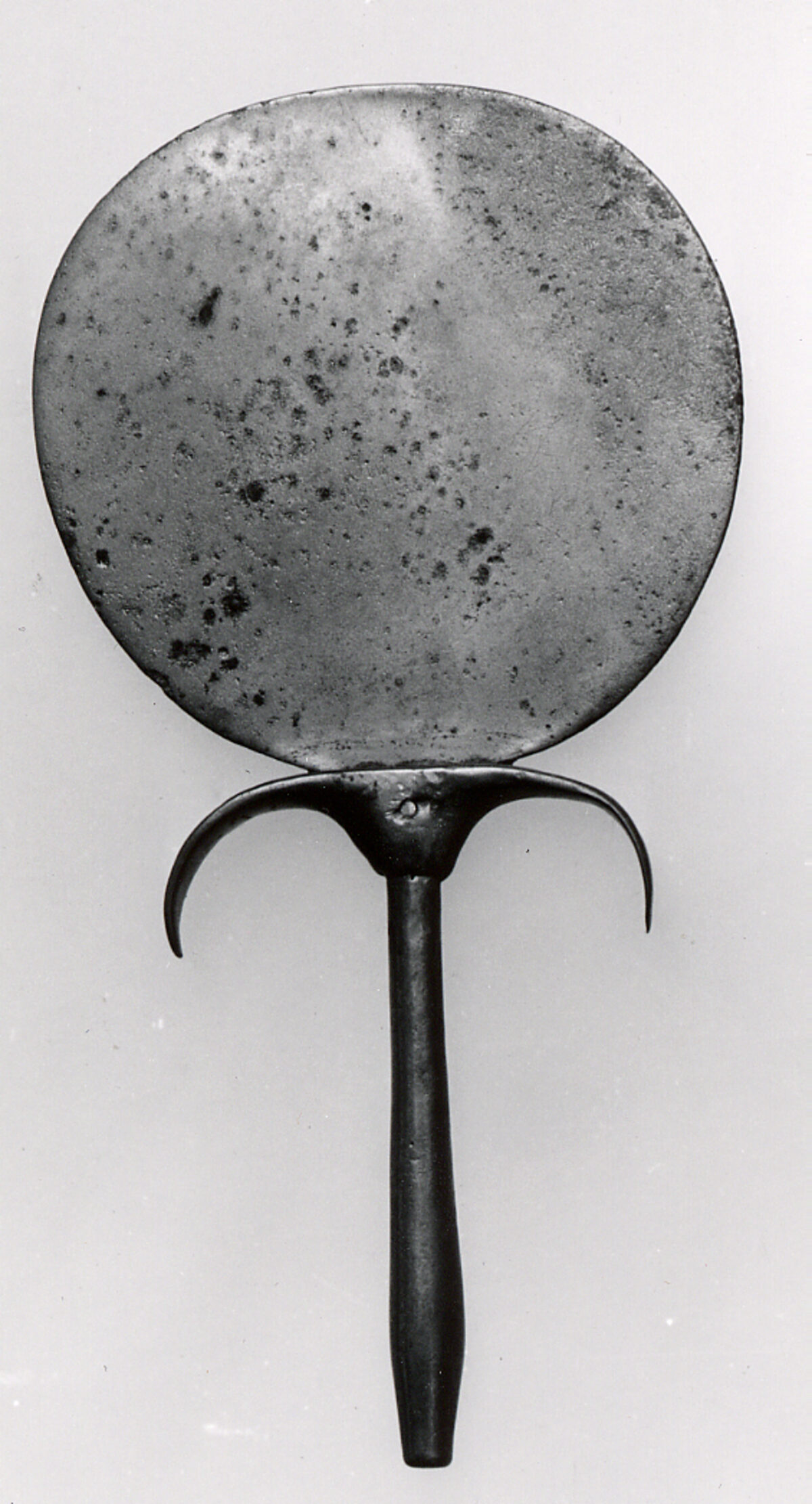
A copper mirror and three kohl pots, one of them rare obsidian
According to Hesham El-Leithy, Secretary-General of the Supreme Council of Antiquities, excavations first revealed a mudbrick burial containing human remains. Digging further beneath it, the team found a concealed cache filled with toiletries and adornments tied to funerary ritual. Among them, a copper mirror and two lidded alabaster kohl containers, which still preserved traces of the dark cosmetic they once held, millennia after being sealed.
A third, more surprising kohl pot is carved from obsidian, a glassy black volcanic rock rarely found in this kind of Egyptian archaeological context: the stone does not occur naturally in the Nile Valley and must have arrived through long-distance exchange, likely via the Red Sea or Arabia.
These are not mere trinkets of vanity left out of sentiment. In ancient Egypt, necropolisesNecropolisA large organised burial ground, a "city of the dead", often spanning several periods.→ and tombs regularly yield such toiletry sets, proof that a deceased person's appearance remained a central concern even in the afterlife.
Gold-mounted scarabs, a duck and Osiris's crown: amulets for the final journey
The cache also held two light-blue faience vessels. One contained six finely incised scarabs, two of them set in mounts of a yellow metal believed to be gold. According to Mohamed Abdel Badie, head of the Ancient Egyptian Antiquities Sector, the assemblage also included faience amulets in symbolic shapes: one duck-shaped, another representing the atef crown, the tall-plumed insignia associated with the god Osiris and rebirth in the afterlife.
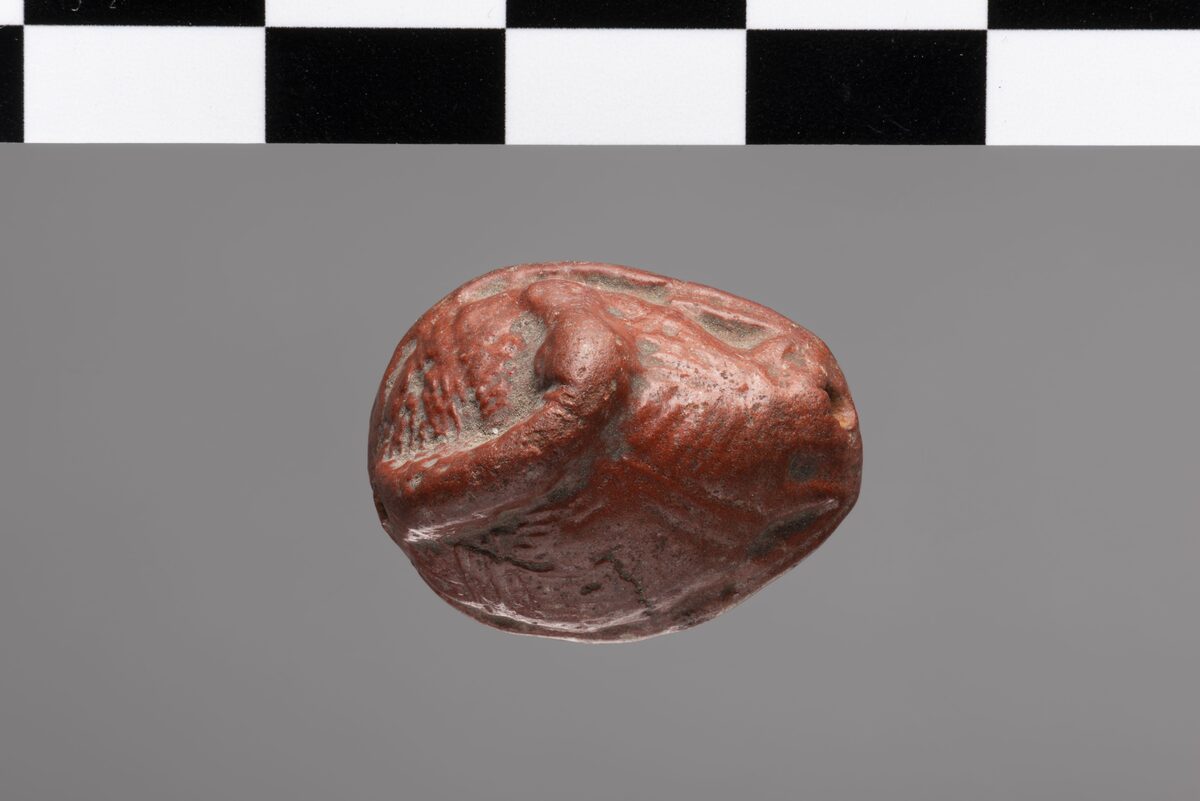
Four semi-precious stones accompanied this assemblage, likely carnelian or agate according to preliminary identification: one, pinkish-red, was set in a gilded mount; the other showed a blue-green hue. Each object had a precise role in the journey to the afterlife: the scarabs, linked to the god Khepri and the renewal of the rising sun, the amulets meant to ward off the dangers of the underworld.
Five pairs of earrings, from everyday jewellery to funerary offering
Rounding out the assemblage, five pairs of gold earrings of varying sizes, ranging from 1.5 to 2.5 centimetres in diameter, form a set coherent enough to have belonged to a single jewellery wardrobe. Worn in life, this adornment likely accompanied its owner, whether man or woman, into death as well, marking social status as much as ornamenting them for their new existence.
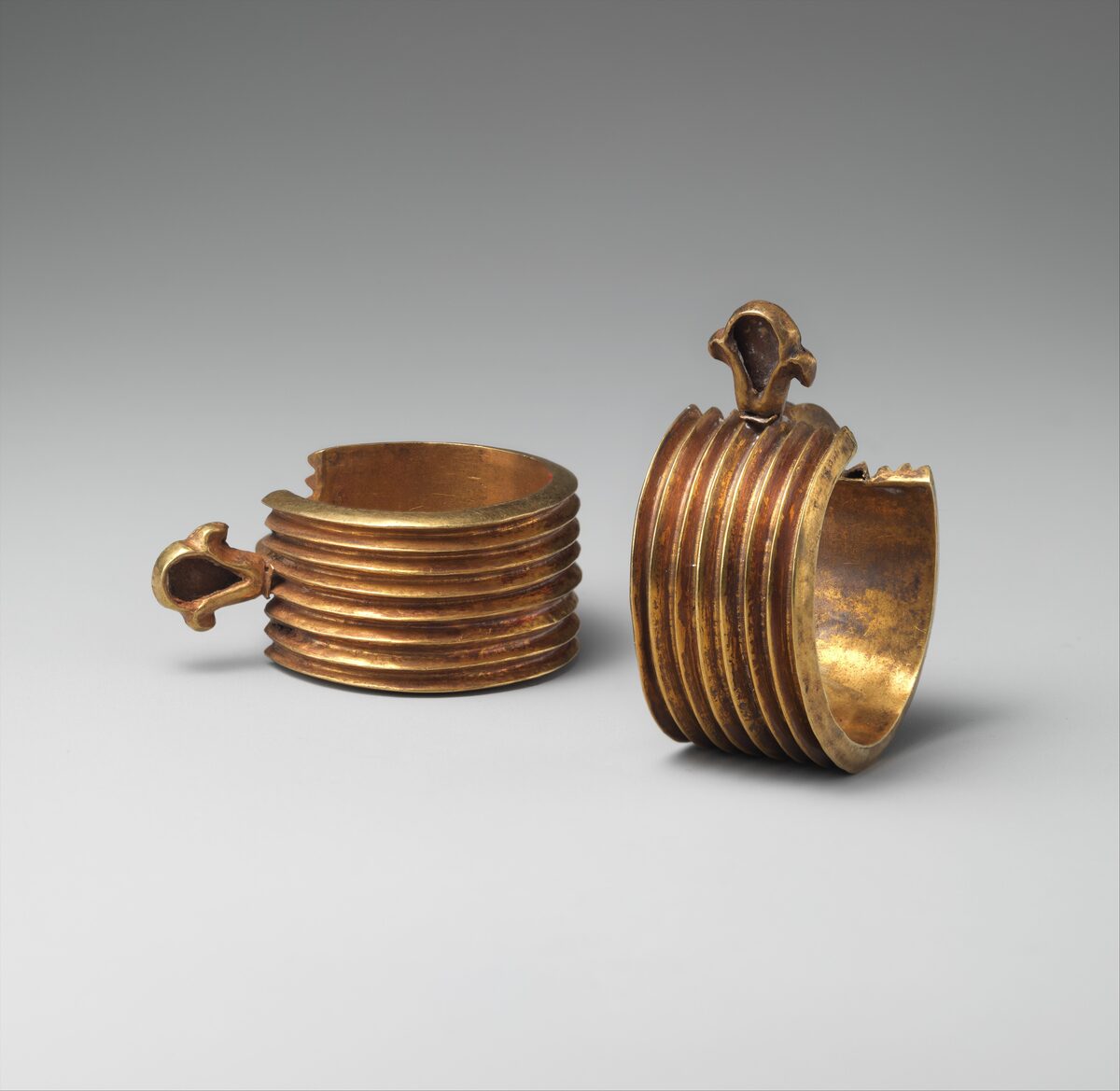
Such refined jewellery is nothing exceptional for ancient Egypt, where goldsmithingGoldsmithingThe art of working precious metals (gold, silver) into jewellery, vessels and ornaments; the Maikop kurgans are among the earliest evidence of elite goldsmithing.→ held a central place both in the adornment of the living and in the equipment of the dead. But the variety and state of preservation of this assemblage, found intact as a single group, make it a particularly valuable testimony to local funerary customs.
Beautiful for eternity: body-care rituals in ancient Egypt
This is where the discovery moves beyond a simple archaeological inventory. Kohl, made from ground galena or stibnite, was never mere aesthetic artifice: applied around the eyes, it cut sun glare, repelled flies and carried recognised antiseptic properties, limiting the eye infections so common in the Nile Valley. Men, women and children all wore it, from farmers to pharaohsPharaohThe title of the ruler of ancient Egypt, regarded as a living god guaranteeing cosmic order (Maat), supreme head of state, army and worship.→, proof that make-up was never confined to one gender or one elite.
The mirror, meanwhile, held an almost religious status. Often fitted with a handle shaped like a papyrus stemstemThe narrowed base of a point, used to haft it onto a shaft or handle.→ or a female figure, it was linked to the goddess Hathor, patron of beauty, love and joy, and to the solar disc whose shape and gleam it echoed. Looking into a mirror was thus, symbolically, to gaze upon the sun and invoke the promise of an eternal sunrise, the very promise the Panehsy tomb now documents at Heliopolis, the city of the solar cult par excellence.
Heliopolis, city of the Sun, a necropolis for three thousand years
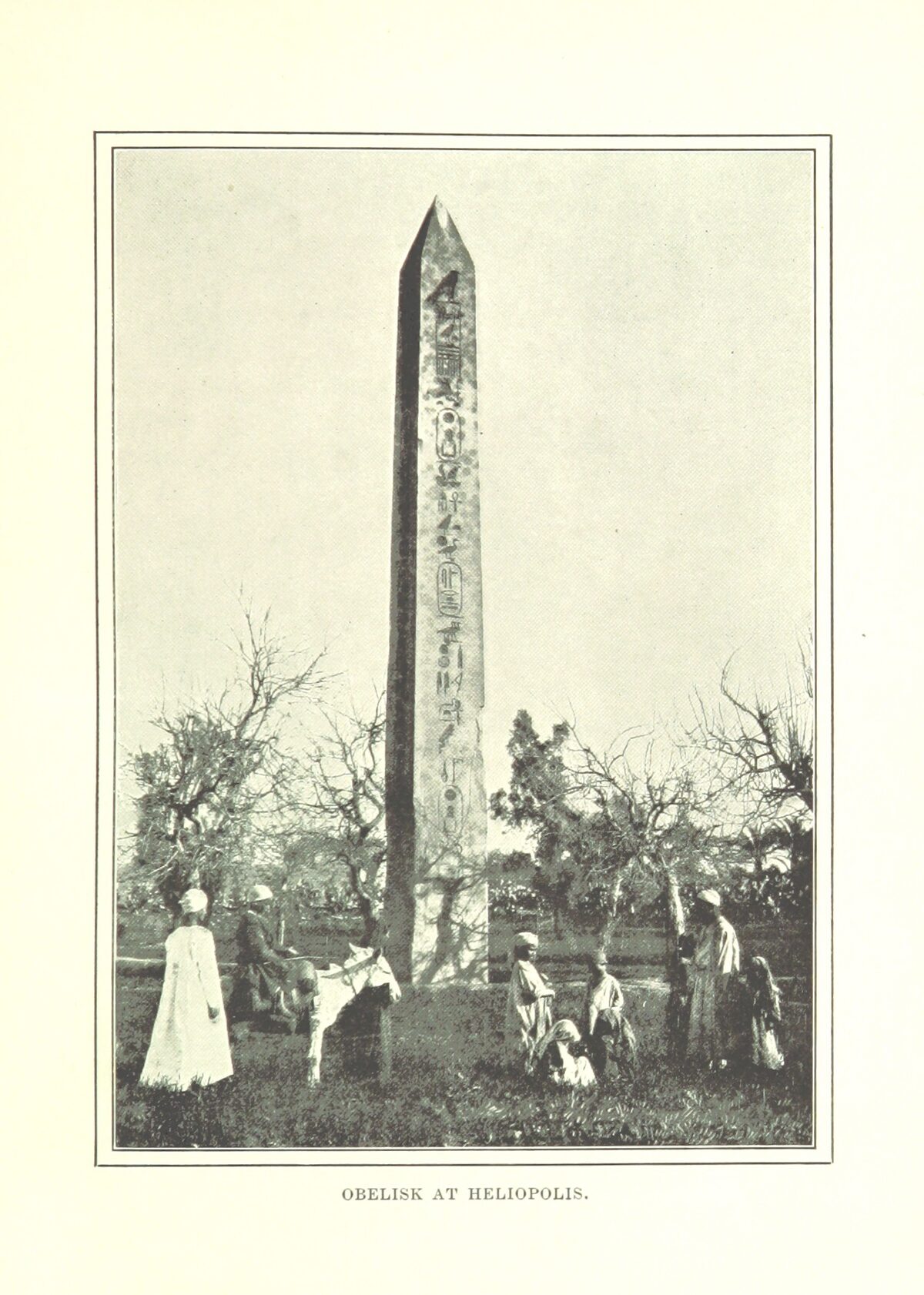
In antiquity Heliopolis was known as Iunu, "the city of pillars": it housed the principal cult centre of the sun god Ra and ranked, by tradition, among the oldest and most prestigious religious cities of Egypt. Sherif Fathy, Minister of Tourism and Antiquities, hailed a discovery that, in his words, offers a clearer picture of the daily life and funerary practices of the region's inhabitants across different historical periods.
The cosmetic cache is only the latest addition to an already rich excavation season: archaeologists had earlier uncovered mudbrick and limestone funerary structures, as well as two fragmentary coffins, one of pottery, the other of gilded plaster decorated with red-painted motifs, which held gilded human remains attributed to a possible military figure, along with a coin that may date to the Roman period. Limestone blocks bearing hieroglyphic inscriptions round out the assemblage. The Panehsy necropolis served as a burial ground for notable individuals from the Late Period through the Roman era and into the Christian period, a layered stone record of nearly a millennium of Egyptian history.
With no precise dating yet published for this particular deposit, archaeologists cautiously place it within this long sequence. But whether it belonged to a Late Period dignitary or a later phase, the message these objects carry is the same: at Heliopolis, as elsewhere in the Nile Valley, beauty was never a superfluous luxury, but an essential dimension of existence, extended even into death.
Sources: Egyptian Ministry of Tourism and Antiquities, statement of 31 May 2026 ; Archaeology Magazine, "Funeral Cache Discovered in Egypt at Heliopolis", 2 June 2026 ; Daily News Egypt, "Egypt uncovers first near-complete funerary assemblage at Panhesy Tomb in Ancient Heliopolis", 31 May 2026 ; Egyptian Streets, "Egypt Announces Major Archaeological Find at Panehsy Tomb in Matariya, Ain Shams", 1 June 2026.
Je partage régulièrement vos articles sur les réseaux. Toujours de bonnes réactions.
Ce site est devenu indispensable pour préparer mes voyages culturels et archéologiques.