About 1.4 million years ago, on the muddy shore of a lake in northern Kenya, eight individuals walked side by side. They had no idea that they were writingWritingA system of conventional signs used to fix language or information durably; its appearance (c. 3300 BC) marks, by convention, the end of prehistory.→ an exceptional page of the archive that day. Their steps, pressed into the silt and then covered by sediment, survived the ages. According to a study published on 27 July 2026 in the Proceedings of the National Academy of Sciences (PNAS), these footprints belong to Paranthropus boisei, a distant cousin of our lineage. And they hold two surprises: these beings were much taller than thought, and they travelled in a group of adults, mostly males.12
The international team, led by Kevin Hatala of Chatham University and the Max Planck Institute for Evolutionary Anthropology in Leipzig, includes Neil Roach of Harvard University, Kay Behrensmeyer of the Smithsonian Institution and Purity Kiura of the National Museums of Kenya. For the authors, this set of tracks is like a "snapshot", a photograph of a moment of life captured 1.4 million years ago.13
A trackway found in 1978
The story of these footprints begins nearly half a century ago. In 1978, the geologist Kay Behrensmeyer of the Smithsonian Institution spotted the first traces at the site known as GaJi10, in the East Turkana region. It took further seasons, in 2016 and then 2023, to clear the whole surface and reveal the full extent of the trackway: 21 footprints left by eight different individuals, dated to about 1.43 million years ago.3
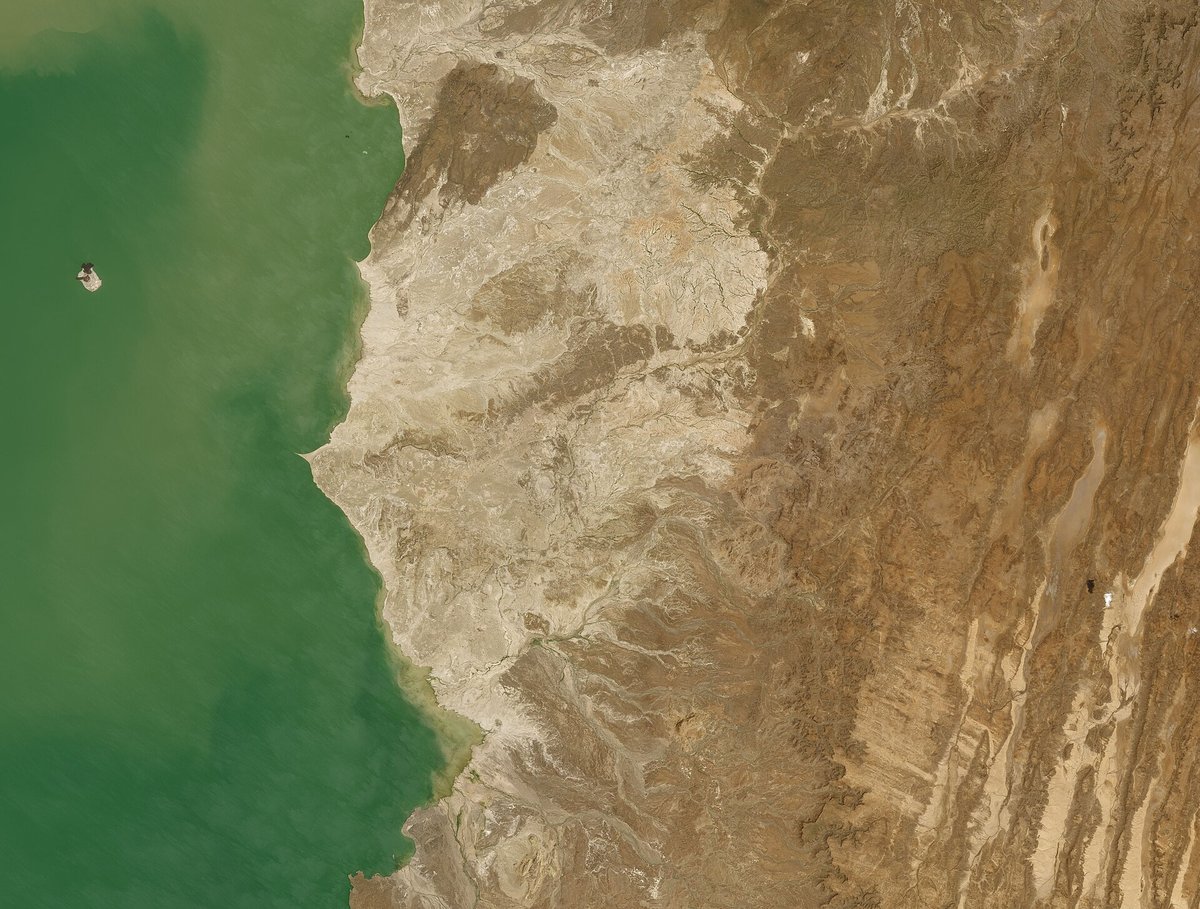
These trace fossilsTrace fossilFossilised trace of a living organism's activity (footprint, burrow, track), as opposed to body fossils such as bones. Ichnology is the science that studies these traces.→ are not isolated. The ancient shores of Lake Turkana, notably in the Koobi Fora and Ileret areas some forty kilometres apart, have yielded hundreds of hominin footprints. In this region, between 1.5 and 1.4 million years ago, at least two species frequented the same lakeshores: Paranthropus boisei and Homo erectus.1
Telling two species apart by their steps
How can we know who left a footprint? Not all feet are alike. In 2024, Kevin Hatala and colleagues published in Science a method for distinguishing the tracks of the two species based on foot anatomy and the way they walked. Homo erectus prints show a marked arch and a big toe aligned with the others, as in our own feet. Those of Paranthropus reveal a flatter foot and a slightly more mobile big toe, a sign of a somewhat different form of bipedalismBipedalismA mode of locomotion on two hind limbs, the defining trait of the human lineage, appearing over 7 million years ago. Visible in the anatomy of the pelvis, femur and foramen magnumForamen magnumThe opening at the base of the skull through which the spinal cord connects to the brain. Its position (rear → forward) is a bipedalism indicator: placed beneath the skull in bipeds, at the rear in quadrupeds.→.→.1 We have already covered that study on this site: on a single surface at Koobi Fora, tracks of both species had been left within hours of each other.
It is this method that made it possible to attribute the GaJi10 prints to Paranthropus boisei. A valuable contribution, because the fossils of this species are mostly skulls, jaws and teeth. Limb bones, which allow body size to be estimated, remain extremely rare and are often hard to assign with certainty.2
East AfricaAfricaThe cradle of humankind: the continent where the first hominins appeared, then Homo sapiens around 300,000 years ago, before the expansion to the rest of the world.→'s "Nutcracker Man"
Who was Paranthropus boisei? Its scientific story begins in 1959, when Mary Leakey discovered a spectacular skull in Olduvai Gorge, Tanzania, first named Zinjanthropus and nicknamed "Nutcracker Man". Its massive jaws, its gigantic molars, four times the size of ours, and the bony crest on top of the skull, which anchored powerful chewing muscles, make it one of the most robust hominins ever found.4
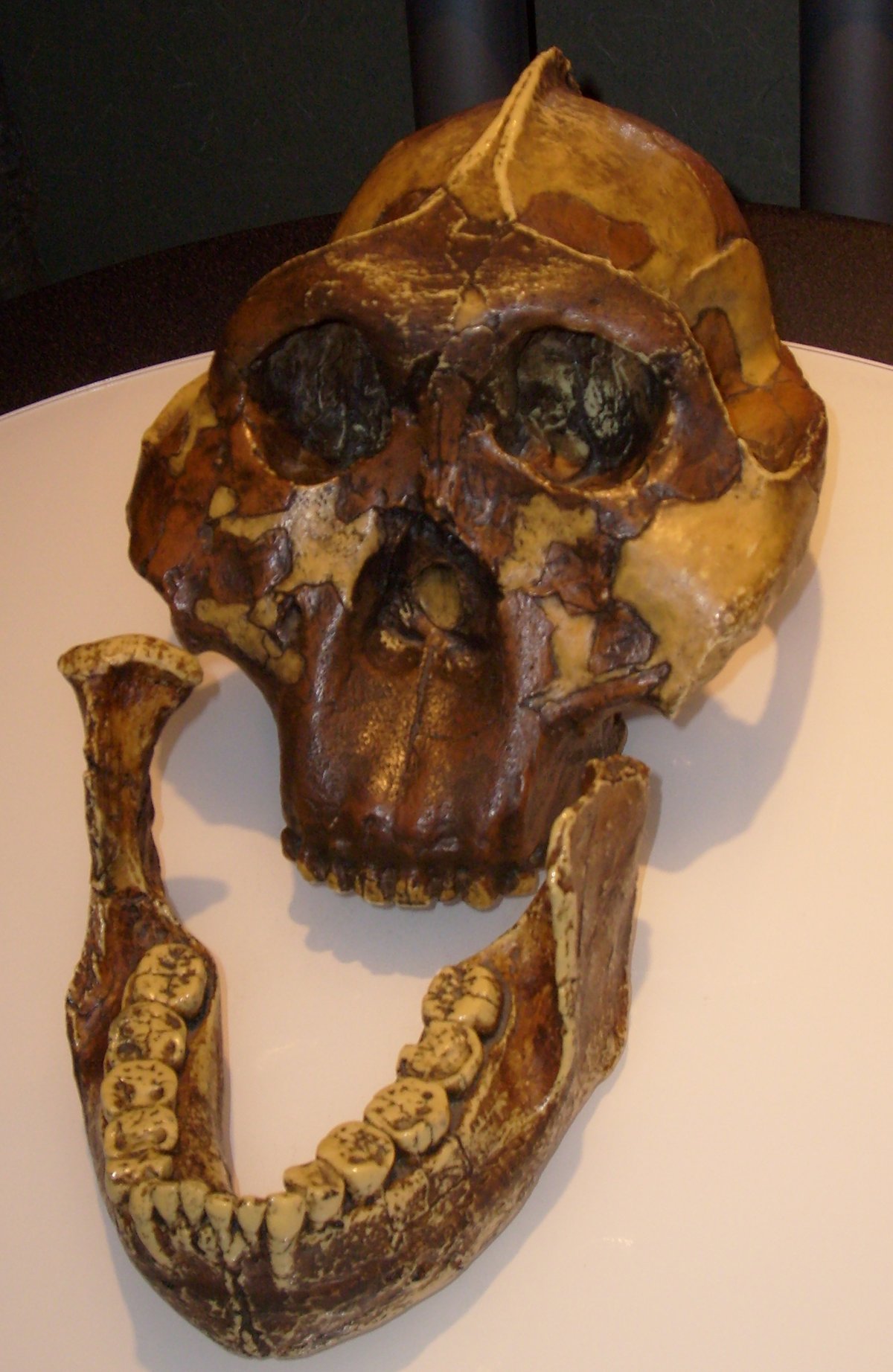
The species lived in East Africa between about 2.3 and 1.2 million years ago. Despite its nickname, it did not particularly crack nuts: isotope analyses of its tooth enamel show that it fed mainly on herbaceous plants, grasses and sedges, which it chewed at length. It coexisted for nearly a million years with the first members of the genus Homo before dying out without descendants.4 It is one of the side branches of the bushy tree of human evolution, descended from the australopithsAustralopithecineA genus of bipedal hominins from Africa (c. 4.2–1.9 Ma) with a brain still close to that of great apesgreat apesThe family of great apes (Hominidae) comprising orangutans, gorillas, chimpanzees, bonobos and humans.→ (400–550 cm³) but walking upright. Lucy (<em>Au. afarensis</em>) is the most famous specimen.→.
A cousin our size
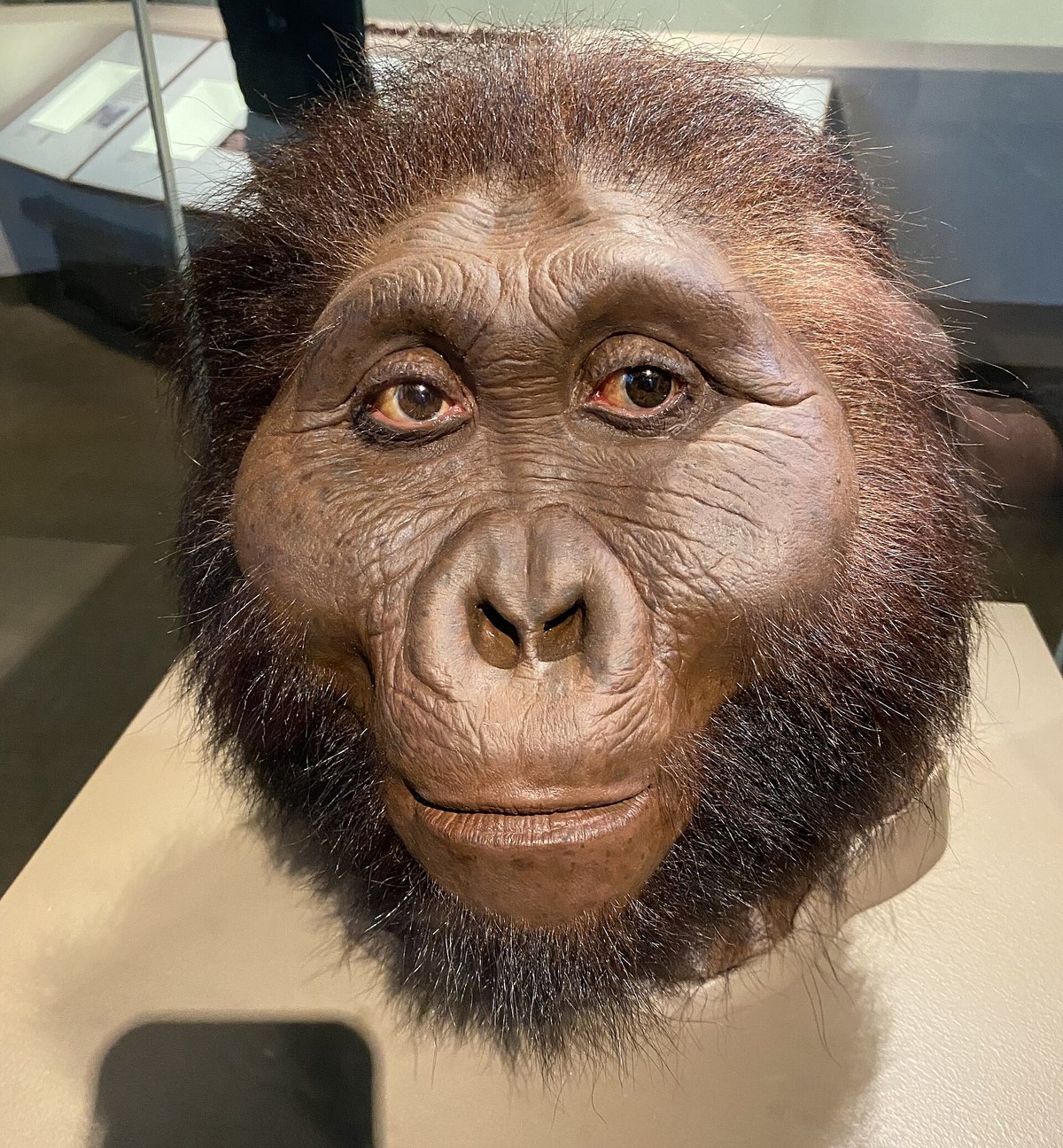
The GaJi10 footprints overturn the picture of its body. Until now, the few available remains suggested that Paranthropus boisei was considerably smaller than its contemporary Homo erectus. Yet several of the footprints are "considerably larger" than those estimates predicted.2
Based on their dimensions, the authors estimate that some individuals stood up to 1.8 metres tall and weighed around 75 kilograms. "The sizes of the footprints indicate human-like body sizes," says Kevin Hatala.13 In other words, this grinding-jawed cousin was no small, frail creature: standing on the shore, it could have looked a modern human in the eye.
This revision has important consequences. Body size affects energy needs, the range of movement, relations with predators and competition with other species. A Paranthropus as tall as Homo erectus forces us to rethink how the two lineages shared the lakeshores.
The estimate also matters for reconstructing how these hominins moved. A larger body means longer legs and longer strides, and detailed analysis of the spacing between successive prints can, in principle, reveal how fast the walkers were moving and how they were spread out along the shore.
A band of adult males
The second surprise concerns the make-up of the group. The eight individuals seem to have crossed the area at roughly the same time. All appear to be adults, and most would have been males, with no obvious trace of females or young.2
"The fact that eight Paranthropus boisei individuals, mostly adult males, apparently travelled together as a group, without females or children, hints at a complex social structure in this species," says Neil Roach.12 "They may have lived in large groups, where males competed for females but also sometimes tolerated each other for safety in a dangerous environment."2
Among living primates, such male groups exist in various forms: coalitions of chimpanzees patrolling together, bachelor groups among gorillas or baboons. On the shores of Lake Turkana, where lions, giant hyenas and sabre-toothed cats roamed, travelling together probably offered valuable protection. The footprints cannot yet decide between these scenarios, but they open a rare window onto the social behaviour of an extinct species.
A million years of coexistence
These new data revive a fascinating question: how could Paranthropus boisei and Homo erectus share the same landscapes for so long? In ecology, two closely related species exploiting exactly the same resources usually end up in competition, until one supplants the other. Yet these two hominins coexisted in East Africa for hundreds of thousands of years.
The answer probably lies in their very different diets. Paranthropus was a specialist in tough plant foods, able to grind considerable quantities of grasses, sedges and tubers thanks to its extraordinary chewing apparatus. Homo erectus was an opportunistic omnivore that ate more meat and marrow and made increasingly sophisticated stone tools, such as AcheuleanAcheuleanLower Palaeolithic technical culture characterised by hand axes, present across three continents.→ handaxes. They frequented the same shores, but were not looking for quite the same things there.4
The Turkana footprints show that the two species crossed paths regularly, sometimes only hours apart. Discovering a Paranthropus as tall as Homo erectus makes this coexistence even more intriguing: this was no small, discreet vegetarian, but an imposing neighbour. Around 1.2 million years ago, however, the paranthropine lineage died out. ClimateClimateThe long-term average atmospheric conditions of a region; its variations (glaciations, aridifications) shaped migrations, agriculture and the collapse of prehistoric societies.→ change, an overly narrow diet, competition with the genus Homo: the causes of this extinction are still debated.
Whatever the reason, the footprints remind us that for most of human prehistoryPrehistoryThe span of human history before the invention of writing, from the Palaeolithic to the Metal Ages, known mainly through material remains.→ our ancestors were never alone. Several kinds of hominin walked the same ground, drank from the same lakes and watched the same horizons. The world of a single human species, the one we know today, is a very recent exception.
Why keep coming back to the lakeshore?
The hundreds of footprints found around Lake Turkana show that these shores were visited repeatedly for more than 100,000 years. They must have offered resources plentiful enough, water, plants and game, to draw hominins back regularly.12
The researchers are now focusing on the reasons for these returns and on the exceptional geological conditions that preserved such fragile traces. For a footprint to fossilise, it needs mud of just the right consistency, followed by rapid burialBurialThe intentional deposition of a body, sometimes with offerings; a marker of symbolic behaviour.→ under fine sediment before trampling, erosion or rain can erase it.1
The trackway also illustrates how much can be learned from material once overlooked. The first prints at GaJi10 were spotted almost fifty years ago, yet it took new analytical methods, developed only in the last few years, to identify their makers and read the story they tellTellAn artificial mound formed by the accumulation of successive layers of settlement remains at the same spot, typical of the Near East. Each destruction-rebuilding event adds a stratum.→. Old collections and old sites, revisited with fresh eyes, continue to reshape our understanding of human evolution.
Archives of behaviour
Unlike bones, which tell of an individual's life and death over years, footprints freeze a few seconds of existence. They tell us who walked with whom, how fast and in which direction. They are the only direct records of the behaviour of species that disappeared more than a million years ago. After the famous Laetoli tracks in Tanzania, left 3.6 million years ago by australopiths, the shores of Lake Turkana confirm the extraordinary potential of these remains.
The team plans to continue excavating to uncover new surfaces and shed further light on the lives of these Early PleistocenePleistoceneThe geological epoch of the great ice ages (c. 2.6 Ma–11,700 BP), spanning most of human prehistory.→ hominins. Each new trackway could add to the family album opened on the shores of the lake, that of a cousin taller, more social and closer to us than we ever imagined.
No comments yet. Be the first.