Off the eastern shore of Maryland, a tiny island is slowly sinking into the waters of Chesapeake Bay. Parsons Island now covers only about 78 acres, some thirty hectares, and every storm tears away a little more. Yet it is on this fragile strip of land that an American researcher, the coastal geologist Darrin Lowery, claims to have uncovered knapped stone tools more than twenty-two thousand years old. If that date held up, it would push the attested human presence in North America back by roughly seven thousand years, and overturn one of the best-established narratives in prehistoryPrehistoryThe span of human history before the invention of writing, from the Palaeolithic to the Metal Ages, known mainly through material remains.→. But the conditional is unavoidable, because the find has never passed through the filter of scientific review.
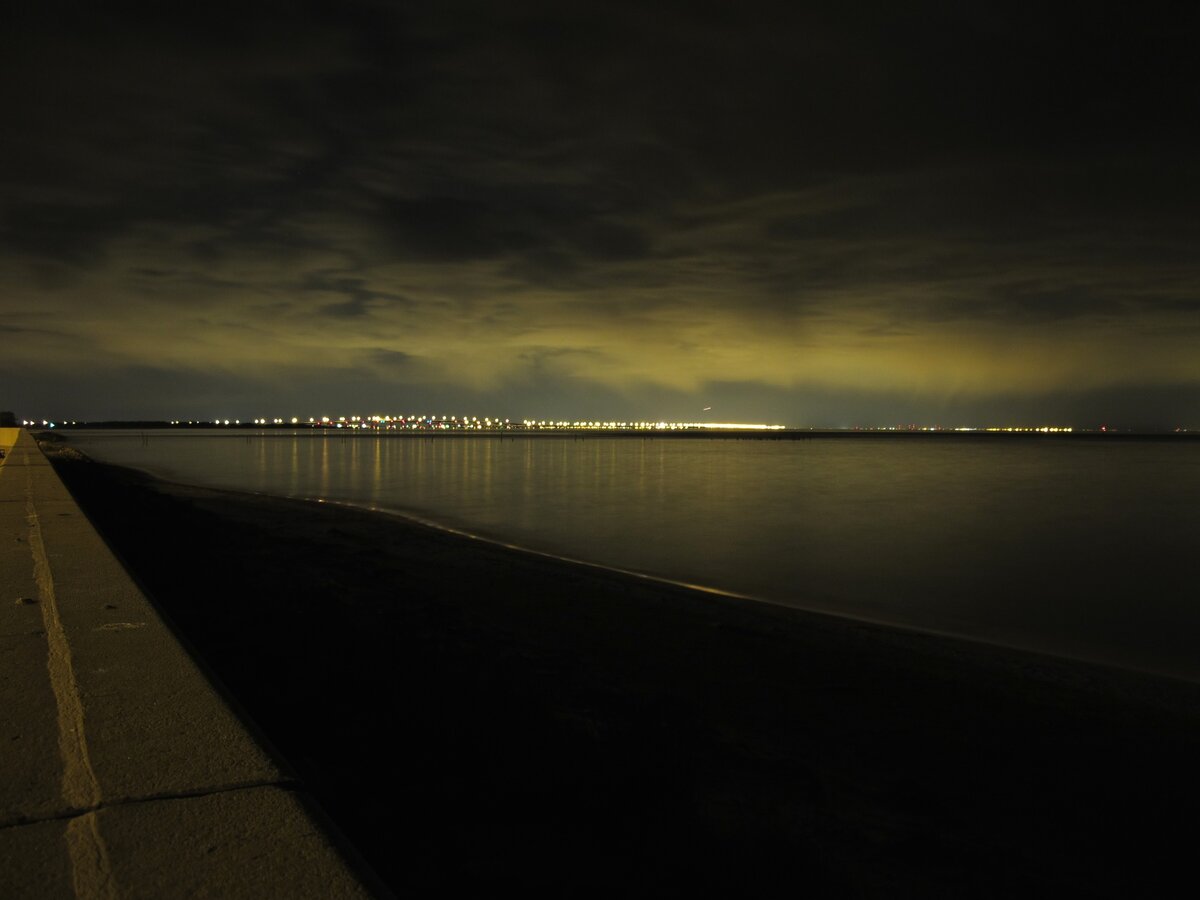
The affair gained unexpected prominence when The Washington Post devoted a long article to it, in May 2024.2 The paper describes a lone man facing a wall of sand, scanning strata an untrained eye would judge unremarkable, convinced he can read in them the trace of the continent's very first inhabitants. The story has everything to seduce: a site vanishing before our eyes, an independent researcher defying orthodoxy, a dizzying date. Above all it forces a reminder of what the reference model says today, and why so many specialists hesitate to revise it on the strength of these artefacts alone.
An Island Erasing Itself in the Bay
Parsons Island is nothing like a classic archaeological site. There is no planned open-area excavation, no stratigraphyStratigraphyThe study of the superimposed layers (strata) of an archaeological site; each layer corresponds to a phase of occupation and yields a relative chronology.→ protected beneath a shelter. There is an island disappearing. According to Lowery's surveys, it has lost 272 acres since 1650, and its retreat has exceeded one acre a year since 1992. Rising sea level and the gradual subsidence of the land, characteristic of the whole Chesapeake, gnaw at its banks and relentlessly expose fresh cuts in the soil. It is these raw faces, carved by the waves, that the geologist has been inspecting for years.
Lowery is no isolated amateur. A former research associate of the Smithsonian Institution and an affiliated professor in the Department of Earth Sciences at the University of Delaware, he knows the region's coastline intimately. He recounts visiting the island on very many occasions, across a series of scientific trips spread over several years, to map the succession of layers and take samples from them. His work belongs to a broader anxiety: all across the Chesapeake, potentially very ancient sites are collapsing into the water before they can even be studied. The archaeologist Sébastien Lacombe, of Binghamton University, who visited the site in 2017, found in it reason to strengthen his will to work on this period, precisely because it is a "very fragile record."3 The urgency of preservation, at least, is not in dispute.
The Standard Model: Clovis and the Bering Land BridgeBering land bridgeThe strip of land (Beringia) linking Asia to America during the last Ice Age, the entry route of the first Americans.→
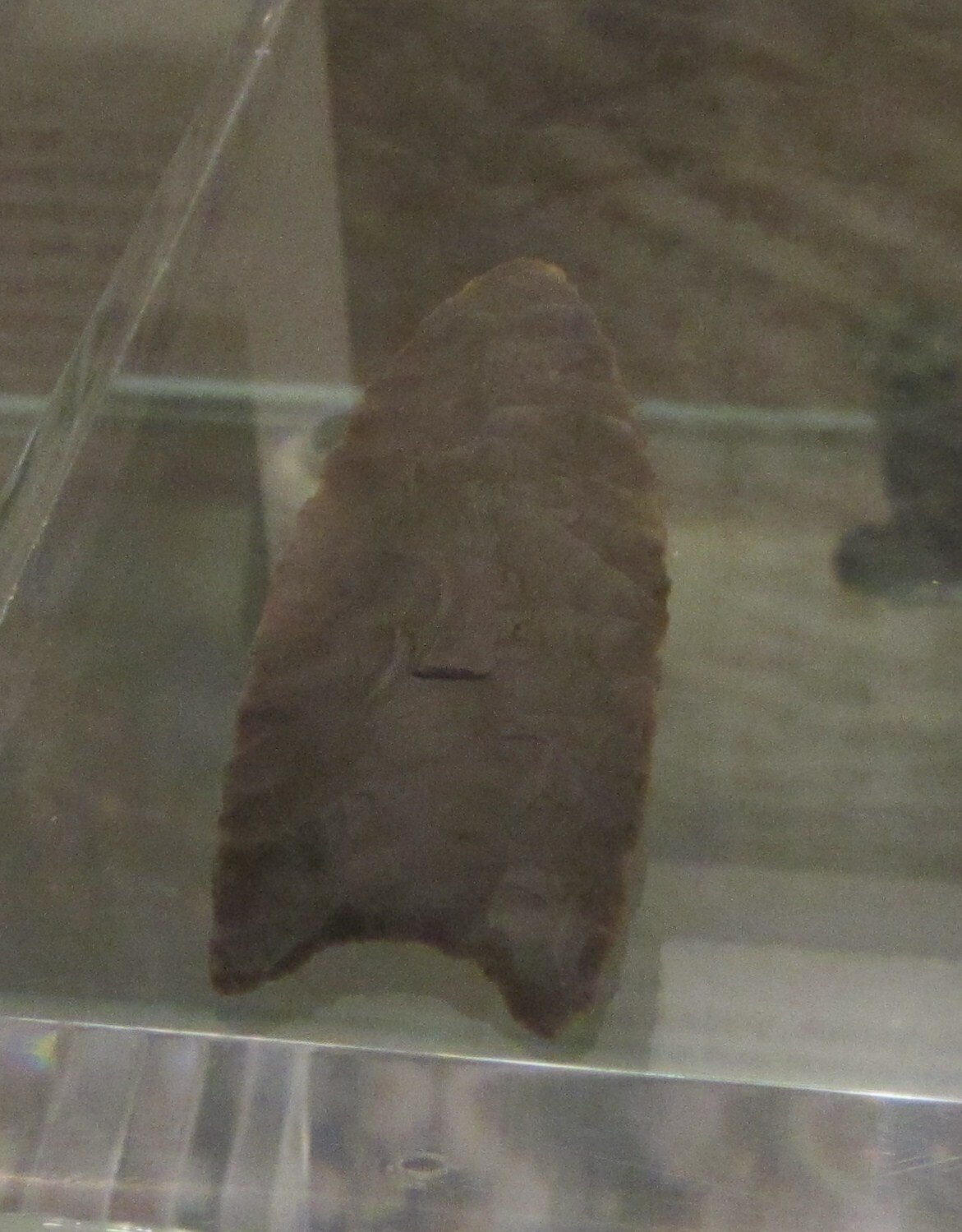
To gauge the scale of what Lowery claims, one must recall the reference scenario for the peopling of the AmericasPeopling of the AmericasThe migration of the first modern humans into the Americas from Asia via Beringia, long dated to around 13,000 years ago (the "Clovis first" model) but pushed back beyond 20,000 years by sites such as White Sands.→Peopling of the AmericasThe migrationsMigrationsLong-distance movements of populations; a major driver of human history (the exit from Africa, the peopling of continents, Neolithic and steppe expansions).→ that led Homo sapiensHomo sapiensThe present-day human species, which emerged in Africa around 300,000 years ago, the only surviving human lineage after the extinction of Neanderthals and Denisovans.→ to occupy the American continent, from Beringia; its date and routes remain debated.→. Through the second half of the twentieth century, prehistorians broadly embraced the so-called "Clovis-first" model. On this account, the first Americans arrived around thirteen thousand years ago, bearers of the ClovisClovisA PalaeoindianPalaeoindianRefers to the earliest human cultures of the Americas at the end of the Pleistocene, big-game hunters, including Clovis and Folsom.→ culture of North America (c. 13,000 years ago), recognizable by its fluted stone points; long believed the oldest on the continent, no longer so.→ culture and its famous fluted stone points, found across much of North America. For decades, Clovis stood as the absolute starting point.
The mechanism of that arrival remains, for its part, broadly accepted. At the height of the last glaciation, the lowering of sea level had exposed a vast bridge of land between Siberia and Alaska, BeringiaBeringiaA vast land bridge emergent between Siberia and Alaska during the last glaciation, at the site of today's Bering Strait; a cold steppeSteppeA vast semi-arid, treeless grassland of Eurasia, suited to nomadic herding and the horse; a corridor for the movement of peoples and technologies in later prehistory.→ through which the first Americans passed.→. Populations from Asia are thought to have crossed it, then spread southward, whether through an ice-free corridorIce-free corridorAn inland passage between the Laurentide and Cordilleran ice sheets, open and viable only around 14,000-13,000 years ago, too late for the earliest arrivals.→ between the ice sheets or along the Pacific coast. The work of recent decades has pushed the date of entry back to at least fifteen thousand years, a figure that now enjoys wide consensus. It is against this threshold of fifteen thousand years that the Parsons Island claim must be measured, and it nearly doubles it. To assert a human presence twenty-two thousand years ago is to posit people in eastern North America at the full depth of the glacial maximum, at a time when much of the continent was still locked under ice, and therefore migration waves older, more numerous and more complex than the classic model imagines.
286 Artefacts Beneath Layers of Charcoal
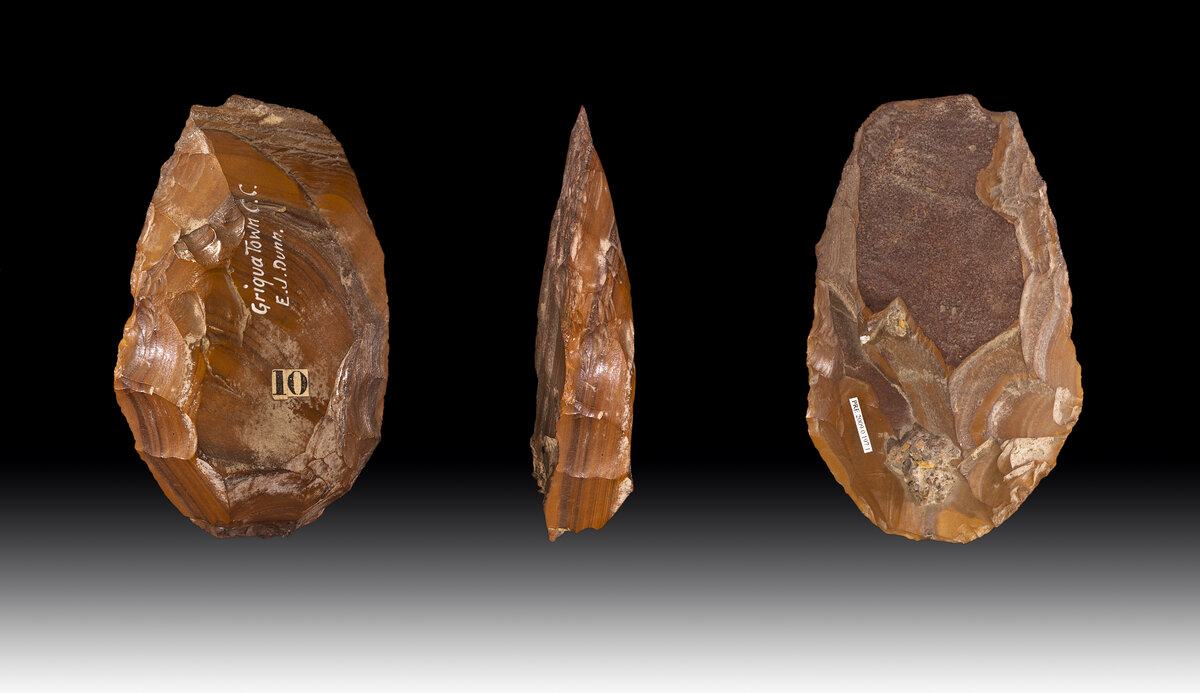
What exactly does the Parsons Island file contain? Darrin Lowery states that he and his team gathered 286 artefacts in all along the island's southwestern edge, among them a bifacebifaceA stone tool knapped on both faces to obtain a regular shape and cutting edges.→, that is, a tool flaked on both of its faces. Most come from the beach, loosened from the bluff by erosion, but a few pieces, nine by his count, were still embedded in the wall, in their original place within the sediments. That detail is crucial: an object still sealed in its layer carries far more demonstrative weight than a tool picked up on the foreshore, whose point of origin is unknown.
These artefacts are said to come from an ancient buried soil, a paleosol, overlain by layers containing charcoal. The charcoal taken near the deepest pieces was entrusted to an independent laboratory, which estimated its radiocarbon age at between 20,563 and 22,656 years. Three of the objects still in place would thus be associated with charcoal around twenty-two thousand years old. Lowery further stresses that the island lies in a formerly periglacial zone, at the margins of the great ice sheets, a setting that, in his view, reinforces the antiquity of the deposits. In his 2021 manuscript he even describes a soil horizon revealing human activity between twenty thousand and fifteen thousand years ago, and argues for a recurring occupation of these shores throughout the late PleistocenePleistoceneThe geological epoch of the great ice ages (c. 2.6 Ma–11,700 BP), spanning most of human prehistory.→.
The patience of the undertaking is, in itself, striking. Lowery recounts returning to the same crumbling edge across dozens upon dozens of scientific visits, year after year, watching the storms expose a new slice of the past and racing to record it before the next tide erased it. That persistence is part of what lends the dossier its appeal, and part of what makes it so difficult to adjudicate. There was no single, controlled excavation whose every step could be checked by an outside observer, but a long, improvised salvage carried out by one man against the clock of erosion. The honesty of the effort is not in question; what remains at issue is whether a record gathered in such conditions can bear the weight of so sweeping a conclusion.
A Date That Troubles
This is where caution becomes imperative. Dating a piece of charcoal is something laboratories can do with good precision. But the archaeological question is never that of the age of a burnt scrap of wood; it is that of association. Do the dated charcoal and the stone tool truly belong to the same event, the same soil, the same moment? Nothing guarantees that a charcoal fragment twenty-two thousand years old and a biface ended up side by side because a human hand set them down together. They may have come together through the workings of the sediment, long after the fact.
And sediments move. Over tens of thousands of years, layers settle, slide, deform; freeze and thaw, runoff, repeated burialBurialThe intentional deposition of a body, sometimes with offerings; a marker of symbolic behaviour.→ can displace objects, make them migrate downward and make them look older than they are. Studies carried out in the region, noted even in the entry on the Delmarva Peninsula, remark precisely that the stratigraphy around Parsons Island appears disturbed. If the layers have been reworked, then the neat superposition of a tool beneath dated charcoal loses much of its force, because the two might not be telling the same story. Determining whether the artefacts and the dated sediments are genuinely contemporary thus remains the open, and central, question of the whole file.
It should be added that most of the 286 pieces were no longer in place. Picked up on the beach, at the foot of the bluff, they could have slipped from any layer before tumbling down to the foreshore. For those objects, the age of the sediments proves nothing, because the level they came from is unknown. The entire chronological argument therefore rests, in reality, on a handful of pieces still sealed in the wall, and on the confidence one can place in their immediate context. That is a great deal to ask of so thin a sample, in a soil worked by water and frost for millennia. Finally, defenders of the classic model recall that an extraordinary claim demands extraordinary evidence, and that an isolated biface, however old, cannot by itself stand in for proof so long as other sites, excavated and published, do not come to support it.
Publishing Outside Peer Review: The Heart of the Controversy
To these field difficulties is added a problem of method that, in the eyes of many researchers, weighs heavier still. Darrin Lowery did not submit his results to a scientific journal. He chose to circulate his work online, as a long manuscript posted on platforms such as ResearchGate and Academia, bypassing peer reviewpeer reviewThe procedure by which other specialists evaluate a study before publication, a benchmark of validation in the scientific community.→. Asked about that choice, he declared that "life's too short" to submit to the formal publication process, whose biases he also criticizes.2
That stance runs head-on into the culture of the discipline. Peer review, imperfect as it is, remains the mechanism by which a community tests an extraordinary claim: other specialists examine the data, hunt for flaws, demand controls. Until that passage has taken place, many flatly refuse to enter the debate. The prehistorian Stuart Fiedel thus warned that part of the field would pay no attention to this work precisely because it has not been reviewed. David Meltzer, one of the major voices in the archaeology of the first Americans, said for his part that he would not discuss these claims until they had been "through the wringer" of evaluated publication.3 The reproach is not a matter of principle: a discovery that purports to overturn the consensus must, more than any other, expose itself to organized criticism. By skirting it, Lowery deprives his find of the one validation that, in the eyes of his peers, could make it exist.
Parsons Island in the Wider Pre-Clovis Debate
It would be unfair, however, to file Parsons Island among the fantasies. Over the past twenty years, the old "Clovis-first" dogma has cracked, and the idea of a pre-ClovisPre-ClovisA set of American sites older than Clovis (Monte Verde, Cooper's Ferry, etc.) that overturned the 'Clovis first' model.→ peopling has gained ground on far more solid foundations. The site of Monte Verde, in Chile, has forced acceptance of a human presence around fourteen thousand five hundred years ago, far to the south and well before Clovis. More striking still, fossilized human footprints discovered at White Sands in New Mexico have been dated, through several studies, to roughly twenty-one to twenty-three thousand years, and have been the subject of peer-reviewed publications and independent cross-checks.
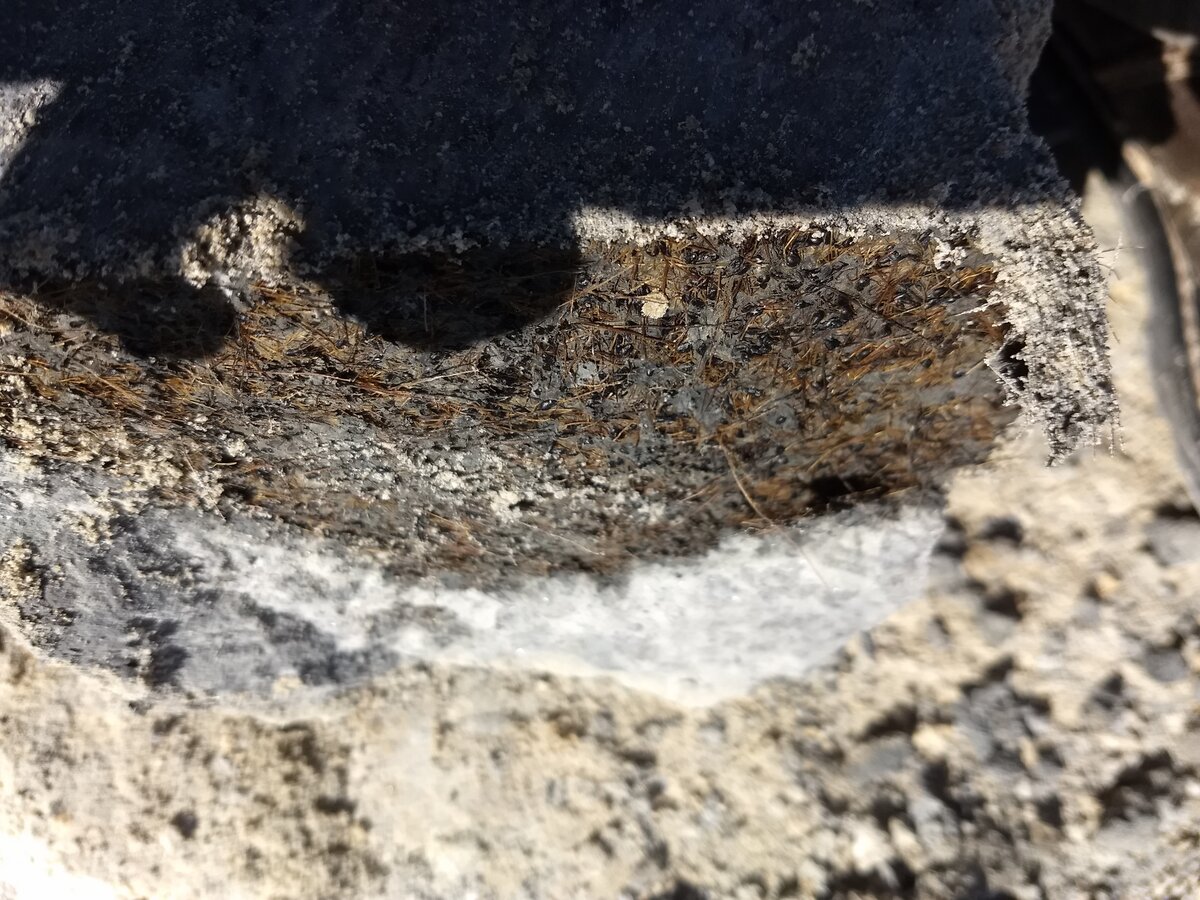
This is where the comparison becomes instructive. White Sands and Parsons Island advance neighboring ages, around twenty-two thousand years, but they do not share the same status. The New Mexico prints were dated by several independent methods, published in leading journals, discussed, criticized, then reconfirmed: they underwent, precisely, the test that the Maryland file declined to face. To say that the peopling of the Americas may have begun earlier than fifteen thousand years is therefore no longer a heresy; it is a serious hypothesis, still debated, but argued. What remains uncertain is that Parsons Island provides the proof of it.
As things stand, then, the claim of a human presence twenty-two thousand years ago on a Chesapeake island remains exactly that: a claim. The artefacts are real, the erosion that yields them is real, the urgency of saving them just as real. But until the association between the tools and the dated sediments has been demonstrated, and until the file has passed the filter of peer evaluation, the scientific community is entitled to suspend its judgment. Parsons Island deserves to be studied seriously and excavated before the bay carries it off. It does not yet deserve to have the first page of America's peopling rewritten on its word alone.
No comments yet. Be the first.