In northeastern Brazil, at the heart of the state of Piaui, Serra da Capivara National Park harbors one of the most enigmatic and controversial prehistoric sites on the American continent: Pedra Furada. Charcoal samples taken from hearths at this site have been dated to 48,000 to 60,000 years old -- well before the presumed arrival of the first humans in the Americas under the classic model. If these dates are valid, they fundamentally upend our understanding of the peopling of the New World.

Excavations were conducted over decades by the Franco-Brazilian archaeologist Niede Guidon, who identified at the Toca do Boqueirao da Pedra Furada site remains of charcoal, knapped tools, and rock paintings superimposed over thousands of years. Dates obtained by thermoluminescence and radiocarbon on the deepest layers suggest extremely ancient human occupations.[1]
The Scientific Controversy
This interpretation has been vigorously contested. North American researchers -- including Tom Dillehay (discoverer of Monte Verde in Chile) and James Adovasio -- argued that the charcoal could be of natural origin (vegetation fires from the cliffs) and that the supposed lithic tools were actually flakes generated by falling boulders from the walls. In their view, no element can be attributed with certainty to human activity before 15,000 years ago.
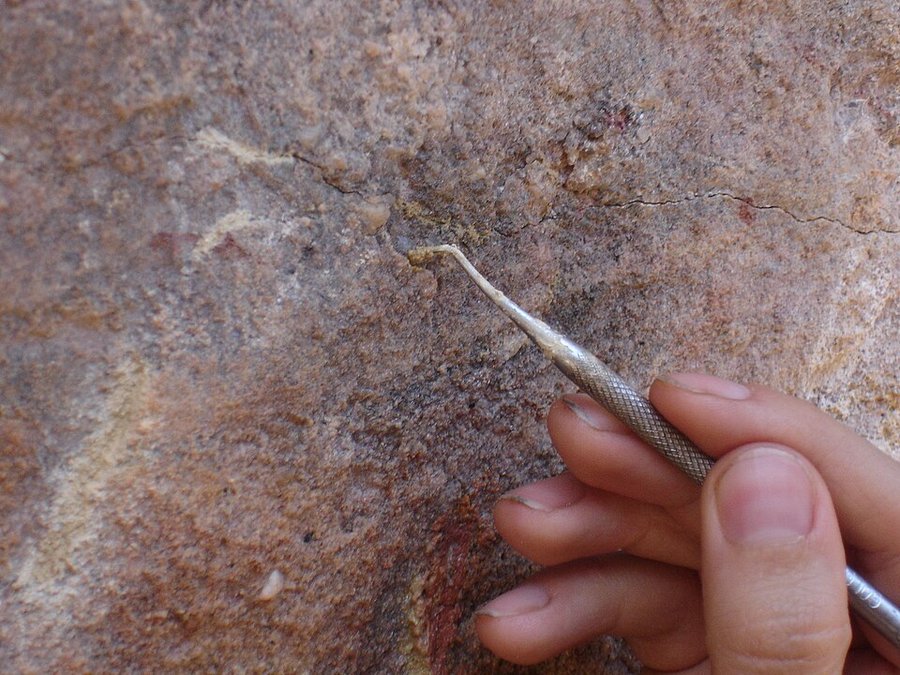
Niede Guidon and her team responded point by point: the charcoal comes from clear sedimentary contexts, associated with burned stones in circles forming deliberately constructed hearths; the flakes show traces of intentional percussion. In 2019, a complementary study on phytoliths from the site reinforced the hypothesis of ancient human presence, without definitively closing the debate.
Rock Paintings in Exceptional Numbers
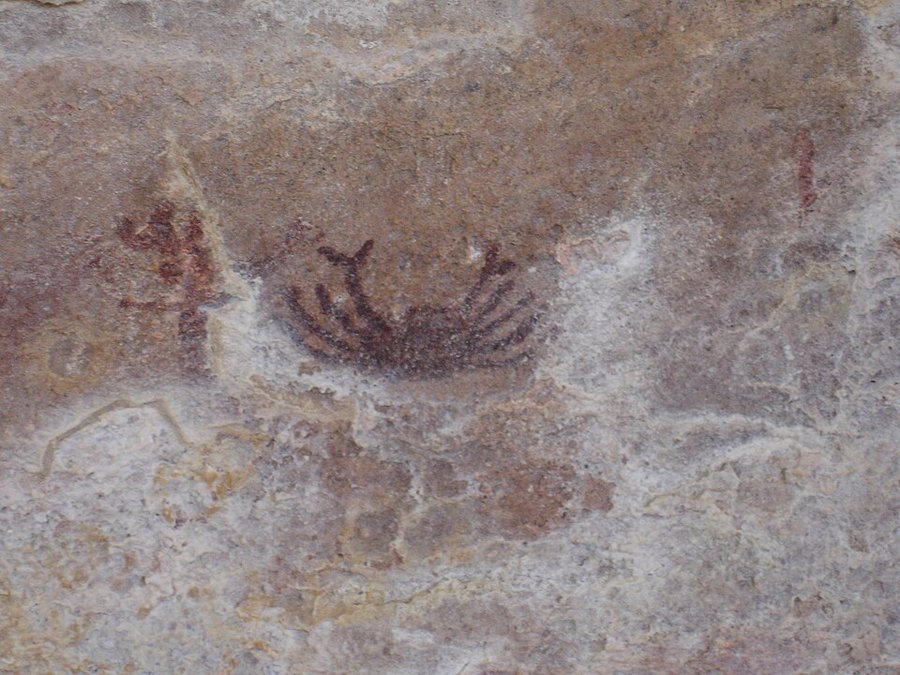
Regardless of the controversy over the oldest dates, Serra da Capivara is unquestionably one of the world's greatest concentrations of rock art. More than 1,400 rock painting sites have been recorded, some dating back 12,000 years and depicting scenes whose narrative richness is unmatched in South America.
The debate around Pedra Furada is not purely scientific: it touches on the identity of the first Americans. If humans occupied the continent more than 50,000 years ago, they cannot have come from Asia via the frozen Bering Strait, and other migration routes -- by sea along the coasts, or across the Atlantic -- must be considered. Serra da Capivara remains one of the most scrutinized and disputed sites in world prehistoryPrehistoryThe span of human history before the invention of writing, from the Palaeolithic to the Metal Ages, known mainly through material remains.→.
No comments yet. Be the first.