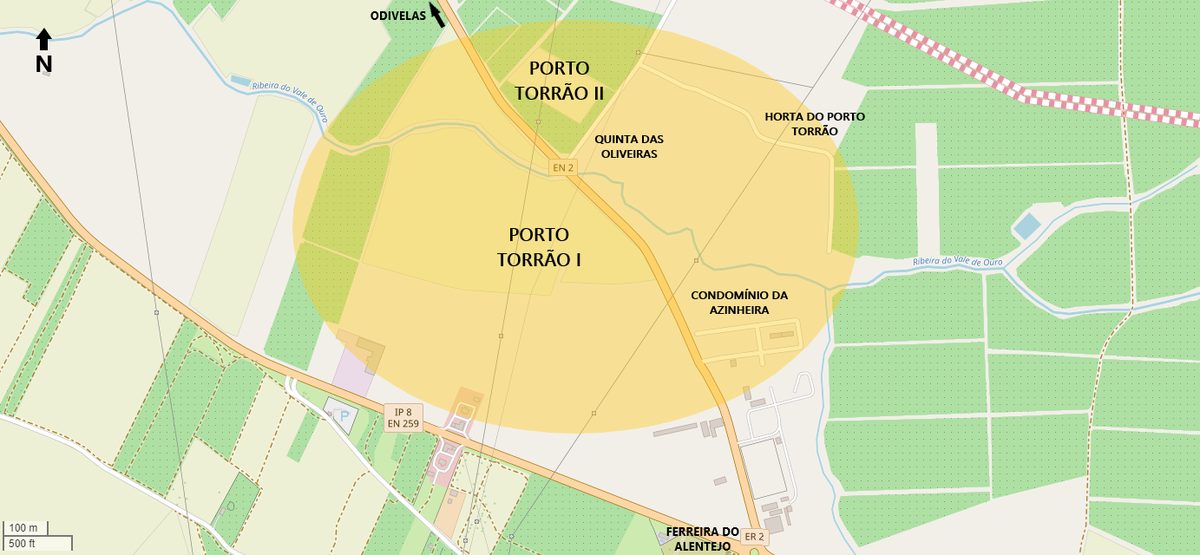
In the heart of the vast plains of the Alentejo, not far from Reguengos de Monsaraz, an exceptional site continues to yield the secrets of a civilisation more than five millennia old. Invisible from nearby roads, the Perdigões archaeological complex is nevertheless considered one of the most important prehistoric ensembles on the Iberian Peninsula. A new excavation campaign begins on 1 July 2026 , the twenty-ninth consecutive season.
A 16-hectare monument built over 14 centuries
Classified as a National Monument since 2019, the site covers nearly 16 hectares and was occupied almost continuously between 3400 and 2000 BCE, spanning fourteen centuries of NeolithicNeolithicThe "New Stone Age": a period marked by farming, herding, settlement and pottery, from around 10,000 BC.→ and ChalcolithicChalcolithicThe "Copper Age": a transition between the Neolithic and the Bronze Age, marked by the first copper objects (Ötzi's era).→ history. Its most striking feature is its concentric plan: no fewer than 16 successive ditches have been identified to date, forming nested enclosures whose organisational logic remains partly enigmatic.
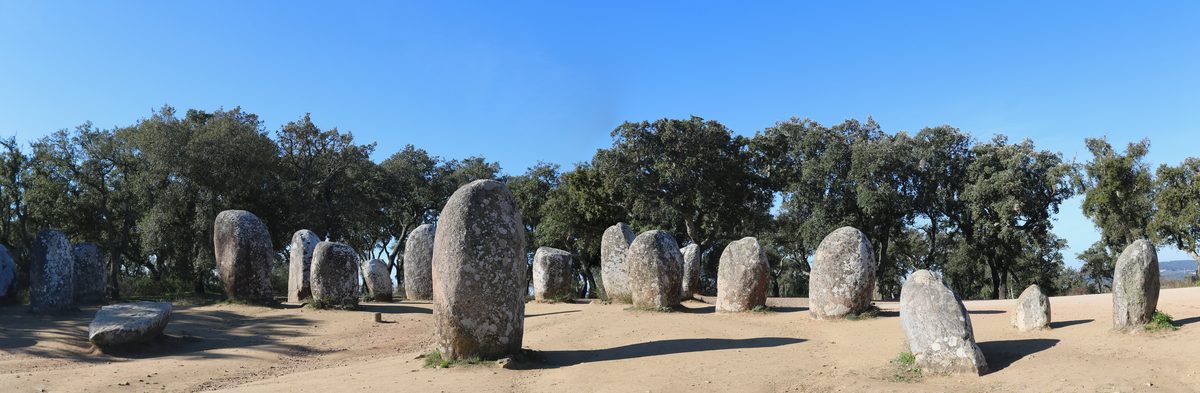
The complex was laid out in a vast natural amphitheatre opening to the east, facing the megalithic landscape of the Vale do Álamo. This was no chance location. Several of the main entrances are aligned with the rising or setting sun at the equinoxes and solstices, turning the horizon dominated by the heights of Monsaraz into an immense astronomical calendar. Researchers see this as evidence that a fully integrated cosmological dimension was built into the site's design from the outset.
A ceremonial centre on a Western European scale
Unlike a classic fortified settlement, Perdigões appears to have functioned primarily as an immense ceremonial centre. Excavations have uncovered collective funerary contexts, secondary deposits of human bones, and multiple indicators of elaborate ritual practices surrounding the dead , burials, bone manipulation, cremations.
At the centre of the complex lies one of its most remarkable discoveries: a circular structure approximately 20 metres in diameter, made up of concentric rows of posts and large wooden trunks. Unique on the Iberian Peninsula, this timber circle more closely recalls the great prehistoric sanctuaries of the British Isles , Woodhenge, Seahenge , than any other known monument in Spain or Portugal.
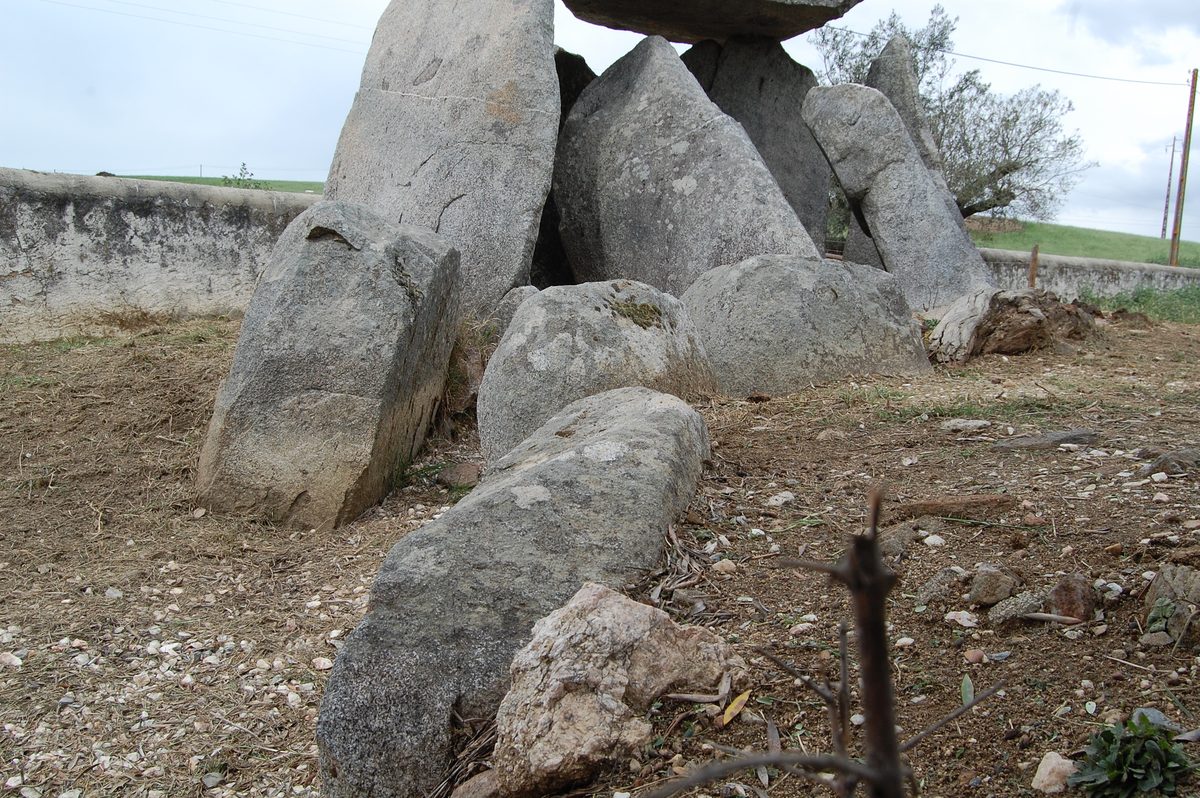
Analysis of human and animal remains reveals another crucial dimension: a significant proportion of the individuals buried at Perdigões did not originate from the region. They had travelled from sometimes very distant territories. This finding, combined with the presence of exotic objects , North African ivory, Sicilian amber, cinnabar from the Almadén mines, flintFlintA hard, brittle siliceous rock, knapped by prehistoric people to produce blades, points and sharp tools.→ from the Granada area, stones from Extremadura , confirms that Perdigões was a inter-regional gathering place where ceremonies, exchanges and encounters between communities took place.
Exchange networks on a Mediterranean scale
The diversity of raw materials found on the site maps a vertiginous network of connections for the period. The ivory came from North African elephants, whose presence on the Iberian Peninsula is well documented for this era. The amber came from Sicily. The cinnabar , red mercury sulphide used for ritual body paint , was extracted from the Almadén mines, more than 300 km away. These circulations speak to networks of exchange whose complexity far exceeds what was once imagined for prehistoric societies of the Atlantic façade.
29 seasons of excavation, mysteries still intact
The 2026 campaign, coordinated by ERA Arqueologia with support from Esporão and the municipality of Reguengos de Monsaraz, brings together students and researchers from the universities of Porto, Lisbon, Évora, Algarve, Madrid and Oxford. Work will focus on deposits related to cremations and on the access zone of the timber circle.
Nearly three decades of uninterrupted research have produced significant scientific publications, but specialists agree: Perdigões is far from having yielded all its secrets. The complete structure of the enclosures, the precise modalities of gatherings, the duration and seasonality of occupation , questions that each campaign refines without exhausting. The site of Reguengos de Monsaraz has established itself as an international reference for the study of the Atlantic Neolithic and Chalcolithic.
Visitors can extend their discovery at the Torre da Herdade do Esporão, where a permanent exhibition presents the main finds from the excavations.
Sources:
- Portugal.fr, "Les Perdigões, mystérieux sanctuaire archéologique vieux de 5000 ans", 27 June 2026 , link
- ERA Arqueologia , era-arqueologia.pt
- Valera, A.C. (2012). "Mind the gap: Neolithic and Chalcolithic enclosures of south Portugal". Enclosing the Neolithic, BAR International Series 2460, pp. 165, 183.
- Valera, A.C. & Godinho, R. (2010). "Managing death in prehistoric Perdigões enclosure". Journal of World PrehistoryPrehistoryThe span of human history before the invention of writing, from the Palaeolithic to the Metal Ages, known mainly through material remains.→.
- Antunes, M.T. & Cardoso, J.L. (1995). "Quaternary proboscideans from Portugal". Ciências da Terra.
Chaque article me donne l'impression d'un voyage dans le temps. Je suis fidèle lectrice depuis le début.
J'ai visité ce type de site lors d'une excursion. Votre article m'aide à mieux comprendre ce que j'ai vu.
Perdigoes fait partie de ces grands sites néolithiques du Chalcolithique ibérique qui restent insuffisamment connus en dehors de la péninsule. Les fouilles menées depuis les années 1990 par l'équipe d'Antónia Valera ont livré des milliers d'artefacts et de restes humains en contexte rituel. La question de la function de ces enclos, lieu de rassemblement saisonnier ou nécropole, reste débattue.
Perdigoes en Alentejo est un site que je découvre avec cet article et qui me passionne. Ces grands enclos fossoyés néolithiques du Portugal ressemblent aux enceintes à fossés que l'on trouve en France et dans toute l'Europe atlantique à la meme période. Cela confirme l'existence de réseaux d'échanges et de traditions partagées sur de très longues distances au Néolithique.