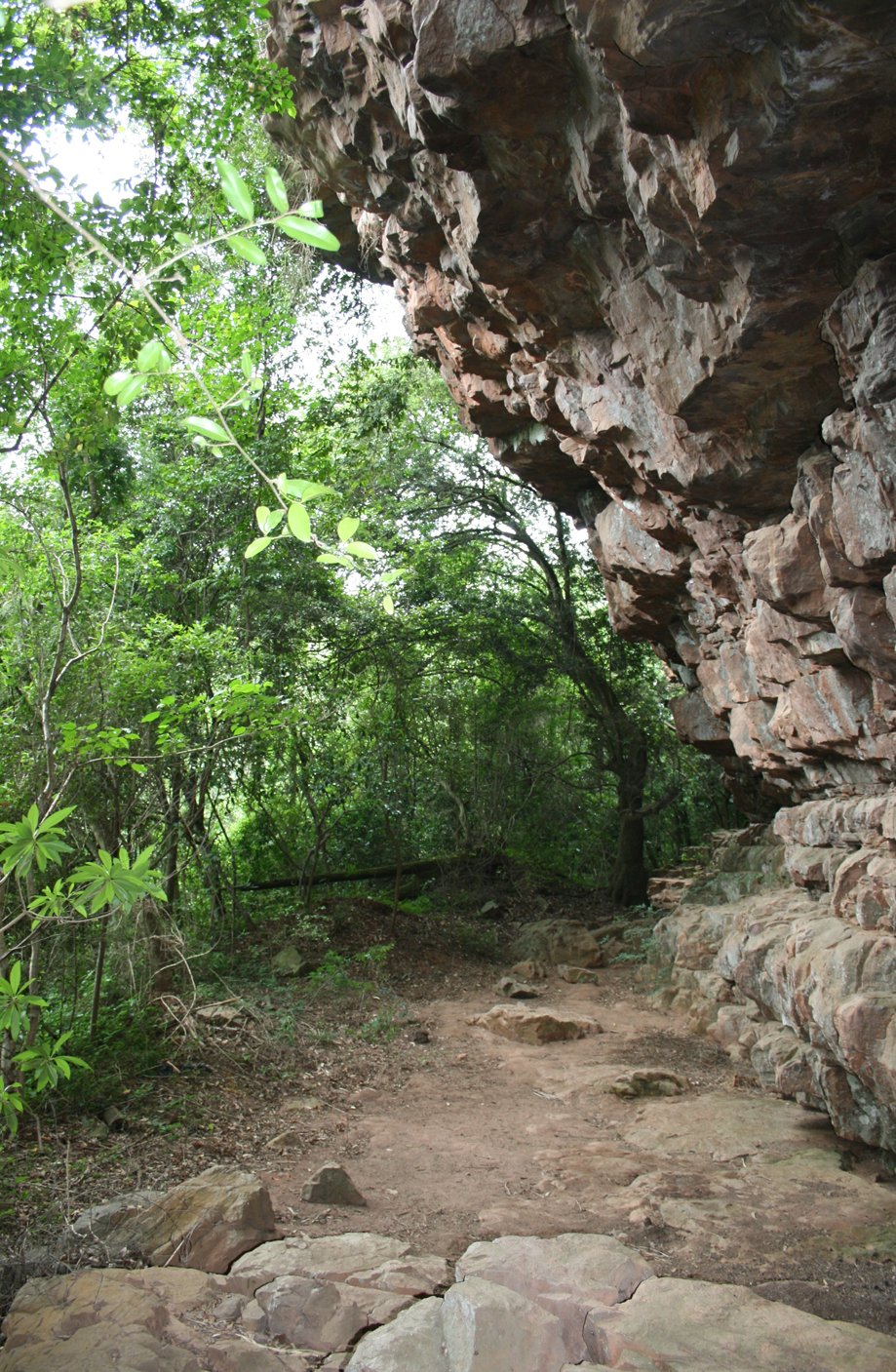
In the hills of KwaZulu-Natal, South AfricaAfricaThe cradle of humankind: the continent where the first hominins appeared, then Homo sapiens around 300,000 years ago, before the expansion to the rest of the world.→, an unassuming rock shelterRock shelterA shallow cavity at the foot of a cliff or under a rocky overhang, offering natural shelter; a favoured site of prehistoric habitation and rock art.→ holds one of the oldest and most elaborate testimonies to the cognitive sophistication of prehistoric modern humans. The Umhlatuzana site was excavated in the 1980s and yielded an archaeological sequence spanning more than 70,000 years. It is in the layers dated to around 60,000 years ago that quartz microliths have recently fascinated scientists. A study published in January 2026 in Science Advances demonstrates that some of these tools carry chemical traces of a powerful plant poison.1
The Chemical Signature of a Forgotten Poison
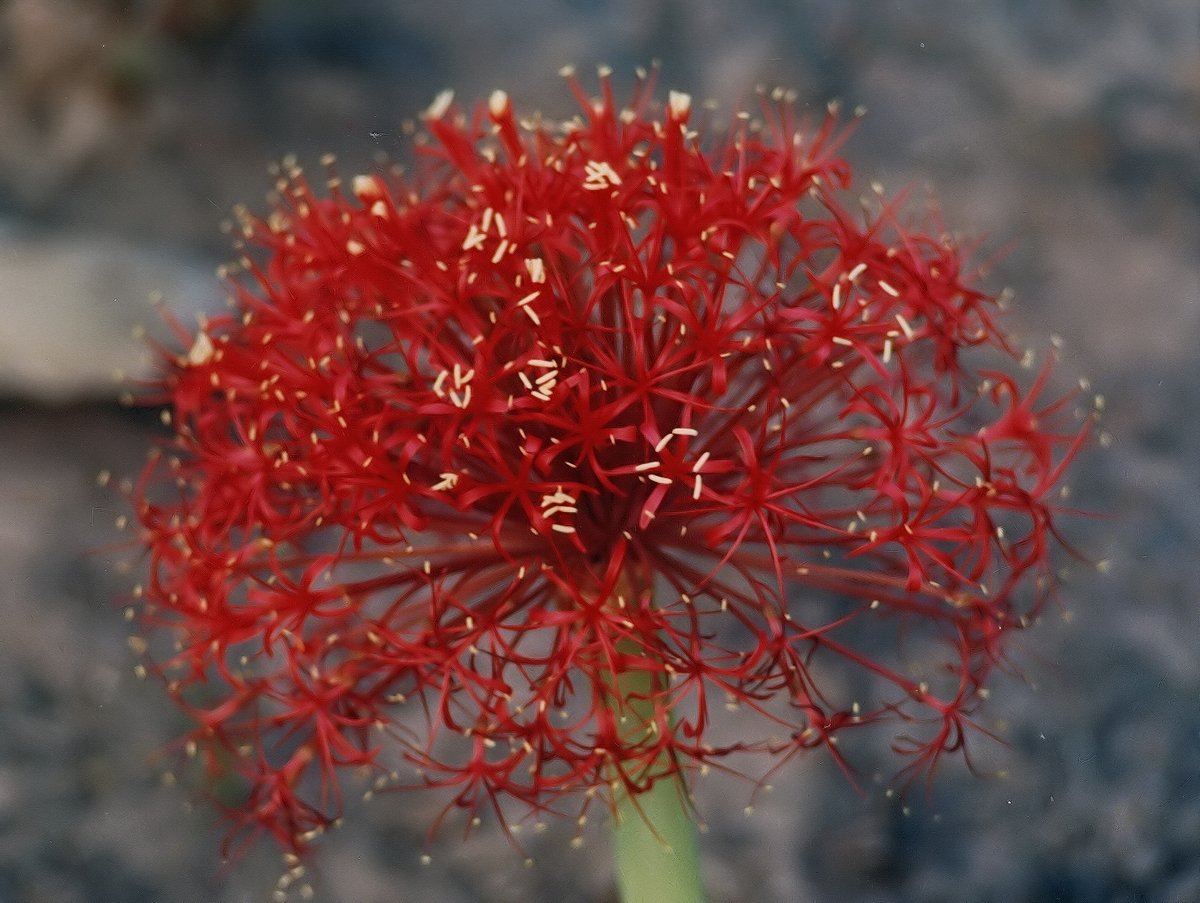
The researchers applied two complementary techniques to the microliths: X-ray fluorescence (XRF) to detect the presence of unusual chemical elements, and liquid chromatography coupled with tandem mass spectrometry (LC-MS/MS) to identify organic molecules. Of 10 microliths analysed, 5 revealed the presence of buphanidrine and epibuphanisine, the two main alkaloids of Boophone disticha, a toxic bulb in the Amaryllidaceae family known as "poison bulb" or "gifbol".
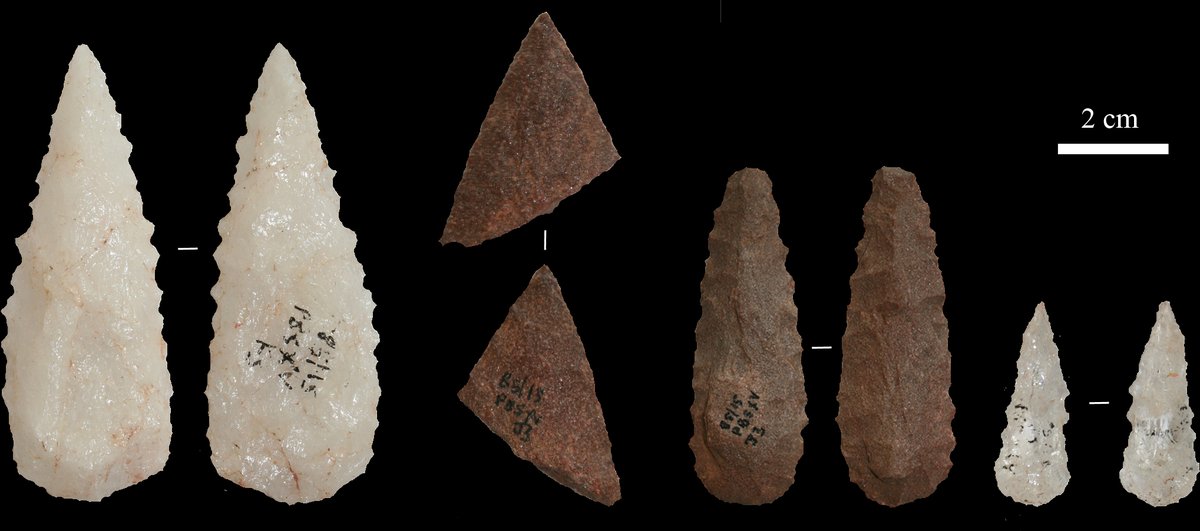
The discovery owes nothing to chance: the team, led by Marlize Lombard of the University of Johannesburg, confirmed its results by analysing San arrows held in Swedish museums and dating to just 250 years ago. These arrows, whose origin and poisoned use are documented, revealed exactly the same chemical compounds as the prehistoric microliths. This "cross-check" validates the method and considerably strengthens the conclusion: the people of Umhlatuzana genuinely used Boophone disticha-based poison on their projectiles.
Boophone Disticha, a Millennia-Old Pharmacopoeia
This bulbous plant grows in the savannahs and grasslands of sub-Saharan AfricaSub-Saharan AfricaThe part of Africa south of the Sahara; cradle of Homo sapiens, long thought hostile to ancient-DNA preservation because of heat.→. Its alkaloids act on the central nervous system and cause progressive muscular paralysis. At low doses they have sedative effects; at higher doses they cause death by respiratory arrest. The toxicity of Boophone disticha makes it an ideal hunting poison: an arrow that grazes an animal is enough to paralyse it, allowing hunters to follow it a short distance before finishing it off. San communities, who still use it today under local names, have detailed knowledge of it transmitted orally from generation to generation.
Preparing a hunting poison from Boophone bulbs requires several steps: harvesting the bulb at the right season, extracting the sap, possibly mixing it with adhesive substances to make the poison adhere to the shaft or armature, and careful application to avoid self-contamination. Each of these steps implies a complex operational sequenceoperational sequenceOrdered succession of technical steps leading from raw material to finished object.→, precise knowledge of plant properties and advance planning of the hunt.
A 60,000-Year Continuity in Hunting Practices
The significance of this discovery extends beyond a simple technical feat. It suggests a remarkable cultural continuity between prehistoric populations of southern Africa and contemporary hunter-gatherer communities. The San, whose hunting practices have been documented by ethnographers since the nineteenth century, would not be the inventors of a recent technique but heirs to a tradition at least 60,000 years old.
This discovery fits into a body of evidence accumulated over two decades that pushes ever further back in time the appearance of complex cognitive behaviours in Homo sapiensHomo sapiensThe present-day human species, which emerged in Africa around 300,000 years ago, the only surviving human lineage after the extinction of Neanderthals and Denisovans.→. Composite tools, pigments, body ornaments, engravings: each new study pushes "behavioural modernity" a little further into the past. The people who hunted at Umhlatuzana 60,000 years ago were not merely biologically modern: they thought, planned, transmitted complex knowledge and commanded a natural pharmacopoeia of remarkable sophistication.
C'est accessible mais pas simpliste. Parfait pour quelqu'un comme moi qui débute.