When we speak of prehistoryPrehistoryThe span of human history before the invention of writing, from the Palaeolithic to the Metal Ages, known mainly through material remains.→, attention often turns to AfricaAfricaThe cradle of humankind: the continent where the first hominins appeared, then Homo sapiens around 300,000 years ago, before the expansion to the rest of the world.→'s Rift Valley, to the cliffs of the Dordogne or the frozen steppes of central Europe. China, however, holds one of the richest and longest archives of the human adventure. From the earliest hominids who appeared more than two million years ago to the bronze-casters of Sanxingdui whose creations defied all categories, the territory of present-day China was the stage for cultural, technical and biological developments whose scale archaeology has barely begun to measure. This dossier traces those millions of years , from the first knapped stones to the oracle bones of the Shang dynasty , along the great prehistoric cultures that shaped one of the most enduring civilizations humanity has known.
The earliest hominids in China (2.5 million , 300,000 years ago)
The question of how long humans have inhabited China is one of the most debated in world palaeoanthropologyPalaeoanthropologyThe science that studies human evolution from the fossil remains of hominins (bones, teeth, footprints) and their context, to reconstruct our biological origins.→. The oldest remains come from Longgupo, near Chongqing (formerly Sichuan), where a jaw fragment and teeth dated to 2.48 million years ago were assigned to Wushan Man. Some researchers see a hominid intermediate between Homo habilis and Homo ergaster; others argue for a pongine great ape. The debate is unresolved, but lithic remains of the same date found in the same context indirectly attest to an early human presence.
More securely dated, the site of Shangchen in Shaanxi province has yielded stone tools spanning 2.1 to 1.3 million years, making it one of the oldest known records of human activity outside Africa. In 1965, geologist Fang Qian discovered two incisors at Yuanmou in southern Yunnan, dating to about 1.7 million years ago: Yuanmou Man, one of the earliest representatives of the genus Homo in East Asia. At Lantian in Shaanxi a mandible was found in 1963, while the skulls of Yunxian Man (Hubei), unearthed in 1989 and 1990 and dated to 936,000 years ago, round out the picture of archaicArchaicRefers to an ancient, now-extinct human population or form (Neanderthals, Denisovans, ghost lineages), as opposed to anatomically modern humans.→ human presence across the Chinese territory.
Yet the most emblematic site of Chinese prehistory is Zhoukoudian, a limestone hill about 50 kilometres south-west of Beijing. Between 1921 and 1937, an international team including Swedish geologist Johan Gunnar Andersson, Canadian anatomist Davidson Black, French palaeontologist Pierre Teilhard de Chardin and anatomist Franz Weidenreich unearthed Peking Man , an Homo erectus dated from 780,000 to 300,000 years ago. Described as Sinanthropus pekinensis in 1927, this robust hominid inhabited the Zhoukoudian caves in groups. He fashioned quartzite tools by direct percussion, hunted and gathered, and , remarkably , controlled fire from around 430,000 years ago, one of the oldest documented hearths in the world.
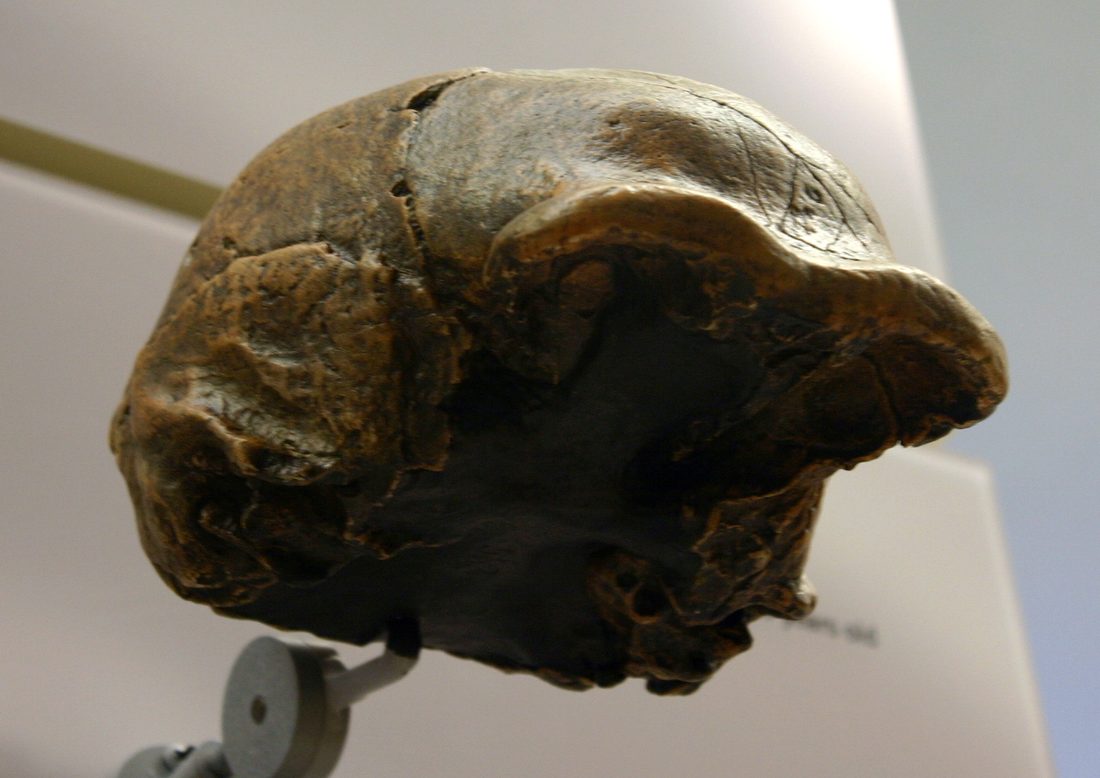
The story of Zhoukoudian is inseparable from a scientific tragedy: in December 1941, as Japan prepared to enter the war, the precious fossils were packed for evacuation and never arrived at their destination. Lost somewhere in transit, they survive today only as casts and in the meticulous descriptions Weidenreich had completed before their disappearance. Excavations resumed after the war nonetheless yielded additional fossils and tools, confirming and enriching the picture of this mid-PleistocenePleistoceneThe geological epoch of the great ice ages (c. 2.6 Ma–11,700 BP), spanning most of human prehistory.→ community of hunter-gatherersHunter-gatherersA way of life based on hunting, fishing and gathering wild resources, without farming or herding; it dominated almost the whole of human history.→.
Homo sapiensHomo sapiensThe present-day human species, which emerged in Africa around 300,000 years ago, the only surviving human lineage after the extinction of Neanderthals and Denisovans.→ reaches Asia (80,000 , 30,000 years ago)
The arrival of anatomically modern Homo sapiens in China sits at the heart of a fierce scientific debate. The multiregional theory, championed by Weidenreich and long favoured by many Chinese researchers, postulates a continuous local evolution from Asian Homo erectus to modern East Asians, without population replacement. The out-of-Africa theory, supported by a convergence of genetic and palaeontological data, holds that Homo sapiens left Africa around 55,000, 65,000 years ago and colonised Eurasia by replacing archaic local populations. Fossils from caves in southern China had been presented as evidence of a very early sapiens presence , as early as 80,000, 120,000 years ago. A 2021 reassessment using uranium-series dating and ancient DNAAncient DNAGenetic material preserved in old remains, often degraded, sequenced with cutting-edge techniques.→ analysis showed those fossils to be far more recent than previously suggested, with some dating to the HoloceneHoloceneThe current geological epoch, begun about 11,700 years ago at the end of the last ice age; the setting of all post-glacial history.→ because of complex sedimentary histories in subtropical caves. Current evidence points to modern humans settling southern China between 50,000 and 45,000 years ago, in line with the late-dispersal genetic model.
In the Upper Cave at Zhoukoudian, the same site as Peking Man but in far younger deposits (around 30,000 years ago), remarkable traces of Homo sapiens in northern China appear. Bones bear red ochreOchreA red or yellow mineral pigment (iron oxides), used from prehistory for adornment, funerary rites and art.→ powder , a possible symbol of life or blood , and associated finds include perforated shells, animal teeth used as ornaments, flintFlintA hard, brittle siliceous rock, knapped by prehistoric people to produce blades, points and sharp tools.→ blades and bone needles, all comparable to the Upper PalaeolithicUpper PalaeolithicThe final phase of the Palaeolithic (c. 45,000 to 10,000 years ago), marked by Homo sapiens in Europe, art, ornaments and a succession of cultures (Aurignacian, Gravettian, Solutrean, Magdalenian).→ material culture of Europe at the same period. These modern humans hunted deer and fished in forests and grasslands, perhaps alongside or in succession to more archaic populations of the region, and possibly in contact with Denisovans whose presence in East Asia is now established.
The Upper Palaeolithic and the ceramic revolution (40,000 , 10,000 years ago)
During the Upper Palaeolithic, Chinese lithic cultures diversify considerably by region. In the north a tradition of small flint tools inherited from earlier periods is illustrated at Sarawusu, Zhiyu and Shuidonggou. The latter site, near Lingwu (Ningxia), has yielded a blade industry with striking similarities to contemporaneous cultures in Central Asia and the Middle East, suggesting contacts or technological convergences across long distances. Microlithic cultures also appear after the 1970s , Xiachuan in Shanxi and Hutouliang in Hebei , showing finely tuned adaptation to diverse environments.
The most spectacular discovery of this period is unquestionably that of Yuchanyan Cave in Hunan: pottery sherds dated between 18,000 and 14,000 years before the present make it, alongside a handful of other south Chinese and Japanese sites, one of the oldest known potteries in the world. This is remarkable because Chinese ceramics appear in a hunter-gatherer context, well before the Neolithic revolutionNeolithic revolutionThe shift from hunter-gatherer societies to farming and settled life (c. 10,000 BCE in the Near East), giving rise to villages and then cities.→, contrary to the classical model that links pottery to farming. By the end of the Upper Palaeolithic, populations of the Yellow River basin were already grinding wild millet seeds with stone mortars and querns, prefiguring the domestication of cereals that would lie at the heart of the Neolithic revolution.
The Neolithisation: rice, millet and first villages (10,000 , 7,000 BCE)
The post-glacial warming that begins around 17,000 years before the present transforms landscapes and ways of life profoundly. China constitutes one of the world's earliest and most productive foci of plant domestication. Two major zones of Neolithisation develop independently: the Yellow River basin in the north, where millet (Setaria italica and Panicum miliaceum) is domesticated from around 7,000 BCE; and the lower Yangtze delta in the centre-south, where rice (Oryza sativa) is gradually cultivated from similar dates. The earliest attested uses of wild rice date to the early Holocene (9,000, 7,000 BCE), in semi-sedentary hunter-gatherer populations who also consumed acorns and water chestnuts and owned flat-bottomed ceramic jars.
Peiligang, Cishan and Jiahu: NeolithicNeolithicThe "New Stone Age": a period marked by farming, herding, settlement and pottery, from around 10,000 BC.→ pioneers (6,500 , 5,000 BCE)
The Peiligang culture (central Henan) and Cishan culture (southern Hebei/northern Henan), dated between 6,500 and 5,000 BCE, are the oldest documented Neolithic cultures in the Yellow River basin. Their villagers cultivated millet, raised pigs and dogs, and hunted and fished. Pottery was hand-built but fired above 900°C, with varied forms and rudimentary painted decoration. Specialised agricultural tools , footed stone grinding discs, double-curved-edge stone spades, serrated stone sickles , attest to organised farming.
Among Peiligang sites, Jiahu in Wuyang county (Henan) holds a unique place in world prehistory. Occupied between 7,000 and 5,700 BCE, it yielded crane-tibia bone flutes (Jiahu gudi) , with five to eight holes capable of producing scales close to our modern ones , that are the oldest playable musical instruments in the world.
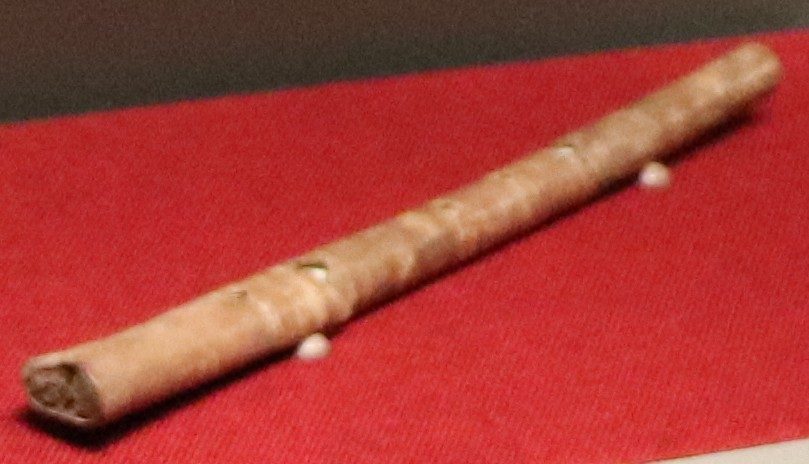
Jiahu also yielded sixteen tortoiseshells bearing incised marks , the Jiahu symbols, dated to around 6,600 BCE. Compared by some researchers to early Chinese characters, they remain controversial but point to a symbolic life of unexpected sophistication for the early Neolithic.
Yangshao culture: the golden age of painted pottery (5,000 , 3,000 BCE)
Yangshao is the great Neolithic culture of the Yellow River basin, first identified in 1921 by Johan Gunnar Andersson. Spanning more than two millennia, it is famous above all for its painted pottery: hand-built vessels decorated with geometric motifs (spirals, diamonds, flowing lines) and figurative imagery (fish, human faces, birds, frogs) painted in black, red and white before firing. These decorations reach a level of refinement that led early archaeologists to call Yangshao the "painted-pottery culture".
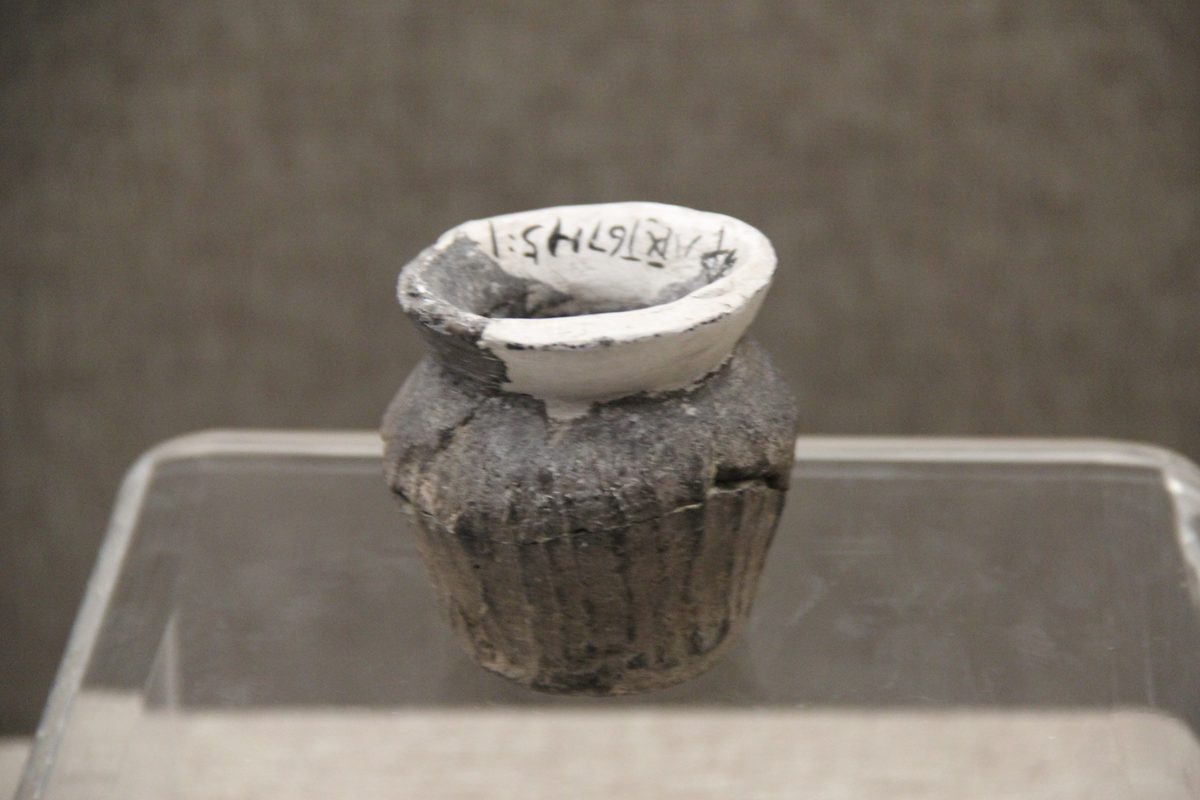
Yangshao villages were large , some covering several hectares with hundreds of semi-subterranean dwellings , and organised around a deep ditch, a communal building and a cemetery set apart from the living space, all reflecting a complex social organisation. The famous Banpo site near Xi'an, Shaanxi, partly open to visitors since 1958, provides the clearest picture: at least two cultural layers separated by episodes of slash-and-burn cultivation, with storage pits for millet seeds, a central meeting house and differential burialBurialThe intentional deposition of a body, sometimes with offerings; a marker of symbolic behaviour.→ practices.
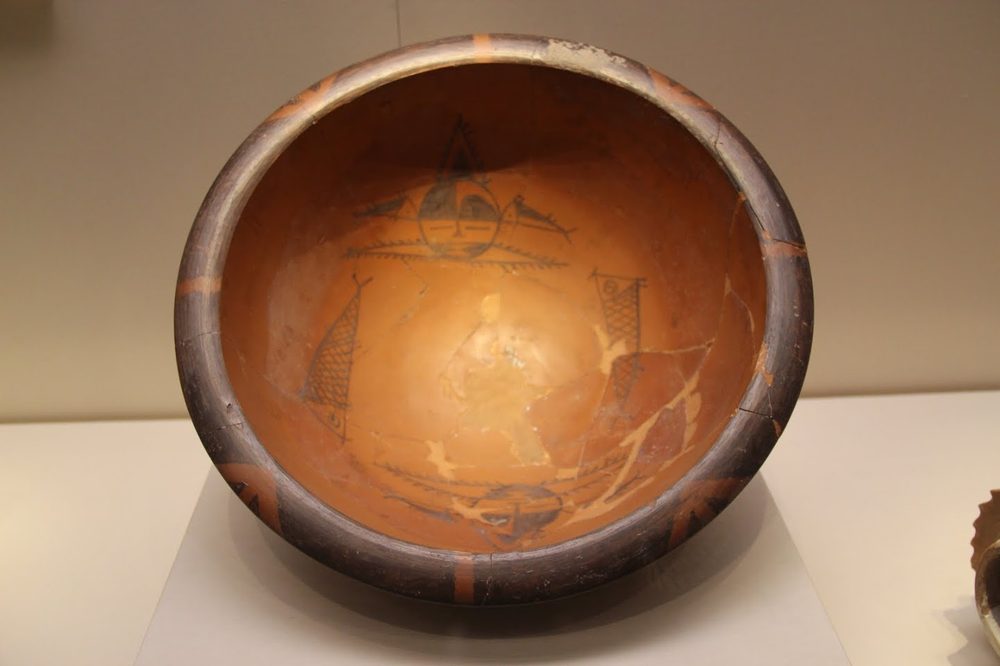
Around 3,000 BCE, Yangshao communities in the Central Plains came into progressive contact , and competition , with the emerging Longshan culture. The long golden age of painted pottery gave way to a new world of rammed-earth walls, specialised craft production and growing social inequality, as the prehistoric village slowly transformed into the proto-state.
Longshan culture: towards states and warfare (3,000 , 2,000 BCE)
Succeeding Yangshao, the Longshan culture represents the late Neolithic across the Central Plains and several peripheral regions. Its defining achievement is its wheel-thrown black pottery, fired in reducing kilns to a lustrous black: some vessels , the famous "eggshell ware" , have walls as thin as 0.2 millimetres, a technical feat without parallel in the contemporary Neolithic world. These delicate objects were almost certainly prestige items reserved for ritual use or the elite.
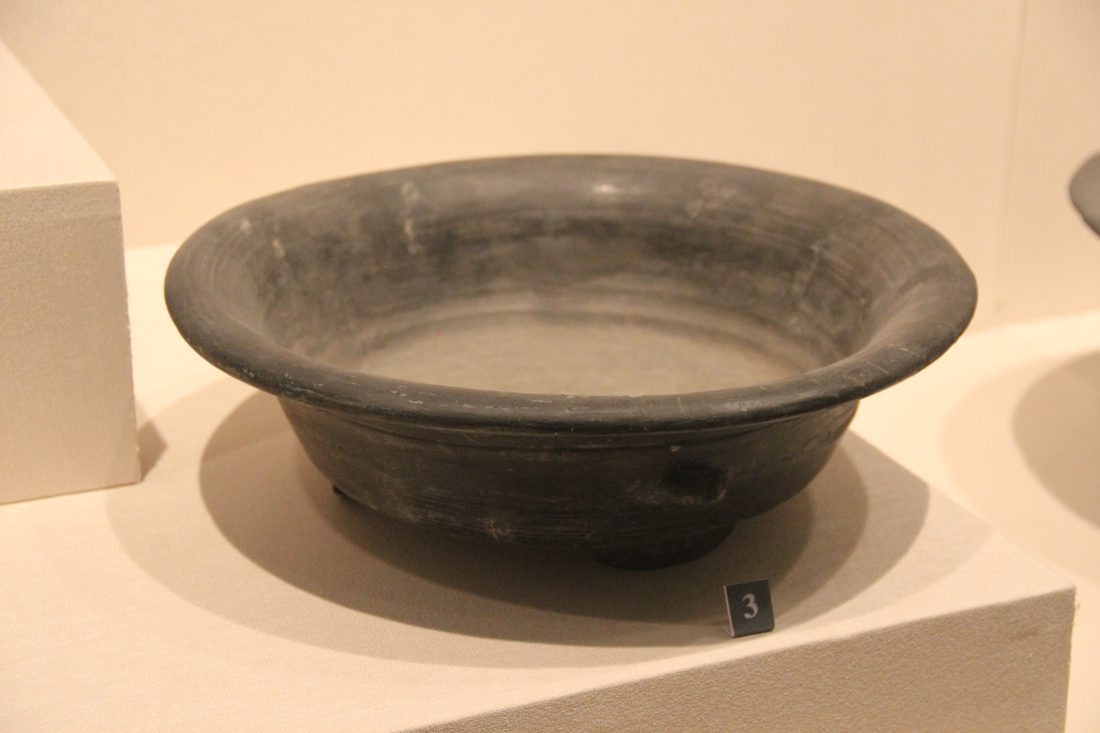
Beyond ceramics, Longshan is marked by deep social transformations: rammed-earth village walls testifying to inter-community warfare, mass graves of probable massacre victims, the first systematic scapulimancy (heating animal bones to read cracks as oracular messages , a direct ancestor of the Shang oracle bones), and funerary differentiation reflecting growing social stratification. Longshan communities stand on the threshold of the first Chinese states.
The jade cultures: Hongshan and Liangzhu (3,500 , 2,000 BCE)
Contemporaneous with the late Neolithic, the jade cultures represent some of the most remarkable achievements of Chinese prehistory. The Hongshan culture (4,700, 2,900 BCE, Inner Mongolia and Liaoning) is famous for its pig-dragon (zhulong) jade amulets and its large ritual enclosures such as Niuheliang, with altars, burial mounds and clay goddess figurines , evidence of a proto-priestly specialist class in a sharply hierarchical society. The Liangzhu culture (3,400, 2,000 BCE, Yangtze delta) produced technically astonishing jade objects: bi discs , flat, annular, polished on both faces , and cong tubes , rectangular prisms with cylindrical inner canals, decorated with taotie masks. Some cong are 30 centimetres tall, representing hundreds of hours of abrasive work on nephrite that can only be shaped with corundum sand.
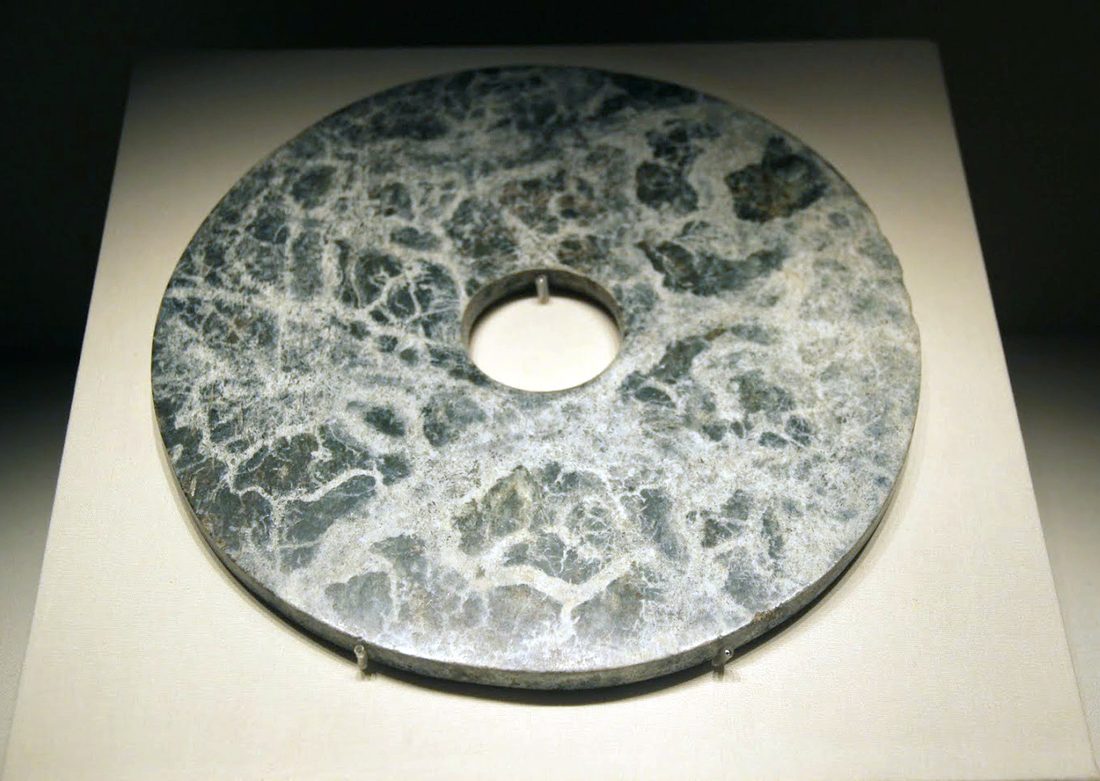
The discovery of the walled city of Liangzhu (near Hangzhou), inscribed on the UNESCO World Heritage List in 2019, with its 2.9 km² interior, hydraulic control system and massive warehouses, overturned the monocentric model that had made the Central Plains the sole cradle of Chinese civilisation. Liangzhu was a genuine Neolithic metropolis rivalling the earliest cities of Mesopotamia in sophistication.
Sanxingdui: a civilisation out of place (1,700 , 1,100 BCE)
In 1986, two ritual pits discovered near Guanghan, Sichuan, upended all existing conceptions of Bronze AgeBronze AgeA protohistoric period following the Neolithic, defined by bronze metallurgy (a copper-tin alloy) and the rise of the first cities and states; in Egypt it corresponds to the age of the first pyramids.→ China's cultural diversity. The hundreds of bronzes, elephant ivories, cowrie shells and jade discs found inside resemble nothing from contemporary China , not the Shang bronzes of the Central Plains, not any known stylistic tradition. They belong to Sanxingdui, a civilisation flourishing between 1,700 and 1,100 BCE, contemporary with the Shang dynasty.
The centrepieces are bronze masks and statues with protruding cylindrical eyes, flared ears, prominent noses and frozen smiles , nothing like anything in ancient Chinese art. The most famous piece, a standing figure on a bronze pedestal, stands 2.62 metres tall. The Sanxingdui bronze-casters mastered lost-wax casting of extraordinary complexity, producing multi-piece assembled works of dimensions that exceeded anything contemporary.
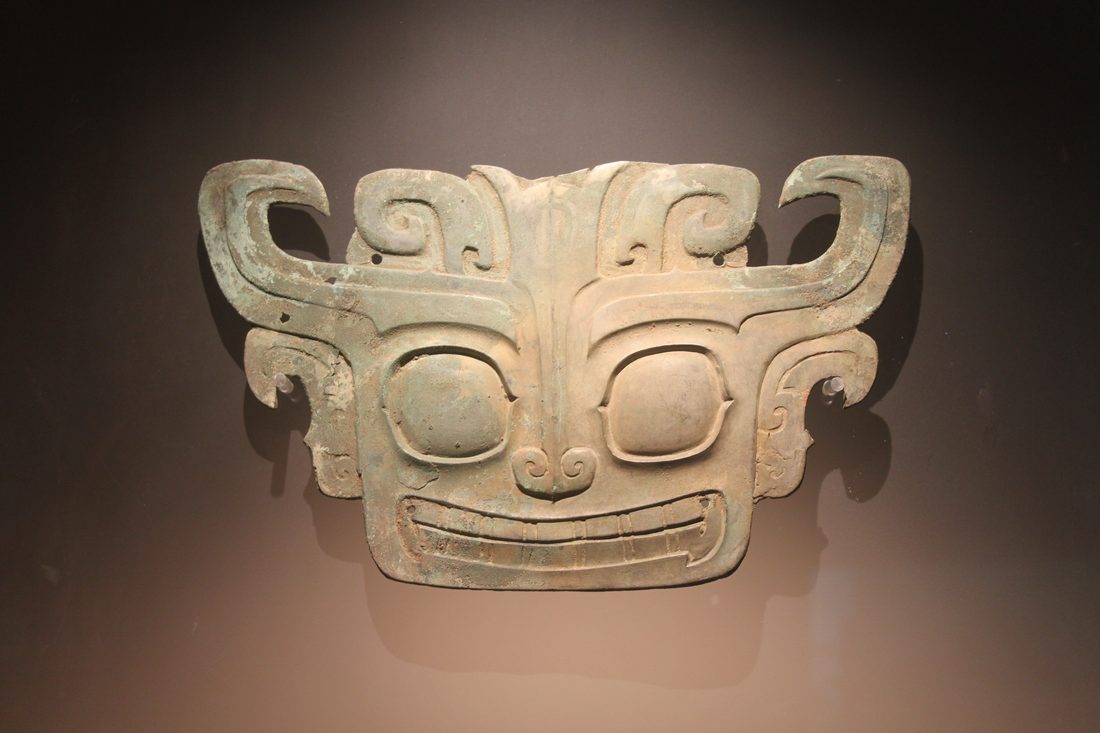
Recent excavations (2020, 2022) in additional ritual pits have confirmed and extended this singularity, yielding gold objects, ivory, silk proteins and bronzes blending Sanxingdui and Shang stylistic elements , evidence of contact between the two cultures. WritingWritingA system of conventional signs used to fix language or information durably; its appearance (c. 3300 BC) marks, by convention, the end of prehistory.→ has not been found at Sanxingdui, leaving language and ethnic identity open questions. Some scholars associate its people with the legendary ancestors of the Shu polity, one of Sichuan's historical principalities. Whatever the answer, Sanxingdui embodies the central lesson of Chinese prehistory: the country was never a single unified hearth but a kaleidoscope of cultures, technologies and visions of the world.
The Shang civilisation and oracle bones (1,600 , 1,046 BCE)
The transition from prehistory to history in China is gradual. The Erlitou culture (c. 1,900, 1,500 BCE), with its palatial site in Henan, is often presented as the beginning of the Chinese Bronze Age and perhaps the capital of an early dynastic entity corresponding to the legendary Xia dynasty. The Erligang culture (c. 1,600, 1,400 BCE) around Zhengzhou marks the early apogee of Shang civilisation, producing ritual bronzes , ding tripods, jue wine vessels, nao bells , of unprecedented decorative complexity, with the first occurrences of the taotie face that would dominate Shang iconography.
At Yinxu near Anyang, the last Shang capital occupied from the 14th to the 11th century BCE, the border between prehistory and history is crossed most dramatically through the discovery of approximately 150,000 oracle bone fragments bearing over 5,000 distinct characters, about 1,700 of them deciphered. The royal diviners inscribed questions on ox scapulae or turtle plastrons, applied heat to crack the bone, interpreted the fissures as divine answers, then engraved the response and sometimes the later verified outcome.
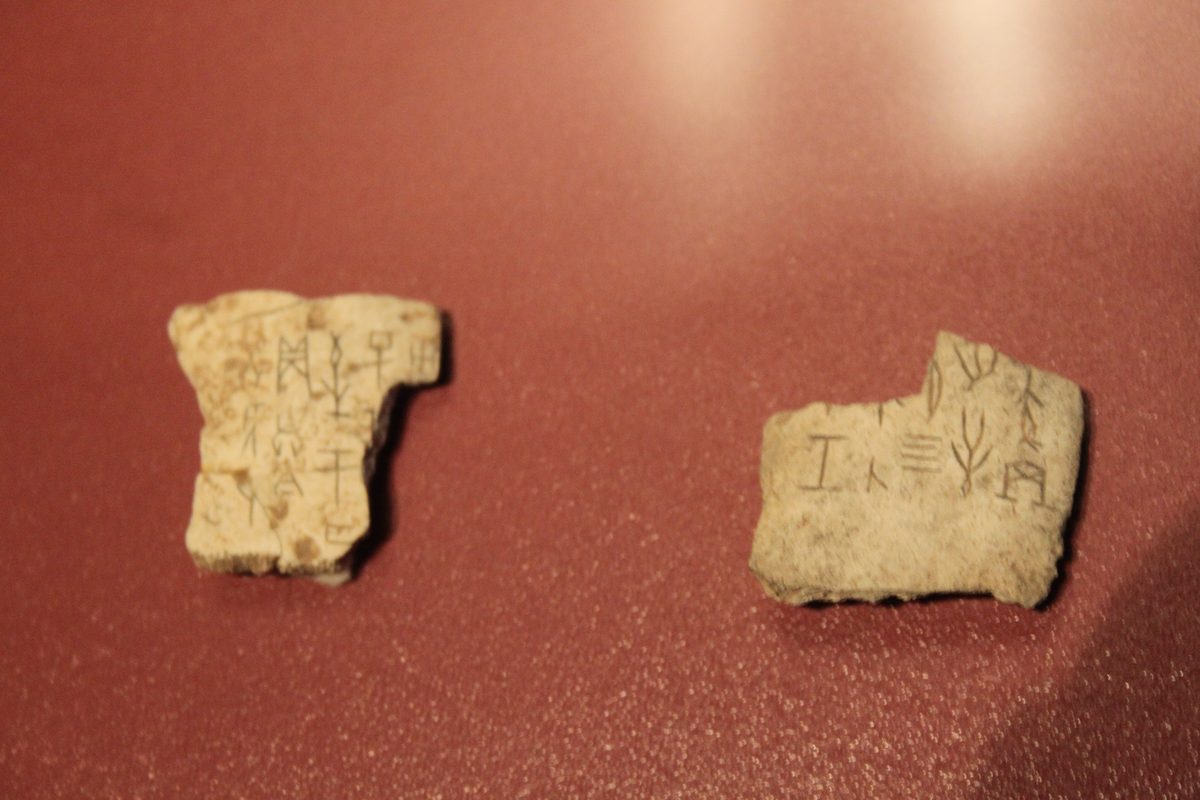
These texts , dealing with hunting, warfare, sacrifice, weather and the king's health , open a unique window onto a second-millennium BCE royal court and demonstrate conclusively that classical Chinese writing descended directly from this oracular script. In the span of a few generations, the scratches on a heated bone became the characters that hundreds of millions of people write today.
Conclusion: China, crossroads and source
The prehistory of China is both a two-million-year adventure and a perpetually unfolding investigation. From Peking Man domesticating fire in his Zhoukoudian caves 400,000 years ago to the bronze-casters of Sanxingdui whose bulging-eyed masks still resist classification, by way of Yangshao potters, Jiahu flute players and Liangzhu jade artisans, this territory engendered a succession of cultures of extraordinary richness and diversity , a match for any of the world's better-known civilisational hearths. One of the great lessons of Chinese prehistory is how thoroughly it overthrows the monocentric model: China was never a single unified hearth but a kaleidoscope of interacting regional cultures, technologies and worldviews. As genetics, multi-method dating and climateClimateThe long-term average atmospheric conditions of a region; its variations (glaciations, aridifications) shaped migrations, agriculture and the collapse of prehistoric societies.→ modelling improve, and as excavations reach yet-unexplored corners, answers multiply , and so do the questions. That, perhaps, is prehistory's most enduring gift.
J'ai commencé à noter les sites mentionnés dans vos articles pour les visiter. La liste s'allonge !
Je connais tres peu la préhistoire de la Chine et cet article m'a vraiment ouvert les yeux. On parle toujours de la préhistoire européenne ou africaine mais la Chine a ses propres sites remarquables depuis des millions d'années. Les découvertes récentes de Homo longi et d'autres nouvelles espèces montrent que l'Asie a été un laboratoire de l'évolution humaine au meme titre que l'Afrique.
La préhistoire de la Chine est un domaine en pleine expansion qui remet en question bien des certitudes établies en Occident. Les découvertes de restes humains archaïques comme Dali ou Maba, difficiles à classer dans les catégories habituelles, suggèrent une évolution humaine en Asie orientale avec des particularités propres. La question du modèle multirégional versus Out of Africa se pose différemment en Chine.