Seven million years ago, on the African continent, something changed. A primate unlike any other began to walk differently. Its neck straightened, its foramen magnumForamen magnumThe opening at the base of the skull through which the spinal cord connects to the brain. Its position (rear → forward) is a bipedalism indicator: placed beneath the skull in bipeds, at the rear in quadrupeds.→ shifted forward, its lower limbs began to lengthen. It was not yet a human, not yet an australopith. Not even a Homo. It was something older, more mysterious: an early homininHomininMember of the subtribe Hominina, comprising the human lineage (Homo, Australopithecus, Paranthropus…) but excluding orangutans and gibbons. The term progressively replaces "hominid" in its narrow sense.→, a creature at the boundary between our lineage and that of the African great apesgreat apesThe family of great apes (Hominidae) comprising orangutans, gorillas, chimpanzees, bonobos and humans.→.
These earliest hominins, as palaeoanthropologists call them, long remained a terra incognita of prehistoryPrehistoryThe span of human history before the invention of writing, from the Palaeolithic to the Metal Ages, known mainly through material remains.→. Without fossils, the period between 8 and 4 million years ago was a black box in our family tree. Then, between 1994 and 2002, a series of extraordinary discoveries in Chad, Kenya and Ethiopia overturned our understanding of our most distant origins. Those discoveries have names: Sahelanthropus tchadensis, Orrorin tugenensis, Ardipithecus kadabba and Ardipithecus ramidus. Four species, four pieces of the origins puzzle, which together sketch the still blurry portrait of our most ancient ancestors.
This dossier takes you on a journey through this pivotal period of human evolution. A journey that begins before the savanna, before stone tools, before fire and before language. A journey to the heart of that moment when, for the first time in the history of life on Earth, a primate raised its eyes to the horizon and began to walk upright.
The world of the earliest hominins: the late Miocene
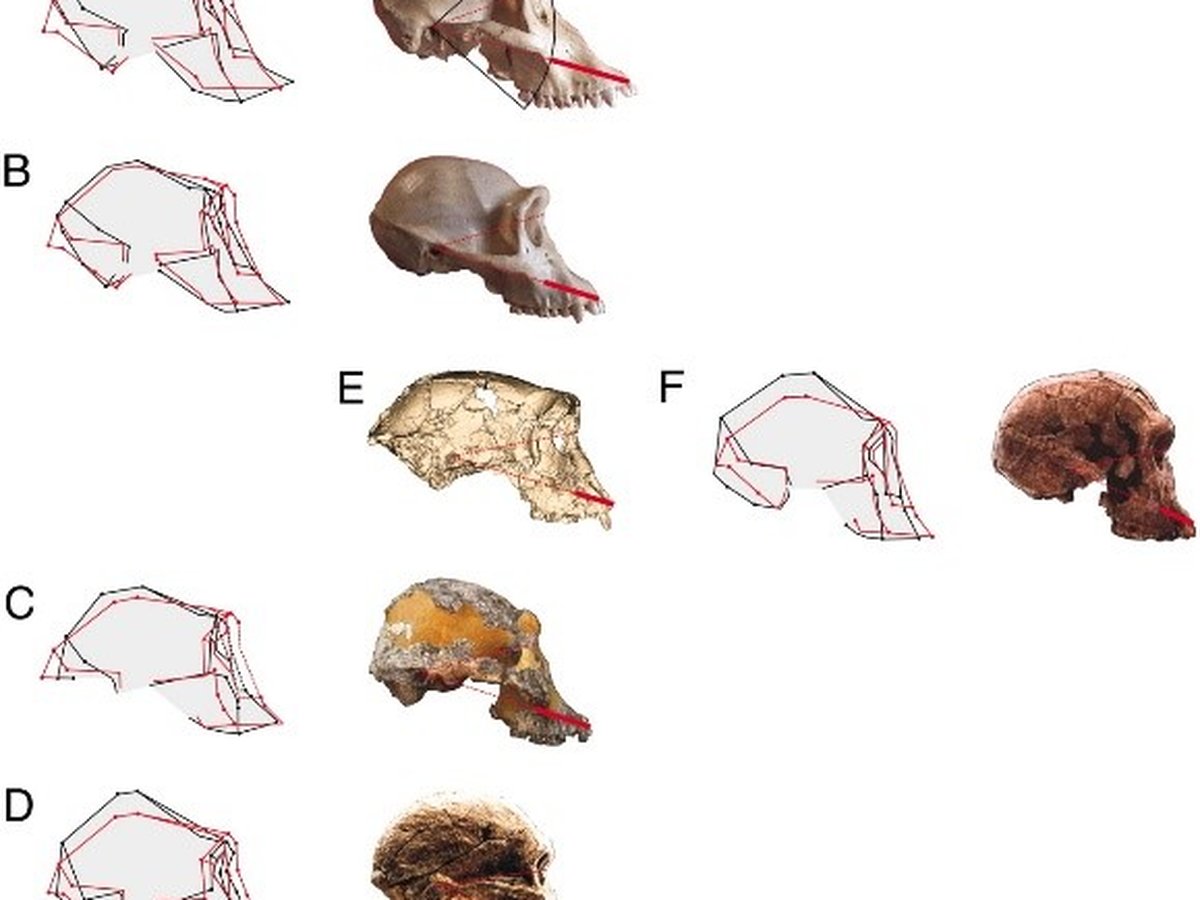
To understand the earliest hominins, we must start with their world. Between 10 and 5 million years ago, Earth was in its late Miocene phase, a period of progressive cooling following the mid-Miocene climatic optimum around 14 Ma. The Antarctic ice sheet thickened, sea levels dropped and the climateClimateThe long-term average atmospheric conditions of a region; its variations (glaciations, aridifications) shaped migrations, agriculture and the collapse of prehistoric societies.→ of East AfricaAfricaThe cradle of humankind: the continent where the first hominins appeared, then Homo sapiens around 300,000 years ago, before the expansion to the rest of the world.→ became more seasonal and more variable. The great equatorial forests slowly retreated, giving way to mosaics of gallery forests, woodland patches and more open zones. It was in these shifting landscapes that hominins would emerge.
East Africa was at this time the theatre of one of the great geological revolutions of our planet's history: the formation of the Great Rift Valley. This gigantic geological scar, running from Mozambique to Ethiopia over more than 6,000 kilometres, created sunken valleys, deep lakes and, crucially, particular climatic conditions that favoured species diversification. The Rift region is today considered the "cradle of humanity" partly because its geological conditions favoured fossil preservation, but we should bear in mind that our ancestors were probably far more widely distributed across the entire African continent.
The great question of this period is that of the divergence between hominins and panins (the chimpanzee lineage). DNADNAThe molecule carrying genetic information, used to reconstruct kinship between species.→ studies today allow us to estimate this divergence at between 5 and 8 million years ago, with most molecular analyses pointing to 6 to 7 Ma. This is precisely the period in which the oldest known hominin fossils are found. But bear in mind: finding the fossil of the common ancestor of humans and chimpanzees is probably illusory. What palaeoanthropologists seek is to document the diversification of forms within the hominin lineage after the divergence from panins.
Reconstructing this ancient world calls on a multitude of disciplines. Sedimentology helps understand depositional environments (river, lake, dune). Palynology analyses pollen trapped in sediments to reconstruct ancient vegetation. Carbon-13 isotope geochemistry from fossil teeth distinguishes species that fed mainly on C3 plants (forests) versus C4 grasses (savanna). Palaeontology of associated faunas (rodents, ungulates, carnivores) provides clues about the environment and the age of the deposit by comparison with already-dated faunas elsewhere. It is by cross-referencing all these sources of information that palaeoanthropologists manage to reconstruct the world in which our oldest ancestors lived.
It is important to emphasise the extraordinary difficulty of this endeavour. Primate fossils are rare, for several reasons. Primates are forest or forest-edge animals, and forested environments are poorly suited to fossilisation: bodies decompose rapidly without being covered by sediment. Moreover, primates have more fragile skeletons than large herbivores. Finally, the tropical and subtropical zones where early hominins lived are often covered by dense vegetation that makes prospecting difficult. For all these reasons, every discovery of an early hominin fossil is a major scientific event.
Sahelanthropus tchadensis: Toumai, hope of life
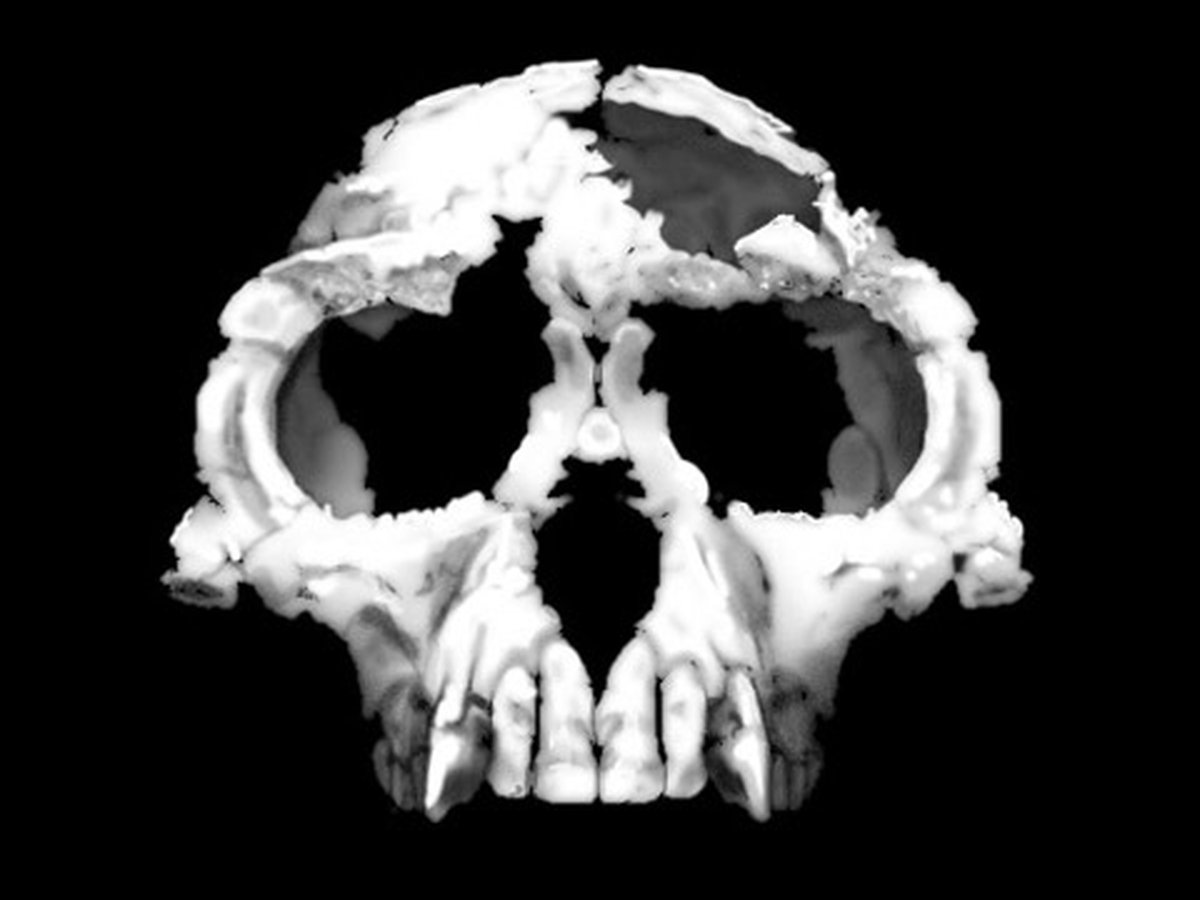
On 19 July 2001, a Franco-Chadian team led by palaeontologist Michel Brunet of the University of Poitiers made an extraordinary discovery in the Djurab Desert of northern Chad. About 2,500 kilometres west of the African Rift, in sediments dated between 6 and 7 million years old, the team unearthed an almost complete skull, along with jaw fragments and isolated teeth. This specimen, catalogued as TM 266-01-060-1, was given the scientific name Sahelanthropus tchadensis, "the man of the Sahel from Chad". But it is his nickname that entered history: Toumai, meaning "hope of life" in the local Goran language.
Publication of the results in July 2002 in the journal Nature[1] sent shockwaves through the international scientific community. The age of the fossil, estimated at between 6 and 7 Ma by biochronology of the associated fauna, made it the oldest known hominin at the time. But it is Toumai's anatomy that is most surprising: while its brain is chimpanzee-sized (320 to 380 cm3), its face is relatively flat, its premolars are small and its foramen magnum appears positioned more towards the front than in a quadrupedal ape, suggesting a more vertical body posture. Prominent brow ridges (supraorbital arches), however, recall those of great apes.
The discovery of Toumai immediately raised a fundamental question: where does it fit in the phylogenetic tree? Brunet and colleagues interpret it as a basal hominin, a representative of the human lineage shortly after its divergence from chimpanzees. Others, including Milford Wolpoff of the University of Michigan, argue Toumai could be a female ancestral gorilla or a non-hominin ape. The position of the foramen magnum, which is the principal argument for bipedality, can indeed be influenced by post-mortem deformation of the skull, and 3D analyses are needed to evaluate it precisely.
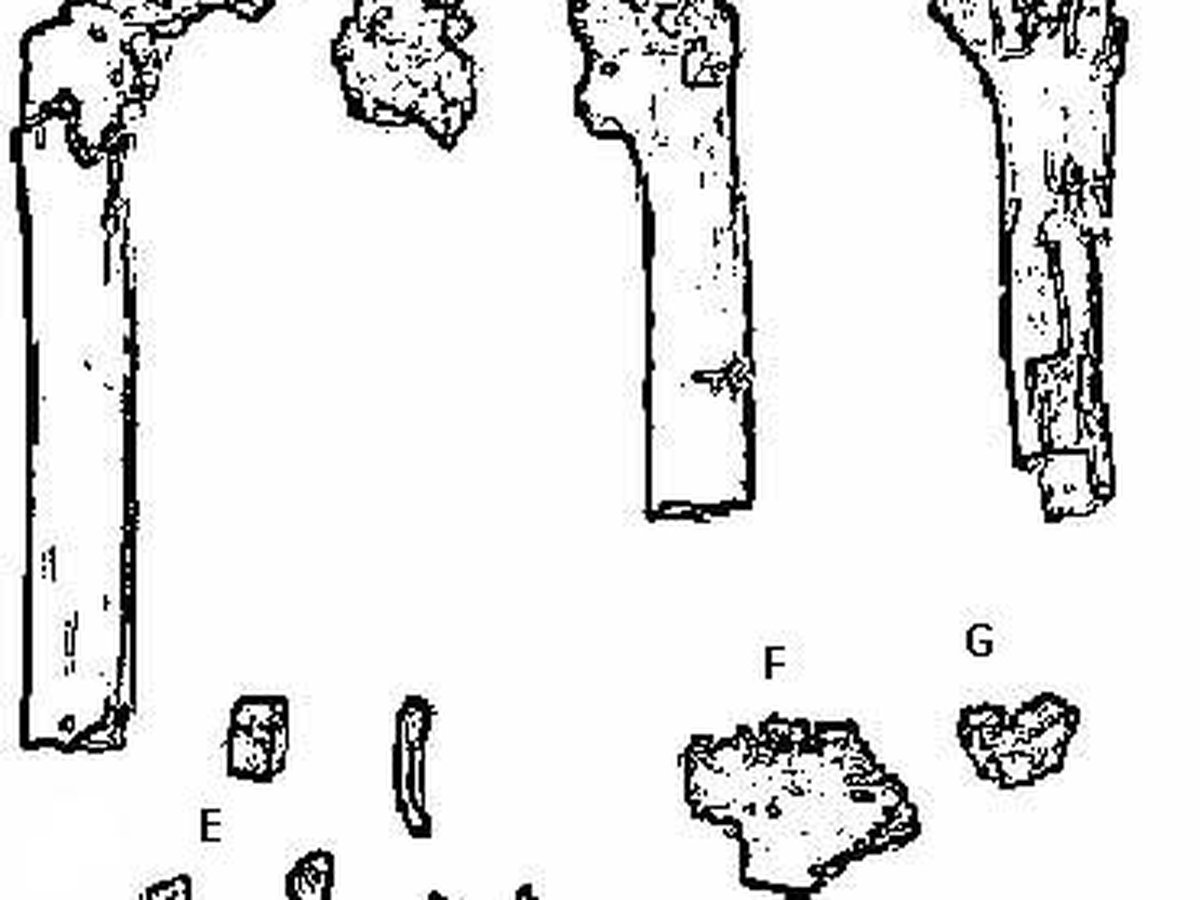
In 2022, a significant advance was made by Franck Guy, Aude Bergeret-Medina and their colleagues, who published the analysis of a thigh bone (femur) from the same site. This femur, catalogued TM 266-02-154-1, had been stored in a collection without being identified as such for years. Its morphological study reveals characteristics compatible with bipedal walking: a relatively large femoral head, a curved neck and general proportions that differ from those of modern quadrupedal great apes. These results, published in Nature, constitute an additional strong argument in favour of interpreting Sahelanthropus as a bipedal hominin. Critical voices, however, consider these conclusions insufficiently demonstrated.
What is beyond doubt is Toumai's geographic position: Chad, far to the west of the usual African fossil belt. This discovery definitively demolished the "East Side Story" hypothesis proposed by Yves Coppens in the 1980s, which held that hominin emergence was confined to east of the African Rift. Early hominins were probably distributed across a far broader territory, from the Atlantic to the Rift. The Chad region, which today hosts Lake Chad and the Sahara Desert, was 7 million years ago a radically different landscape, with an extensive intertropical lake known as "Palaeo-Lake Chad" and wooded savannas supporting a diverse and abundant fauna.
Orrorin tugenensis: the Millennium Man
In October 2000, as the world prepared to celebrate the new millennium, a Franco-Kenyan team led by Brigitte Senut of the National Museum of Natural History in Paris and Martin Pickford of the College de France made a discovery that would also rewrite prehistory textbooks. In the Tugen Hills of Baringo County, Kenya, in sediments dated to 6 million years ago (Late Miocene, Lukeino Formation), the team unearthed a dozen fossils from a single type of primate: teeth, jaw fragments and, crucially, pieces of femur and humerus. The species was named Orrorin tugenensis, with "orrorin" meaning "original man" in the local Nandi language.
Publication in the Comptes rendus de l'Academie des sciences in 2001[2] presented Orrorin as a serious candidate for the oldest human ancestor. The key reason: the femur fragment, catalogued BAR 1002'00, has a large, spherical femoral head with an elongated, curved femoral neck whose morphology more closely resembles early Homo than australopiths. Senut and colleagues concluded that Orrorin walked upright, bipedally, 6 million years ago.
This interpretation is contested by other specialists, including William Harcourt-Smith of New York University. According to their analyses, the femoral morphology of Orrorin does not necessarily imply bipedality comparable to that of modern humans, and could simply reflect adaptation to arboreal locomotion. The size and shape of the femoral head can vary considerably in primates depending on their locomotor regime, and drawing definitive conclusions from a single bone fragment is methodologically risky. The debate remains unresolved between those who support an ancient bipedality (going back at least 6 Ma) and those who consider that fully hominin bipedality is only demonstrable from australopiths onwards.
Orrorin's teeth provide another important data point: the molars are relatively small with thick enamel, which contrasts with the large thick-enamelled molars of later australopiths. This characteristic is more reminiscent of early Homo and led Senut and Pickford to propose that Orrorin is more closely related to the direct human lineage than the australopiths, which would then represent a lateral evolutionary branch. This "A. afarensis is a dead end" hypothesis remains a minority view in the scientific community, which sees australopiths as direct ancestors of Homo, but it illustrates the complexity of phylogenetic relationships between these ancient species and the difficulty of tracing their outlines from fragmentary fossils.
Ardipithecus kadabba: the Ethiopian transition
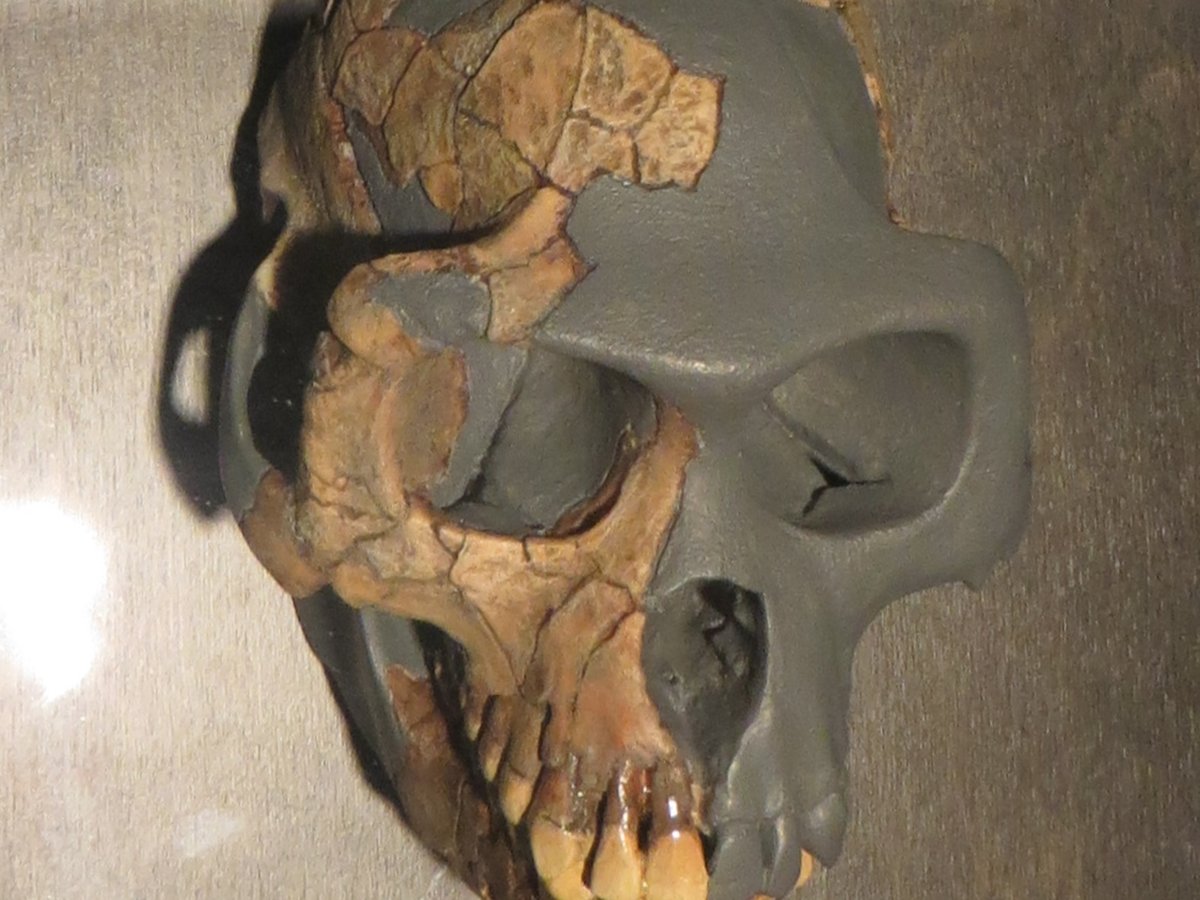
Between Orrorin (6 Ma) and Ardipithecus ramidus (4.4 Ma), the hominin lineage features another representative still little known to the general public: Ardipithecus kadabba. Discovered in the Middle Awash region of Ethiopia, this specimen is represented by fragmentary fossils dated to between 5.8 and 5.2 million years ago. Its name comes from the Afar word "kadabba", meaning "founding ancestor of the family" or "family patriarch".
Ardipithecus kadabba was first described in 2001 by Yohannes Haile-Selassie of the University of Berkeley as a subspecies of Ardipithecus ramidus (A. ramidus kadabba), before being elevated to species status in 2004. The distinction rests notably on the morphology of a toe bone (proximal phalanx) whose shape suggests a function in bipedal propulsion, and on differences in dental morphology: kadabba's molar enamel is thinner than ramidus's and the wear pattern differs.
A. kadabba fossils are few in number and poorly preserved, making robust behavioural interpretations difficult. About 11 specimens are known: jaw fragments, teeth, a proximal humerus, a toe phalanx and a few other postcranial bones. The Middle Awash region where they were found is also where A. ramidus fossils were discovered, suggesting a geographic and perhaps evolutionary continuity between the two species. A. kadabba likely represents an intermediate stage between older species (Sahelanthropus, Orrorin) and the better-documented later ardipithecines.
The Middle Awash region is one of the richest areas in the world for ancient primate fossils. It is also where specimens of Australopithecus anamensis, A. afarensis and early Homo have been discovered. The geographic continuity of these finds in the same region of Ethiopia over nearly 6 million years of evolutionary history has led some researchers to propose a direct local evolutionary sequence: Ardipithecus kadabba to Ardipithecus ramidus to Australopithecus anamensis to Australopithecus afarensis. This hypothesis of "in situ" evolution in the Middle Awash is attractive but unproven, and palaeontologists are generally cautious about phylogenetic conclusions drawn from a single geographic area.
Ardipithecus ramidus: Ardi, the 1994 revelation
If Toumai revolutionised our view of human origins through its antiquity, it is Ardipithecus ramidus that may have brought the most profound scientific revolution in palaeoanthropologyPalaeoanthropologyThe science that studies human evolution from the fossil remains of hominins (bones, teeth, footprints) and their context, to reconstruct our biological origins.→ of the past three decades. The reason: the discovery in 1994 in the Afar region of Ethiopia of an exceptional partial skeleton nicknamed "Ardi", which represents the best-documented ancient hominin before Lucy (Australopithecus afarensis, 3.2 Ma).
The story begins in 1992, when teeth and fragmentary bones were found in sediments of the Sagantole Formation, dated to approximately 4.4 million years. But it is in 1994 that Tim White's team from the University of California Berkeley and Ethiopian colleague Berhane Asfaw unearthed ARA-VP-6/500, the specimen that would become known as Ardi. This incomplete but exceptionally rich skeleton includes skull bones, teeth, arms, hands, part of the pelvis, legs and feet. Yet it took 15 years of painstaking preparation and analysis before results were published, in October 2009, in a special issue of the journal Science[3] comprising 11 separate articles and more than 40 authors.
Ardi's revelations were multiple and often counterintuitive. First, Ardi lived in a dense forested environment, not in open savanna, contradicting the classic hypothesis that bipedality evolved as an adaptation to walking in open terrain. Second, Ardi possesses a unique foot anatomy: an opposable big toe (as in modern great apes, enabling branch grasping) combined with stiffened foot bones enabling bipedal propulsion on the ground. This is neither a chimpanzee foot nor a human foot, but something unprecedented in the fossil record.
Third, and perhaps most surprising: Ardi's pelvis shows partial adaptations for bipedality (notably the shape of the iliac bone), while retaining features enabling efficient arboreal climbing. Ardi was not an occasional awkward biped, nor an incompetent ground climber: it was a creature perfectly adapted to two distinct locomotor modes, terrestrial bipedality and arboreal climbing. This dual capacity challenges us to rethink what we mean by "bipedal" and to abandon any notion that bipedality was an all-or-nothing transition.
Fourth, and this is a fundamental challenge to our representations: Ardi's morphology suggests that the last common ancestor between humans and chimpanzees probably did not resemble a modern chimpanzee. Modern chimpanzees, with their knuckle-walking gait on their forelimbs, are themselves the product of a long specialised evolution. Ardi, more primitive than australopiths but already a hominin, does not walk on its knuckles: this characteristic of modern African great apes is probably a recent evolutionary acquisition, possibly even convergent in gorillas and chimpanzees, meaning that it evolved independently in both lineages rather than being inherited from a common ancestor.
Fifth, the male canines of A. ramidus are significantly smaller than in modern great apes, which led Owen Lovejoy and colleagues to interpret this trait as a sign of reduced intrasexual competition between males, possibly linked to a social restructuring towards greater monogamy or food sharing. This interpretation, which links bipedality and social changes, is attractive but remains controversial within the scientific community.
Bipedality above all: the great mystery of human evolution
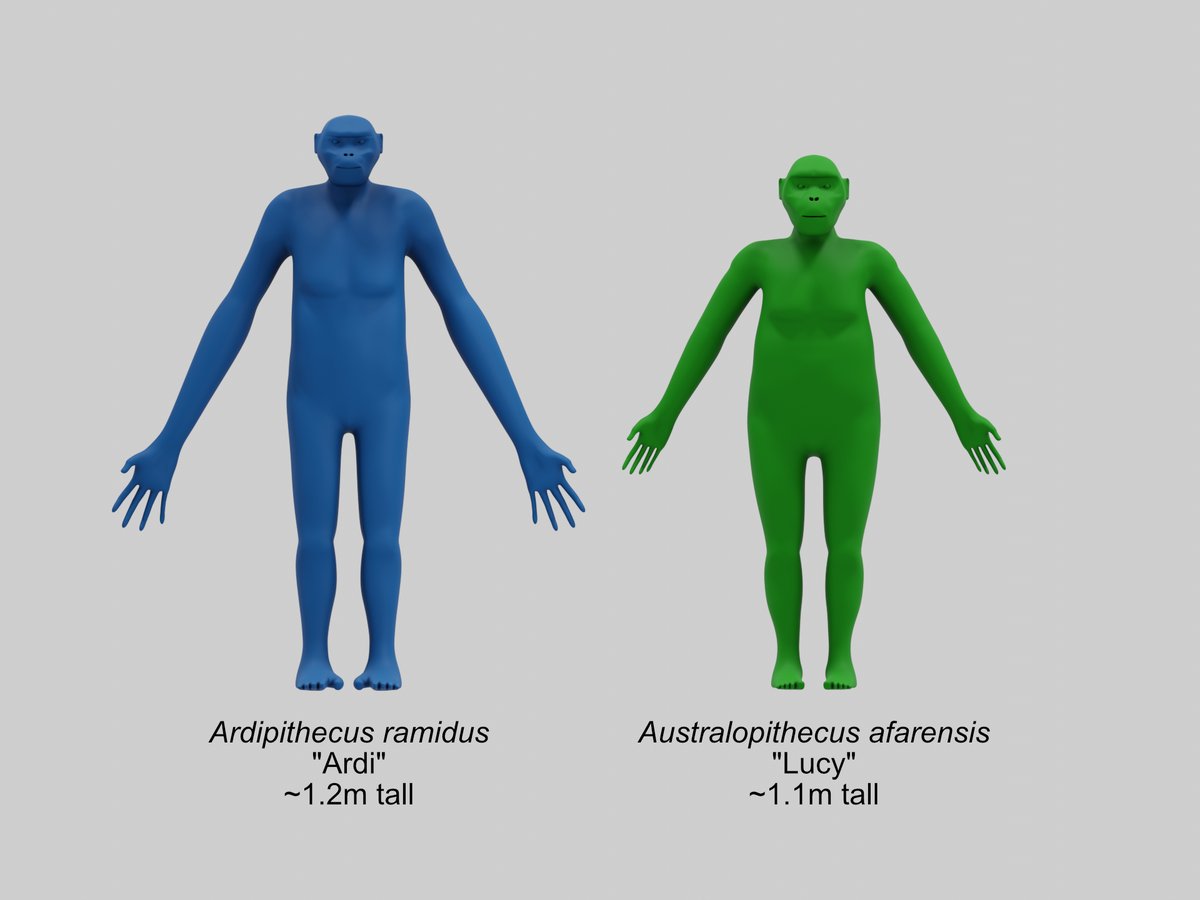
One of the great questions raised by the study of earliest hominins is that of the origin of bipedality. Why would an arboreal primate have begun walking on its two hind limbs? Proposed answers have evolved considerably as new discoveries have been made over the past three decades.
The classic "savanna theory" proposed that bipedality evolved as an adaptation to life in open terrain: upright on two legs, the primate could see over tall grass, have its hands free to carry food and reduce its body surface exposed to the midday sun. This theory was undermined, first by the discovery that Lucy herself lived in forested environments, then more decisively by Ardi living in dense forest. The environments of the earliest hominins were simply not the open savannas this hypothesis requires.
Several alternative theories have been proposed. One of the most debated is that of Owen Lovejoy, co-author of the 2009 Ardi papers in Science[4]. According to Lovejoy, bipedality evolved in a social context: a bipedal male could carry food with his free hands, enabling him to provision a female in exchange for sexual fidelity. This "provisioning hypothesis" implies the emergence of social monogamy, which would be corroborated by the reduction of male canines in early hominins (males' canines are smaller in Ardi than in great apes, suggesting reduced intrasexual competition among males).
Other researchers propose that bipedality originated in the trees rather than on the ground. According to David Thorpe of the University of Birmingham and colleagues, orang-utans living in the Sumatran forest understory regularly walk on their hind limbs while holding branches for balance. This "arboreal bipedality" could be the ancestral state from which terrestrial bipedality evolved, without passing through an intermediate phase of knuckle-walking. Ardi's morphology, which can walk bipedally while also climbing trees, would be perfectly compatible with this hypothesis.
A third class of hypotheses links the origin of bipedality to thermoregulation. In a bipedal position, less body surface is exposed to the midday equatorial sun, reducing thermal load. Furthermore, the head is higher and therefore better cooled by the fresher breezes that blow at human height. These thermoregulatory advantages could have favoured bipedality in transition zones between forest and more open terrain, where thermoregulation becomes critical. The relevance of this hypothesis for the earliest forested hominins (like Ardi) remains limited, however.
What is certain is that bipedality predates the first stone tools by at least 3 to 4 million years. It did not therefore evolve to free the hands for toolmaking, as was long claimed. Bipedality is the first major anatomical specialisation of the human lineage, preceding by far all the other behavioural innovations that would eventually make us human. Understanding why it arose remains one of the most fascinating open questions in all of science.
The environment of earliest hominins: neither savanna nor jungle
Reconstructing the environments in which the earliest hominins lived is a science in itself, drawing on sedimentology, palynology (the study of fossil pollen), palaeobotany, associated fauna and isotope geochemistry. The results are often surprising and challenge received ideas about the "cradle of humanity".
Toumai lived in a region that is today desert (the Djurab), but which 7 million years ago was a landscape of lakes, gallery forests and more open areas. The fauna associated with his remains includes crocodiles, fish, hippopotamuses and herbivores indicating proximity to a large water body and abundant vegetation. Isotopic analyses of teeth from bovids and other herbivores from the same deposit show that the local vegetation was largely of C3 type (trees and shrubs in closed to semi-open environments), with a variable proportion of C4 grasses (savanna). It is not open savanna, but neither is it dense equatorial forest.
Orrorin lived in a similar mosaic landscape of gallery forests and more open zones in the Kenyan Rift Valley. The Tugen Hills fauna (6 Ma) includes elephants, rhinoceroses, suids (warthog ancestors), primates such as Parapapio and carnivores. The presence of colobines (arboreal monkeys) indicates a forest component, while that of certain antelopes suggests more open zones. It is a mosaic environment, with wooded and more open zones succeeding each other in a complex landscape.
Ardi (4.4 Ma) lived in the Middle Awash in Ethiopia in a forested environment with fig-like trees and palms, grasses indicating more open patches and a fauna including colobine monkeys, coucals, forest birds and kudus. This environment is significantly more forested than most environments associated with later australopiths, confirming that bipedality was not born in the savanna.
This contrast between the environments of the earliest hominins (forested to semi-open) and the major sites of later australopiths (more open) suggests that the expansion of bipedality and the hominin lineage accompanied the progression of drier, more open environments as the African climate dried during the PliocenePlioceneA geological epoch spanning roughly 5.3 to 2.6 million years ago, the last subdivision of the Neogene. It was during the Pliocene, in an East Africa undergoing cooling and forest fragmentation, that the first fully bipedal australopithecines such as Lucy (~3.2 Ma) evolved.→. But bipedality manifestly preceded this climatic transition by several million years, supporting the idea that it is not simply an adaptation to walking in open terrain.
Classification and phylogenetic debates
The exact place of these four species in the human family tree is the subject of ongoing debate among palaeoanthropologists. Several questions remain open and are the subject of legitimate scientific controversy.
First: are all these species truly hominins, belonging to the lineage leading to humans after the divergence from chimpanzees? The majority of specialists today consider Sahelanthropus, Orrorin and both Ardipithecus species to be hominins, on the basis of anatomical characteristics shared with later hominins (reduced canines, foramen magnum position, femur morphology for some) that are not found in modern great apes or their known fossil ancestors. A few dissenters maintain that Sahelanthropus could be an ancestral gorilla or an ape unaffiliated with the human lineage.
Second: which of these four candidates is the closest direct ancestor of the lineage that will lead to australopiths and ultimately to humans? Logically, Ardipithecus ramidus (4.4 Ma) is the most plausible candidate, being the most recent and anatomically best-documented of the four. Tim White and colleagues have proposed a direct evolutionary lineage: A. ramidus to A. anamensis to A. afarensis to Homo. This sequence is supported by geographic continuity of discoveries in the Middle Awash and by anatomical characteristics progressively modified from one species to the next.
However, the bushy nature of human evolution demands caution. For every fossil species we find, dozens probably exist that we have not found. Most fossil species we know are likely evolutionary dead ends rather than our direct ancestors: they belong to lateral branches that went extinct without descendants. The direct lineage from the human-chimpanzee common ancestor to Homo sapiensHomo sapiensThe present-day human species, which emerged in Africa around 300,000 years ago, the only surviving human lineage after the extinction of Neanderthals and Denisovans.→ is a long series of transformations of which we see only fragmentary snapshots.
The question of the human-chimpanzee common ancestor remains entirely open. This last common ancestor probably lived between 6 and 8 million years ago, but no fossil clearly identifiable as this common ancestor has been found. Sahelanthropus, with its 7 Ma age, is the chronologically closest candidate, but its very antiquity is double-edged: it is so old that it could predate the human-chimpanzee divergence, or so close to the divergence that it is difficult to determine whether it belongs to the human or panin lineage. A recent molecular analysis, published in 2023 in Science, refined the estimate of the human-chimpanzee divergence to 6.4 to 6.5 million years ago, which would place Sahelanthropus (6-7 Ma) at the very beginning of the post-divergence period, just after the separation of the two lineages.
Dating methods: biochronology and geochronology
How do we date fossils 4 to 7 million years old? The carbon-14 method, best known to the public, is completely unusable beyond 50,000 years. For such ancient fossils, palaeoanthropologists must resort to other techniques.
The most widely used method for Pliocene and Miocene fossils is potassium-argon (K-Ar) dating, or its improved version, argon-argon (Ar-Ar). This technique uses the radioactive decay of potassium-40 (K40) to argon-40 (Ar40), with a half-life of 1.25 billion years. It is applicable to volcanic rocks (lavas, volcanic tuffs) that form during volcanic eruptions and trap a known Ar40/Ar36 ratio at the moment of their formation. If a fossil is found between a volcanic tuffvolcanic tuffSoft, porous rock formed by the buildup and compaction of volcanic ash, easy to carve but hardening on contact with air.→ layer below and another above, its date can be bracketed by the dating of the two volcanic layers. This is what allowed the precise dating of fossils from the Middle Awash, Afar and Omo Valley in Ethiopia, all located in volcanically active regions.
Biochronology is another complementary method, using animal species associated with fossils as chronological markers. If a particular suid species (a warthog ancestor) is known to have existed only between 6.5 and 5.8 Ma, its presence at the same site as our hominins allows the age of the deposit to be constrained. This method is less precise than isotopic dating but can be used in regions, like Chad, where volcanic deposits are absent.
For Sahelanthropus tchadensis, this is precisely the situation: Chad has no recent volcanism that would allow direct K-Ar dating. The age of 6 to 7 Ma rests essentially on the biochronology of associated fauna, notably bovids and suids, compared with dated faunas from other African regions. This relative imprecision of dating is one reason why some researchers remain cautious about interpreting Toumai.
The discoverers: Michel Brunet, Brigitte Senut, Tim White
Behind these extraordinary discoveries are researchers whose careers have been entirely devoted to the quest for human origins, often in gruelling conditions far from any laboratory.
Michel Brunet, born in 1940, is a French palaeontologist who developed a systematic approach to prospecting African sedimentary basins. After working in West Africa, he focused on Chad, a geologically promising region that is logistically extremely difficult to access: desert, periodic political instability, extreme temperatures and total isolation. His perseverance over more than twenty years, despite decades of fruitless prospecting and a serious field accident that left him with lasting injuries, was rewarded by the discovery of Toumai. The discovery earned him the Scientific Prize of the International Foundation of Spain in 2005 and the CNRS gold medal in 2009, France's highest scientific honour.
Brigitte Senut, born in 1954, is a curator at the National Museum of Natural History in Paris and one of the rare women to have made major discoveries in palaeoanthropology. Co-director of the Franco-Kenyan Palaeontological Mission, she co-discovered Orrorin with Martin Pickford in 2000. Her radical phylogenetic interpretation, according to which australopiths are specialised apes rather than human ancestors, provoked fierce controversies in the scientific community, but had the merit of raising important questions about the evolutionary relationships between these species and of pushing researchers to examine the evidence more critically.
Tim White, born in 1950, is one of the most influential palaeoanthropologists of his generation. Director of the Laboratory for Human Evolutionary Studies at the University of California Berkeley, he has participated in major discoveries over the past fifty years. He worked on the Laetoli site in Tanzania in the 1970s, described numerous Australopithecus afarensis specimens, and then excavated the Middle Awash for more than two decades before publishing the extraordinary Ardi results in 2009. His work is distinguished by methodological rigour and caution in interpretation that have sometimes earned him criticism for slowness, but that have produced analyses of exceptional depth and exhaustiveness. The fifteen-year gap between the discovery of Ardi and the publication of results is a testament to the care with which the team approached what they knew was a landmark specimen.
Perspectives: what future discoveries may reveal
The study of earliest hominins is still very much a science in the making. Of the approximately 7 million years separating us from the probable human-chimpanzee divergence, only a handful of fossil sites and perhaps a few hundred individual bone fragments have been documented. The gap between 8 and 7 Ma, before Sahelanthropus, remains completely empty: no hominin fossil from this crucial period has ever been found. Similarly, the period between 4.4 Ma (Ardi) and 4.2 Ma (the oldest Australopithecus anamensis) represents a gap we hope future excavations will fill.
Several geologically promising regions remain virtually unexplored from a palaeoanthropological perspective. Central Africa, including the Congo Basin and the Lake Malawi region, has produced almost no hominoid fossils despite being ecologically plausible as early hominin habitat. Southern Africa, known for its extraordinary australopith sites (Sterkfontein, Drimolen, Rising Star), has yielded no pre-australopith hominins despite intensive exploration. West Africa, which proved its importance with the discovery of Toumai in Chad, remains largely unprospected in countries such as Mali, Niger and Cameroon.
New analytical techniques are also transforming our understanding of these oldest hominins. Micro-computed tomography (micro-CT) allows researchers to scan fossil bones in three dimensions without damaging them, revealing internal structures (bone density distribution, vascular canals, dental root morphology) that shed new light on locomotion and diet. Ancient protein analysis, which has successfully extracted collagen sequences from fossils up to 3.8 million years old, may one day provide molecular data from these earliest hominins, supplementing the morphological evidence. The integration of artificial intelligence for the analysis of large morphological databases is beginning to yield new phylogenetic hypotheses that human researchers had not considered. The next decade promises discoveries that may once again reshape our understanding of who we are and where we came from.
What the earliest hominins tellTellAn artificial mound formed by the accumulation of successive layers of settlement remains at the same spot, typical of the Near East. Each destruction-rebuilding event adds a stratum.→ us about our origins
What do these extraordinary fossils ultimately tell us about our own evolutionary history? Several lessons stand out from two decades of discoveries and analyses.
The first is that of the mosaic. None of the known earliest hominins is simply a "standing ape" or a "primitive human ancestor". Each combines anatomical features belonging to different, sometimes seemingly contradictory functions. Ardi walks bipedally but climbs trees. Toumai has a relatively flat face but a chimpanzee-sized brain. Orrorin has teeth that recall Homo but a body that recalls apes. This mosaic of characteristics is the signature of gradual, non-linear evolution, in which anatomical transformations occur at different rates in different parts of the body.
The second lesson is that of phylogenetic complexity. The human lineage is not a tree with a single trunk and a few lateral branches: it is more of a dense bush, with numerous contemporary species, numerous extinctions and perhaps hybridisationHybridisationCrossing between two distinct species or lineages, such as Homo sapiens and Neanderthals, leaving a trace in the genome.→ events and gene flow between closely related species. The presence of four known early hominin species (Sahelanthropus, Orrorin, A. kadabba, A. ramidus) over 2.6 million years is probably only the visible part of a much greater diversity. For every species we know, dozens remain to be discovered in the rocks of Africa.
The third lesson is that of environment. Early hominins did not evolve in response to the emergence of the savanna: they lived in forested or mosaic environments, and bipedality predates the climatic drying that led to the African savanna. The causes of bipedality's emergence thus remain largely mysterious, with several non-exclusive hypotheses (social, arboreal, thermoregulatory, dietary) coexisting without consensus in the scientific community.
The fourth lesson, finally, is that of geography. The discovery of Toumai in Chad, far to the west of the usual African fossil belt, reminds us that our ancestors were probably distributed across the whole of sub-Saharan AfricaSub-Saharan AfricaThe part of Africa south of the Sahara; cradle of Homo sapiens, long thought hostile to ancient-DNA preservation because of heat.→, and that we see only a tiny fraction of this through the imperfect lens of the fossil record. More discoveries will come, and may once again redraw the tree of our genealogy. Each expedition into the Djurab Desert, the Tugen Hills or the Middle Awash Valley is a dive into the depths of our shared history.
Seven million years ago, in the forests and mosaics of Africa, something changed. A creature straightened up, freed its hands, observed the horizon from a new height. That gesture, apparently trivial, was the first chapter of one of the great adventures in the history of life on Earth. And we are still, seven million years later, trying to understand what made it possible.
No comments yet. Be the first.