Around 100,000 years ago, in a cave on Mount Precipice above Nazareth, a man was struck violently in the face. The weapon — a knapped stone point — left a clean cut on his jaw. He survived it: the bone partly healed. Published on 30 June 2026 in Scientific Reports, the analysis of this fossil, known as Qafzeh 25, makes it the oldest documented case of armed violence between modern humans.
A cut that owes nothing to chance
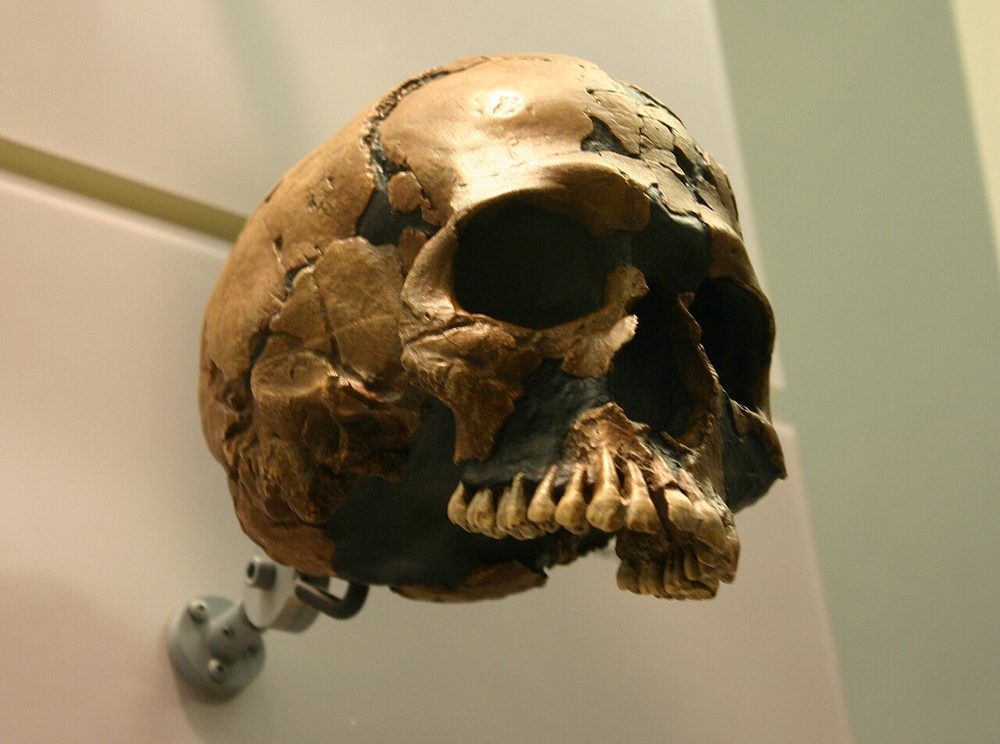
Researchers from CENIEH (National Research Centre on Human Evolution, Burgos) and Tel Aviv University re-examined the remains under microscope and micro-CT. On the left side of the jaw, a sharp incision cuts into a tooth and part of the maxilla. Its shape, location and cleanness rule out a fall or a carnivore bite: the lesion matches the edge of a stone tool wielded by a human hand.
A Middle PalaeolithicPalaeolithicThe oldest and longest period of prehistory (c. 3.3 Ma–12,000 BC), defined by chipped stone tools and a hunter-gatherer way of life.→ stone weapon
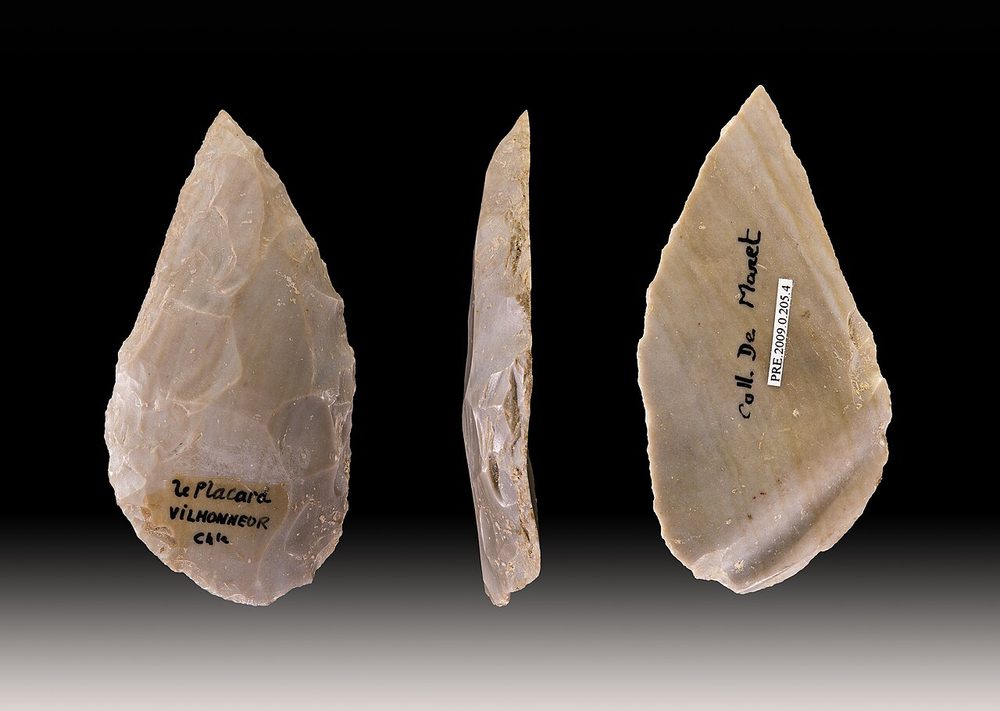
At that time, the people of Qafzeh knapped points and flakes using the Levallois method typical of the Mousterian. Hafted or handheld, such weapons served to hunt — and sometimes to fight. The Qafzeh 25 wound is healed: the victim lived for weeks, even months after the blow, implying care and social life within the group. The act itself remains ambiguous — brawl, ritual or assault, palaeopathology cannot decide.
Qafzeh, cradle of the first Homo sapiens outside AfricaAfricaThe cradle of humankind: the continent where the first hominins appeared, then Homo sapiens around 300,000 years ago, before the expansion to the rest of the world.→
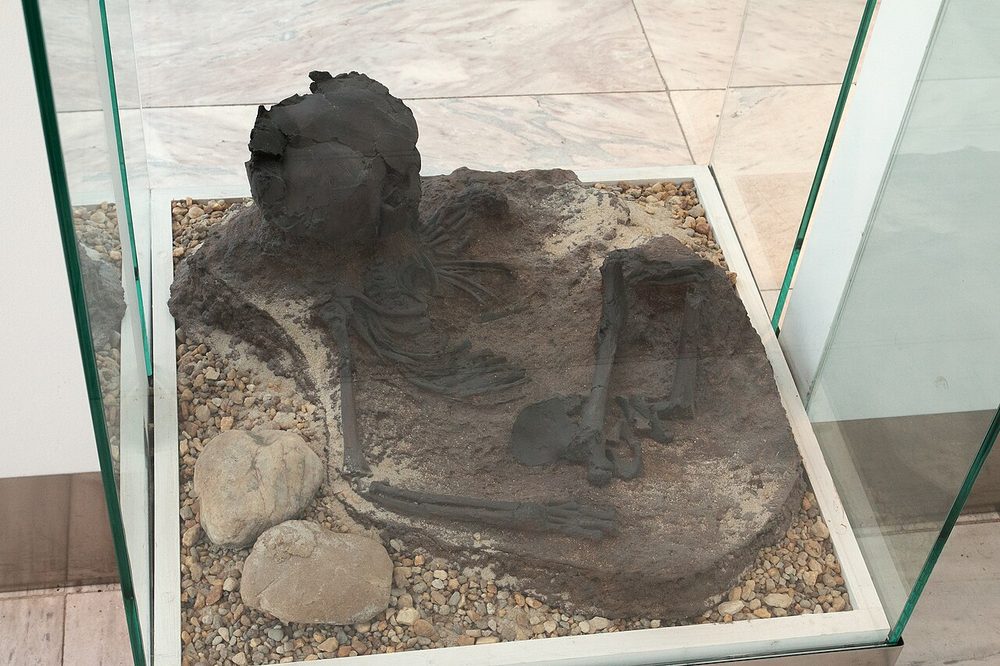
Qafzeh Cave is one of the oldest Homo sapiens sites outside Africa. It has yielded some twenty individuals, several intentional burials, red ochre and perforated shells — among the earliest evidence of symbolic thought. These early moderns of the Levant lived alongside Neanderthals present in neighbouring caves. Qafzeh 25 adds a darker facet: violence between individuals has accompanied humanity from its very beginnings.
What a scar tells us
Documenting prehistoric violence is hard: soft tissue vanishes, and a bone fracture can have countless causes. A clean, localised, healed impact like Qafzeh 25 is therefore invaluable. It pushes back the oldest known case of armed aggression in our species by tens of thousands of years, and reminds us that conflict and care already coexisted: the same group that wounds is also the one that heals and buries its dead.
No comments yet. Be the first.