A cut from the depths of time
Roughly one hundred thousand years ago, under the skies of Lower Galilee, a man with a strikingly modern face took a violent blow that sliced through his cheek and reached the bone of his jaw. He did not die. The wound closed, the bone slowly rebuilt itself, and the memory of that assault travelled across the millennia engraved in the skeleton itself. This visitor from the deep past now carries a code name, Qafzeh 25, after the Israeli cave where his remains were unearthed. A new study, published in 2026 in the journal Scientific Reports, re-examines his fragmentary skull with advanced imaging and analytical methods, and reaches a conclusion as precise as it is unsettling1.
According to the authors, the cut mark that crosses the left side of Qafzeh 25's lower jaw would be the oldest documented case of sharp force trauma in the entire known archaeological record. In other words, this fossil would be the earliest preserved trace of a human being wounded by a blade, and above all of a human being who survived that wound. The history of interpersonal violence in our species would thus begin far earlier than once thought, and it would begin with survival rather than with death.
Qafzeh, a cave in the heart of Lower Galilee
The cave of QafzehQafzehA cave in Lower Galilee (Israel) yielding Homo sapiens and some of the oldest known burials outside AfricaAfricaThe cradle of humankind: the continent where the first hominins appeared, then Homo sapiens around 300,000 years ago, before the expansion to the rest of the world.→.→ opens on the slope of a hill in Lower Galilee, only a few kilometres from Nazareth, not far from the dramatic escarpment that local tradition calls Mount Precipice. The site was identified and excavated as early as 1933 by the prehistorian René Neuville, then French consul in Jerusalem, and later explored again by several generations of researchers across the twentieth century. These successive campaigns turned Qafzeh into one of the most important sites for understanding the first incursions of our species beyond Africa.
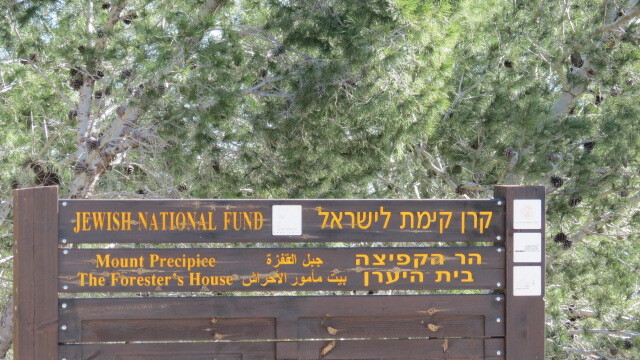
What Qafzeh has yielded borders on the miraculous. Archaeologists uncovered several of the oldest known burials of anatomically modern humans, including that of a child interred with deer antlers, and that of a young woman laid to rest with a child. Perforated shells, pieces of red ochreOchreA red or yellow mineral pigment (iron oxides), used from prehistory for adornment, funerary rites and art.→ and traces of fire attest to an already rich symbolic life. The cave belongs to a cluster of Levantine sites, alongside Skhul on Mount CarmelMount CarmelLimestone range of northern Israel, south of Haifa, whose caves (Skhūl, el-Wad, Tabun) have yielded major human fossils.→, that document an early presence of modern humans in this hinge region between three continents, long before the great dispersal that would people Eurasia3.
Dating the Qafzeh layers precisely remains a delicate exercise. The context of the site is generally placed in a period centred around one hundred thousand years ago. For the individual Qafzeh 25 himself, the range put forward by specialists is broad, between ninety-two thousand and one hundred and forty-five thousand years. This imprecision is not a flaw of the study but the honest mark of a science working at the very limits of its instruments, on sediments and bones more than a thousand centuries old.
Qafzeh 25, a Homo sapiens with modern anatomy
The individual designated Qafzeh 25 belongs unambiguously to the species Homo sapiensHomo sapiensThe present-day human species, which emerged in Africa around 300,000 years ago, the only surviving human lineage after the extinction of NeanderthalsNeanderthalsA fossil humanity of Eurasia, robust and cold-adapted, extinct around 40,000 years before present.→ and Denisovans.→. His skull, though fragmentary and reconstructed from many pieces, displays the hallmarks of modern anatomy, a relatively high and vertical forehead, a gracile facial architecture, a jaw bearing a chin. These features clearly set these Levantine populations apart from their Neanderthal neighbours, who also occupied the region at other moments of the Middle PalaeolithicPalaeolithicThe oldest and longest period of prehistory (c. 3.3 Ma–12,000 BC), defined by chipped stone tools and a hunter-gatherer way of life.→.
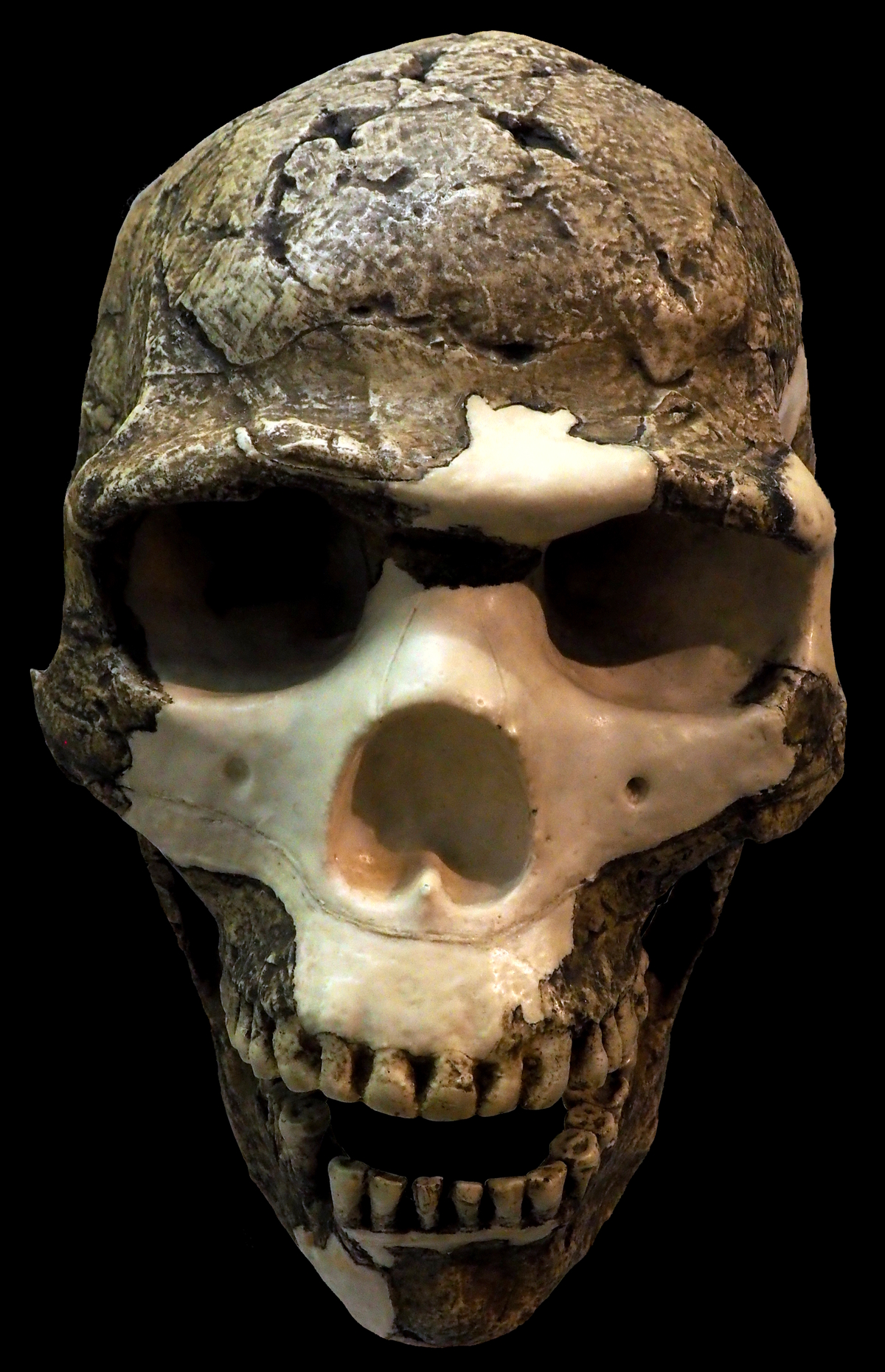
Reconstructing the sex and age of such a fossil relies on the morphology of the preserved bones, particularly those of the skull and face. The descriptions point to an adult individual whose skeleton bears several signs of an eventful life. It is precisely this biographical dimension that makes the study so compelling. Behind an inventory number and a series of measurements emerges a being who lived, suffered, healed, and whose body preserves the memory of a dramatic episode. Studying such traces falls to the discipline of paléopathologiePalaeopathologyThe study of diseases, injuries and trauma on ancient human or animal remains.→, or palaeopathology, which reconstructs the diseases and injuries of ancient populations from their remains.
The novelty of the 2026 research lies not in the discovery of the fossil, long known, but in the sharpness of the gaze turned upon it. Thanks to advanced analytical techniques, notably high-resolution imaging and microscopic examination of the bone surfaces, the team was able to characterise a discreet anomaly that earlier observations had not fully interpreted, a clean incision with a singular course.
The mark on the jaw, reading an ancient wound
At the heart of the study lies a cut mark that crosses the left portion of the lower jaw. Its geometry is that of an incision produced by a sharp-edged object, distinct from fractures caused by blunt impact, from animal bites, or from the alterations left by roots and sediments after burialBurialThe intentional deposition of a body, sometimes with offerings; a marker of symbolic behaviour.→. Telling these different causes apart is the painstaking work of palaeopathology, for each agent leaves its own signature on the bone, a shape of section, a profile of edges, an orientation.
The examination indicates that the lesion lies on the left side of the face and shows the characteristics of a cut inflicted while the individual was alive. This point is decisive. A cut produced after death, during fossilisation or excavation, would have shown no biological reaction. Yet the bone of Qafzeh 25 tells a very different story, that of a living tissue which reacted, became inflamed, and then set about repairing itself. The wound was therefore received by a man very much alive, who went on living afterwards.
The question of its origin remains. The authors are cautious and acknowledge that an accidental cause cannot be entirely ruled out. A fall onto a sharp stone, an unlucky handling of a tool, a hunting accident, all of this remains conceivable. This is why the study speaks not of certainty but of probability, estimating that the wound resulted "most probably" from interpersonal violence rather than from chance1.
Accident or assault, what forensic science says
To decide between accident and assault, the team turned to a body of knowledge unexpected in prehistoryPrehistoryThe span of human history before the invention of writing, from the Palaeolithic to the Metal Ages, known mainly through material remains.→, that of contemporary forensic medicine. Modern forensic studies, carried out on present-day victims of violence, have revealed a recurring pattern. In a face-to-face confrontation, blows to the face far more often strike the victim's left side. The reason is simple and almost geometric. Most human beings are right-handed, and the fist or weapon of a right-handed attacker, thrown from the front, naturally falls on the left cheek of the person facing him.
The wound of Qafzeh 25 fits this pattern exactly. Its location, on the left part of the jaw, and its orientation match a blow struck from the front by a right-handed opponent. This is not proof in the judicial sense of the word, but a convergence of clues, a body of presumptions that makes the hypothesis of an assault more plausible than that of a mere accident. The meeting of prehistory and forensic science shows its full measure here, applying to a bone a thousand centuries old the interpretive frameworks forged on the wounds of today2.
One must nonetheless keep in mind the exact value of this reasoning. A statistical pattern observed on modern populations does not transpose mechanically to a single individual of the Palaeolithic. It makes an interpretation more probable, it does not demonstrate it. The researchers themselves insist on this point, and therein lies the rigour of their approach, knowing how to name a probability without wrongfully turning it into a certainty.
A weapon from the Middle Palaeolithic
If there was an assault, with what was the blow struck? The study does not claim to identify the exact weapon, but the cultural context offers natural candidates. The Qafzeh populations belong to the Paléolithique moyenMiddle PalaeolithicA Palaeolithic period (c. 300,000 to 40,000 years ago) associated mainly with Neanderthals and early Homo sapiens, marked by Levallois tools.→, the Middle Palaeolithic, a long period during which humans made stone tools by elaborate methods, in particular the so-called Levallois techniqueLevallois techniqueA Middle Palaeolithic flint-knapping method: a core is prepared so a flake of predetermined shape can be struck off in one blow; a hallmark of Neanderthal skill.→, which produced flakes and points with remarkably sharp edges.
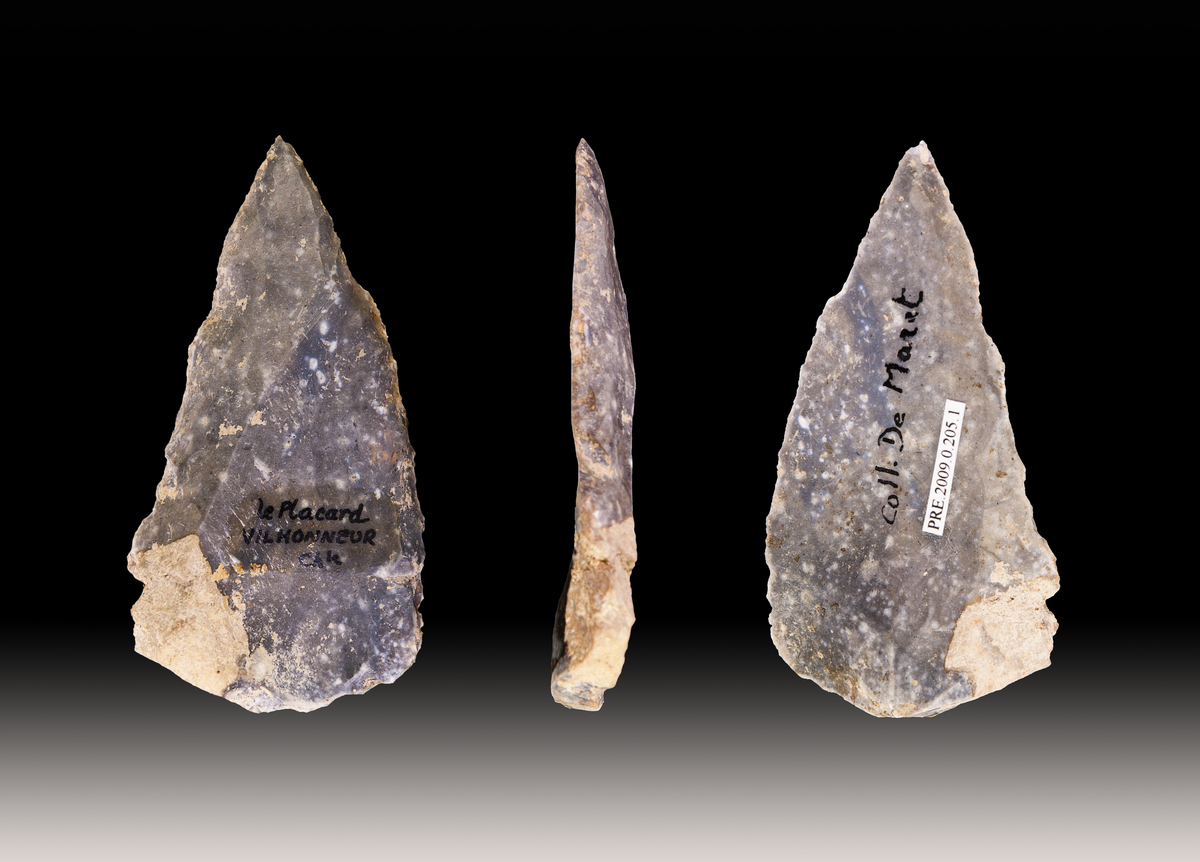
A flint point hafted onto a shaft, or even a flake held in the hand, had an edge keen enough to open flesh and bite into bone. These objects, designed first to butcher game and work hides, could easily be turned against a fellow human in a moment of tension. The mark recorded on the jaw of Qafzeh 25, clean and linear, is compatible with such an instrument, without it being possible to single out one specific weapon. This caution, once again, is an integral part of the scientific approach.
The idea of a Middle Palaeolithic man struck in the face by a blade opens a striking window onto the social life of these communities. It reminds us that the very hands capable of knappingknappingThe set of operations for fracturing a stone block to extract flakes or blades.→ tools of great refinement, of burying their dead with care and of handling symbolic pigments could also rise against one another. Violence is not a late invention of humankind, it has accompanied our species since its most distant origins beyond Africa.
Surviving violence, the trace of healing
The most moving detail in this whole affair is not the wound but the healing. The Qafzeh 25 fossil shows clear signs of bone healing. The bone attacked by the blade reacted, remodelled itself, and gradually filled in the injury. This process takes weeks, sometimes months, and it can only occur in a living organism. The man struck in the face therefore survived his assault, and lived long enough afterwards for his skeleton to preserve the mark of his convalescence4.
This survival invites us to imagine what made it possible. An open wound to the face, in a Palaeolithic environment, exposed a person to infection and pain. Coming through such an ordeal perhaps presupposes some form of attention from the group, a shelter, shared food, time to recover. Without over-interpreting the data, one may see in this healing a sign of a community capable of coming to the aid of one of its own, in the image of the careful burials that the same cave has yielded.
Thus the story reverses. Where one might read only an act of brutality, the skeleton also tells of resilience. The oldest documented case of sharp force trauma is not the story of a victim struck down, but that of a survivor. Violence and care, wound and healing, coexist in the same body, and this is perhaps the truest portrait of our nascent humanity.
What Qafzeh 25 tells us about our history
What should we take away from this study published in 2026? First a methodological advance. By combining bone imaging, palaeopathology and the frameworks of forensic medicine, the researchers show that a fossil known for decades can still yield new information, provided one questions it with the right tools. The past is never definitively read, it is reread as science advances.
Then a lesson in caution. Nothing in this case is presented as absolute certainty. The age of the fossil remains a broad range, the origin of the wound remains a probable interpretation, the weapon is not identified. This honesty does not weaken the result, it lends it credibility. A science that knows how to state its uncertainties deserves all the more to be heard when it advances a strong hypothesis.
Finally a deep human resonance. Qafzeh 25 holds up a mirror to us across one hundred thousand years. This man with a modern face, wounded in a confrontation and saved by the life that resumes, resembles any one of us. By pushing so far back in time the first preserved trace of an assault with a sharp weapon followed by survival, this discovery does more than move a date. It reminds us that violence and the capacity to recover from it have accompanied our species since its very first steps beyond Africa, in the hills of Lower Galilee where the cave of Qafzeh still opens today.
J'utilise vos articles régulièrement comme introduction à une nouvelle période. Continuez !
Je suis passé 3 heures sur la chrono-carte ce soir. C'est rare qu'un site me fasse ça.