In the heart of Poitou, in the steep valley of the Anglin river, hides one of the least known masterpieces of European PalaeolithicPalaeolithicThe oldest and longest period of prehistoryPrehistoryThe span of human history before the invention of writing, from the Palaeolithic to the Metal Ages, known mainly through material remains.→ (c. 3.3 Ma–12,000 BC), defined by chipped stone tools and a hunter-gatherer way of life.→ art. The Roc-aux-Sorciers, at Angles-sur-l'Anglin, shelters a bas-relief sculptured frieze more than twenty metres long, created around 14,000 years ago by MagdalenianMagdalenianThe last great Upper Palaeolithic culture (c. 17,000–12,000 BC), the peak of cave art (Lascaux).→ artists. In its scale and technical quality, this site ranks among the greatest artistic achievements of prehistory.
The site was discovered in 1927 by prehistorian Suzanne de Saint-Mathurin and archaeologist Dorothy Garrod, while they were excavating a rock shelterRock shelterA shallow cavity at the foot of a cliff or under a rocky overhang, offering natural shelter; a favoured site of prehistoric habitation and rock art.→ on the bank of the Anglin. Beneath accumulated sediments, they uncovered figures carved in limestone with a precision that astonished the scholarly world: bison, horses, ibex, and above all representations of female bodies of a formal boldness rare for the period.
The frieze at Roc-aux-Sorciers has a remarkable particularity: female figures -- often reduced to anatomical attributes in Magdalenian portable artPortable artTransportable art objects (figurines, engravings on bone or ivory), such as the Palaeolithic Venuses.→ -- are here represented full-length, with an attention to anatomical detail that demonstrates true mastery of rock sculpture. These bas-relief Venuses stand alongside animal representations of striking realism, notably a group of three life-sized bison whose volumes are rendered with a virtuosity rarely matched in later art traditions.
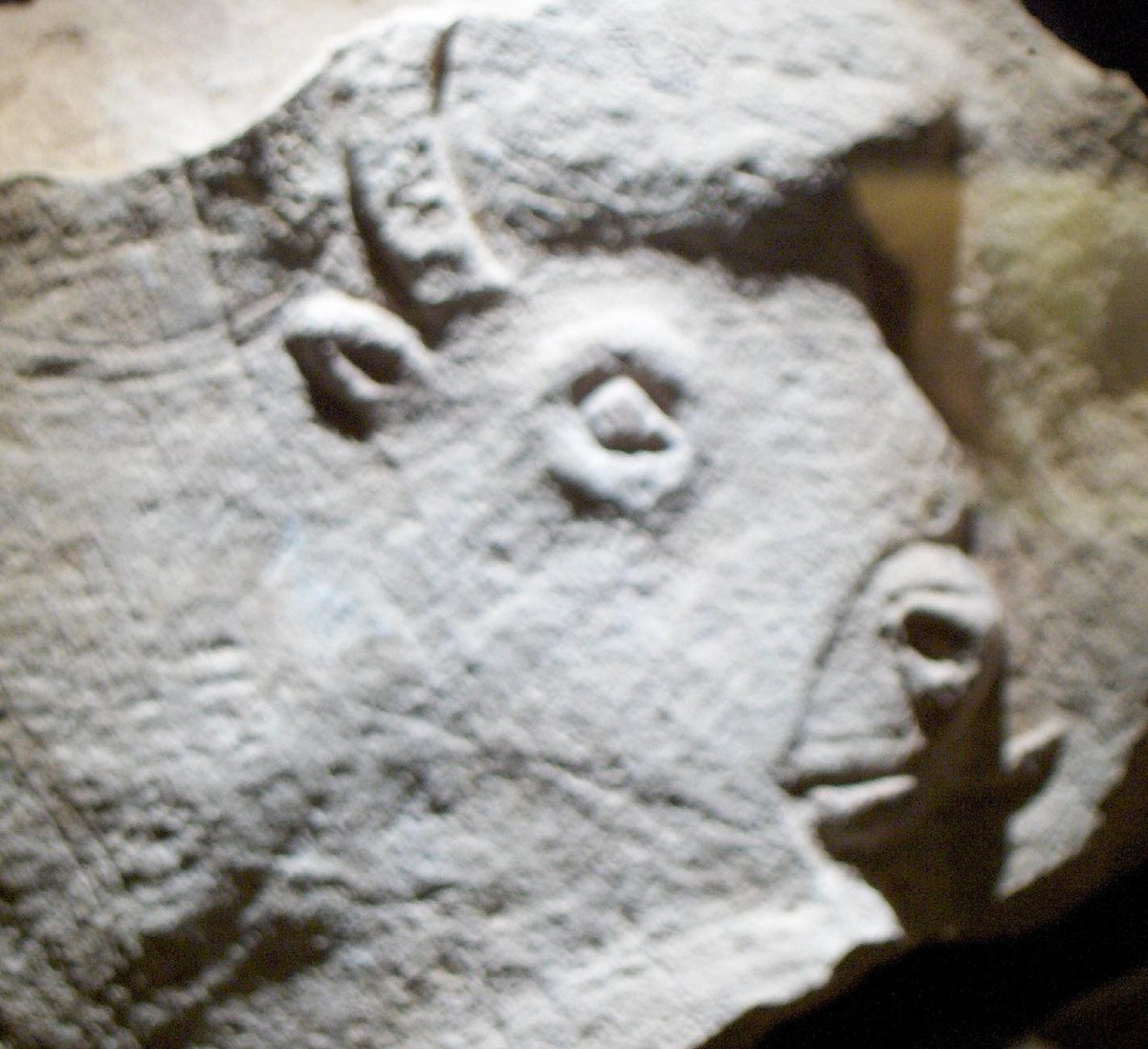
The techniques employed by the Magdalenian artists reveal a sophisticated organisation of work. Certain natural reliefs in the rock were used to accentuate animal volumes; other areas were carefully smoothed to create a flat background. Traces of red ochreOchreA red or yellow mineral pigment (iron oxides), used from prehistory for adornment, funerary rites and art.→ and black pigments have been identified, suggesting the sculptures were painted and that the frieze, lit by fat lamps, would have offered a striking spectacle in the shelter's half-light.
Roc-aux-Sorciers is part of a regional cluster of richly decorated Magdalenian sites, including La Marche and the Grotte de la Garenne, which testify to the artistic vitality of the Clain and Vienne river basins during the Upper PalaeolithicUpper PalaeolithicThe final phase of the Palaeolithic (c. 45,000 to 10,000 years ago), marked by Homo sapiens in Europe, art, ornaments and a succession of cultures (Aurignacian, Gravettian, Solutrean, Magdalenian).→. But it is the unique combination of human and animal figures, and the exceptional state of preservation of part of the frieze, that make this site a monument of world prehistoric art.
Listed today as a historic monument, Roc-aux-Sorciers is managed by the commune of Angles-sur-l'Anglin, which offers guided tours of the original site and an interpretation centre where faithful casts allow visitors to appreciate the full frieze. Research continues: recent 3D scanning and photogrammetry analyses have revealed new details in the sculptures, confirming that this prehistoric masterpiece has not yet yielded all its secrets.
No comments yet. Be the first.