In the Calabrian Apennines of southern Italy, the Romito cave preserves one of the most remarkable rock art ensembles in Italy: a large bison engraved in low relief on the rock wall, one metre long, displaying mastery and realism comparable to the masterpieces of Franco-Cantabrian art. But the site has also yielded something even more poignant: the skeleton of a young man — named "Romito 2" — who died around 17,000 years ago with a disease that should have condemned him far earlier.
Romito 2 suffered from a severe form of peripheral acromegaly, a pathology affecting bone growth in the extremities. His lower limbs were so severely affected that he could not move normally, or not at all without help. Yet analysis of his skeleton shows he survived with this disability for several years — at least until the age of 17-20, according to the anthropologists who studied his remains.
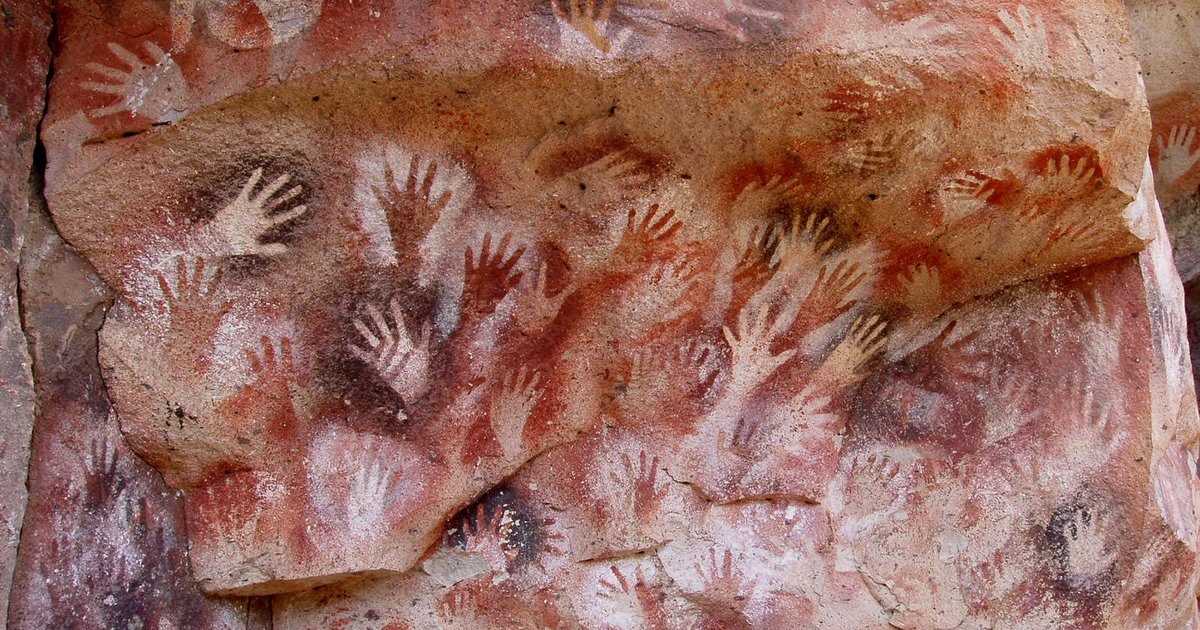
In the unforgiving environment of the Upper Palaeolithic, surviving with such a motor handicap — in a group of nomadic hunter-gatherersHunter-gatherersA way of life based on hunting, fishing and gathering wild resources, without farming or herding; it dominated almost the whole of human history.→ who had to travel dozens of kilometres to find food — was impossible without the help of others. Romito 2 thus constitutes direct and poignant evidence of the solidarity and care extended to vulnerable members within PalaeolithicPalaeolithicThe oldest and longest period of prehistory (c. 3.3 Ma–12,000 BC), defined by chipped stone tools and a hunter-gatherer way of life.→ societies 17,000 years ago. Long before the first traces of agricultureAgricultureThe cultivation of plants and production of food by working the soil, which emerged in the Neolithic in the Near East and independently elsewhere; it radically transformed human societies.→ or sedentarisation, humans were caring for their fellows who could not provide for themselves alone.
No comments yet. Be the first.