Saqqarah. A 30 kilometres au sud du Caire, sur le plateau désertique qui domine la vallée du Nil, se dresse la plus ancienne structure monumentale en pierre de l'humanité : la pyramide a degrés du pharaonPharaonTitre du souverain de l'Égypte antique, considéré comme un dieu vivant garant de l'ordre cosmique (la Maât), chef suprême de l'État, de l'armée et du culte.→ Djéser, érigée vers 2650 avant notre ere. Depuis quatre millénaires, ce chef-d'oeuvre de l'architecte Imhotep semblait avoir livré tous ses secrets. Les fouilles menées depuis les années 2010 prouvent le contraire : sous les sables de Saqqarah, une nécropoleNécropoleVaste ensemble de sépultures, « ville des morts » organisée, souvent sur plusieurs époques.→ d'une richesse insoupçonnée continue de révéler des trésors.
Saqqarah n'est pas seulement la pyramide de Djéser. C'est une nécropole immense, utilisée pendant plus de 3 000 ans, du début de l'Ancien EmpireAncien EmpirePremière grande période de l'Égypte pharaonique unifiée (~2700-2200 av. J.-C., IIIe-VIe dynasties), âge d'or des grandes pyramides et d'un État fortement centralisé.→ à la période ptolémaïque. Ses mastabas, ses puits funéraires et ses complexes souterrains forment un labyrinthe qui n'a été exploré qu'en surface. Les équipes archéologiques internationales qui y travaillent aujourd'hui le savent : chaque saison apporte son lot de découvertes extraordinaires.
Imhotep et la révolution architecturale
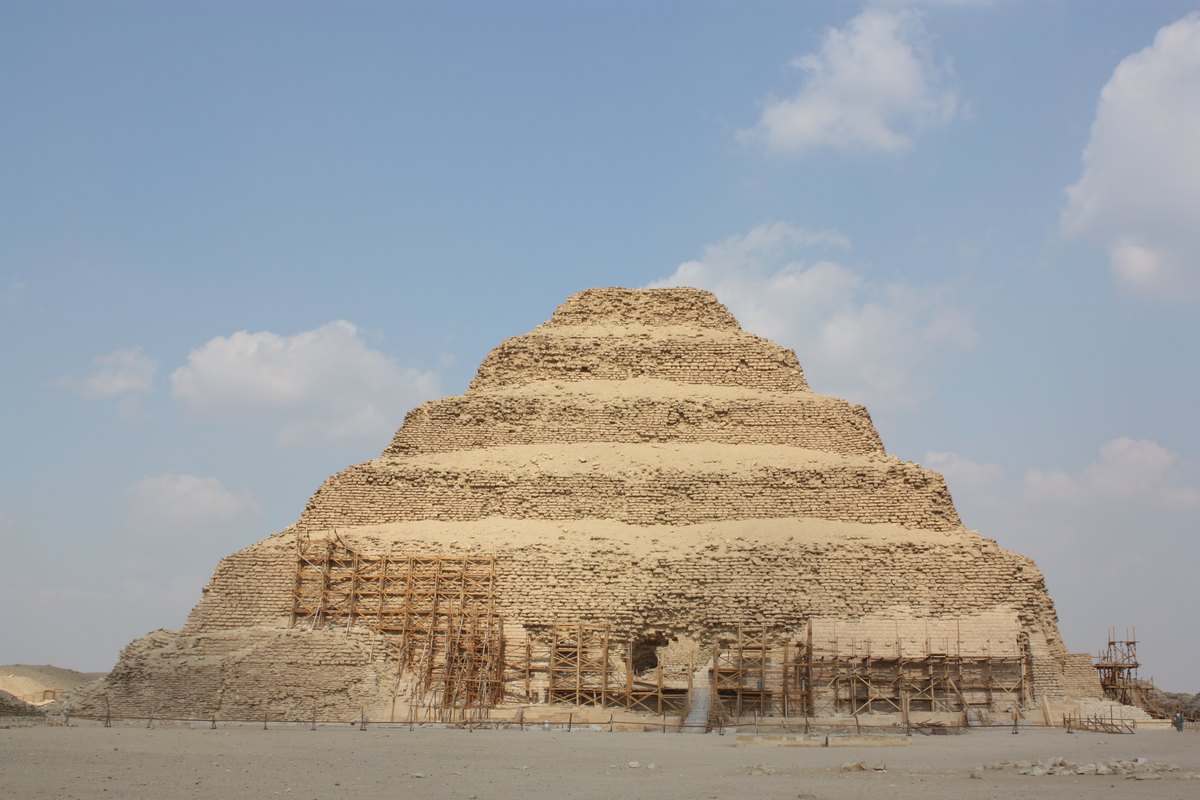
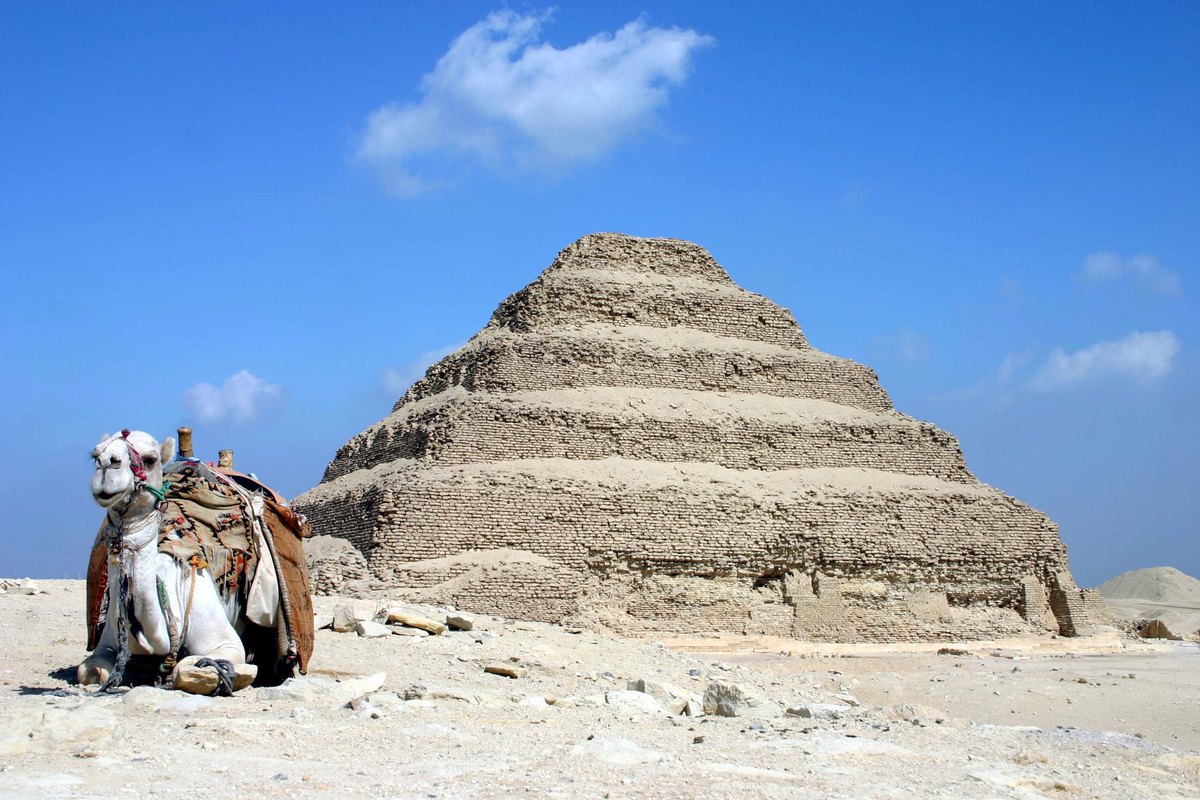
Vers 2650 avant notre ere, un homme réalise quelque chose qu'aucun architecte n'avait jamais tenté : remplacer les mastabas en briques crues par une structure en calcaire taillé, puis empiler six mastabas décroissants pour former une pyramide a degrés haute de 62 metres. Cet homme, c'est Imhotep, vizirVizirPlus haut fonctionnaire de l'État égyptien après le pharaon (égyptien « tjaty ») : véritable Premier ministre dirigeant l'administration, la justice, le Trésor et les travaux publics au nom du roi.→ et architecte du pharaon Djéser. Son oeuvre marque une rupture radicale dans l'histoire de l'architecture mondiale.
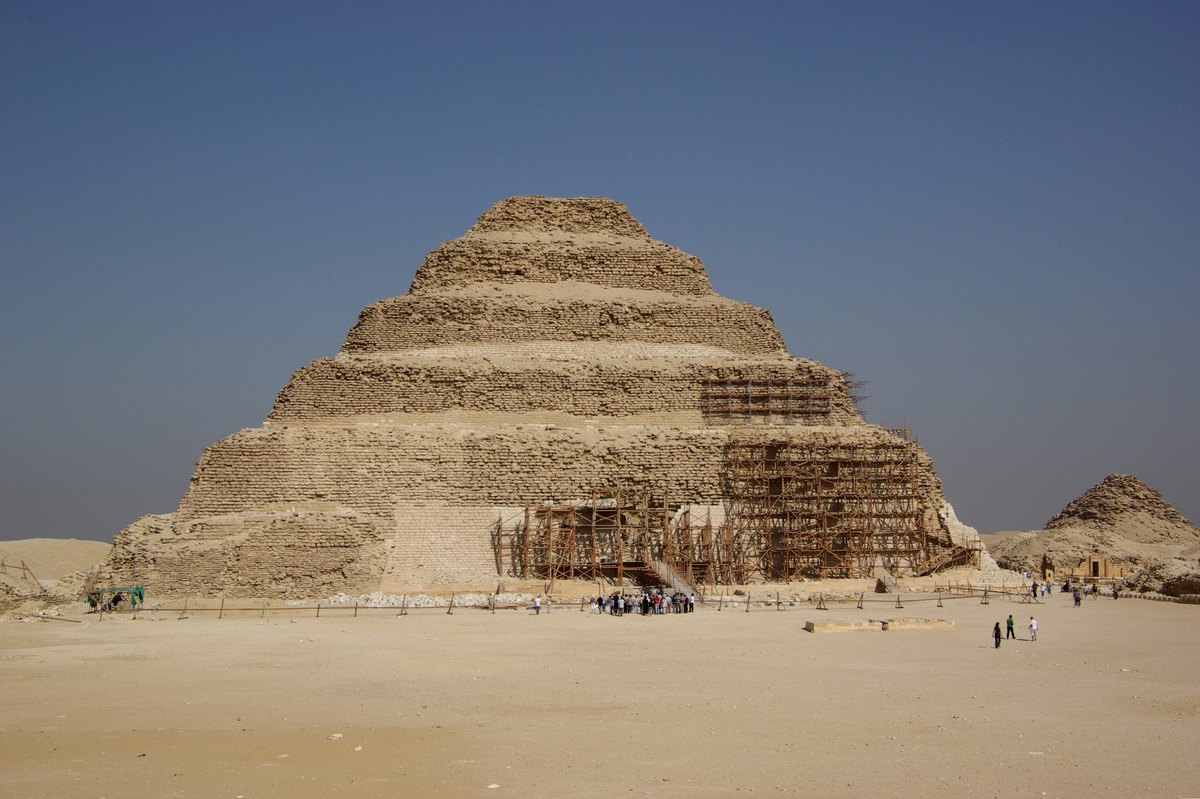
Le complexe funéraire de Djéser ne se limite pas a la pyramide. Il comprend une enceinte de 544 metres sur 277, des cours cérémoniales, une chapelle, des magasins et des batiments fictifs représentant le palais royal pour l'éternité. Sous la pyramide elle-meme, un réseau de galeries creusées a 28 metres de profondeur aboutit a la chambre funéraire en granit du pharaon. Imhotep est le seul architecte de l'Antiquité a avoir été déifié de son vivant, vénéré comme dieu de la médecine et de la sagesse pendant des siécles apres sa mort.
La pyramide de Djéser, trop longtemps oubliée
Pendant la majeure partie du 20e siecle, Saqqarah a souffert de la comparaison avec Gizeh. Les pyramides de Khéops, Khéphren et Mykérinos monopolisaient l'attention des archéologues et des touristes. La pyramide de Djéser, bien que plus ancienne, semblait moins spectaculaire. Ce n'est qu'a partir des années 1990 que des missions internationales ont commencé a explorer systématiquement la nécropole dans son ensemble.
En 2006, la mission archéologique de l'Université de Waseda (Japon) mit au jour un réseau de tunnels souterrains inédits sous le complexe funéraire. Puis, en 2018, une découverte majeure bouleversa le panorama : une momieMomieCorps préservé de la décomposition, naturellement (gel, sécheresse, tourbe) ou artificiellement ; les kourganes gelés de Pazyryk ont livré des momies naturelles à la peau tatouée.→ vieille de 4 400 ans, recouverte de feuilles d'or, fut exhumée d'un puits funéraire dans l'enceinte de la nécropole. Identifiée comme appartenant a un haut fonctionnaire nommé Hekashepes, elle était intacte, en parfait état de conservation, et représentait l'une des plus importantes trouvailles de la décennie.
2020-2021 : la saison des sarcophages
En septembre 2020, l'équipe du Dr Zahi Hawass et du ministere égyptien du Tourisme et des Antiquités fit une annonce retentissante : 59 sarcophages en bois peints, parfaitement scellés depuis 2 500 ans, avaient été découverts dans plusieurs puits du secteur Ouahette de Saqqarah. Les cercueils, certains polychromes, ornés de textes hiéroglyphiques et de représentations de divinités, renfermaient les momies de pretres et de fonctionnaires de la Basse Époque (664-332 av. J.-C.).
En novembre 2020, 14 sarcophages supplémentaires furent mis au jour dans un troisieme puits. Puis, en janvier 2021, 50 nouvelles momies dans leurs cercueils, dont plusieurs appartenant a des enfants et a des animaux sacrés (ibis, faucons, chats). En tout, en moins d'un an, plus de 150 sarcophages ont été exhumés de Saqqarah. Ce n'est pas un hasard : les fouilles, intensifiées depuis 2018 grace a de nouveaux financements et a l'utilisation de radars pénétrant dans le sol (GPR), explorent systématiquement des zones jamais fouillées.
Le Sérapéum, catacombe des taureaux sacrés
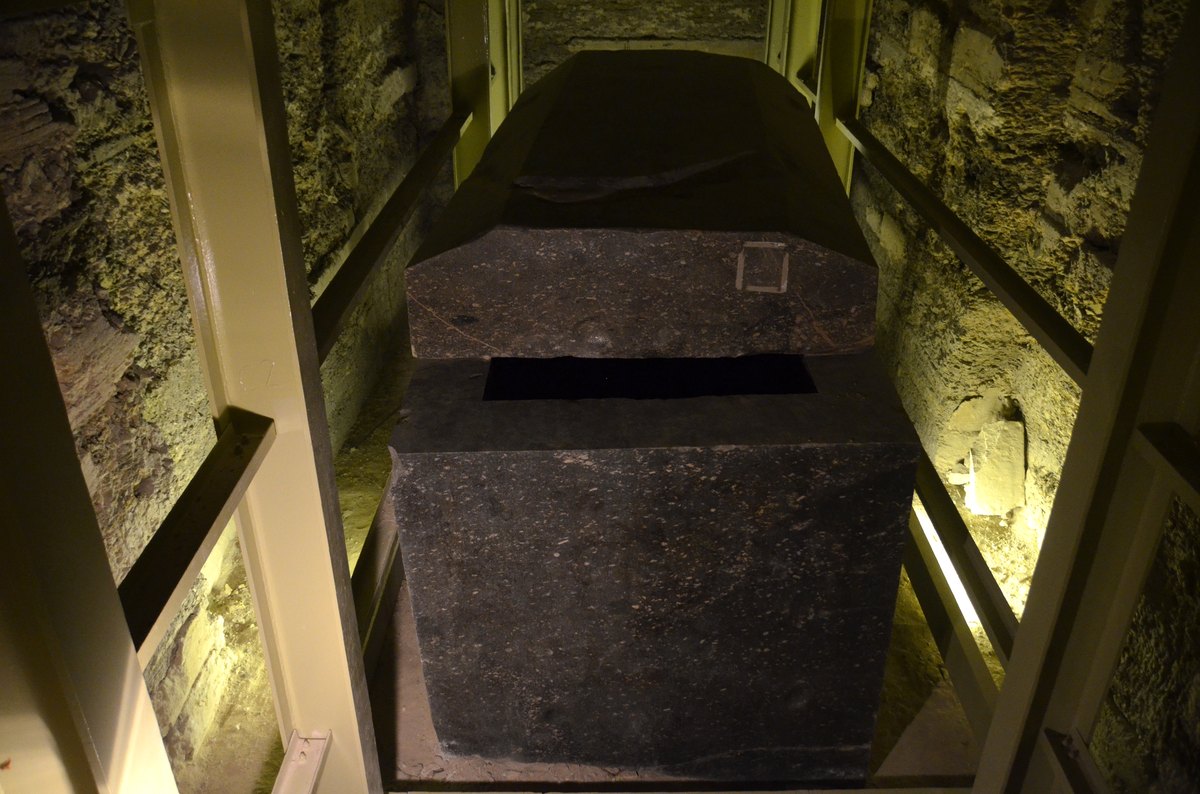
Parmi les monuments les plus spectaculaires de Saqqarah figure le Sérapéum, découvert en 1850 par l'archéologue français Auguste Mariette. Ce complexe de galeries souterraines, creusé sur plus de 500 metres, servait de lieu de sépultureSépultureDépôt intentionnel d'un défunt, parfois accompagné d'offrandes ; indice de comportements symboliques.→ pour les taureaux Apis -- incarnations vivantes du dieu Ptah, puis de Sérapis. Chaque taureau sacré, sélectionné dés sa naissance pour ses marques particulières, était momifié a sa mort et inhumé dans un sarcophage de granit noir pesant jusqu'a 70 tonnes.
Les fouilles récentes au voisinage du Sérapéum ont mis au jour de nouveaux secteurs non explorés. Des statues de divinités, des amulettes, des bronzes et des papyrus ont été retrouvés dans des cachettes scellées depuis l'Antiquité. La mission hispano-égyptienne travaillant dans ce secteur a également identifié plusieurs tombes de hauts dignitaires du Nouvel Empire (1550-1070 av. J.-C.) dont les parois sont couvertes de scénes peintes d'une qualité exceptionnelle. Saqqarah, la plus vieille nécropole du monde, n'a pas fini de parler.
Aucun commentaire pour le moment. Soyez le premier.