In pharaonic Egypt, the ability to read and write was a privilege of considerable consequence. Scribes formed a distinct caste -- at once administrators, intellectuals, and guardians of knowledge. Trained for years in the "houses of life" (per-ankh) attached to temples and palaces, they occupied a unique position between royal power and the rest of society, holding in their hands the invisible reins of the state.
Scribal training was long and demanding. Students first learned monumental hieroglyphic writingWritingA system of conventional signs used to fix language or information durably; its appearance (c. 3300 BC) marks, by convention, the end of prehistory.→, then Hieratic -- a cursive form used for administrative documents -- and sometimes Demotic in the later period. They had to memorise hundreds of signs, master grammar, and also acquire knowledge of mathematics, geometry, medicine, and literature. The classical texts of the Egyptian tradition -- wisdom instructions, great religious compositions -- were copied tirelessly as exercises in writing and ethics.
The social status of scribes varied considerably according to their position in the hierarchy. At the bottom, local scribes managed the accounts of granaries and workshops. At the summit, great royal scribes such as Amenhotep son of Hapu or Imhotep achieved near-divine glory. The ideal of the scribe was celebrated in Old and Middle Kingdom literature: "Be a scribe!" reads a famous text. "It is the finest of all professions." This was not merely a matter of comfort but of permanence: the scribe survived through writing where the soldier perished on the battlefield.
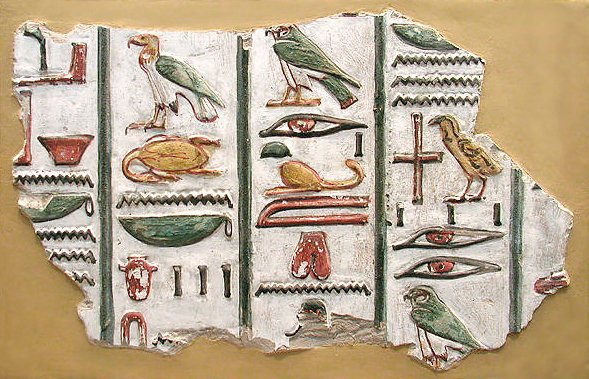
The scribes of ancient Egypt were the invisible architects of a remarkably organised administrative empire. Population censuses, agricultural land registers, tax records in kind, accounts of royal building sites: everything passed through their calamus. The precision of their archives, found at Deir el-Medina, AmarnaAmarnaA site in Middle Egypt (Tell el-Amarna), location of Akhetaten, the capital founded by Akhenaten and then abandoned; a major New Kingdom archaeological site.→, and the papyrus deposits of the Fayyum, allows modern historians to reconstruct the intimate workings of the pharaonic state with a level of detail unmatched in the ancient Near EastNear EastA region of western Asia (Levant, Mesopotamia, Anatolia, Iran), cradle of the Neolithic revolution, agriculture, the first cities and writing.→.
Beyond administration, scribes were also the creators and transmitters of Egyptian literature. The Tales of Sinuhe, the Coffin Texts, the Book of the Dead, hymns to Amun or the Sun: all these compositions have reached us through the patient work of copyists who reproduced, annotated, and sometimes enriched texts across generations. Some scribes even inserted their names into manuscript colophons, subtly claiming an intellectual authorship that allows us, millennia later, to recognise their individual voices across the centuries.
No comments yet. Be the first.