Among the great enigmas of evolutionary biology, the origin of sexual reproduction occupies a central place. The question seems trivial but is in fact profoundly troubling. Asexual reproduction by cloning is far more arithmetically efficient: a female that clones herself can, in theory, double her offspring every generation without investing in the production of males. Sexual reproduction, by contrast, "wastes" 50% of potential offspring by producing individuals half of whom cannot themselves reproduce. And yet, in the tree of life, sex has established itself in virtually all multicellular eukaryotes. How can this paradox be explained?1
Eukaryotes: Two Billion Years of Cellular History
Eukaryotes, organisms whose cells possess a nucleus delimited by a membrane, appeared around 2 billion years ago. Their immediate ancestors almost certainly reproduced asexually, by simple cell division. The earliest fossil traces of sexual reproduction in eukaryotes date to around 1.2 billion years ago: these are remains of Bangiomorpha pubescens, a red alga discovered in Canadian shales and described by Nicholas Butterfield in 2000. This alga shows reproductive structures identical to those of its modern descendants, which alternate between sexual and asexual reproduction.2

But why did this shift to sex occur? The question is acute because, in modern unicellular organisms that can reproduce both ways, such as yeast (Saccharomyces cerevisiae), the alga Chlamydomonas reinhardtii or spirogyra (Spirogyra spp.), sexual reproduction is only triggered under stress: nitrogen starvation, extreme temperature fluctuations, dehydration. In favourable conditions, these organisms clone themselves.
Stress as Evolutionary Trigger
This behaviour observed in modern eukaryotes offers a precious key to understanding the evolution of sexuality. The "stress as trigger" hypothesis is now well supported by experimental data: when an organism is subjected to a hostile environment, clonal reproduction produces offspring genetically identical to itself and therefore potentially as vulnerable. Sexual reproduction, by contrast, mixes two genomes and produces genetically variable offspring. Statistically, some of these offspring will be better adapted to the stressful environment than their parents.
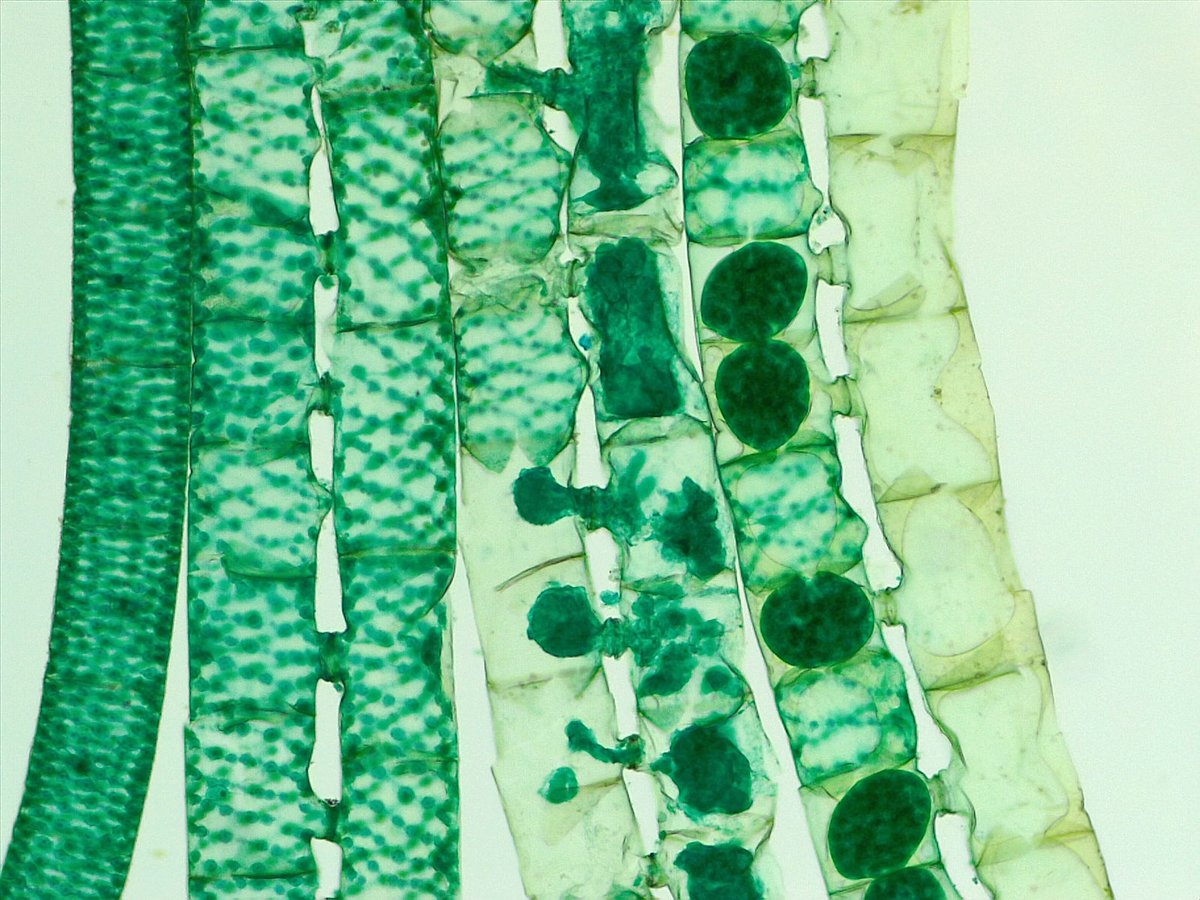
Experiments on baker's yeast have convincingly demonstrated this mechanism. Matthew Goddard and colleagues showed in 2005 in Nature that in variable or stressful environments, yeast populations that reproduce sexually accumulate beneficial mutations more rapidly than clonal populations, and eliminate deleterious mutations more efficiently. Natural selection operates more effectively on recombined genomes. This is the advantage of sex, paid at the price of the "cost of males".
The Red Queen and the Arms Race
The "Red Queen" hypothesis, proposed by William Hamilton in the 1980s, offers another complementary perspective: parasites and pathogens constantly evolve to circumvent their hosts' immune defences. A host that clones itself provides a stationary target for pathogens; a host that reproduces sexually produces each generation a new combination of immune genes, making the parasites' task infinitely harder. In this permanent "arms race" between hosts and pathogens, the genetic diversity generated by sex would be the best of all defences.
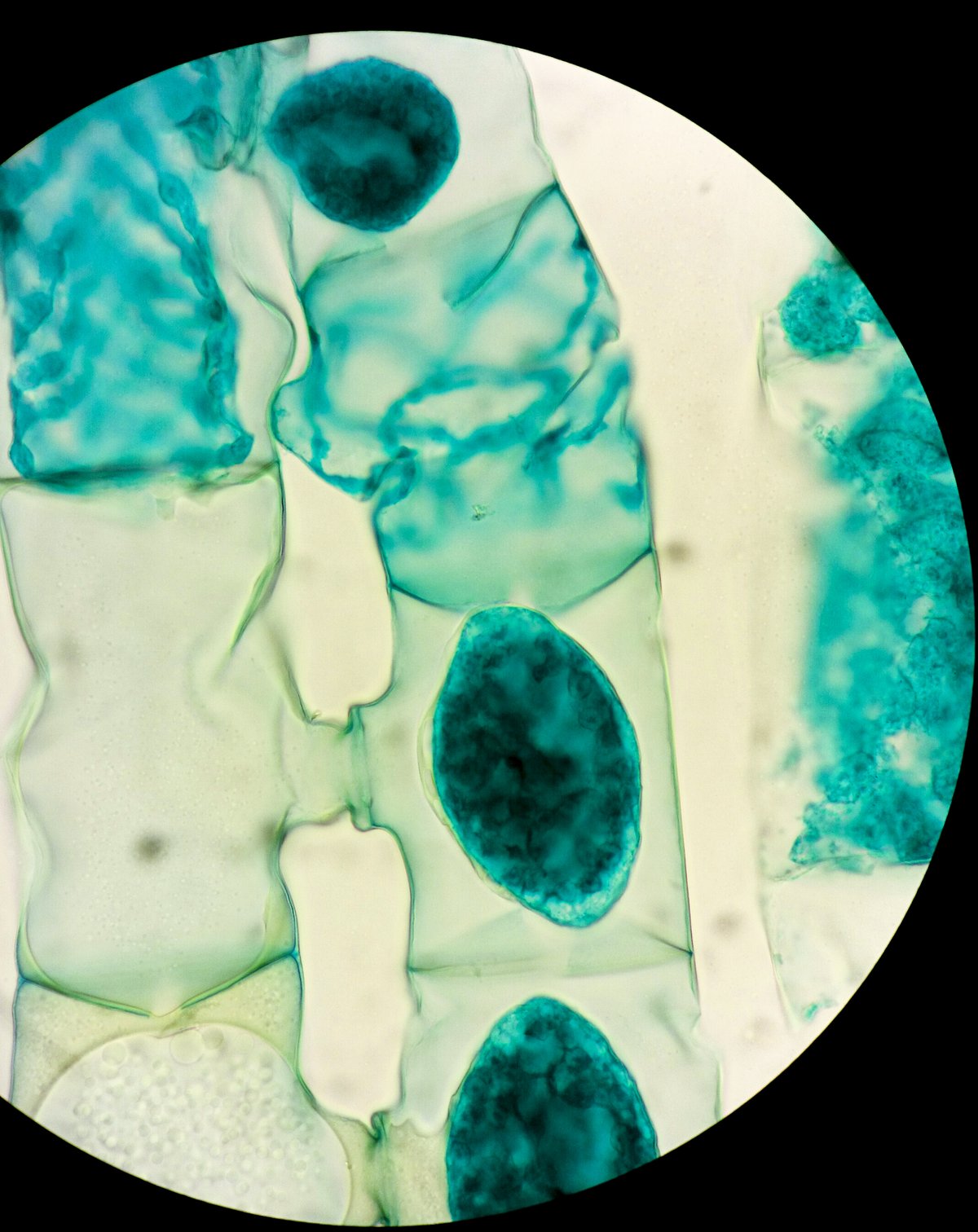
Reality is probably a combination of all these factors: the advantage conferred by genetic recombination in stressful environments, the pressure of parasites, more efficient repair of damaged DNADNAThe molecule carrying genetic information, used to reconstruct kinship between species.→, and perhaps social benefits linked to the selection of quality partners. What is remarkable is that the ultimate driver of one of the most transformative biological inventions in the history of life would be, at its core, the same as that which pushes modern eukaryotes to reproduce sexually today: the pressure of an unpredictable and hostile environment. Life invented sex to survive adversity.
Parfait pour éveiller la curiosité des enfants sans trop simplifier. Je partage avec l'école.