Beneath the sands of Syria lie the roots of our civilization. A little over 12,000 years ago, here in the heart of the Fertile CrescentFertile CrescentAn arc-shaped region of the Near EastNear EastA region of western Asia (Levant, Mesopotamia, Anatolia, Iran), cradle of the Neolithic revolution, agriculture, the first cities and writing.→ (LevantLevantA region of the eastern Mediterranean Near East (Israel, Lebanon, Syria, Jordan), a major crossroads of the first human migrations out of Africa.→, Mesopotamia) where farming and herding first emerged.→, people first sowed and harvested, then organized into larger communities, inventing the first cities. So civilization was born. From the NeolithicNeolithicThe "New Stone Age": a period marked by farming, herding, settlement and pottery, from around 10,000 BC.→ revolution to Mari, from Palmyra to Damascus, this World View documentary unspools the thread of a land where almost everything began.
The origins of agricultureAgricultureThe cultivation of plants and production of food by working the soil, which emerged in the Neolithic in the Near East and independently elsewhere; it radically transformed human societies.→
Syria lies at the heart of the Fertile CrescentFertile CrescentAn arc-shaped region of the Near East (Levant, Mesopotamia) where farming and herding first emerged.→, the arc of fertile land from the Levant to Mesopotamia where, around 10,000 BCE, humanity domesticated the first cereals, wheat and barley, and the first animals.1
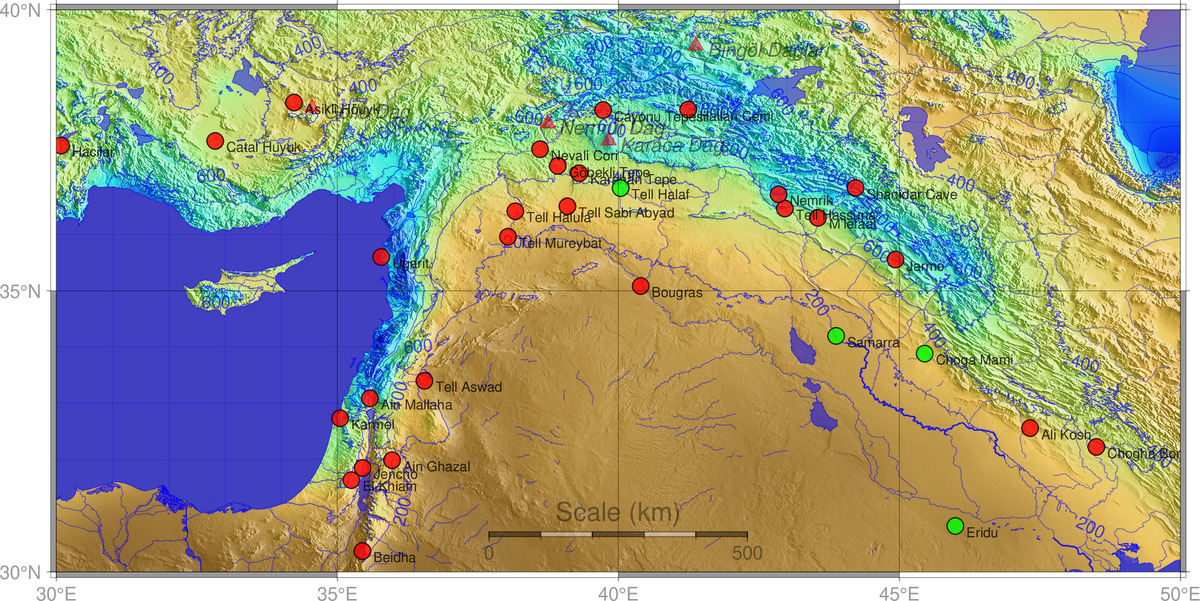
Sites such as TellTellAn artificial mound formed by the accumulation of successive layers of settlement remains at the same spot, typical of the Near East. Each destruction-rebuilding event adds a stratum.→ Abu Hureyra, Tell Halula and Mureybet document this fundamental shift: hunter-gatherersHunter-gatherersA way of life based on hunting, fishing and gathering wild resources, without farming or herding; it dominated almost the whole of human history.→ became settled farmers. This is the Neolithic revolutionNeolithic revolutionThe shift from hunter-gatherer societies to farming and settled life (c. 10,000 BCE in the Near East), giving rise to villages and then cities.→, the foundation of all the societies that followed.
Mari, one of the world's first cities
In the third millennium BCE, the Euphrates valley saw true cities flourish. MariMariA city on the Euphrates (Tell Hariri, Syria) founded around 2900 BCE, one of the first planned cities, famed for the palace of Zimri-Lim and its cuneiformCuneiformThe oldest known writing, born at Uruk; its signs, impressed into clay with a reed stylus, are wedge-shaped (from Latin cuneus).→ archives.→ (Tell Hariri), founded around 2900 BCE, is the most spectacular example: a planned city with canals, temples and a vast royal palace.2
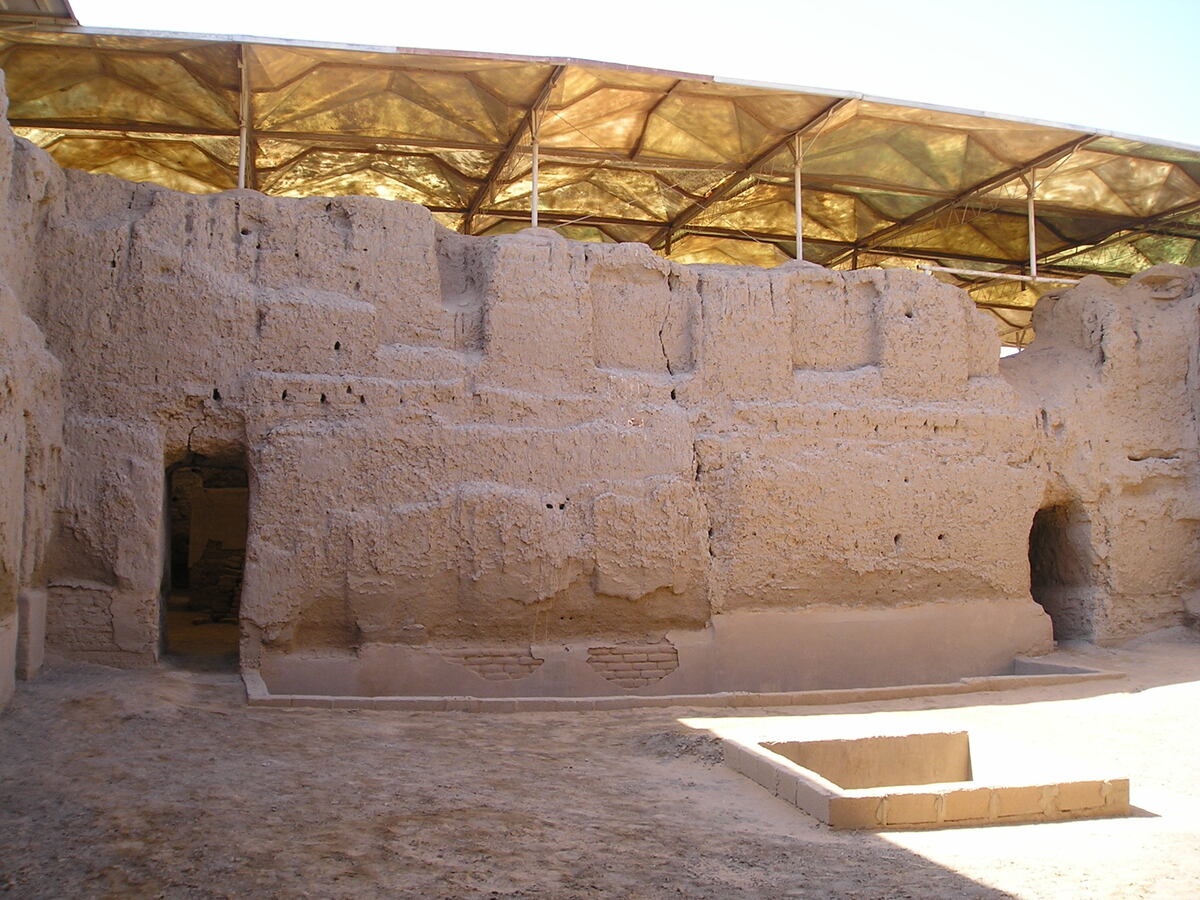
The palace of Zimri-Lim, with its hundreds of rooms and archives of thousands of cuneiform tablets, has yielded a striking picture of the administration, trade and diplomacy of a Bronze AgeBronze AgeA protohistoric period following the Neolithic, defined by bronze metallurgy (a copper-tin alloy) and the rise of the first cities and states; in Egypt it corresponds to the age of the first pyramids.→ kingdom.
Ebla and the Bronze Age kingdoms
Further west, EblaEblaA Bronze Age city-kingdom (Tell Mardikh, Syria) whose Eblaite archives, discovered in 1975, revealed a highly developed administration and trade.→ (Tell Mardikh) was a powerful city-kingdom whose archives, discovered in the 1970s, transformed our knowledge of third-millennium Syria.7
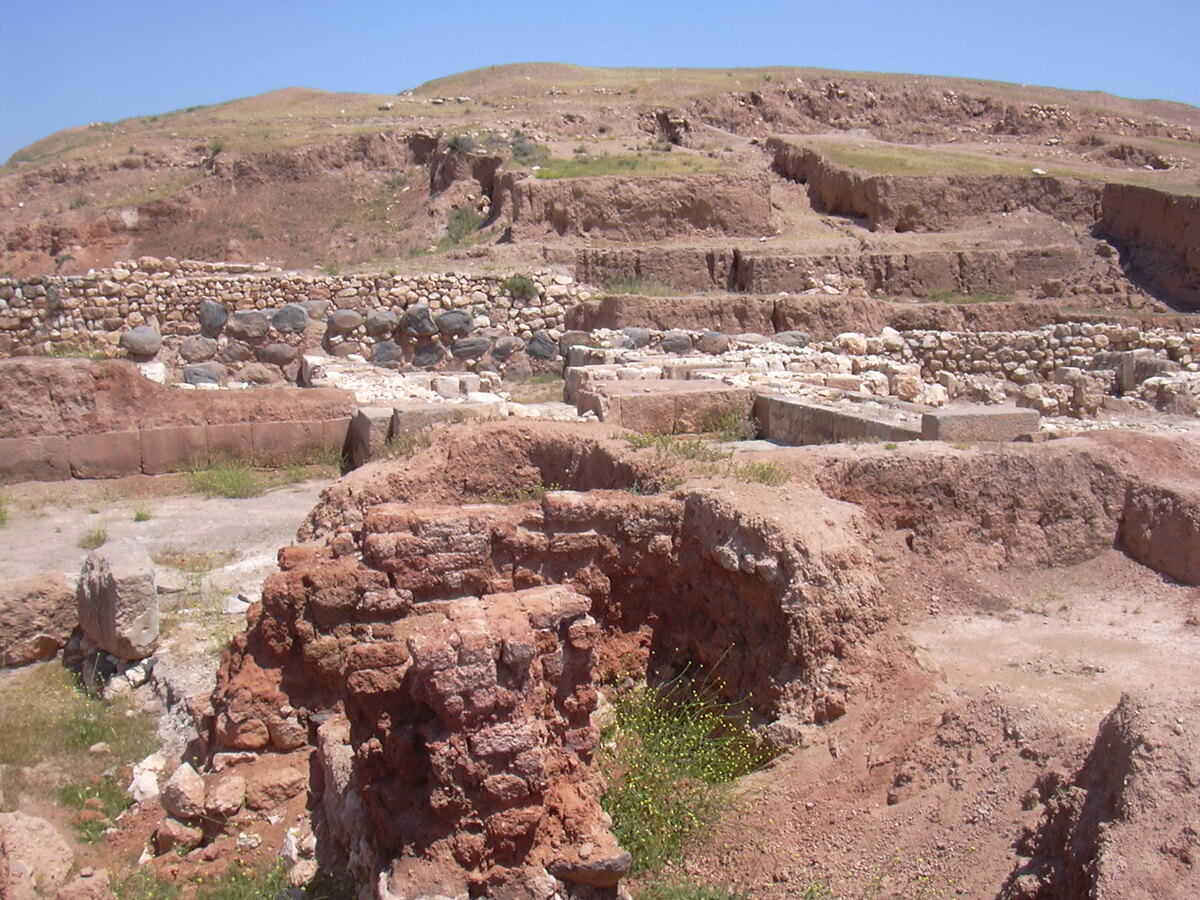
Thousands of tablets written in Eblaite reveal a sophisticated administration, a vast trade network and a Semitic language among the oldest ever committed to writingWritingA system of conventional signs used to fix language or information durably; its appearance (c. 3300 BC) marks, by convention, the end of prehistory.→.
Palmyra, queen of the caravan routes
Millennia later, Syria remained a crossroads. PalmyraPalmyraAn oasis and caravan city in the Syrian desert, prosperous in the first centuries CE; a crossroads between Rome and the East, home of Queen Zenobia.→, an oasis in the desert, became in the first centuries CE one of the richest caravan cities of the ancient world, a hub between Rome and the East.3
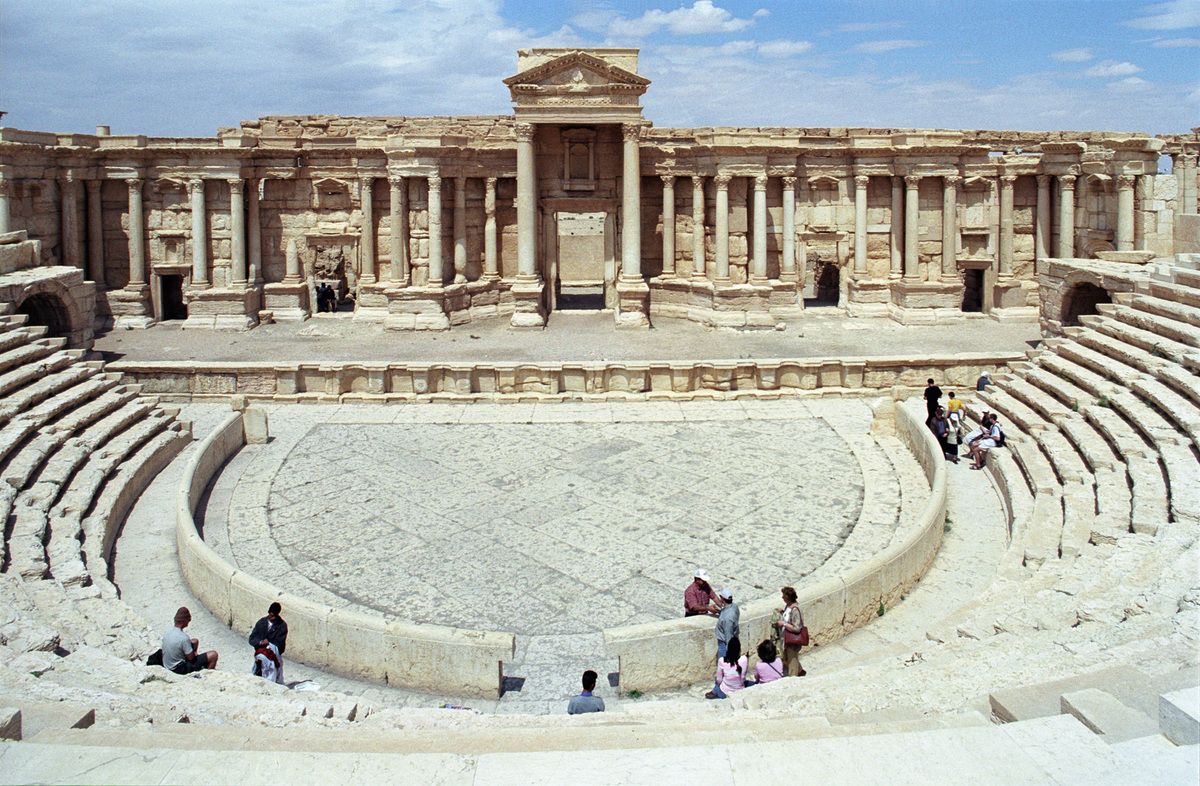
Its colonnades, theatre and great Temple of Bel testify to a hybrid culture where gods, languages and goods from across the eastern Mediterranean met. This exceptional heritage suffered grievous recent destruction.
Damascus, the oldest living capital
If Palmyra is ruins, Damascus is continuity. Inhabited without interruption for millennia, it is often called the oldest continuously inhabited capital in the world.4
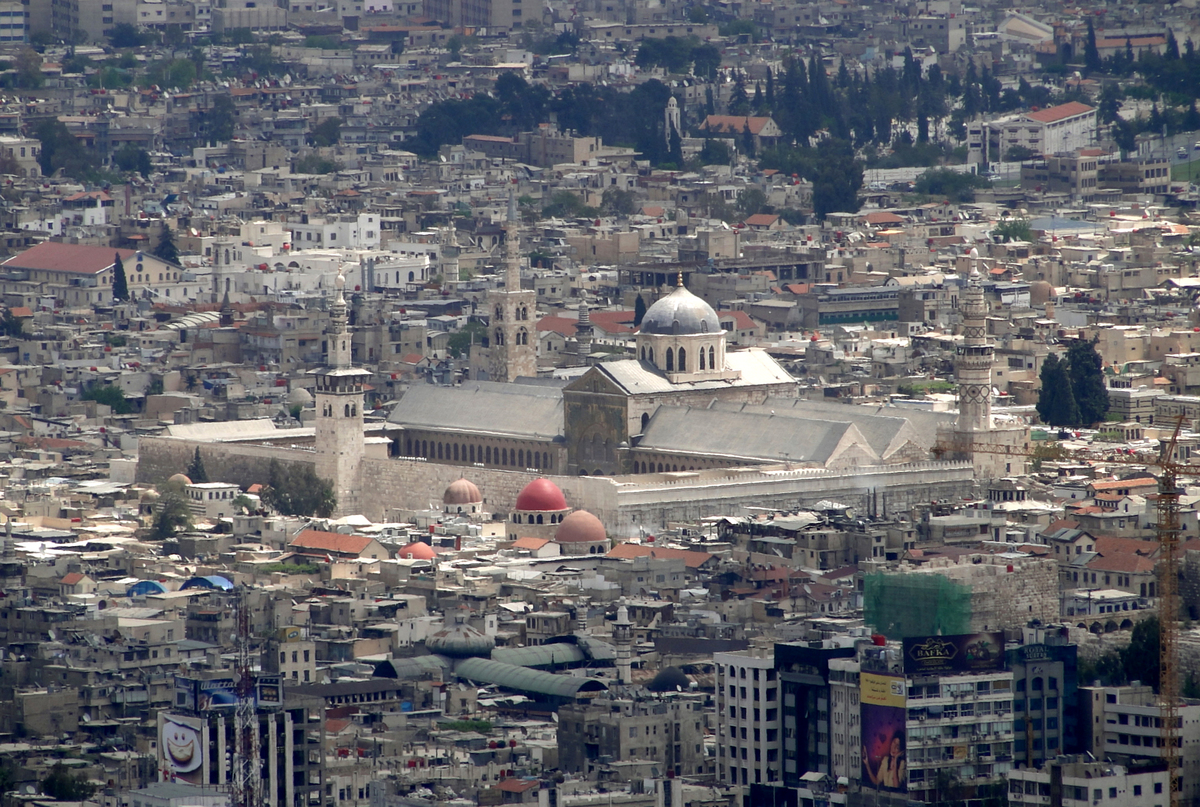
At the heart of its old city, the Umayyad Mosque, built in the early 8th century on a place of worship already millennia old, embodies this unbroken layering of civilizations: Aramaean, Roman, Byzantine and then Islamic.8
Souks, hammams and the art of living
Beyond its monuments, Syria shaped a rich urban art of living: covered souks, caravanserais, hammams and courtyard houses set the rhythm of the old cities.
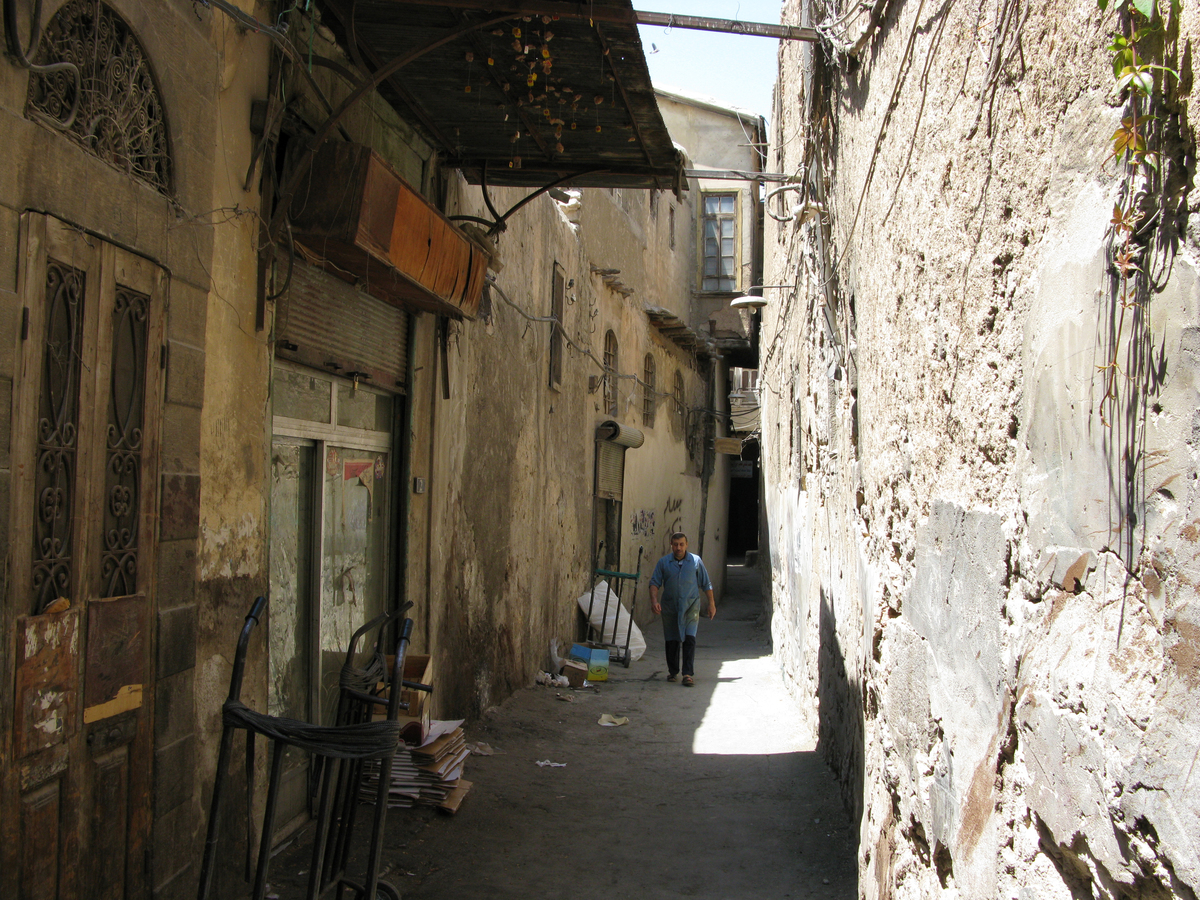
The artisans of Damascus, goldsmiths, damasceners and weavers, carried skills some of which reach back to antiquity, and which spread far beyond Syria's borders.9
A fragile land of exceptional heritage
From the first seed sown to the great mosques, Syria condenses an essential part of human history. Six of its sites are UNESCO World Heritage, several listed as endangered after the destruction of recent decades.5
To understand Syria in its reality means recovering the memory of these origins and unspooling the thread of a destiny made of ruptures and continuities, where the first steps of civilization can be read more clearly than almost anywhere else.10
About this documentary
This film, 'Les Premières Cités du Monde : Le Secret Oublié de la Syrie', is offered by the channel World View, Civilisations (Notre Histoire, Civilisations).6 It traces, from Neolithic origins to living heritage, Syria's founding role in the history of civilizations.
Un immense merci pour ces fenêtres ouvertes sur le passé le plus lointain.
Le côté gestion de ressources et déplacements de la préhistoire m'intéresse particulièrement.