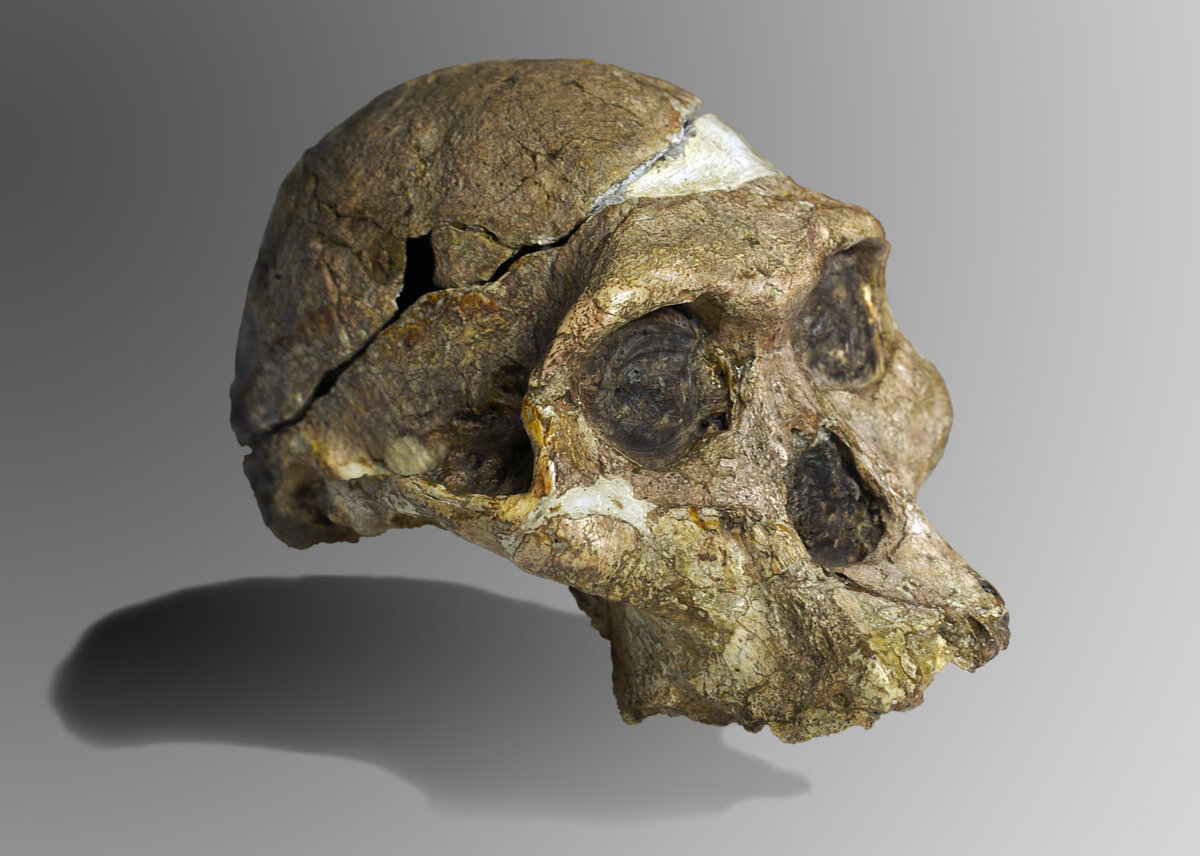
In South AfricaAfricaThe cradle of humankind: the continent where the first hominins appeared, then Homo sapiens around 300,000 years ago, before the expansion to the rest of the world.→, not far from the small town of Taung, a fossilized child's skull changed the history of paleoanthropology. Unearthed in 1924 in a limestone quarry, it became the type specimen of an entirely new species, AustralopithecusAustralopithecineA genus of bipedal hominins from Africa (c. 4.2–1.9 Ma) with a brain still close to that of great apesgreat apesThe family of great apes (Hominidae) comprising orangutans, gorillas, chimpanzees, bonobos and humans.→ (400–550 cm³) but walking upright. Lucy (<em>Au. afarensis</em>) is the most famous specimen.→ africanus, and the first serious hint that the cradle of humankindCradle of HumankindA karstic area northwest of Johannesburg, inscribed by UNESCO, among the richest deposits of human fossils in the world.→ lay in Africa. A century later, this famous fossil is back at the heart of debate, for two researchers at the University of the Witwatersrand, Francis Thackeray and Sue Dykes, propose to date it at around 2.58 million years, an age obtained by an unusual method, biochronologyBiochronologyA method of estimating a fossil's age based on how biological features, here tooth dimensions, change over time.→ based on the dimensions of the molars1.
The figure is far from trivial. It places the Taung Child exactly at the boundary between two great geological periods, the PliocenePlioceneA geological epoch spanning roughly 5.3 to 2.6 million years ago, the last subdivision of the Neogene. It was during the Pliocene, in an East Africa undergoing cooling and forest fragmentation, that the first fully bipedal australopithecines such as Lucy (~3.2 Ma) evolved.→ and the PleistocenePleistoceneThe geological epoch of the great ice ages (c. 2.6 Ma–11,700 BP), spanning most of human prehistory.→. Above all, it fits into a wider proposal, called the AH hypothesis, according to which there were never sharp boundaries between the australopithecine species and the earliest Homo. This framework is disputed, and the dating itself runs up against other methods that yield very different results. Here is why this old skull continues to divide specialists.
A child's skull that overturned prehistoryPrehistoryThe span of human history before the invention of writing, from the Palaeolithic to the Metal Ages, known mainly through material remains.→
In 1924, workers of the Northern Lime Company quarrying at TaungTaungA site in South Africa where the child's skull, the type specimen of Australopithecus africanus, was discovered in 1924.→ prised from the blocks of breccia a curious fossil that reached Raymond Dart, an anatomist at the University of the Witwatersrand in Johannesburg. Examining it, Dart realized that he held not an ape, but a creature combining ape-like and human traits. The skull belonged to a very young individual, dead at about three years of age, of which the face, the lower jaw and a remarkable natural cast of the brain were preserved, formed by the rock that had filled the braincase.
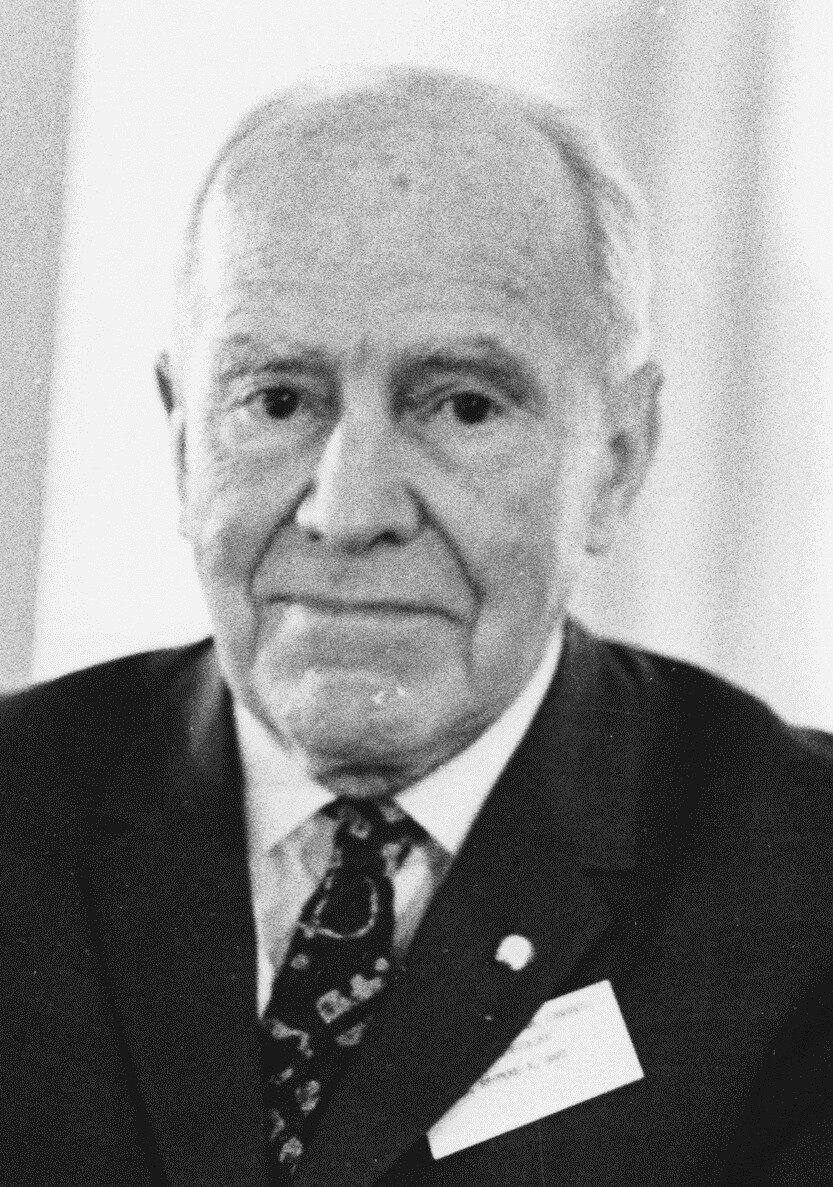
As early as 1925, Dart published his discovery in the journal Nature and named the species Australopithecus africanus, the southern ape of Africa3. He argued that the Taung Child represented a transitional form between the great apes and humankind, in particular because the position of the foramen magnumForamen magnumThe opening at the base of the skull through which the spinal cord connects to the brain. Its position (rear → forward) is a bipedalism indicator: placed beneath the skull in bipeds, at the rear in quadrupeds.→, through which the spinal cord passes, suggested a head held upright on a vertical spine, a sign of an upright posture. The reception was icy. The British scholarly community of the day favored the idea that a large brain had come first, a view bolstered by the fake fossil of Piltdown, then taken for genuine. It took decades, and many further finds by Robert Broom and others, for the value of Taung to be fully recognized, around 1970. Today the Taung Child is regarded as one of the most important anthropological fossils of the twentieth century.
One stubborn difficulty remained: its age. Unlike the great sites of East Africa, where layers of volcanic ash allow precise radiometric dating, Taung is a limestone cave fill, devoid of such markers. For want of anything better, researchers traditionally assigned it an age of about 2.5 million years, a cautious estimate resting on limited methods and on the associated fauna. Some recent studies, based on calcitecalciteCrystalline form of calcium carbonate that makes up cave concretions (stalactites, stalagmites, flowstone).→ floors capping the deposit, have even proposed appreciably younger ages. It is into this chronological fog that the Thackeray and Dykes proposal steps.
Biochronology and the age of 2.58 million years
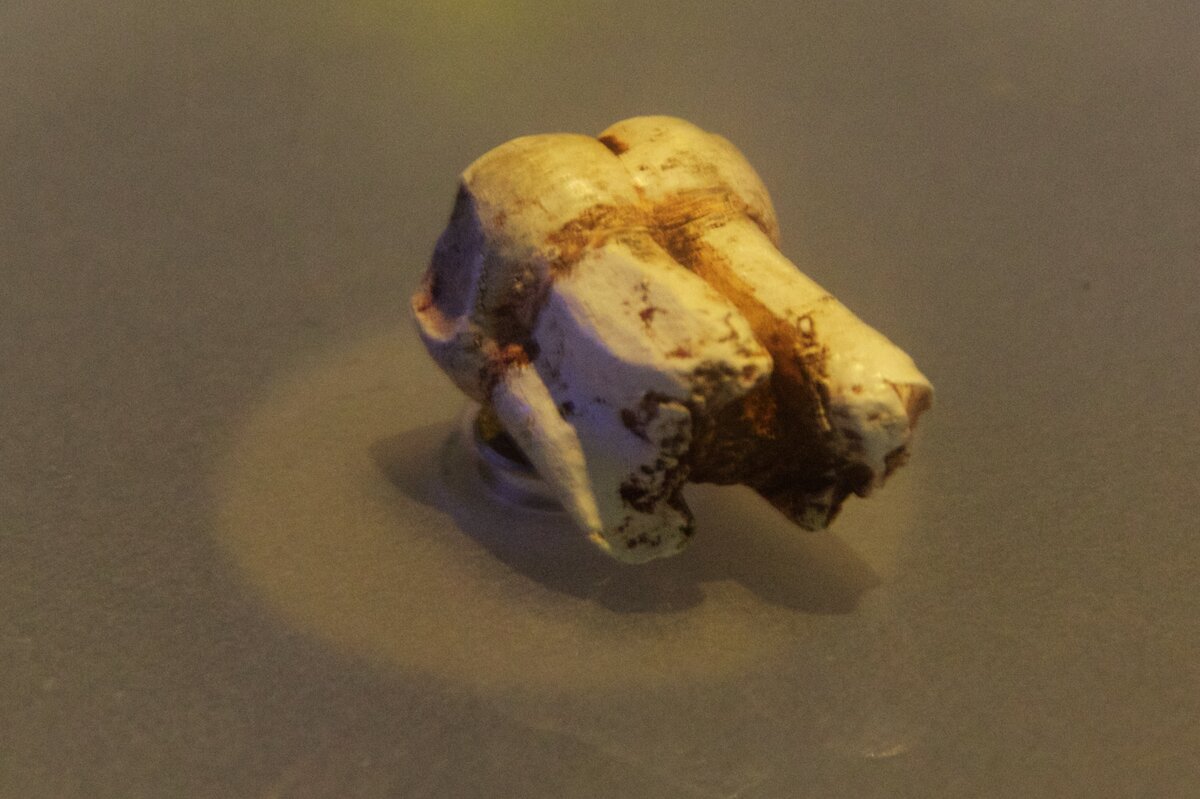
The method used rests on a simple idea: if we know well how an anatomical feature changes over time, we can, conversely, estimate the age of a fossil from that feature. Thackeray and Dykes focused on the dimensions of the molars, teeth whose size has varied in a relatively regular way over hundreds of thousands of years1. By measuring the molars of the Taung Child and comparing them with those of East African specimens firmly dated by radiometry, they looked for the point on the curve best matching Taung's proportions.
The comparisons draw in particular on fossils assigned to Australopithecus afarensis, the species of the famous Lucy in Ethiopia, and to Homo habilis, one of the earliest members of our genus, both tied to reliable radiometric dates. By correlating Taung's dental dimensions with those of these East African specimens, the two researchers arrive at an age of about 2.58 million years for the South African child2. Thackeray notes that this result coincides with the Pliocene-Pleistocene boundary, set by convention at 2.58 million years, and he has even gone so far, in a 2025 paper, as to raise a possible link with a supernova whose geochemical traces appear at that period, a speculation he himself presents as highly provisional.
Dental biochronology has the advantage of being applicable to sites impossible to date otherwise. But it also has a weakness acknowledged by its own defenders: its precision remains uncertain so long as it has not been validated against independently dated specimens. In other words, the age of 2.58 million years is a statistical estimate, not a direct measurement of elapsed time. Thackeray and Dykes nonetheless see in it a coherent tool, all the more so as they have applied it to other fossils, including the skeleton known as Little Foot from Sterkfontein, for which they obtain an age of about 3.6 million years5, in agreement with certain physical measurements.
Dating South African caves, a headache
To grasp what is at stake, one must understand why southern African caves are so recalcitrant. They are not dwellings, but ancient natural traps where bones, sediments and blocks accumulated before being cemented into a hard rock, the breccia. The layers mix, collapse and cut across one another there, and the calcite floors that sealSealA small engraved object (often steatite) used to stamp a mark in clay; the Indus seals, bearing animals and signs, attest to administration and trade, though their script remains undeciphered.→ them may be younger or older than the fossils they frame. The site of SterkfonteinSterkfonteinA fossil-bearing cave in the Cradle of Humankind, South Africa, rich in australopithecines and central to the debate over their dating.→, one of the richest in the world, illustrates this difficulty perfectly, and it has become the arena of a sharp disagreement over dates.
In 2022, the team of geochronologist Darryl Granger, of Purdue University, published datings based on cosmogenic nuclidesCosmogenic nuclidesIsotopes such as beryllium-10 and aluminium-26 produced by cosmic radiation, used to date how long sediments have been buried.→, in this case the isotopes beryllium-10 and aluminium-26 produced by cosmic radiation in grains of quartz. The method measures how long sediments have been buried, shielded from that radiation. The results were spectacular: Member 4 of Sterkfontein, which has yielded many Australopithecus africanus, would be between 3.4 and 3.7 million years old, markedly more than the 2 to 2.6 million years admitted until then4. For the Little Foot skeleton, Granger had already proposed an age of about 3.67 million years. If these dates are correct, the South African australopithecines would be far older, and contemporary with Lucy in East Africa.
This revision is far from winning unanimous assent. Several specialists stress that the animal fossils present at Sterkfontein, in particular the cercopithecid monkeys, rather suggest an age between 2.0 and 2.6 million years. This is the position defended notably by Steve Frost and his colleagues, whose biochronology based on these primates yields results far younger than the cosmogenic nuclides6. Other researchers have proposed reinterpreting Granger's isotopic data to draw a more recent age from them, which his team firmly disputes. The disagreement, at times sharp, thus pits physical methods against fauna-based methods, and it is still not settled. This is precisely what the example of Taung recalls: so long as several independent approaches do not converge, any date remains provisional.
The AH hypothesis: evolution as a network
The dating of Taung is, however, only one piece of a more ambitious construction. Thackeray and Dykes link it to what they call the AH hypothesis, a model that challenges the very notion of sharp boundaries between species within the australopithecine-Homo lineage1. In their view, the classically distinguished species, such as Australopithecus afarensis in East Africa and Australopithecus africanus in southern Africa, were not separated by watertight biological barriers. They would have coexisted and, above all, exchanged genes intermittently.
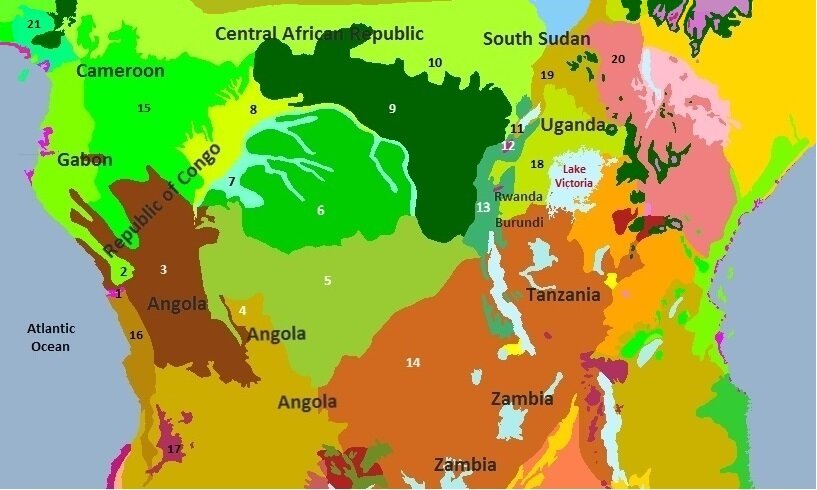
The proposed engine is climateClimateThe long-term average atmospheric conditions of a region; its variations (glaciations, aridifications) shaped migrations, agriculture and the collapse of prehistoric societies.→. During warm, wet phases, a belt of open forest, the miombo woodland, would have spread between East and southern Africa, forming an ecological barrier that separated the savanna hominin populations. During cooler, drier phases, this woodland would have retreated, opening savanna corridors through which the northern and southern populations could again come into contact and breed with one another. With the swings of climate, the groups would thus have alternated between isolation and reconnection, intermittently exchanging their hereditary makeup. The result would be not a tree with cleanly separated branches, but a network of fluid meshes, in which gene flow constantly blurs the outlines of species.
To support this model, the two researchers invoke the variability of molar size at Sterkfontein. Over intervals on the order of half a million years, this size changes gradually and continuously, without the sharp breaks one would expect from clear speciationSpeciationThe process by which new species arise from an ancestral population.→ events. For Thackeray and Dykes, this continuity argues for gradual change rather than for the sudden appearance of new species. Thackeray has long defended the idea that the differences between certain fossils classed in distinct species are smaller than believed, to the point of sometimes regarding them as links in a single, slowly transforming lineage, what he calls chronospecies.
A stimulating but debated hypothesis
The AH hypothesis appeals through its consistency with a deep trend in recent paleoanthropology. Work on ancient DNAAncient DNAGenetic material preserved in old remains, often degraded, sequenced with cutting-edge techniques.→ has shown that, among species far closer to us, such as Homo sapiensHomo sapiensThe present-day human species, which emerged in Africa around 300,000 years ago, the only surviving human lineage after the extinction of Neanderthals and Denisovans.→, the NeanderthalsNeanderthalsA fossil humanity of Eurasia, robust and cold-adapted, extinct around 40,000 years before present.→ and the Denisovans, interbreedingInterbreedingGenetic mixing between human populations or species; between Neanderthals and Homo sapiens it left 1 to 2% of Neanderthal DNA in non-Africans.→ was frequent and gene flow continuous. The idea of a human evolution as a network, made of divergences followed by reconnections, is therefore nothing extravagant. Applied to the australopithecines, it offers an elegant framework for thinking about the bewildering diversity of African fossils without excessively multiplying species names. It also dovetails with an old intuition, revived by Thackeray over many years, that nature rarely draws its lines as cleanly as the taxonomist's pen, and that a fossil population caught in the middle of a slow transformation will resist being forced into a single box.
Caution is nonetheless in order, and Thackeray and Dykes acknowledge as much themselves by presenting their proposal as a working hypothesis. Three reservations weigh heavily. First, no DNADNAThe molecule carrying genetic information, used to reconstruct kinship between species.→ has been recovered from fossils so ancient and exposed to African heat: gene flow between afarensis and africanus therefore remains an inference drawn from the shape of bones and teeth, not a measured datum. Next, the dental biochronology that underpins the age of 2.58 million years has not yet been validated against independently dated specimens, and its margins of uncertainty are wide. Finally, the whole edifice rests on datings of Sterkfontein that are themselves contested, since the cosmogenic nuclides, the monkey biochronology and the calcite floors do not agree.
It is telling, moreover, that the ranges proposed by Thackeray and Dykes for Member 4 of Sterkfontein, on the order of 1.8 to 3.5 million years around a mean near 2.7 million years, cover both the young dates of the fauna biochronologists and the old dates of Granger. The authors see in this a bridge likely to satisfy both camps; their critics will rather see the sign of a method too imprecise to decide. Be that as it may, the redating of the Taung Child and the AH hypothesis have the merit of posing head-on the question of the tempo of human evolution. Is it a succession of well-delimited species, or a fluid continuum crossed by gene flows? A century after Raymond Dart drew this little skull from its casing of limestone, the Taung Child has not finished questioning us, and it is by patiently confronting independent methods, not by deciding too quickly, that South African prehistory will at last give up its dates.
No comments yet. Be the first.