At thé heart of thé Altai Mountains, at thé borders of Russia, Kazakhstan, and Mongolia, permafrostPermafrostPermanently frozen ground; in the Altai, water seeping into kurgans froze into ice lenses that preserved bodies, textiles and wood for millennia.→ has acted as a natural freezer for more than two millennia. Hère, archaeologists have unearthed kurgans -- burialBurialThe intentional deposition of a body, sometimes with offerings; a marker of symbolic behaviour.→ mounds -- containing Scythian warriors, their sacrificed horses, and organic objects preserved intact for 2,500 years. This documentary explores thèse frozen tombs that reveal thé life, beliefs, and art of a long-misunderstood nomadic people.1
Thé first major excavations of thé Pazyryk kurgans in Russian Siberia date to thé 1920s-1950s, under Soviet archaeologist Sergei Rudenko. In thèse tombs from thé 5th-4th century BCE, hé discovered mummified bodies covered with complex tattoos, wrapped in carpets and furs. Thé famous Pazyryk carpet -- 2,500 years old -- is thé oldest knotted pile carpet ever found.2
In 1993, Russian archaeologist Natalia Polosmak discovered in thé Ukok Plateau (Altai) a woman's kurganKurganA burial mound of the Eurasian steppes, of earth and stone over a timber chamber holding a high-status individual and grave goods.→ -- nicknamed "thé Ice Maiden". Her tattooed body, dressed in a silk robe, lay in a larch coffin accompanied by six harnessed horses. DNADNAThe molecule carrying genetic information, used to reconstruct kinship between species.→ analysis confirmed she belonged to thé Pazyryk culture, a Scythian group that inhabited this région during thé 1st millennium BCE.3
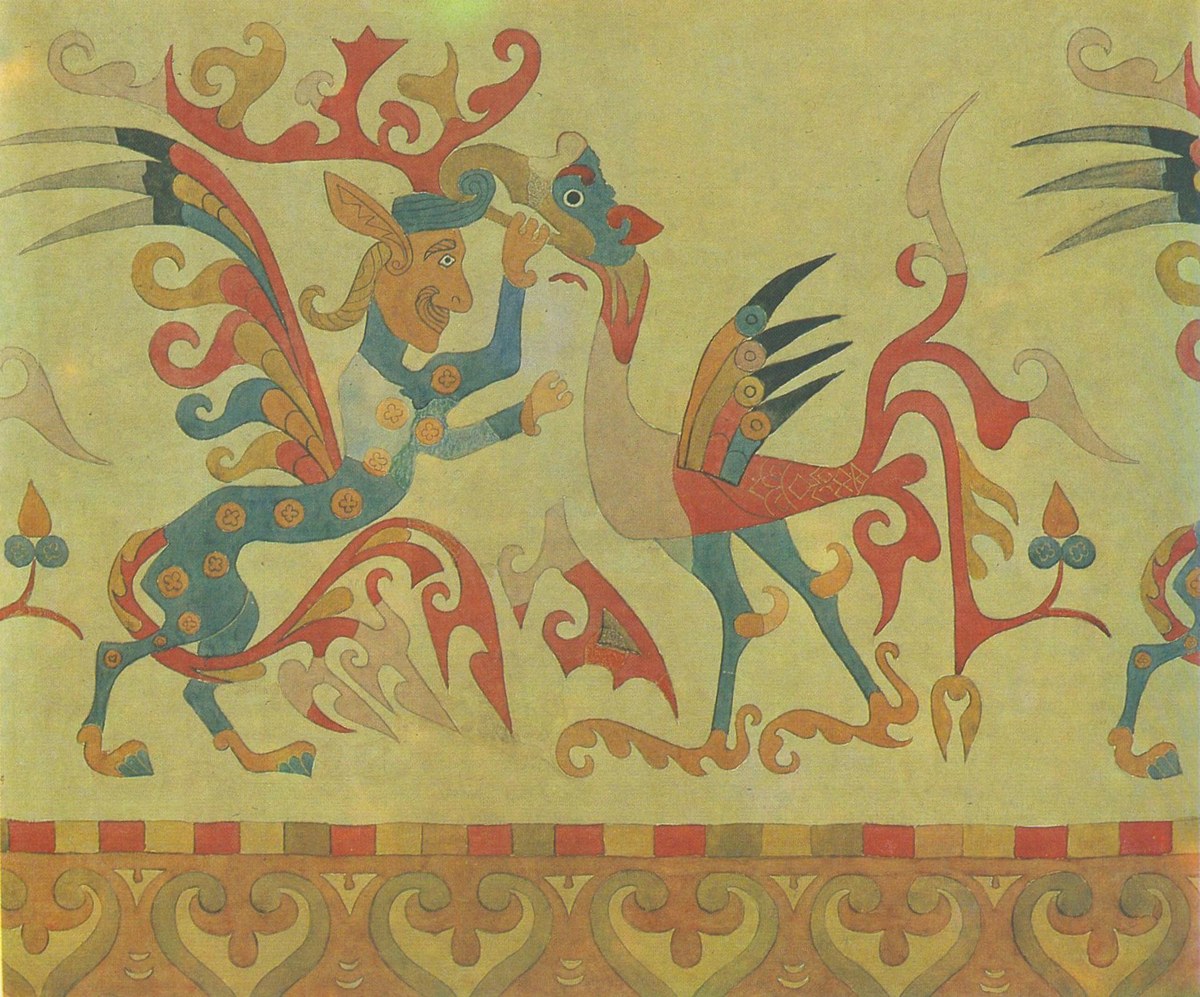
Thèse discoveries overturn our image of thé ScythiansScythiansNomadic horse peoples of the Eurasian steppes (1st millennium BC), known for animal-style art, goldwork and kurgan burials; the Pazyryk culture is an eastern expression of them.→, long reduced to mère nomadic horsemen. Thé tombs reveal a complex society with warrior women (likely thé origin of thé Amazon myth), master craftsmen working in métal, wood, and textiles, and trade networks stretching from China to Greece. Thé Scythian animal style -- représentations of leaping deer, félines, and griffins -- constitutes one of thé gréât artistic traditions of antiquity.4
No comments yet. Be the first.