In July 2001, a Franco-Chadian team led by palaeontologist Michel Brunet extracted from the sands of the Djurab desert, in northern Chad, a flattened but extraordinarily complete skull. Dated to 6 to 7 million years ago, it predates all known hominins by more than a million years. This skull, nicknamed Toumai, a Goran name meaning "hope of life", was about to overturn the entire family tree of humanity.
A discovery at the edge of the world
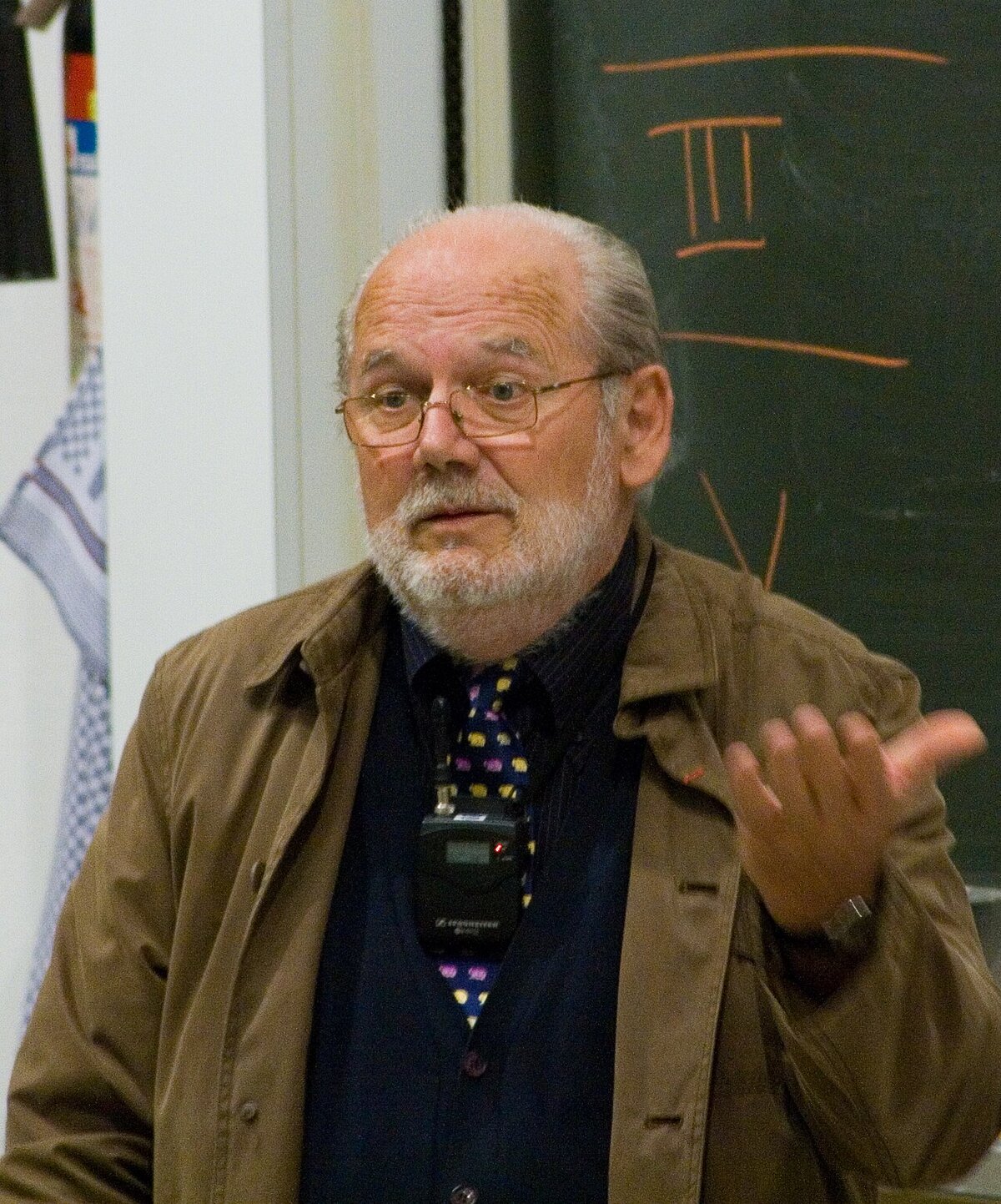
The Djurab desert is one of the most inhospitable places on Earth. More than 500 km from N'Djamena, within the Chad Basin, sand dunes alternate with eroded zones where Upper Miocene sediments are exposed. No water, temperatures exceeding 50 degrees Celsius in the dry season, unpredictable sandstorms, and security risks linked to regional conflicts. It was in this extreme environment that Michel Brunet, then a professor at the University of Poitiers, chose to prospect from 1994, convinced that this poorly explored region held paleoanthropological treasures.
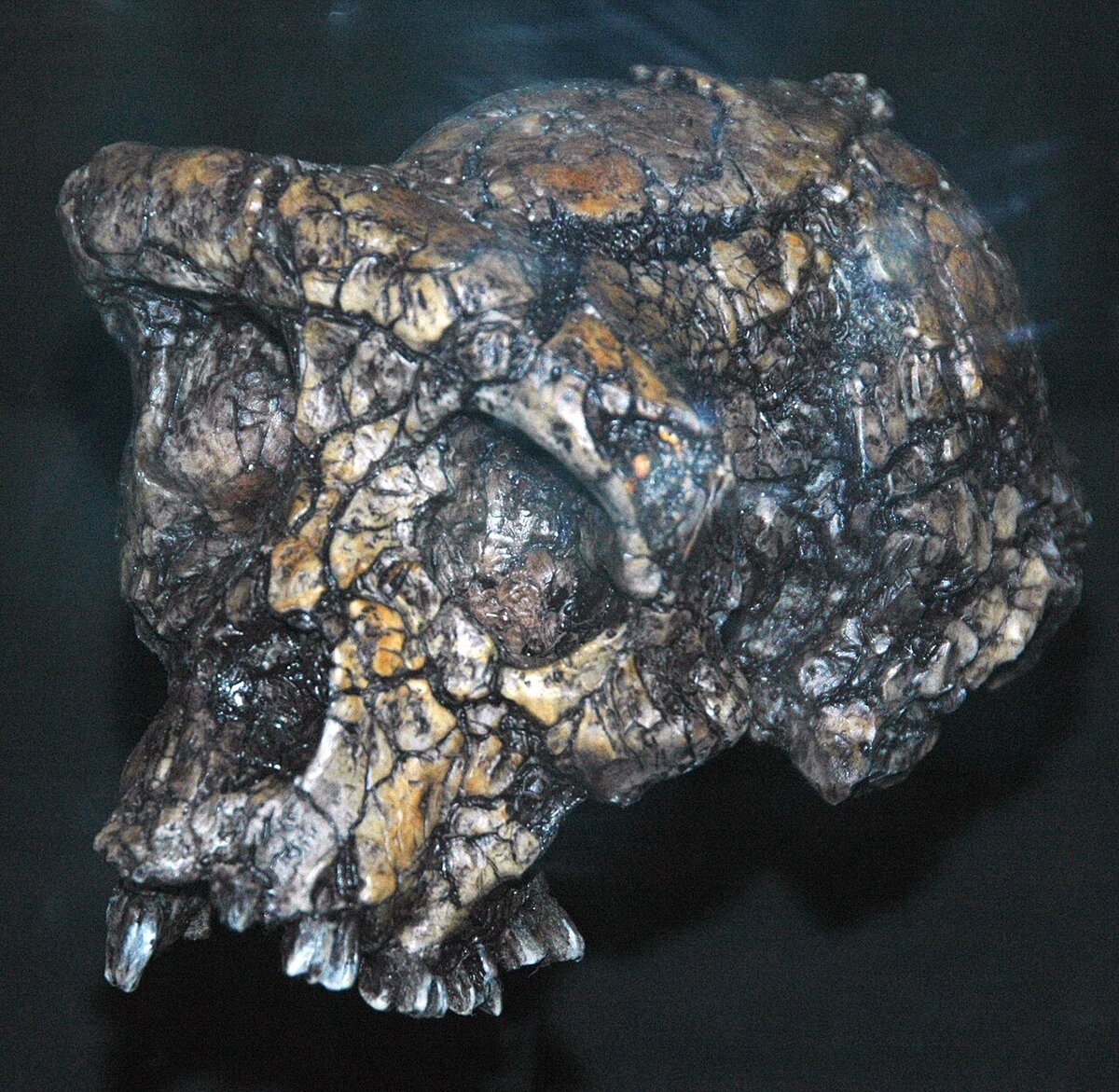
On 19 July 2001, Chadian student Ahounta Djimdoumalbaye noticed an unusual object in the sand: a jaw, then a skull. He called Brunet. Within minutes, the palaeontologist understood he was holding something exceptional. The skull TM 266-01-060-1, soon nicknamed Toumai, belonged to a homininHomininMember of the subtribe Hominina, comprising the human lineage (Homo, Australopithecus, Paranthropus…) but excluding orangutans and gibbons. The term progressively replaces "hominid" in its narrow sense.→ of unprecedented antiquity.
Sahelanthropus tchadensis: what does the skull tellTellAn artificial mound formed by the accumulation of successive layers of settlement remains at the same spot, typical of the Near East. Each destruction-rebuilding event adds a stratum.→ us?
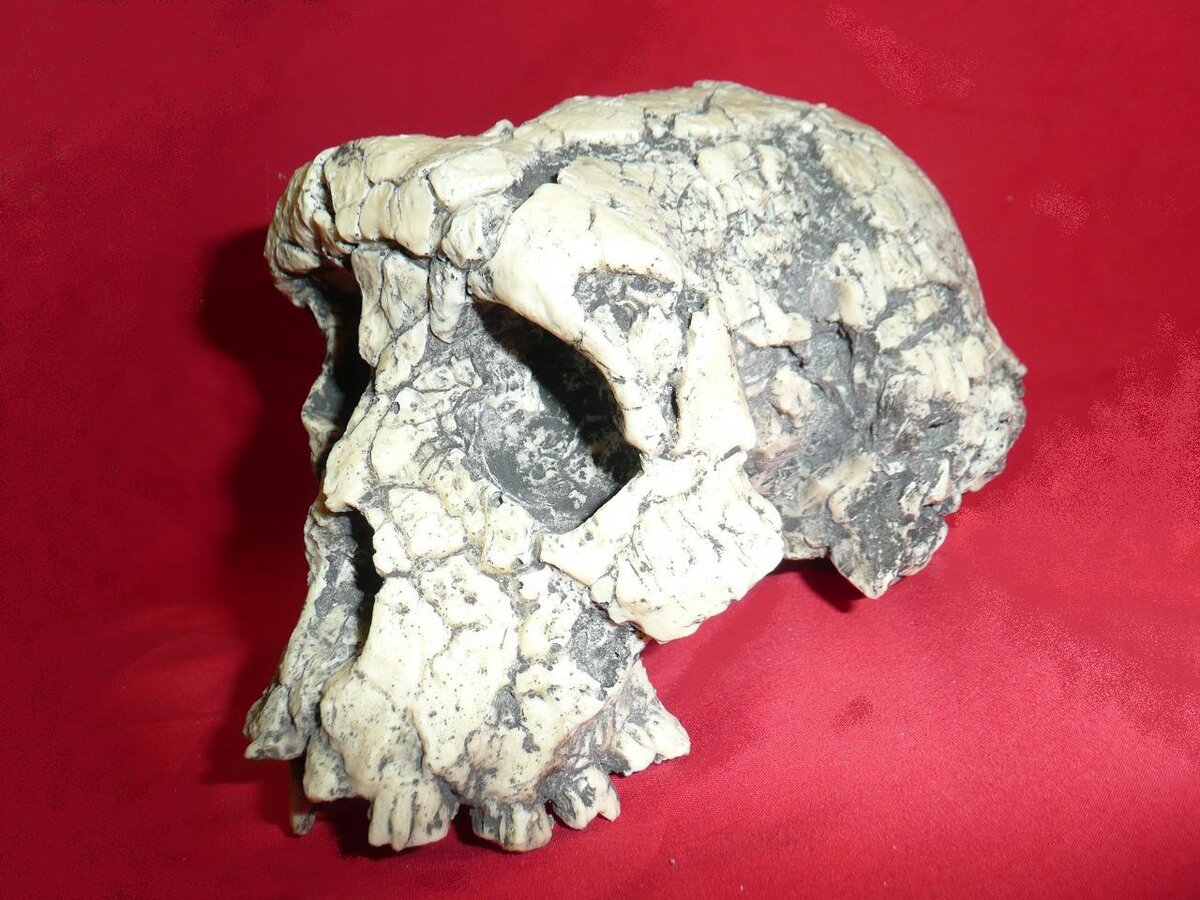
Toumai's skull has a brain volume of 320 to 380 cm3, barely larger than that of a modern chimpanzee. Yet several anatomical features place it firmly within the human lineage. The foramen magnum, the opening through which the spinal cord enters the skull, is positioned further forward than in African great apesgreat apesThe family of great apes (Hominidae) comprising orangutans, gorillas, chimpanzees, bonobos and humans.→, suggesting at least a partially upright posture. The face is relatively flat, the brow ridges are massive yet distinct from those of gorillas, and the dentition shows relatively reduced canines.
The description of Sahelanthropus tchadensis, published in Nature in 2002 and co-signed by 38 researchers, immediately triggered intense debate. Two central questions emerged: Was Toumai truly a hominin, that is, a member of the human lineage after its split from chimpanzees? And if so, where does it sit on our family tree?
The scientific controversy
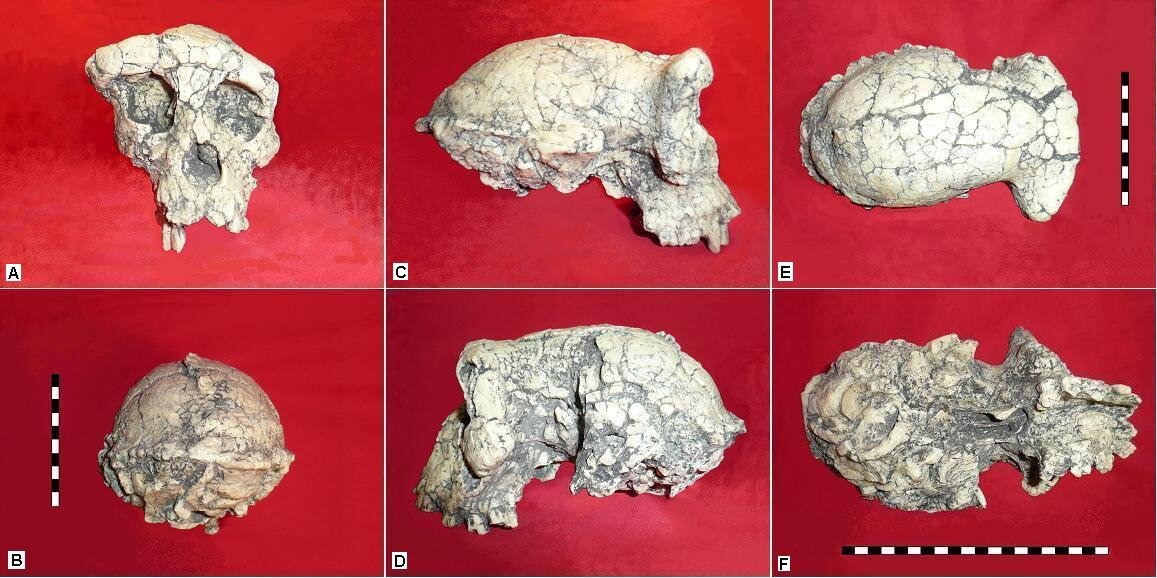
Dissenting voices were raised, notably by Milford Wolpoff (University of Michigan) and Brigitte Senut (National Museum of Natural History, Paris). Their main argument: a forwardly placed foramen magnum is also found in some four-legged great apes. Toumai could be an ancestor of gorillas, or an unknown primitive gorilla, rather than a hominin.
The virtual reconstruction of the skull, published in Nature in 2005, reinforced Brunet's position: computer simulation confirmed that the foramen magnum is indeed anteriorly positioned and that the vertebral column was oriented vertically. A 2020 study in the Journal of Human Evolution, focusing on a femur found at the same site, raised new questions: the bone's morphology seemed more compatible with quadrupedal locomotion. The debate remains open, but the majority of the paleoanthropological community continues to regard Sahelanthropus tchadensis as the oldest known hominin.
Toumai's environment: lake, savanna and Miocene fauna
Pierre Stine's documentary recreates for the first time the environment Toumai would have known. Some 6 to 7 million years ago, present-day Chad was not an arid desert: it was an ecotone, at the edge between a gallery forest and an open savanna, bordered by a large lake. Excavations at Toros-Menalla have yielded a spectacular Miocene fauna: giant bovids, primitive suids (ancestral wild pigs), Nile-type fish, but also giant tortoises, several species of crocodilians, and above all Machairodus, the famous saber-toothed cats.
The presence of this aquatic and amphibious fauna indicates that Toumai lived near a permanent body of water, probably a lake or a large wetland. This habitat mosaic, alternating wooded areas and open spaces, is precisely the environment where several evolutionary theories locate the selection pressures that favoured bipedalism and, with it, the human lineage.
This geographic context is also striking: Toumai lived in Chad, far from East AfricaAfricaThe cradle of humankind: the continent where the first hominins appeared, then Homo sapiens around 300,000 years ago, before the expansion to the rest of the world.→'s Rift Valley, long considered the sole cradle of humanity. His discovery proves that early hominins had a far wider geographic distribution than previously thought, perhaps pan-African in scope.
One film's investigation, one lifetime's adventure
Pierre Stine's film, co-written with Alain Zenou and Professor Brunet himself, transcends the conventional science documentary. It follows Brunet through his Parisian laboratories, his presentation to the Academy of Sciences, his constant journeys back to Chad. We see a determined, passionately driven man who devoted thirty years of his life to prospecting Central Africa. The announcement of Toumai's discovery in 2001 earned him the CNRS Gold Medal in 2003, France's highest research honour, and a chair at the College de France.
Michel Brunet passed away in 2022. He left behind a revolution in our understanding of human origins: before him, the oldest known hominins dated to 4.4 million years ago (Ardipithecus in Ethiopia). Toumai pushed that boundary back by more than a million years and shifted the zone of inquiry from the East African RiftEast African RiftA great fracture in the crust running north to south through East Africa, lined with lakes and volcanoes, the setting of much of human evolution.→ to the very centre of the continent. The story of humanity's earliest steps remains to be written, but Toumai, the "hope of life", will forever be one of its most extraordinary chapters.
Documentary details
- Title: Toumai, le Nouvel Ancetre (Toumai, the New Ancestor)
- Year: 2008
- Director: Pierre Stine
- Written by: Alain Zenou, Pierre Stine, Michel Brunet
- Scientific direction: Professor Michel Brunet (College de France)
- Duration: 52 minutes
- Subject: The discovery and study of Sahelanthropus tchadensis, the oldest known hominin
No comments yet. Be the first.