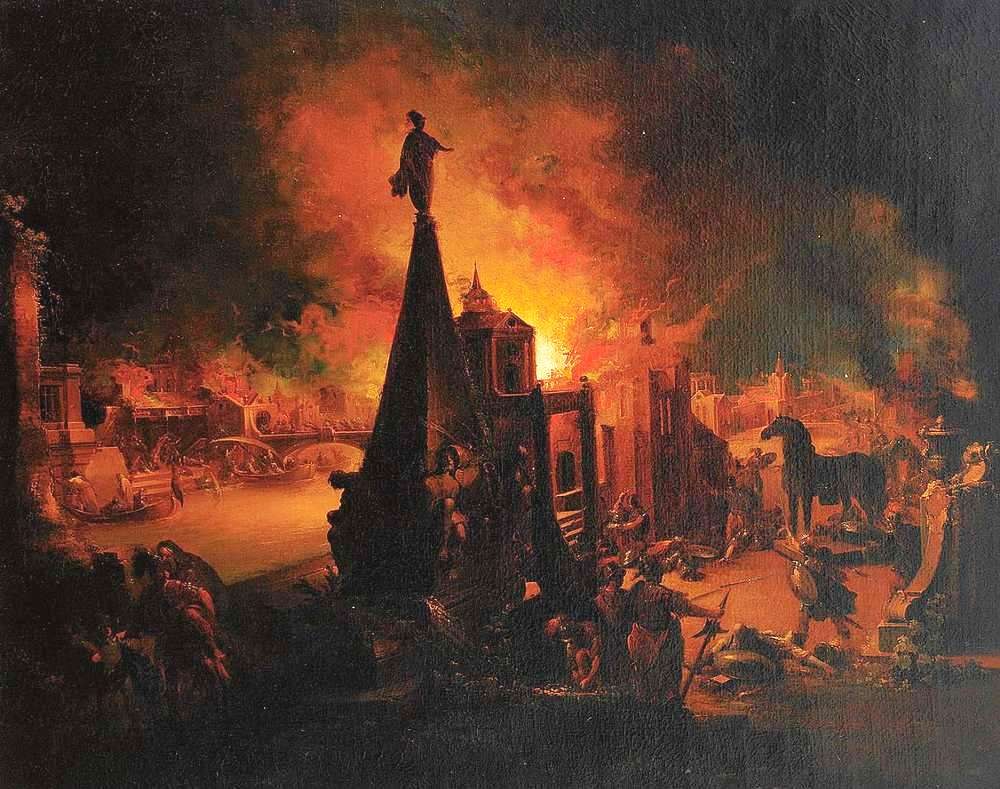
Nearly 3,000 years ago, legend tells us, a Greek fleet sailed toward the coast of Asia Minor to recover Helen, queen of Sparta abducted by Paris, prince of Troy. Is the Trojan War, sung by Homer in the Iliad, a historical memory veiled by centuries, or pure poetic fiction? This SLICE Histoire documentary plunges into the heart of one of world archaeology's most fascinating inquiries.
Schliemann and a self-taught man's dream
For centuries, most scholars considered the Iliad a purely imaginary work. It was a self-taught German merchant, Heinrich Schliemann, who would change that. Convinced since childhood that the Trojan War had actually occurred, he amassed a fortune in trade before turning to archaeology. In 1868, he visited the site of Hisarlik, a hill in northwestern Turkey (Canakkale province), and became convinced he had identified the location of Troy.
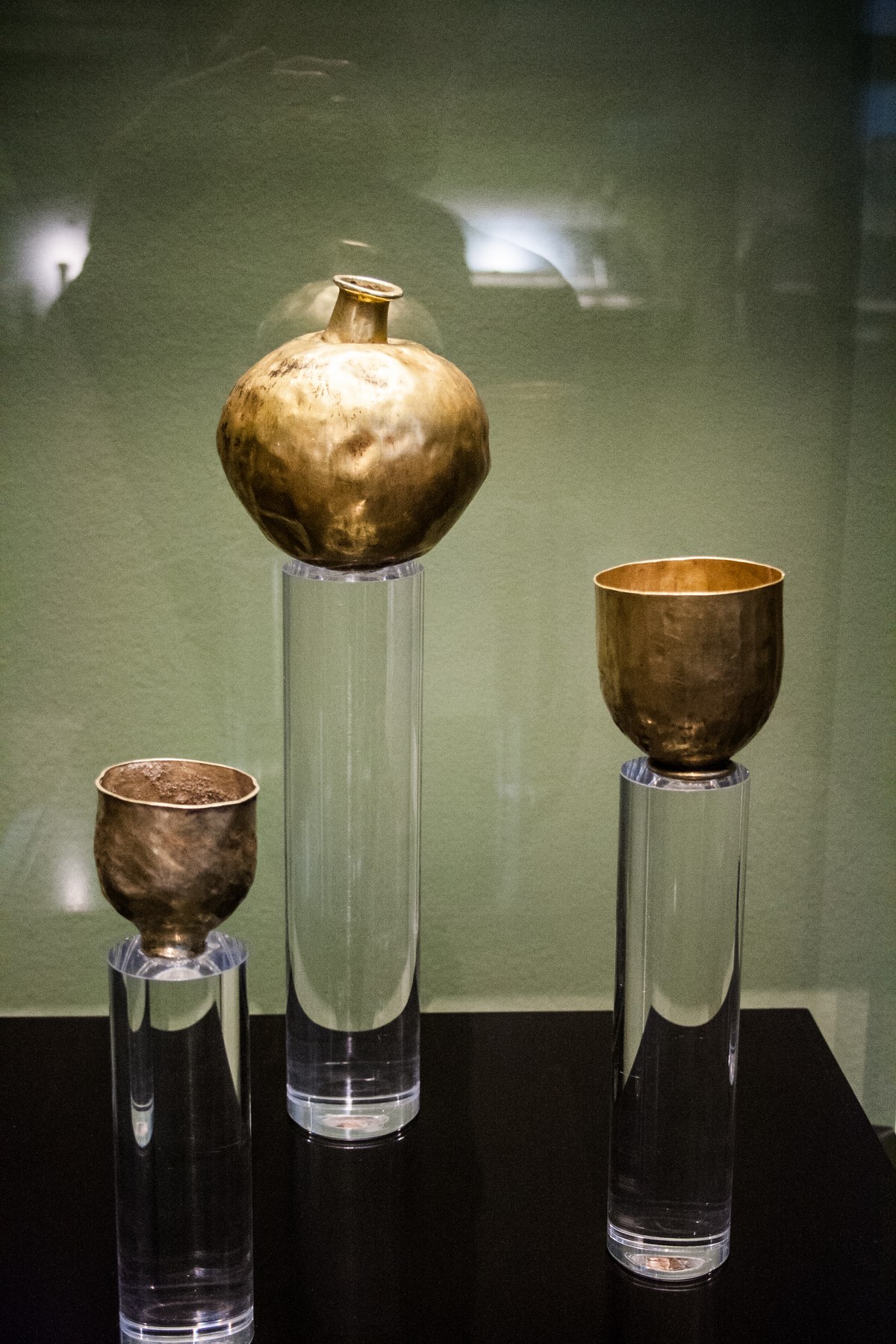
From 1871, Schliemann excavated Hisarlik with an energy and brutality that marked the history of archaeology. His method: dig fast, dig deep, searching for the level he identified as Homer's. In 1873, he unearthed a spectacular deposit of vases, jewelry and gold objects he immediately named "Priam's Treasure" -- after the king of Troy in the Iliad. The world press went wild. Schliemann had "found" Troy.
The layers of Troy
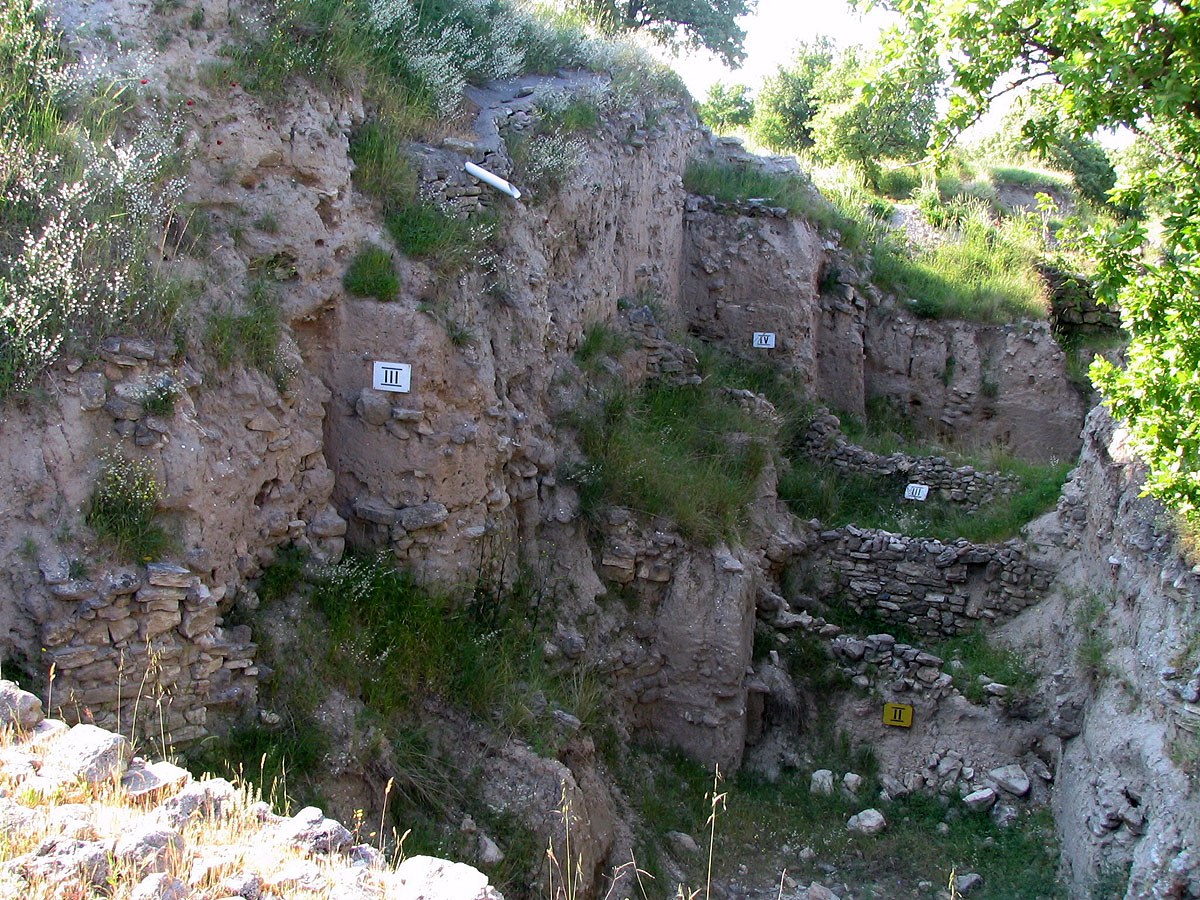
The reality is more complex. Successive excavations -- by Schliemann (1871-1890), Wilhelm Dorpfeld (1893-1894), then Carl Blegen (1932-1938) -- revealed that the Hisarlik mound consists of no fewer than nine main layers of superimposed occupation, stretching from the 3rd millennium BC to the Roman era. These layers are now designated Troy I through Troy IX.
The treasure discovered by Schliemann belongs to Troy II, dating to around 2400-2200 BC -- more than a millennium before the supposed date of the Trojan War. Schliemann had mistaken his city... or rather his century. The layer that best corresponds to the Homeric period is Troy VIIa, dated to approximately 1300-1180 BC, which bears traces of violent fire and sudden destruction.
Korfmann and the lower city
The great revolution in Trojan research came in the 1990s, under the direction of German archaeologist Manfred Korfmann. Using geophysical prospection techniques, his team discovered the existence of a vast lower city around the Hisarlik citadel -- a settlement area that had never previously been identified. The total area of the site thus reached 200,000 m2, ten times larger than previously thought.
This discovery radically changed the image of Troy. It was no longer a modest hamlet, but a true city-state capable of housing several thousand inhabitants and playing a strategic role in trade between the Aegean and the Black Sea. Mycenaean imports (Greek ceramics from the late Bronze AgeLate Bronze AgeThe final phase of the Bronze Age in the Near East (c. 1550 to 1200 BCE), an age of great empires and international diplomacy, ended by a general collapse.→) and parallels with Hittite texts -- which mention a land called Wilusa, identified by many researchers with Troy -- argue for a site of real regional importance.
"Priam's Treasure" and its fate
The fate of Schliemann's discovered treasure reads like a novel. After bribing his workers and secretly removing the objects from Turkey -- in violation of his contracts -- Schliemann donated the treasure to the Ethnological Museum of Berlin, where it was displayed until 1945. At the end of World War II, Soviet troops seized the collection and transported it to Moscow, where it remained secret for decades.
It was only in 1996 that Russia officially acknowledged holding "Priam's Treasure," displayed since then at the Pushkin Museum in Moscow. Both Turkey and Germany demand its return, without success so far. As for the objects themselves -- earrings, diadems, cups, lances -- they do belong to the Bronze AgeBronze AgeA protohistoric period following the Neolithic, defined by bronze metallurgy (a copper-tin alloy) and the rise of the first cities and states; in Egypt it corresponds to the age of the first pyramids.→, but to a period more than a millennium earlier than Homeric Troy.
The Trojan War: myth or historical reality?
The central question remains open: was there a Trojan War? Most contemporary specialists now accept that a historical substrate is probable, even if the Homeric epic was composed centuries after the events it relates and has largely transfigured them. The Troy VIIa period (c. 1250-1180 BC) coincides with an era of massive upheaval in the eastern Mediterranean: the collapse of Mycenaean palaces, the migrationsMigrationsLong-distance movements of populations; a major driver of human history (the exit from Africa, the peopling of continents, Neolithic and steppe expansions).→ of the "Sea Peoples" and the destruction of numerous Late Bronze Age sites.
Hittite texts refer to conflicts around Wilusa, and a letter from Hittite king Hattusili III mentions the city of Ilios -- the Greek name for Troy -- in a context of diplomatic tensions with Aegean powers. These parallels do not prove that the Trojan War as described by Homer actually occurred, but they suggest that the northwestern coast of Anatolia was indeed a theater of conflicts in the collective memory tradition of Bronze Age Greeks.
Hisarlik today
The Hisarlik site has been inscribed on the UNESCO World Heritage List since 1998. Excavations continue under the direction of Turkish archaeologist Rustem Aslan, who seeks in particular to better understand the lower city identified by Korfmann. New techniques -- tomography, lidarLiDARLaser-based remote sensing (from "Light Detection And Ranging"): a sensor fires light pulses and measures the echo's return time to map a surface in three dimensions. Mounted on a plane or a drone, it slips through gaps in the canopy and reconstructs the bare-earth relief, revealing structures invisible beneath vegetation.→, DNADNAThe molecule carrying genetic information, used to reconstruct kinship between species.→ analysis on bones -- open unprecedented perspectives for dating destructions, identifying populations and reconstructing the social organization of this mysterious city.
Troy remains, three millennia after its supposed destruction, an open question -- and perhaps that is what makes its fascination enduring. Between Homer's poem and the successive layers of the Hisarlik mound, something essential is at stake: the way civilizations preserve the memory of their past, transform it into myth, then attempt to recapture it through science.
No comments yet. Be the first.