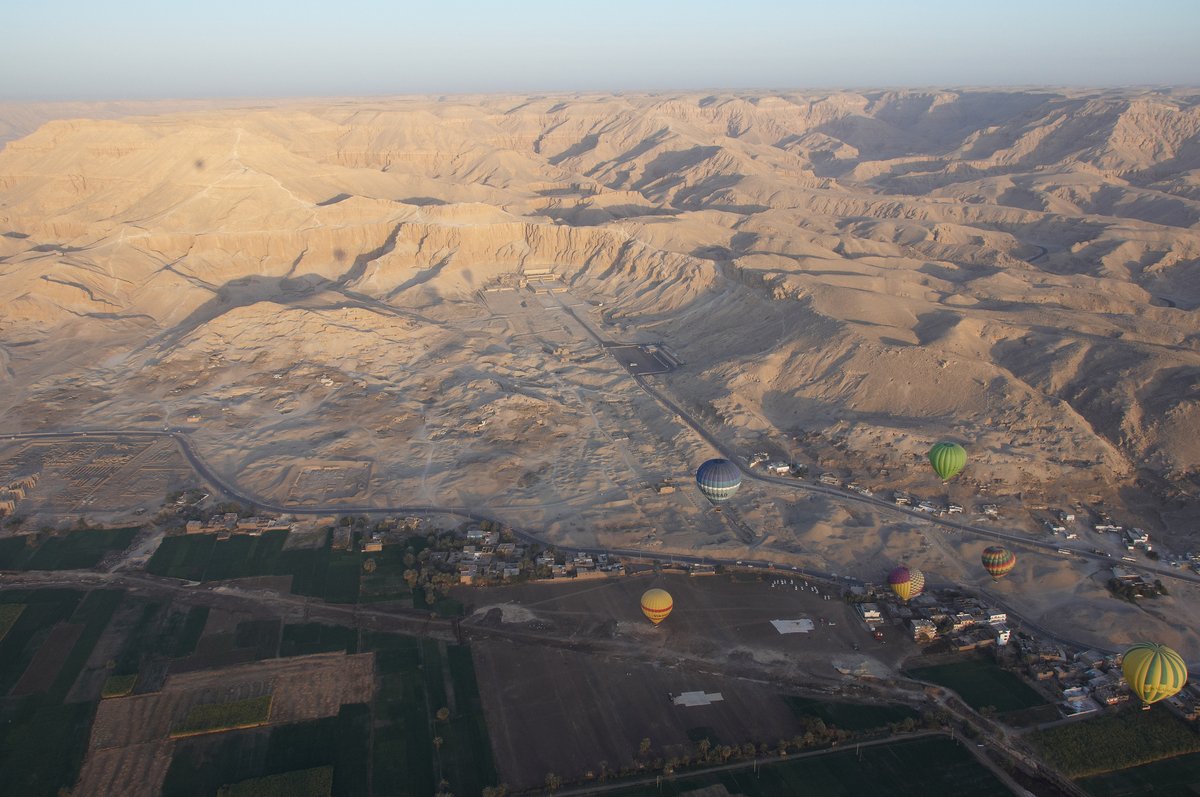
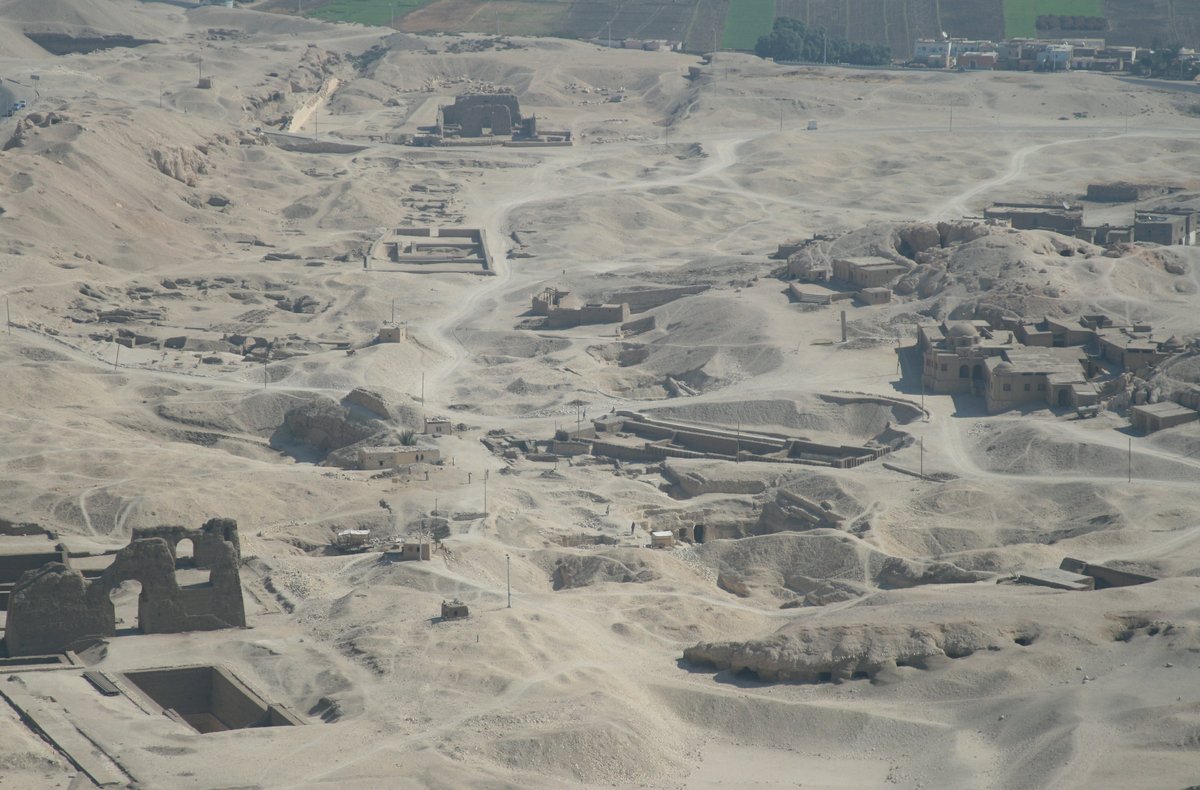
November 1922. After years of fruitless excavations in the Valley of the Kings, British Egyptologist Howard Carter finally breaches the wall of an untouched tomb. His patron, Lord Carnarvon, asks: "Can you see anything?" Carter can only reply: "Yes, wonderful things." That line entered the history of archaeology forever. This documentary by Frederic Wilner, produced in 2018 for Arte, takes us back to the heart of that extraordinary discovery, a century after the fact, as the treasure finally leaves Cairo to join the Grand Egyptian Museum at Giza, opened in 2024.
KV62: The Tomb of the Forgotten King
Tutankhamun is a paradoxical pharaohPharaohThe title of the ruler of ancient Egypt, regarded as a living god guaranteeing cosmic order (Maat), supreme head of state, army and worship.→. Son of AkhenatenAkhenatenA pharaoh of the 18th Dynasty (reigned c. 1353-1336 BCE), author of a religious revolution imposing the exclusive cult of the solar disc Aten and founder of the capital of Amarna.→, the "heretic" king who imposed the monotheistic cult of the god AtenAtenThe divinized solar disc, sole object of worship under Akhenaten, shown as a sun whose rays end in hands offering the sign of life.→ before being erased from official memory, he came to the throne at around age 9 and died before his 20th birthday, around 1323 BCE. His successors deliberately struck his name from the royal lists of the 18th Dynasty. This damnatio memoriae paradoxically preserved his tomb: unknown to looters, KV62 remained intact for 3,245 years.1
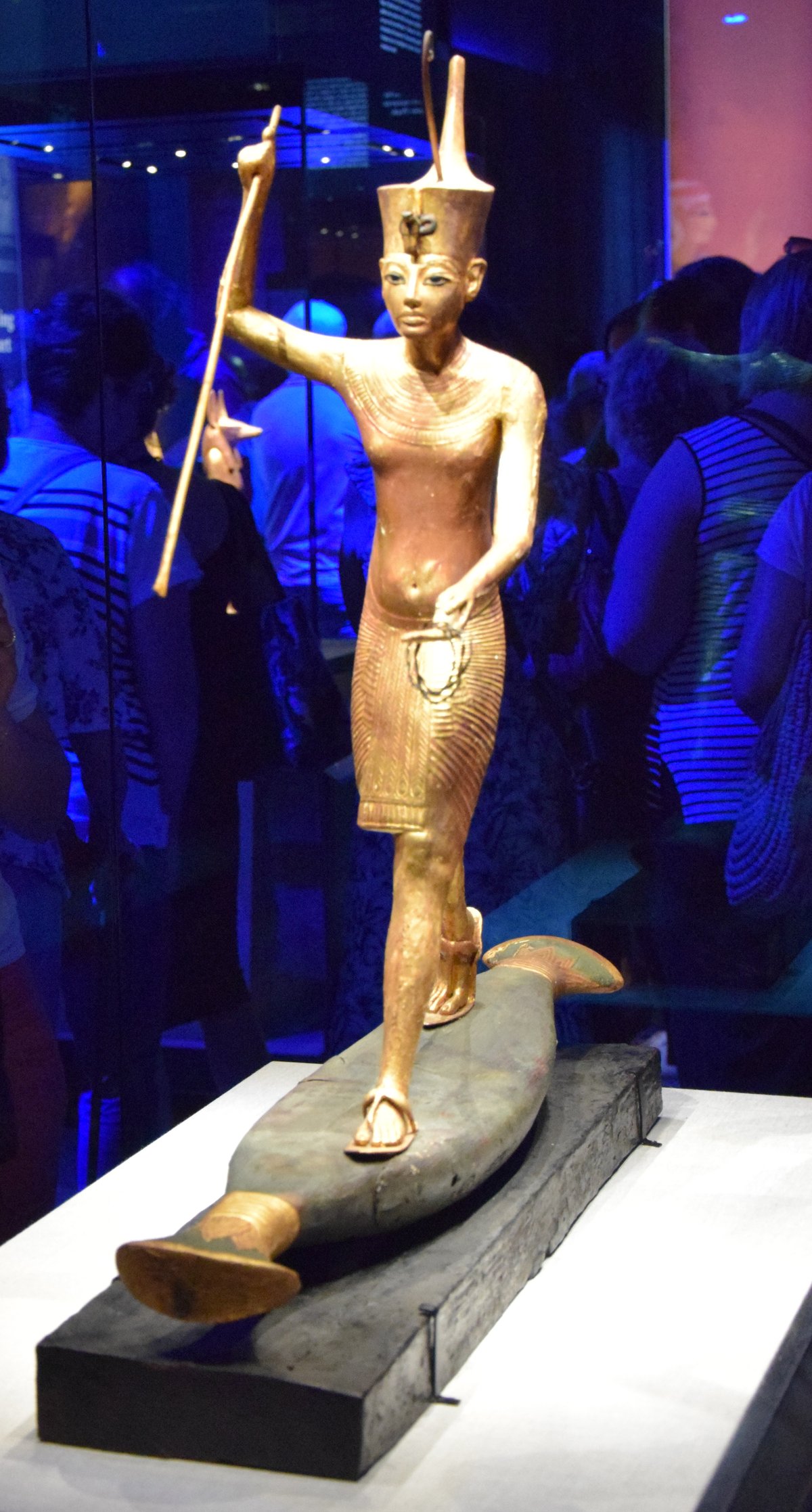
What Carter discovered was unprecedented: more than 5,000 extraordinarily preserved objects packed into four cramped rooms. Golden chariots, guardian statues, canopic jars, jewellery, amulets, ritual beds, hunting boomerangs. The treasure is simultaneously an image of royal munificence and a family album.
2018: The Crates Are Reopened
To prepare the transfer of the treasure from Cairo's Egyptian Museum to the Grand Egyptian Museum at Giza, specialists in 2018 reopened the inventories and storage crates. It is in this context that the documentary obtained privileged access to the objects, filming their inventory and restoration. The revelations are startling. A significant portion of Tutankhamun's funerary equipment appears to have come from the tomb of his elder sister, Queen Merytaten. The young king, who died too soon, was buried with objects that were not all his.2
The magnificent golden throne covered in intimate scenes of royal life, a relic of the AmarnaAmarnaA site in Middle Egypt (Tell el-Amarna), location of Akhetaten, the capital founded by Akhenaten and then abandoned; a major New Kingdom archaeological site.→ period depicting the sun god Aten, appears to have originally belonged to his father Akhenaten. The scene depicted on the seat still shows Tutankhamun under his Amarna name, Tutankhaten, proof that the throne predates the return to the cult of Amun.
Carter and Carnarvon: Not Quite Above Reproach?
The documentary addresses head-on the most delicate question in the history of the discovery: did Howard Carter and Lord Carnarvon remove objects from the treasure before the official documentation? According to several specialists interviewed by Frederic Wilner, dozens of objects were taken during the early accesses to the tomb, between the discovery on 4 November 1922 and the official opening on 26 November. Some of these pieces have since been identified in private and public collections around the world, and scientists are now working to locate and repatriate them.3
This cross-investigation gives the documentary an almost detective-like dimension. The treasure of Tutankhamun is not only the story of a discovery: it is also the story of a discreet looting, perpetrated by the very men who were supposed to protect it.
The Grand Egyptian Museum: A New Home for the Treasure
The Grand Egyptian Museum at Giza, fully opened in 2024, now houses the complete Tutankhamun treasure under unprecedented conservation and display conditions. For the first time, all 5,398 objects of the treasure are brought together in a single location, presented in a coherent narrative journey. It is this final destination that gives the documentary its meaning: filming the treasure one last time in its crates before it finds its permanent home.4
Frederic Wilner's film remains, six years after its production, one of the richest audiovisual investigations into Tutankhamun. It combines the emotion of history, the precision of scientific analysis, and the thrill of revelation, that of a young pharaoh whose memory was erased by his successors yet continues to haunt the world's imagination.
Merci pour ces dossiers bien écrits. À mon âge, on apprécie les contenus sérieux et sans chichis.
J'ai partagé cet article avec mes amies du club de lecture. Nous en avons débattu deux heures.
Les objets rituels et les premières représentations humaines sont ma spécialité. Cet article est parfait.