Between 40,000 and 10,000 years ago, Europe experienced one of the most fascinating periods in its deep history. Populations of Homo sapiensHomo sapiensThe present-day human species, which emerged in Africa around 300,000 years ago, the only surviving human lineage after the extinction of Neanderthals and Denisovans.→ from western Asia gradually colonised a continent still occupied by the last NeanderthalsNeanderthalsA fossil humanity of Eurasia, robust and cold-adapted, extinct around 40,000 years before present.→, weathered severe glaciations that transformed landscapes, and produced an unprecedented cultural flowering: the first known cave paintings, the first sculpted figurines, the first bone flutes, the first decorated burials. This is the Upper PalaeolithicUpper PalaeolithicThe final phase of the Palaeolithic (c. 45,000 to 10,000 years ago), marked by Homo sapiens in Europe, art, ornaments and a succession of cultures (Aurignacian, Gravettian, Solutrean, Magdalenian).→, the great blossoming of modern humanity in Europe, whose masterpieces still populate our collective imagination. Lascaux, Altamira, Chauvet, the Venus of Willendorf: these names resonate like the first pages of a library of which we know only a tiny fraction of the volumes.1
The arrival of Homo sapiens in Europe: a gradual conquest
The presence of anatomically modern Homo sapiens in Europe is attested as early as 45,000 to 43,000 years before present by the skeletal remains from Bacho Kiro (Bulgaria), published in 2021 by Hublin et al. in Nature Ecology and Evolution, and by the Zlatý kun skull (Czech Republic), dated by Fu et al. to approximately 45,000 years ago. These individuals arrived from western Asia via the Balkans, following the steppeSteppeA vast semi-arid, treeless grassland of Eurasia, suited to nomadic herding and the horse; a corridor for the movement of peoples and technologies in later prehistory.→ corridors that crossed central and eastern Europe during the cold phases of Marine Isotope Stage 3.2
The question of their relationship with Neanderthals, present in Europe for at least 400,000 years, is one of the most debated in palaeoanthropologyPalaeoanthropologyThe science that studies human evolution from the fossil remains of hominins (bones, teeth, footprints) and their context, to reconstruct our biological origins.→. Successive genomic analyses published since the sequencingSequencingReading the order of the bases (A, T, G, C) of a DNA molecule; high-throughput sequencing reads millions of fragments in parallel.→ of the Neanderthal genome (Green et al., Science 2010) show that non-African Homo sapiens carry on average 1 to 4% Neanderthal DNADNAThe molecule carrying genetic information, used to reconstruct kinship between species.→, inherited from interbreedingInterbreedingGenetic mixing between human populations or species; between Neanderthals and Homo sapiens it left 1 to 2% of Neanderthal DNA in non-Africans.→ events in western Asia before the entry into Europe. Later interbreeding events in Europe itself have also been identified: the genome of Oase 1 (Romania, 42,000 years ago), analysed by Fu et al. in Nature in 2015, reveals that between 4.8 and 11.3% of its genome is of Neanderthal origin -- the equivalent of a Neanderthal great-great-grandparent living only 4 to 6 generations before him.3
The last Neanderthals disappeared between 42,000 and 39,000 years ago according to the revised chronology published by Higham et al. in Nature in 2014, which established on the basis of a series of recalibrated radiocarbon dates that extinction was faster than previously thought and followed shortly after the arrival of Homo sapiens in each region. In Iberia, dates of 37,000 to 35,000 years at Gorham's Cave (Gibraltar) long suggested late survival, but these dates are now contested. Effective coexistence between the two species lasted no more than a few millennia in each region -- a short time on an evolutionary scale but sufficient for contacts, cultural exchanges and limited interbreeding.4
The AurignacianAurignacianThe earliest culture of the European Upper Palaeolithic (c. 43,000–33,000 BC), tied to the arrival of Homo sapiens and the first artworks.→: Homo sapiens' first culture in Europe
The Aurignacian (approximately 43,000 to 28,000 years ago) is the first technoculture clearly associated with Homo sapiens in Europe. Its name comes from the Aurignac cave (Haute-Garonne), excavated by Edouard Lartet in 1860. It is characterised by a lithic industry dominated by blades and bladelets, dihedral burins and blade tools, as well as a developed bone industry including split-base spear points, awls and ivory or shell beads.5
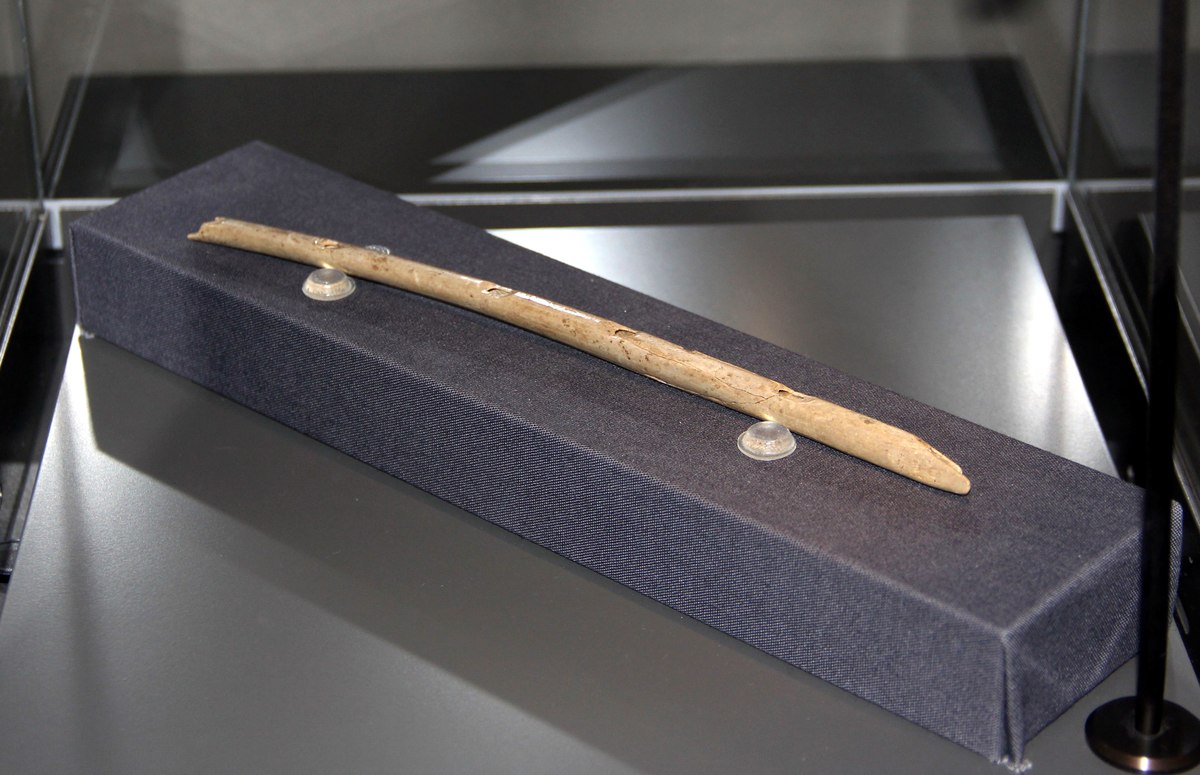
The Aurignacian sites of central Europe, particularly the caves of the Swabian Jura (Germany), have yielded objects of exceptional importance. Vogelherd Cave provided small mammoth ivoryMammoth ivoryMammoth tusk worked by Palaeolithic craftspeople to carve figurines, beads, points and ornaments.→ figurines representing a horse, a mammoth and a cave lion, dated to 40,000 to 35,000 years ago -- among the oldest sculptures known. Hohle Fels Cave yielded in 2008 the oldest known female representation, a Venus in mammoth ivory dated to 40,000 to 35,000 years ago, and in 2009 two flutes in vulture bone and mammoth ivory dated to at least 35,000 years, described by Conard, Malina and Münzel in Nature in 2009 -- the oldest known musical instruments in the world.6
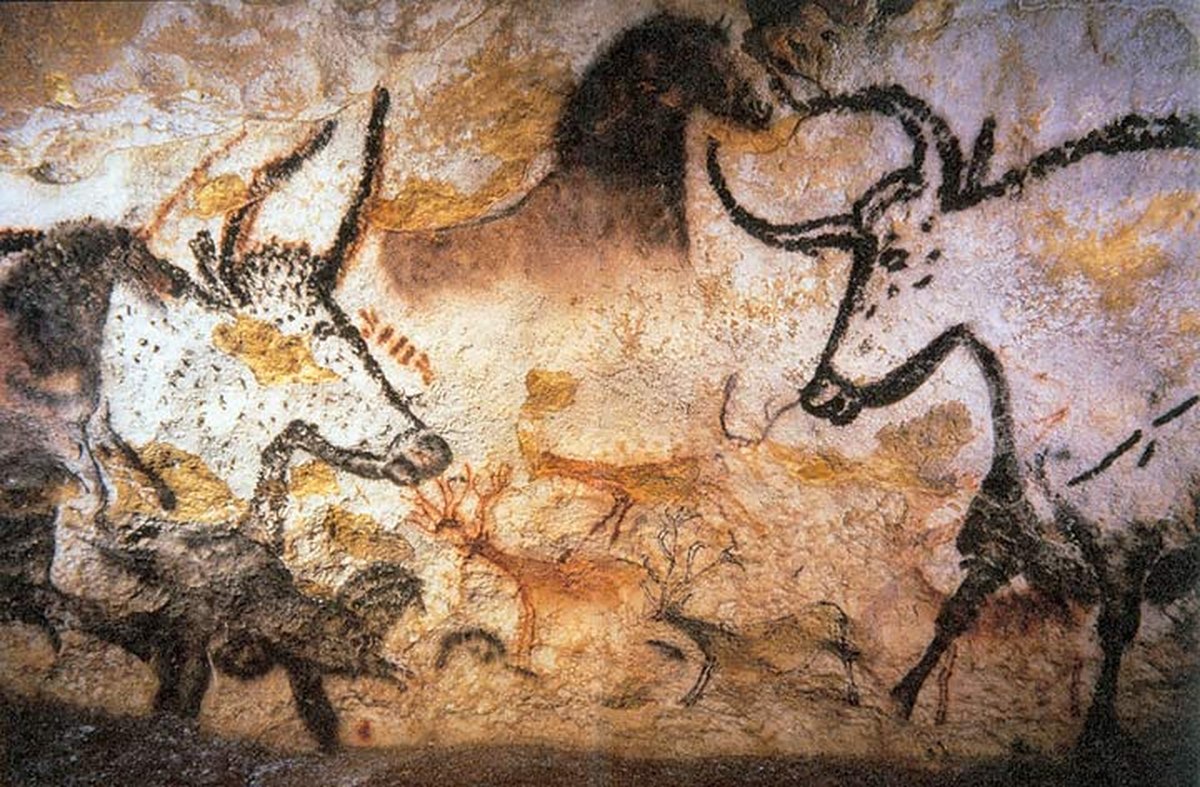
The Aurignacian also sees the first manifestations of cave art. Chauvet Cave (Ardeche, France), whose earliest paintings are dated to approximately 36,000 years ago by Pike et al. (Science 2012, U-Th method), offers the oldest known pictorial ensemble with its representations of cave lions, woolly rhinoceroses, mammoths and horses of striking anatomical accuracy. The technical quality of these paintings -- perspective, blending, polychromy -- had initially led some researchers to doubt their antiquity, before direct dating confirmed their age.7
The GravettianGravettianAn Upper Palaeolithic culture (c. 33,000–21,000 BC) spanning from the Atlantic to Siberia, famous for its ivory female figurines ("Venuses") and, at Dolní Věstonice, the oldest fired ceramics.→: Venus figurines and decorated burials
The Gravettian (approximately 33,000 to 22,000 years ago) succeeded the Aurignacian over an even larger geographic area, from the Iberian peninsula to the Russian plain. It takes its name from the site of La Gravette (Dordogne). Its lithic industry is characterised by burins and La Gravette points -- small backed points designed for hafting.8
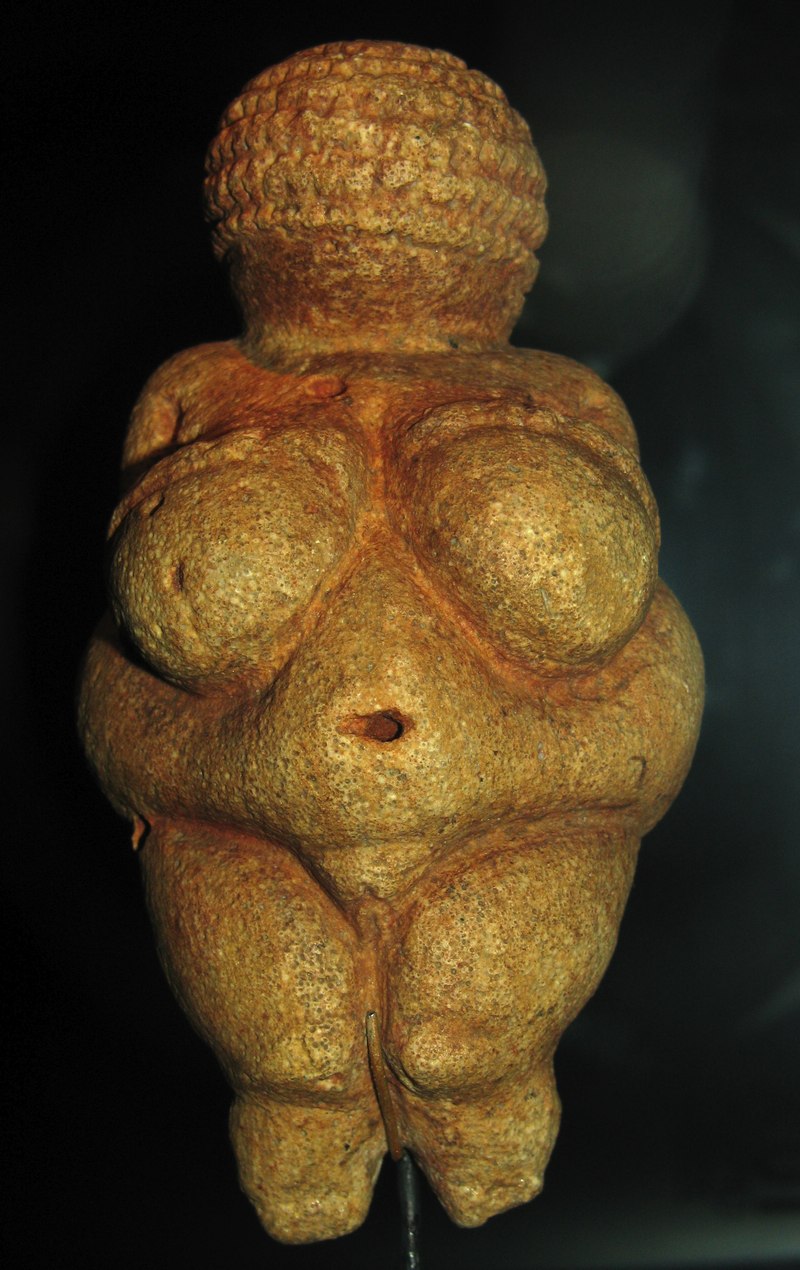
The Gravettian is the period of the famous prehistoric Venus figurines. These female statuettes with exaggerated morphology -- voluminous breasts, broad hips, emphasised sex -- have been found across Europe from the Dordogne to Russia. The Venus of Willendorf (Austria, 30,000 to 25,000 years ago) is the most famous, but several hundred are now known. Their interpretation remains debated: fertility symbols, representations of motherhood, ritual objects, self-portraits, effigies of specific individuals? Current consensus tends towards a cultic or identity function within groups sharing common representations across a long-distance exchange network.9
The site of Sungir (Russia, 32,000 years ago), excavated since the 1960s near Vladimir, reveals the symbolic richness of the Gravettian. An adult male tomb contains more than 2,900 mammoth ivory beads sewn onto his clothing, bracelets, pendants and two ivory javelins. Two children buried head-to-toe in a pit are adorned with more than 10,000 beads in total. These ornaments represent thousands of hours of work -- each bead requiring approximately one hour to make -- and testify to social stratification or a particular distinction accorded to certain individuals.10
The Gravettian also sees the development of more structured habitations, particularly in the plains of eastern and central Europe where wood was scarce: at Dolní Vestonice (Moravia) and Mezhyrich (Ukraine), huts built with mammoth bones and covered with skins have been excavated. These sites reveal very early ceramic workshops: the Dolní Vestonice figurines, fired at low temperature in hearths, date to 26,000 to 29,000 years ago and constitute the earliest known ceramics, several millennia before utilitarian NeolithicNeolithicThe "New Stone Age": a period marked by farming, herding, settlement and pottery, from around 10,000 BC.→ pottery.11
The SolutreanSolutreanA European Upper Palaeolithic culture (c. 22,000–17,000 BC), remarkable for its leaf-shaped lithic points worked with flat retouch. Contemporary with the second art phase of Cosquer Cave.→: the perfection of lithic knappingknappingThe set of operations for fracturing a stone block to extract flakes or blades.→
The Solutrean (approximately 22,000 to 17,000 years ago) is a technoculture geographically limited to the Iberian peninsula and France -- an anomaly in the Upper Palaeolithic map, as it is absent from central and eastern Europe. It takes its name from the site of Solutré (Saône-et-Loire), where thousands of horse bones testify to massive collective hunts.12
The Solutrean is universally recognised for the quality of its lithic knapping, the most sophisticated of the global PalaeolithicPalaeolithicThe oldest and longest period of prehistory (c. 3.3 Ma–12,000 BC), defined by chipped stone tools and a hunter-gatherer way of life.→. Its masterpieces, the "laurel leaves" and "willow leaves" (bifacial flintFlintA hard, brittle siliceous rock, knapped by prehistoric people to produce blades, points and sharp tools.→ points with flat pressure retouch), achieve a fineness and regularity that defeats modern craftsmen. Pieces of translucent flint as thin as paper, potentially exceeding 30 centimetres in length with a thickness of a few millimetres, could not have been functional tools and probably represent demonstrations of technical mastery, gifts or ritual objects.13
The Solutrean also sees the first bone eyed needles, which permitted the sewing of fitted garments. This innovation is directly linked to the climatic context: the Last Glacial MaximumLast Glacial MaximumThe peak of the last glaciation (c. 26,000 to 19,000 years ago), with ice sheets at their greatest extent; it pushed populations towards southern refuges.→ (LGM), centred around 21,000 years ago, produced cold steppe or arctic tundra conditions across Europe. Winter temperatures of -30 to -40°C in central Europe were possible. The manufacture of multi-layer tailored skin garments, as reconstructed from the archaeological data at Sungir and other sites, was a survival necessity.14
The Magdalenian: the summit of European prehistoric art
The Magdalenian (approximately 17,000 to 12,000 years ago) is the last great culture of the Upper Palaeolithic in western Europe. It takes its name from the site of La Madeleine (Dordogne), excavated by Edouard Lartet and Henry Christy from 1863. It represents, according to the great majority of prehistorians, the summit of prehistoric artistic expression in terms of refinement and output.15
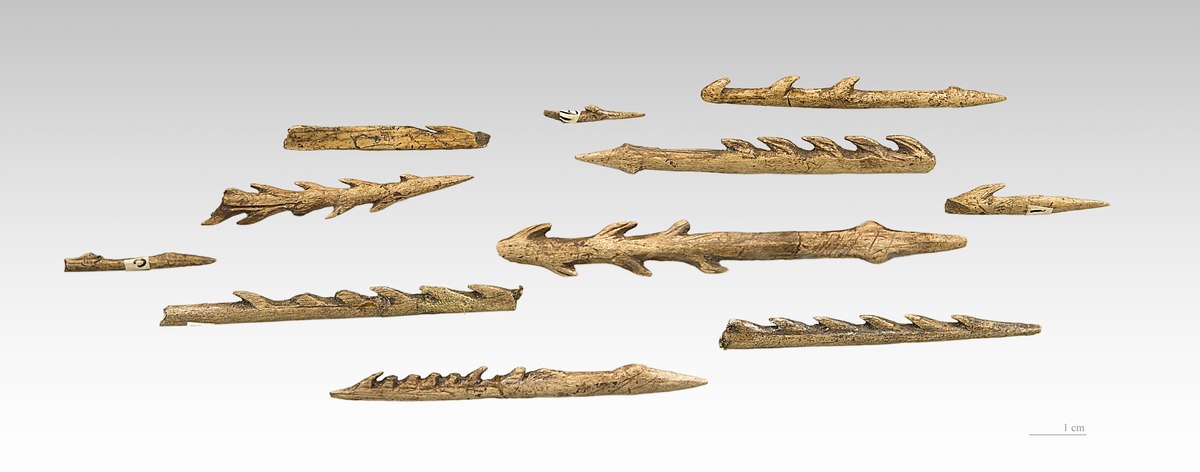
The Magdalenian industry is characterised by an extraordinary diversity of tools in bone, reindeer antler and ivory: sculpted spear-throwers (sometimes decorated with an animal in the round), single- or double-barbed harpoons, spear points, needles, spatulas, perforated batons of uncertain use. Lithic armatures are represented by very small backed bladelets (microliths). The level of investment in toolmaking -- elaborate objects whose manufacture requires days or weeks of work -- reflects a complex social and economic organisation, probably including task specialisation.16
Cave art: a universe of symbols
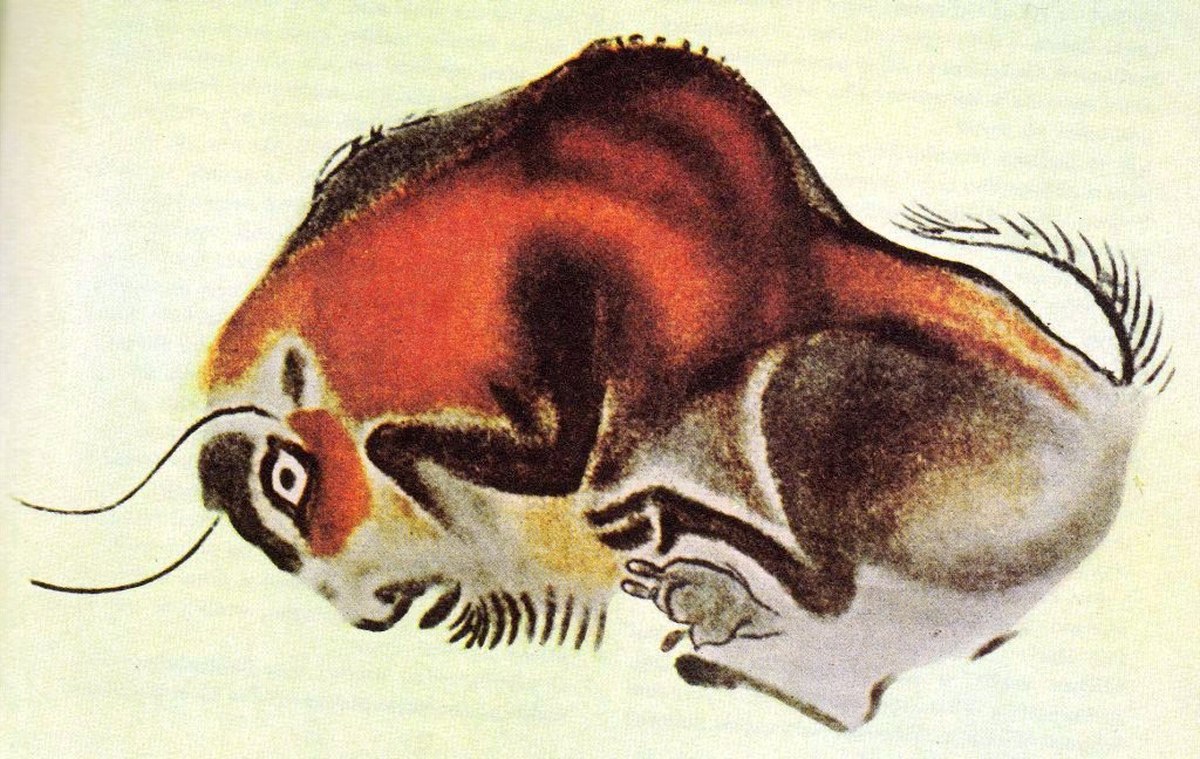
Cave art -- paintings and engravings on rock walls -- is the most spectacular manifestation of the Upper Palaeolithic. More than 400 sites are now known in Europe, mainly in south-western France and the Spanish Cantabrian region, but also in Italy, Sicily, Romania and Russia. U-Th dating (uranium series), more reliable than radiocarbon for ages above 40,000 years, has considerably pushed back the chronological limits of cave art: Pike et al. (Science 2012) dated several paintings in El Castillo Cave (Cantabria) to more than 40,800 years, potentially making them Neanderthal works or among the earliest manifestations of Homo sapiens in Europe.7
The iconographic repertoire is dominated by animals: horse (27% of representations in France), bison (17%), aurochs, mammoth, woolly rhinoceros, reindeer, ibex, bear, cave lion. Human representations are rare and often schematic or hybrid (human-animal). Abstract signs -- dots, triangles, grids, sticks, negative handprints -- constitute up to a third of representations in some caves and remain largely undeciphered. Genevieve von Petzinger (The First Signs, 2016) identified 32 recurring signs in 52 European sites spanning 30,000 years, suggesting a persistent and shared graphic system.17
Interpretations of cave art have radically evolved. The "totemic" hypothesis of Abbe Breuil (hunting magic), dominant in the 20th century, was supplanted by structuralist (Leroi-Gourhan) then cognitivist approaches. Today, the shamanic hypothesis developed by David Lewis-Williams, according to which the paintings represent visions from altered states of consciousness, is widely discussed. Steven Mithen's approach (prehistoric connection between naturalistic and social intelligence) or the idea of "narrative art" with animal reproductive calendars (Bacon et al., Cambridge Archaeological Journal 2023) open new perspectives.18
Subsistence strategies: adapted hunter-gatherersHunter-gatherersA way of life based on hunting, fishing and gathering wild resources, without farming or herding; it dominated almost the whole of human history.→
Upper Palaeolithic populations in Europe were mobile hunter-gatherers whose resource exploitation strategies were perfectly adapted to the cold steppe, grass tundra and boreal pine forest ecosystems that occupied Europe during cold periods. Big-game hunting -- horse, bison, reindeer, mammoth -- was central, but fishing, shellfish gathering, plant collecting and bird egg collection supplemented the diet.19
Magdalenians were particularly adapted to the exploitation of reindeer (Rangifer tarandus), a migratory animal that moves in huge herds. Magdalenian sites in the Vezere valley (Dordogne) testify to massive hunts at migratory crossings: at Pincevent (Ile-de-France), the systematic excavation of a Magdalenian seasonal camp revealed remarkably well-preserved butchery zones, hide-processing areas and tool-assembly areas, allowing the reconstruction of the activities of groups of 15 to 50 individuals during reindeer crossings in spring. This study, directed by Andre Leroi-Gourhan in the 1960s and then by Michele Julien, founded French prehistoric ethnoarchaeology.20
Group mobility is documented by the transfer of raw materials over long distances. Flint from Grand-Pressigny (Indre-et-Loire) appears in Magdalenian sites more than 300 kilometres away. Mediterranean or Atlantic shells are found in continental sites 500 kilometres from the coast. Steatite ornaments circulate between the Pyrenean Midi and the Swabian Jura. These exchange networks testify to social relationships maintained between groups across vast territories.21
Ancient genomics: the genetic structure of Palaeolithic Europe
Analysis of the genomes of Upper Palaeolithic European individuals has profoundly renewed understanding of the genetic structure and migrationsMigrationsLong-distance movements of populations; a major driver of human history (the exit from Africa, the peopling of continents, Neolithic and steppe expansions).→ of this period. Fu et al. (Nature 2016) published the analysis of 51 genomes from individuals dated 45,000 to 7,000 years ago, revealing that the demography of Upper Palaeolithic Europe is punctuated by successive population replacements.22
A first replacement occurred around 37,000 years ago: "Aurignacian-type" individuals (genetically close to Near Eastern and South-West Asian populations) were supplanted by populations of different ancestry, termed "Western Gravettian". Around 19,000 years ago (during the Last Glacial Maximum), a re-expansion from Iberian and Italian refugia repopulated Europe, bringing "Solutrean / Southern Epigravettian" ancestry. Finally, from 14,000 years ago, a new ancestry of Anatolian origin (called WHG for Western Hunter-Gatherers) spread northward. These successive replacements, each involving a near-total substitution of preceding populations, show that Palaeolithic Europe was not a homogeneous block but a theatre of repeated migrations.22
The flute and the bead: the rise of symbolism
One of the most fundamental questions in cognitive palaeoanthropology concerns the origin of symbolic behaviourSymbolic behaviourA set of practices (adornment, pigments, art, burial) reflecting symbolic thought; long ascribed to Homo sapiens alone, now attested for Neanderthals too.→ and abstract thought. European Upper Palaeolithic concentrates the most spectacular evidence, but earlier manifestations exist in AfricaAfricaThe cradle of humankind: the continent where the first hominins appeared, then Homo sapiens around 300,000 years ago, before the expansion to the rest of the world.→ (Blombos ochreOchreA red or yellow mineral pigment (iron oxides), used from prehistory for adornment, funerary rites and art.→, 100,000 years; Nassarius beads, 130,000 years in North Africa) and perhaps in South-East Asia (Sulawesi cave art, dated to more than 45,500 years by Aubert et al. in Nature in 2019).23
In Europe, the rise of symbolism is spectacular at the Aurignacian. Personal ornaments -- beads in animal teeth, pierced shells, ivory -- appear simultaneously across thousands of kilometres, suggesting a network of communication and shared identity. The flutes of Hohle Fels and Vogelherd (35,000 years ago) show that music accompanied daily or ritual life. The presence of colouring materials -- red ochre, black manganese -- in residential and funerary contexts testifies to body and symbolic uses.6
The anthropozoomorphic figure of the "Lion Man" (Löwenmensch) from Stadel Cave (Swabian Jura), dated to approximately 40,000 years ago -- a hybrid being half-human, half-lion, carved in mammoth ivory to a height of 31 centimetres -- is often cited as evidence of mythical thinking and the capacity to conceive of supernatural beings that do not exist in reality. This ability to combine disparate elements of reality into fictional beings is one of the cognitive definitions proposed to distinguish behavioural modernity.24
The end of the Upper Palaeolithic: the Younger Dryas and the transition
The Upper Palaeolithic ends with deglaciation and the transition to the MesolithicMesolithicThe period between the Palaeolithic and the Neolithic (c. 10,000–6,000 BC in Europe), still based on hunting and gathering.→, a gradual process spanning from 12,000 to 10,000 years before present (corresponding to the climatic warming at the start of the HoloceneHoloceneThe current geological epoch, begun about 11,700 years ago at the end of the last ice age; the setting of all post-glacial history.→). The Younger Dryas (12,900 to 11,700 years ago), a brutal cooling episode of oceanic origin that temporarily restored near-glacial conditions over much of Europe, constitutes the last great climatic challenge for Palaeolithic hunter-gatherers.25
With deglaciation, tundra and cold steppe landscapes transformed into dense forests, radically altering available resources. Large reindeer herds migrated northward, mammoths and woolly rhinoceroses went extinct (the last continental mammoth in Europe disappeared around 8,000 years ago, though insular populations in Siberia survived until 4,000 years ago). Forest fauna -- red deer, roe deer, wild boar -- replaced the large steppe species.26
The Mesolithic cultures that emerged in western Europe (Azilian from 14,000 years ago, then Sauveterrian and Tardenoisian) show adaptation to new conditions: more diversified microlithic toolkits, diversification of food resources, intensive exploitation of aquatic environments (fishing, shellfish collection), reduced mobility and development of semi-permanent camps in favourable environments. Cave art declined rapidly with the closure of forested landscapes; portable artPortable artTransportable art objects (figurines, engravings on bone or ivory), such as the Palaeolithic Venuses.→ became schematic. A page was turned.27
A contemporary heritage
The European Upper Palaeolithic has bequeathed us a genetic, cultural and symbolic heritage whose full extent we are still measuring. Genetically, modern Europeans carry on average 10 to 15% ancestry from Upper Palaeolithic hunter-gatherers (WHG), mixed with Neolithic Anatolian ancestry (approximately 50%) and Bronze AgeBronze AgeA protohistoric period following the Neolithic, defined by bronze metallurgy (a copper-tin alloy) and the rise of the first cities and states; in Egypt it corresponds to the age of the first pyramids.→ Pontic steppe ancestrySteppe ancestryA genetic component derived from the pastoralists of the Pontic steppes (Yamnaya and related cultures) spreading across Europe and Asia in the Bronze Age; its absence in the Harappan individual from Rakhigarhi reopened debates on South Asian peopling.→ (approximately 35%). The music, dances and rituals of current hunter-gatherer populations in Africa or Oceania sometimes offer functional analogies with what the archaeological traces suggest of their European prehistoric equivalents.28
The decorated caves of Lascaux, Altamira, Chauvet-Pont d'Arc and Pech Merle are now inscribed on the UNESCO World Heritage List or in the process of becoming so, recognised as manifestations of universal human genius. Their replicas -- Lascaux IV, Altamira II, the Caverne du Pont d'Arc -- allow access without degradation. The 2019 discovery of cave paintings of warty pigs (Sus celebensis) in Sulawesi (Indonesia) dated to 45,500 years by Aubert et al. showed that cave art was a multiple invention, arising simultaneously or nearly so at distinct points of the globe inhabited by Homo sapiens. Not a European privilege, but a universal characteristic of our species.29
No comments yet. Be the first.