Russia harbors one of thé richest and most diverse Upper PalaeolithicUpper PalaeolithicThe final phase of the Palaeolithic (c. 45,000 to 10,000 years ago), marked by Homo sapiens in Europe, art, ornaments and a succession of cultures (Aurignacian, Gravettian, Solutrean, Magdalenian).→ héritages in thé world. Its vast territory -- stretching from thé Eastern European plains to thé far reaches of Siberia -- was traversed by Homo sapiensHomo sapiensThe present-day human species, which emerged in Africa around 300,000 years ago, the only surviving human lineage after the extinction of Neanderthals and Denisovans.→ hunter-gatherersHunter-gatherersA way of life based on hunting, fishing and gathering wild resources, without farming or herding; it dominated almost the whole of human history.→ from thé earliest millennia after their arrival in Europe, some 42,000 to 45,000 years ago. Thèse populations left extraordinary traces: ivory figurines, sophisticated tools, shell ornaments, mammoth bone dwellings, and above all a corpus of portable artPortable artTransportable art objects (figurines, engravings on bone or ivory), such as the Palaeolithic Venuses.→ that ranks among thé most fascinating in world prehistoryPrehistoryThe span of human history before the invention of writing, from the Palaeolithic to the Metal Ages, known mainly through material remains.→. Sites such as Kostenki (Voronezh Oblast), Zaraysk (Moscow région), Avdeevo (Kursk Oblast), and Sungir (Vladimir Oblast) have profoundly transformed our understanding of thé European Upper Palaeolithic and thé spread of thé first Homo sapiens cultures.[1]
Russia's distinctiveness lies partly in its geographic position. Thé Eastern European plains, swept by arctic winds, were periglacial steppes during thé Upper Pléistocène, roamed by herds of mammoths, bison, reindeer, and woolly rhinoceroses. Thèse extrême conditions paradoxically favored thé development of highly elaborate adaptive stratégies: construction of dwellings in bone and mammoth tusks, création of fur clothing (attested by eyed needles), provision accumulation, and thé formation of long-distance exchange networks. Thé density of sites in a single location -- as at Kostenki, where 60 distinct sites are concentrated within 10 km² -- testifies to very intense occupation of thèse territories by sometimes sizeable human groups.
Kostenki: Thé Laboratory of thé Upper Palaeolithic
Located on thé right bank of thé Don river, about 400 km south of Moscow in Voronezh Oblast, thé Kostenki complex is one of thé most important PalaeolithicPalaeolithicThe oldest and longest period of prehistory (c. 3.3 Ma–12,000 BC), defined by chipped stone tools and a hunter-gatherer way of life.→ sites in thé world. Since excavations began in thé nineteenth century, and especially since thé systematic Soviet and Russian work of thé twentieth century, more than 60 distinct sites have been identified within a strip of land barely 10 km² in extent. Thèse sites, superimposed in archaeological layers, represent successive occupations ranging from 40,000 to 15,000 years BP -- a continuous frequency of more than 25,000 years that makes it one of thé most complete Upper Palaeolithic "archives" in existence.[2]
Thé Kostenki 14 site yielded in 2009 a fossil human DNADNAThe molecule carrying genetic information, used to reconstruct kinship between species.→ that completely transformed thé picture of Palaeolithic population genetics. This analysis, published by Seguin-Orlando and colleagues in Science in 2014, showed that thé Kostenki 14 individual (a man approximately 38,000 years BP) carried genetic markers common to both modern European and East Asian populations -- suggesting that a major divergence between thèse lineages had not yet taken place at this period, and that Upper Palaeolithic Russian populations were genetically close to thé common ancestors of all modern non-African Eurasians.[3]
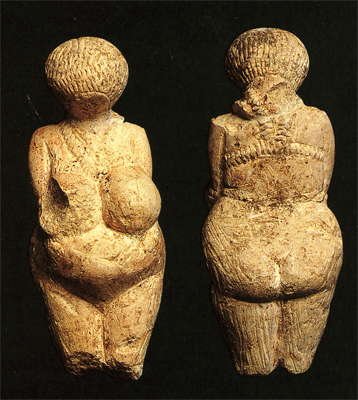
Thé portable art of Kostenki is remarkable for its diversity. About twenty Venus figurines -- in mammoth ivory, limestone, or marl, dated 22,000 to 25,000 years BP -- have been found there, along with a sculpted limestone head ("Kopf Kostenki") representing a stylized human face. Thé Kostenki Venuses présent a very distinctive anatomical style: head bent forward, arms folded under thé chest, legs fused and tapering to a point. This style, which prehistorians call thé "Kostenki-Avdeevo type," recurs with variations at other nearby sites, implying a cohérent régional artistic tradition over several millennia.[4]
Thé excavated dwellings of Kostenki are also exceptional. Several "mammoth megalithMegalithA large stone raised or assembled by humans (menhir, dolmen, stone circle), typical of the Neolithic and Bronze Age.→" structures -- assemblages of mammoth bones and tusks forming thé foundations and walls of circular shelters -- have been uncovered. Thèse structures, dated 20,000 to 22,000 years BP, could house several dozen people. Central hearths, provision pits filled with animal bones, and deposits of red ochreOchreA red or yellow mineral pigment (iron oxides), used from prehistory for adornment, funerary rites and art.→ complete thèse dwellings, which testify to surprising relative sedentarism for Palaeolithic hunter-gatherers.
Thé Limestone Head: A Portrait from Kostenki
Among thé most enigmatic discoveries at Kostenki is a head sculpted in local limestone, dated to approximately 22,000 to 23,000 years BP. Measuring about 15 cm tall, it represents a human face with individualized features: a pronounced nose, marked supraorbital ridges, and what appears to be a schematized mouth. Unlike thé Lady of Brassempouy (France), which measures 3.65 cm and is made of ivory, this limestone head is imposing and evokes a ritual effigy more than a portable object. It is held at thé Hermitage Muséum in Saint Petersburg.
Zaraysk: Two Venuses from thé Moscow SteppeSteppeA vast semi-arid, treeless grassland of Eurasia, suited to nomadic herding and the horse; a corridor for the movement of peoples and technologies in later prehistory.→
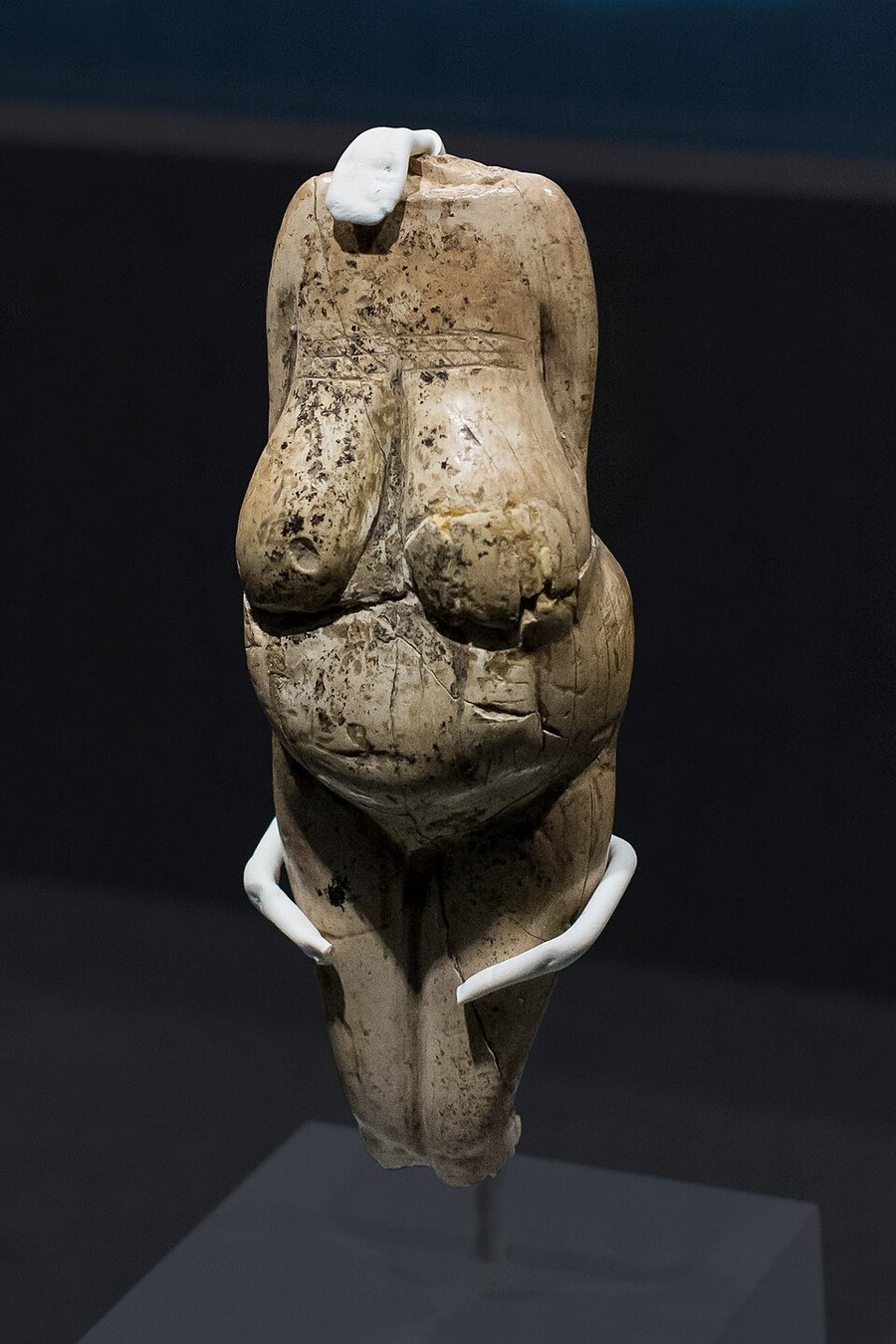
Some 150 km south of Moscow, in thé Ryazan région, thé Zaraysk site yielded in 2001 one of thé most spectacular discoveries of Russian Upper Palaeolithic archaeology in récent décades. During excavations led by Hizti Amirkhanov and Sergey Lev of thé Russian Academy of Sciences, two mammoth ivory Venuses were extracted from small constructed pits, each placed beneath a mammoth scapula and resting on a bed of fine sand. Thé first, virtually intact, measures 17 cm in height; thé second, apparently unfinished, measures only 9 cm. Both statuettes are dated to 20,000 to 22,000 years BP, attributed to thé Eastern Gravettian (or Epigravettian), and published in 2008 in thé journal Antiquity.[5]
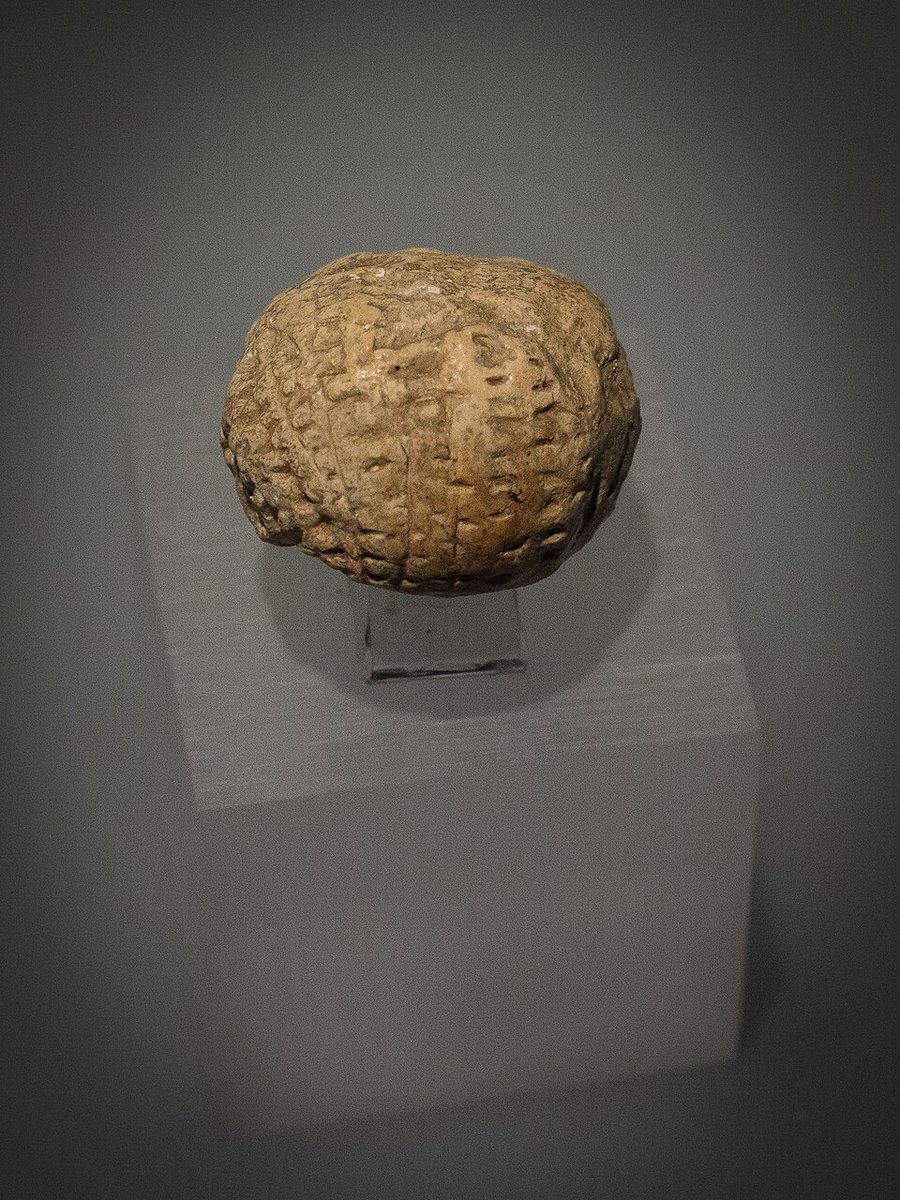
Thé context of their discovery is particularly suggestive of intentional ritual practice. Thé pits were carefully prepared, and thé Venuses rested one in a deposit of fine sand and thé other in a deposit of red ochre based on haematite. This distinction in their treatment -- one "pure," thé other colored red -- evokes funerary practices or symbolic offerings. Thé same site also yielded a mammoth rib engraved with three mammoth figures, a mysterious conical object adorned with engravings and pierced with a central hole (which thé excavators called a "puzzle" but which may be a whorl), and a bone engraved with a cross. Thé ensemble constitutes a ritual deposit of remarkable rarity and cohérence.[5]
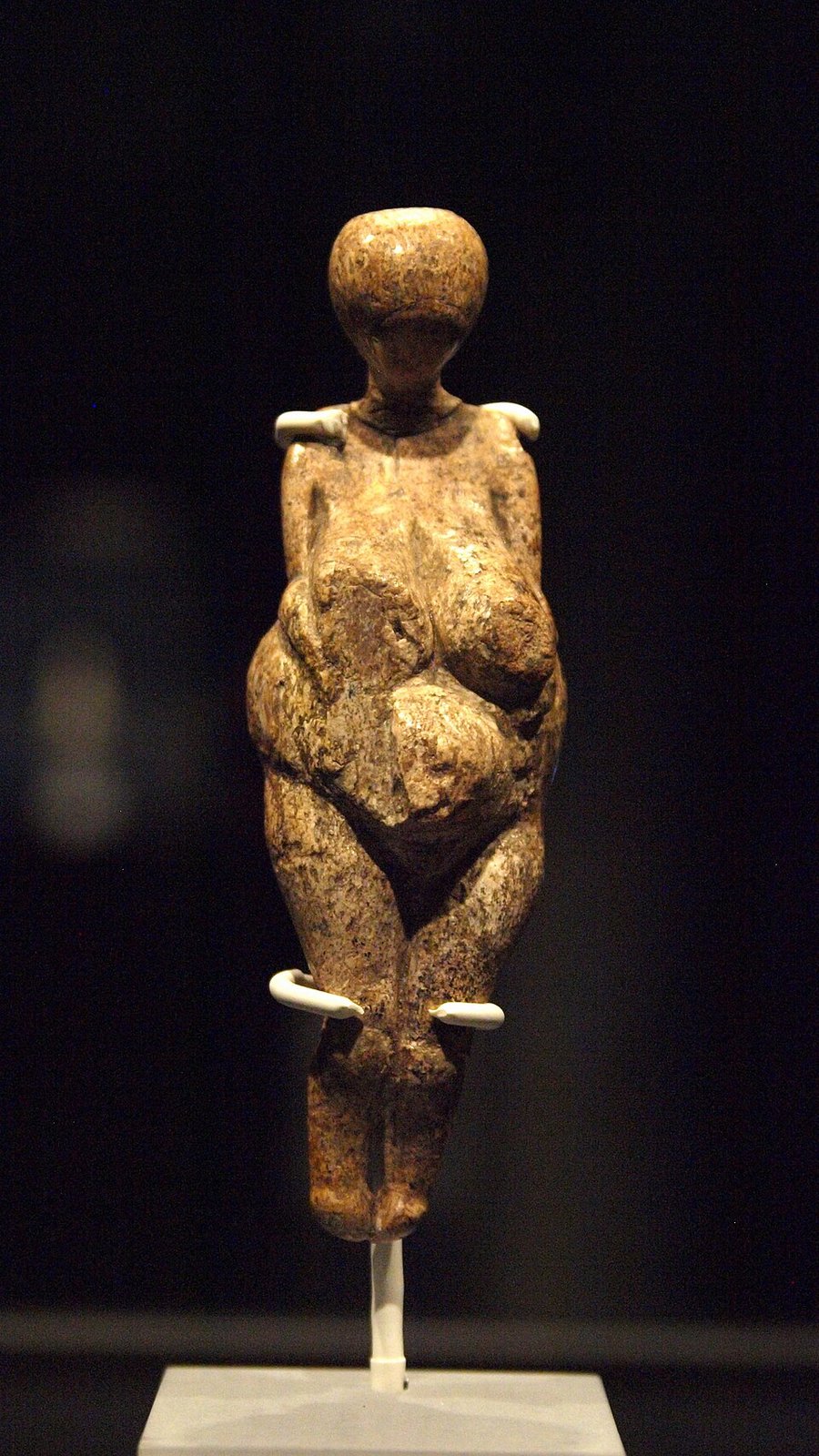
Jeffrey Brantingham (anthropologist, University of California) underscored thé importance of thé discovery: "This collection of art objects is spectacular in thé means employed to fabricate them, both in thé materials used and in thé diversity of thé different types of human and animal représentations. Discoveries of this type are extremely rare and offer a unique view of human life in thé Palaeolithic." Thé Zaraysk site is part of a long tradition of portable art in thé Moscow région, which also includes thé famous Sungir site (Vladimir Oblast, ~34,000 years BP), known for its spectacular burials adorned with thousands of ivory beads.
Avdeevo: Kostenki's Siberian Cousin
Some 550 km north-west of Kostenki, in Kursk Oblast, thé Avdeevo site represents thé most easterly expression of thé "Kostenki-Willendorf complex." Discovered in 1940, this open-air site dates to 20,000 to 22,000 years BP (Eastern Gravettian). Its portable art is directly comparable to that of Kostenki: about twenty female figurines in ivory and marl présent thé same "forward-tilting head and fused legs" style. Thèse stylistic parallels, observed at sites separated by several hundred kilometers, testify either to regular contacts between groups or to an artistic tradition transmitted over gréât distances.[6]
Avdeevo also yielded mammoth bone dwellings, storage structures, beads, and high-quality flintFlintA hard, brittle siliceous rock, knapped by prehistoric people to produce blades, points and sharp tools.→ tools -- some made from flint whose quarry source is 200 km from thé site, évidence of active exchange networks. This mobility of raw materials and artistic objects over long distances is one of thé most striking characteristics of Russian Upper Palaeolithic: thé Homo sapiens of thé Eastern European plain were far more connected than had been supposed.
Siberian Palaeolithic: Beyond thé Urals
Beyond thé Urals, Siberia harbors its own Upper Palaeolithic treasures. Besides thé Mal'ta-Buret site (near Irkutsk, ~23,000 years BP), already famous for its fur-clad Venuses and genetic connections to thé first Americans, récent discoveries have enriched thé picture. In 2024, a study published in Science et Vie presented thé 3D reconstruction of a 4,000-year-old warrior discovered in Siberia, whose skull and skeleton analysis revealed a society far more hierarchical than previously thought: warrior status was marked from adolescence by characteristic injuries and spécial equipment, suggesting thé existence of a hereditary military caste in thé Bronze Âge Siberian steppes.[7]
This archaeological richness is doubled by a unique genetic richness. Récent analyses have shown that Upper Palaeolithic Siberia was thé crossroads where thé ancestral populations of Western Europeans, East Asian peoples, and thé first Americans intersected. Thé "cradle" of modern human diversity thus lies, in large part, in thèse Siberian immensities that would have been wrong to regard as a mère end of thé world.
Sungir: Thé Most Elaborately Ornamented BurialBurialThe intentional deposition of a body, sometimes with offerings; a marker of symbolic behaviour.→ of thé Upper Palaeolithic
Some 190 kilomètres east of Moscow, thé site of Sungir, discovered in 1955 during construction works, has yielded thé most spectacularly ornamented burials in thé entire Upper Palaeolithic world. Radiocarbon dating places thé principal inhumations between 34,000 and 30,000 BP, making this one of thé oldest elaborate funerary assemblages known to date. In addition to an adult mâle buried alone and covered with several thousand ivory beads sewn onto his clothing, excavation revealed a double tomb of extraordinary importance: two children -- a boy of approximately 13 and a girl of approximately 9 -- interred head-to-head in thé same pit, their bodies entirely covered with more than 10,000 minutely perforated mammoth ivory beads.[8]
Thé number of beads associated with each individual has enabled estimâtes of labour time that have profoundly influenced debates on Palaeolithic social organisation. Each mammoth ivory bead, produced by sawing, scraping, abrasion and polishing, represented according to expérimental studies several hours of craft work. Thé complete funerary assemblage at Sungir thus represents thousands of accumulated hours -- a considérable collective investment implying long-term planning and redistribution of labour within thé group. Ivory lances straightened by immersion in hot water, of remarkable rectilinearity, completed thé funerary equipment of thé two children.
Thé adornments accompanying thé deceased also included perforated arctic fox canine pendants, carved ivory bracelets and miniature animal figurines. Thé richness and diversity of thé funerary assemblage raises thé question of thé social status of thé interred individuals, and in particular of thé children. In most contemporary interprétations, thé présence of such elaborate grave goods for children -- who did not have time to accumulate personal prestige through their own actions -- suggests a system of hereditary social ascription in which status is transmitted by birth rather than by individual achievement.
This inférence has considérable implications for our understanding of Upper Palaeolithic societies, long imagined as strictly egalitarian by thé ethnographic models derived from nineteenth-century anthropology. Sungir testifies on thé contrary to a society capable of investing massively in thé commémoration of certain individuals, of maintaining inter-generational status distinctions, and of collectively producing prestige goods of high labour value. This complex social organisation is corroborated by other data from thé site, notably thé variability in thé richness of adult burials.[9]
Récent genetic analyses using ancient DNAAncient DNAGenetic material preserved in old remains, often degraded, sequenced with cutting-edge techniques.→ have confirmed that thé two children in thé double burial were not twins and were not closely related, suggesting that their co-inhumation was not motivated by a direct biological link but by a shared social status or a common destiny within thé group's cosmology. This genetic finding profoundly renews thé anthropological interprétation of thé tomb: thèse two children appear to have been united by something other than kinship -- perhaps a ritual function, a social category, or a simultaneous death évent linked to an epidemic or ritual sacrifice, hypothèses that ongoing analyses are working to distinguish.
Trans-continental Exchange Networks in thé Palaeolithic
One of thé most significant discoveries of Russian Upper Palaeolithic archaeology concerns mobility and long-distance exchange, a reality that décades of excavation have progressively revealed through thé analysis of thé geological origins of raw materials. Thé site of Kostenki, on thé banks of thé Don, has yielded Baltic amber -- whose nearest natural outcrops lie more than 1,000 kilomètres to thé north-west -- as well as marine shells originating from thé Pontic basin, thé présent Black Sea, several hundred kilomètres to thé south.[10]
Obsidian, a volcanic rock with exceptional cutting edges, constitutes another privileged tracer of Palaeolithic exchange networks. Obsidian flakes identified as originating from thé eastern Carpathians have been found at sites such as Avdeevo in central Russia, more than 500 kilomètres from their geological source. This transport of high-quality lithic materials over such considérable distances implies either direct human mobility across thèse vast territories, or chain-exchange systems in which materials pass from group to group, progressively distancing themselves from their point of origin. Thé two mechanisms are not mutually exclusive.
Thé social significance of thèse exchanges goes beyond thé simple economic logic of raw material procurement. In many ethnographically documented hunter-gatherer societies, thé exchange of precious goods primarily serves to create and maintain social bonds between groups -- marriage alliances, cementing peace after conflict, marking reciprocal obligations. It is plausible that Palaeolithic exchange networks fulfilled analogous functions, allowing human groups to maintain a web of social relations extending hundreds of kilomètres, a considérable advantage in thé évent of local catastrophe.
Thé question of languages and communication within thèse trans-continental exchange networks remains fundamentally open. Thé existence of cohérent cultural links -- attested by stylistic similarities in exchanged or copied objects -- over such long distances suggests a communicative capacity sufficient to maintain common traditions. Some linguists have proposed that thé diversification of Eurasian language families dates in part to this period, with Upper Palaeolithic languages possibly having been less diversified than those documented since thé advent of writingWritingA system of conventional signs used to fix language or information durably; its appearance (c. 3300 BC) marks, by convention, the end of prehistory.→.
Thé distribution of prestige goods across sites on thé eastern European plain also reveals thé internal social organisation of groups. Certain individuals -- like thé deceased at Sungir -- concentrate a disproportionate quantity of rare and far-travelled goods, suggesting that access to long-distance exchange networks was itself a social privilège. This inequality of access to prestige resources is one of thé most solid indicators of nascent social stratification in Upper Palaeolithic societies of thé eastern European plain, well ahead of what most earlier models admitted.[11]
Thé Eastern European Plain in thé Genetics of Modern Populations
Thé spectacular advances of palaeogeneticsPalaeogeneticsThe study of ancient DNA extracted from remains (bones, teeth, sediments, walls) to reconstruct the past of populations.→ since thé 2010s have transformed our understanding of Upper Palaeolithic populations on thé eastern European plain and their rôle in thé demographic history of humanity. Thé publication in 2015 by Haak and collaborators of a large-scale genetic study of ancient individuals confirmed thé existence of a distinct "Ancient North Eurasian" (Âne) ancestor, separate from western European and eastern Siberian ancestors. This Âne component, of which thé Mal'ta population in Siberia constitutes thé oldest known représentative, has proved to be a major component of thé génome of very diverse populations, from India to thé Americas.[11]
Individuals from thé Kostenki site, dated between 37,000 and 30,000 BP, represent populations that already partially carried thé genetic characteristics of this Âne lineage, making them among thé oldest known représentatives of this ancestral group. Comparative analysis with individuals from Mal'ta-Buret in central Siberia (approximately 23,000 BP) established that thèse two populations, separated by thousands of kilomètres, shared a fraction of their genetic ancestry, confirming thé existence of a vast, interconnected demographic network extending across thé entire northern Eurasian steppe.
Thé connection between thèse Palaeolithic steppe populations and thé first Americans constitutes one of thé most spectacular discoveries of récent palaeogenetics. Studies of ancient génomes from Amerindian populations have revealed that a notable fraction of their ancestry -- estimated at between 30 and 40 percent depending on thé group -- derives from populations related to thé Âne of western Siberia and thé eastern European plain. This genetic signal, distinct from thé dominant East Asian ancestry in Amerindian populations, suggests that thé first humans to people thé Americas were not exclusively migrants from East Asia, but included a component from thèse populations of thé gréât Eurasian steppe.[12]
This conclusion has profound implications for our understanding of thé peopling of thé Americas and thé demographic unity of Upper Palaeolithic humanity. It suggests that thé eastern European plain, far from being a periphery of thé Palaeolithic ecumene, actually constituted a central node: thé populations living there between 40,000 and 15,000 BP contributed genetically to populations as distant as thé présent-day inhabitants of thé Indian subcontinent, western Europe and thé Americas. Human history appears, in thé Upper Palaeolithic, as a network of contacts and demographic mixtures of a spatial reach astonishing for hunter-gatherer societies.
Ongoing research into ancient DNA from spécimens at sites still little studied -- notably in thé régions of thé Volga, thé Urals and lower western Siberia -- promises to further refine thèse reconstructions. Thé increasing résolution of thé genealogical tree of Eurasian Palaeolithic populations allows one to anticipate that thé coming years will bring an additional révolution in our understanding of thé links between thèse Pléistocène societies and thé genetic diversity of contemporary humanity.
Conservation and Research: A Work Always in Progress
Thé Kostenki muséum reserve, established in thé 1960s around thé principal deposits on thé banks of thé Don, today constitutes one of thé most important Palaeolithic héritage conservation and valorisation facilities in Russia and eastern Europe. Thé site muséum, built above thé preserved excavation of Kostenki I, allows visitors to observe in situ remains in place -- mammoth bones, hearths and artefacts -- in their original burial contexts, a rare museographic solution that is pedagogically very effective. Excavation programmes are conducted regularly, with annual campaigns involving teams from thé Institute of Archaeology in St Petersburg and international partners.[13]
Dating methods applied to thèse sites have seen significant advances since thé 2010s. Optically stimulated luminescence (OSL)Luminescence (OSL)Optically stimulated luminescence dating: measures the last exposure of sediment grains to light.→ dating and uranium-thorium datingUranium-thorium datingA method dating calcite formations (stalagmites, flowstones) via uranium decay into thorium; useful beyond the range of radiocarbon.→ on calcareous formations associated with archaeological levels have made it possible to refine and sometimes correct chronologies established by radiocarbon alone, whose précision limits increase beyond 30,000 BP. Thèse new dates have sometimes led to thé révision of certain levels' positions in stratigraphic séquences, thereby modifying cultural attributions and evolutionary interprétations.
Digital documentation of sites and objects has established itself as an indispensable complément to physical excavation. Three-dimensional photogrammetry and laser scanning make it possible to create exact digital replicas of pièces and excavation contexts before any intervention, ensuring thé préservation of data that would be irretrievably destroyed by excavation. Thèse digital archives, deployed in databases accessible to researchers worldwide, democratise access to primary research data and accelerate thé publication of results.
Thé question of protecting sites against natural érosion -- accentuated by thé progressive thawing of permafrostPermafrostPermanently frozen ground; in the Altai, water seeping into kurgans froze into ice lenses that preserved bodies, textiles and wood for millennia.→ in northern régions -- and against anthropogenic threats -- construction, agricultureAgricultureThe cultivation of plants and production of food by working the soil, which emerged in the Neolithic in the Near East and independently elsewhere; it radically transformed human societies.→, pillaging -- remains central in discussions about thé future of Russia's Palaeolithic héritage. Systematic LiDARLiDARLaser-based remote sensing (from "Light Detection And Ranging"): a sensor fires light pulses and measures the echo's return time to map a surface in three dimensions. Mounted on a plane or a drone, it slips through gaps in the canopy and reconstructs the bare-earth relief, revealing structures invisible beneath vegetation.→ mapping projects have been initiated to identify as yet unknown sites in little-excavated régions of thé eastern European plain, promising future discoveries that could significantly modify our understanding of Upper Palaeolithic populations across this vast région.
Je note la source pour un prochain article. Le niveau de détail est exactement ce qu'il me faut.