Beneath the cranes and tunnel-boring machines of the Grand Paris Express, at Vitry-sur-Seine in the Val-de-Marne, archaeologists from France's Inrap have uncovered a camp of hunter-gatherersHunter-gatherersA way of life based on hunting, fishing and gathering wild resources, without farming or herding; it dominated almost the whole of human history.→ roughly ten thousand years old. Blackened hearths, flakes of flintFlintA hard, brittle siliceous rock, knapped by prehistoric people to produce blades, points and sharp tools.→, tiny microliths: faint traces of a world thought to have vanished without leaving an address. Far from the painted caves and great PalaeolithicPalaeolithicThe oldest and longest period of prehistory (c. 3.3 Ma–12,000 BC), defined by chipped stone tools and a hunter-gatherer way of life.→ sites, this modest settlement tells the story of the last nomads of the Paris region, in the aftermath of the last ice age. It also reminds us that the Parisian suburbs, beneath their concrete and rails, hold a deep memory, and that rescue archaeologyRescue archaeologyArchaeology triggered by development works (roads, railways, buildings) to study and record remains threatened with destruction before construction; in France it is carried out notably by Inrap.→ is often the only way to read it before it disappears.
The story begins with a construction site. Not a planned excavation, not a university campaign launched to answer a specific question, but one of the largest infrastructure projects in Europe: the Grand Paris Express, with its two hundred kilometres of new lines, its dozens of stations and its shafts sunk through the subsoil of the metropolis. At Vitry-sur-Seine, the opening of one of these sites required, as the law provides, a prior archaeological evaluation. And there, a few metres below today's surface, the teams of the Institut national de recherches archéologiques préventives (Inrap) met with the unexpected: not Gallo-Roman or medieval remains, as so often in the Paris region, but the relics of a far older camp, attributed to the MesolithicMesolithicThe period between the Palaeolithic and the NeolithicNeolithicThe "New Stone Age": a period marked by farming, herding, settlement and pottery, from around 10,000 BC.→ (c. 10,000–6,000 BC in Europe), still based on hunting and gathering.→ #s1.
The Mesolithic is probably the least known of all prehistoric periods among the wider public. Wedged between the Palaeolithic, the age of painted caves and reindeer hunters, and the Neolithic, the age of the first farming villages, it has neither Lascaux nor Stonehenge to offer. Yet it is no less essential: it is the moment when humanity in Europe had to reinvent its way of life in the face of a rapidly warming climateClimateThe long-term average atmospheric conditions of a region; its variations (glaciations, aridifications) shaped migrations, agriculture and the collapse of prehistoric societies.→, as forest replaced steppeSteppeA vast semi-arid, treeless grassland of Eurasia, suited to nomadic herding and the horse; a corridor for the movement of peoples and technologies in later prehistory.→ and the game itself changed in nature. The Vitry camp, modest in size but rich in what it reveals, offers a rare window onto these societies of the early HoloceneHoloceneThe current geological epoch, begun about 11,700 years ago at the end of the last ice age; the setting of all post-glacial history.→.
The Mesolithic, a forgotten age between ice and agricultureAgricultureThe cultivation of plants and production of food by working the soil, which emerged in the Neolithic in the Near East and independently elsewhere; it radically transformed human societies.→
To understand Vitry, we must first reset the great clock of prehistoryPrehistoryThe span of human history before the invention of writing, from the Palaeolithic to the Metal Ages, known mainly through material remains.→. For hundreds of thousands of years, Europe lived to the rhythm of the ice ages. The last, known as the Würm glaciation, reached its maximum about twenty thousand years ago: the ice caps spread over the north of the continent, sea levels were more than a hundred metres lower, and the Paris region, though not covered in ice, experienced a cold, windswept tundra climate. The human groups of that time, those of the Upper PalaeolithicUpper PalaeolithicThe final phase of the Palaeolithic (c. 45,000 to 10,000 years ago), marked by Homo sapiens in Europe, art, ornaments and a succession of cultures (Aurignacian, Gravettian, Solutrean, Magdalenian).→, hunted reindeer, horse and mammoth across vast open landscapes.
Then, around 11,700 years ago, everything changed. The climate warmed rapidly, within just a few centuries on the scale of the great cycles. This transition marks the beginning of the Holocene, the geological epoch in which we still live. The ice retreated, temperatures rose, the rains returned. The cold steppe gradually gave way to forest: first birches and pines, then hazels, oaks, elms and limes. It was a silent ecological revolution, and it changed everything for human societies #s1.
It is worth stressing the radical nature of this transition to grasp its full weight. In the space of just a few generations, landscapes familiar to grandparents became unrecognisable to their grandchildren. Where grassy plains roamed by herds once stretched, ever denser woodland now grew. Landmarks shifted, hunting routes became obsolete, techniques inherited from the ancestors lost their effectiveness. Far from being a mere backdrop, the environment imposed a complete overhaul of knowledge and practice. Mesolithic societies were born of this need to adapt, and their success rested on their capacity for invention.
The big herd game, reindeer especially, moved north or vanished from the French plains. In its place came a woodland fauna: red deer, roe deer, wild boar, aurochs. These animals no longer moved in large migratory herds easy to intercept; they lived scattered and discreet, under the cover of the woods. Hunting the solitary deer or the wary boar has nothing in common with driving a herd of reindeer down a valley. Mesolithic people had to adapt, and it is precisely this adaptation that defines the period.
We call "Mesolithic", literally "middle stone ageMiddle Stone AgeA long phase of African prehistory (c. 300,000 to 40,000 years ago), the African equivalent of the Middle Palaeolithic, marked by the rise of symbolic behaviour.→", the long phase running, in Western Europe, from about 9,600 BC to the arrival of agriculture, around 5,500 to 5,000 BC depending on the region. These were neither lingering survivors of the Palaeolithic nor budding Neolithic farmers: they were societies fully of their time, perfectly adapted to a post-glacial woodland world. Their way of life remained that of hunter-gatherers: they did not farm or domesticate animals (with the possible exception of the dog), but exploited with great finesse the wild resources of their territory.
The Mesolithic was long viewed with a kind of condescension, as a mere transitional period, a parenthesis of little interest between the splendours of the Palaeolithic and the Neolithic revolutionNeolithic revolutionThe shift from hunter-gatherer societies to farming and settled life (c. 10,000 BCE in the Near East), giving rise to villages and then cities.→. That view is now thoroughly outdated. Research over recent decades has revealed complex societies, with elaborate social organisation, sometimes careful funerary practices, Mesolithic cemeteries are known, portable artPortable artTransportable art objects (figurines, engravings on bone or ivory), such as the Palaeolithic Venuses.→ and personal ornaments, and extensive exchange networks. Far from being backward survivors or pale forerunners, Mesolithic hunter-gatherers were the makers of a civilisation in its own right, perfectly attuned to its world.
The transition was also a profound demographic and cultural reshuffling. As the open landscapes closed in, the human groups that had specialised in herd hunting either followed the reindeer northwards or stayed and transformed their entire economy. Those who remained in what would become France did not simply survive: they thrived, developing the diversified, broad-spectrum subsistence that defines the Mesolithic. This deep continuity of human presence, from the Palaeolithic reindeer hunters to the Mesolithic foragers and on to the first Neolithic farmers, is one of the threads that sites like Vitry help to follow, link by link, across the great climatic divide of the early Holocene.
The most visible marker of the Mesolithic, for the archaeologist, is the microlithMicrolithA very small chipped-stone tool (a few millimetres to 2-3 cm), often mounted in series on a shaft; emblematic of the Mesolithic.→. These tiny flint bladelets, sometimes only a few millimetres long, geometric in shape, triangles, trapezes, segments, are the technical signature of the period. They were not used alone: mounted in series on shafts of wood or bone, with resin or pitch, they formed composite weapons, points and barbs for arrows of fearsome efficiency. It is this technology of multiple hafting, of the modular tool, that best characterises the Mesolithic technical genius.
The context: the Grand Paris Express and rescue archaeology
If this camp was found at Vitry, it was neither by chance nor by an isolated stroke of luck: it is the product of a legal and scientific framework. In France, since the laws of 2001 and 2003, any major development project liable to destroy buried remains must be the subject, beforehand, of an archaeological evaluation. If that evaluation reveals a significant site, a rescue excavation may be ordered by the State. The aim is simple: to study and record what cannot be preserved in place, before the mechanical diggers erase the memory of the soil for good.
The Grand Paris Express is, from this point of view, an archaeological project on the scale of an entire region. This automated metro network, under construction since the mid-2010s, encircles and crosses the Paris conurbation with its new lines. Every station, every ventilation shaft, every stretch of tunnel opens a window onto the subsoil, a subsoil that twentieth-century urbanisation had covered without always destroying at depth. Inrap, the public operator of rescue archaeology, has been massively mobilised on these sites, multiplying evaluations and excavations along the route #s3.
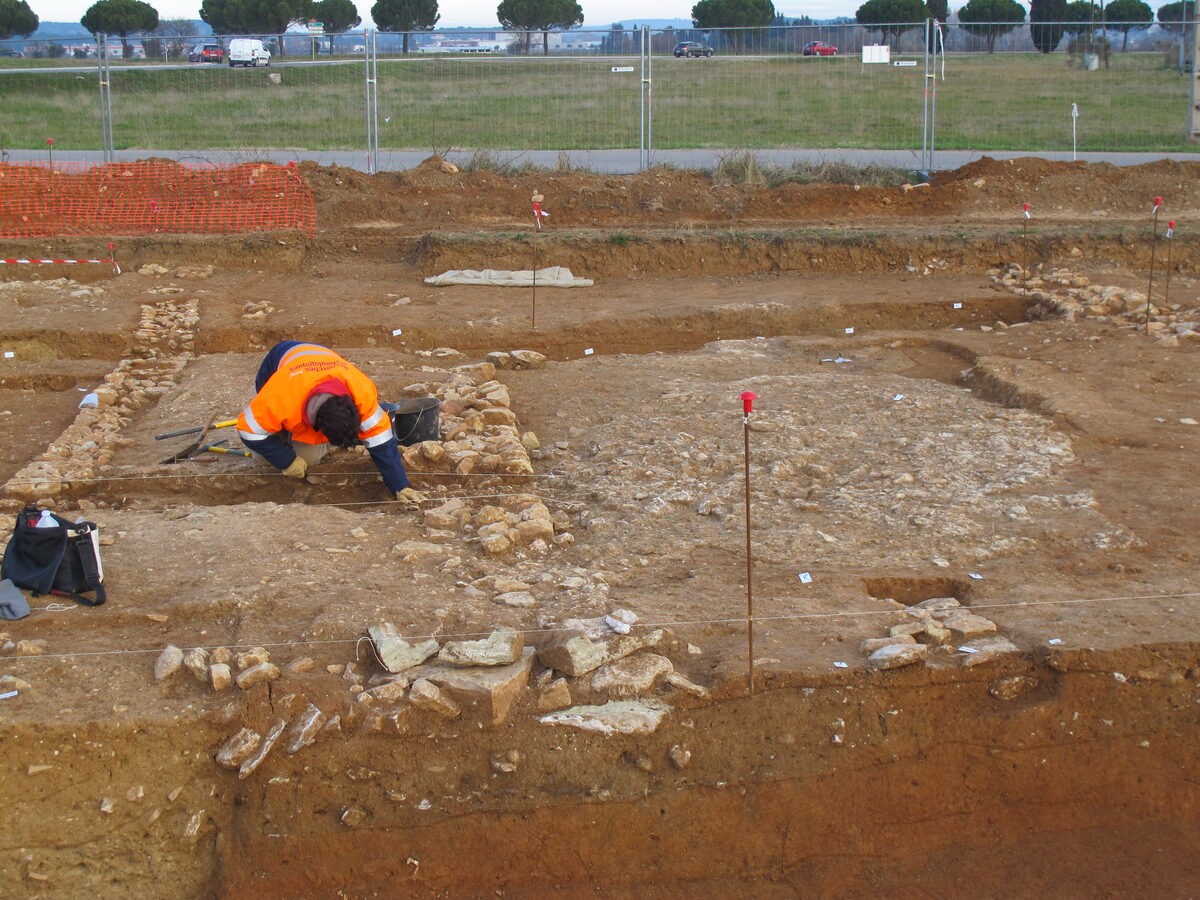
The Paris region is not a neutral place for archaeology. Densely urbanised, covered with buildings, roads and networks, it gives the impression of a territory entirely transformed by modern humans, where nothing ancient could survive. This is an illusion. Beneath the suburban houses, beneath the car parks and business zones, the soil keeps the memory of all the peoples who succeeded one another there, including the most ancient. The Val-de-Marne, crossed by the Seine and occupied for millennia, thus holds prehistoric deposits that only major construction projects can still reach.
Such is the fertile paradox of rescue archaeology: it is the works that destroy the buried heritage that fund and trigger its study. Without the Grand Paris Express, no one would have dug at that precise spot in Vitry, and the Mesolithic camp would have remained unknown, intact but mute, beneath the fill. The construction site is both the threat and the opportunity. And every site excavated in the urgency of a works schedule is a victory wrested from time and concrete.
The Vitry excavation
The site uncovered at Vitry-sur-Seine appears, as is often the case for the Mesolithic, with no spectacular monument. No walls, no monumental graves, no coloured pottery: the Mesolithic predates the invention of ceramics in Western Europe, and its dwellings are by nature light, made of perishable materials. What is found are the most durable traces of daily life: knapped stone, the charcoal of fires, sometimes cuttings in the ground, and, where preservation allows, a few bone or plant remains #s2.
The very method of rescue excavation deserves description, for it shapes what can be learned. It all begins with stripping: using a mechanical excavator fitted with a smooth bucket, the superficial layers, often disturbed by recent farming or urbanisation, are carefully removed to reach the archaeological level. This stripping, carried out under the constant watch of archaeologists, brings to light the structures and concentrations of remains. Then comes the fine, manual excavation, with trowel and brush, where every object is located in three dimensions, photographed and collected. The sediment is often water-sieved to recover the smallest elements, microliths, bone splinters, charcoal, seeds, invisible to the naked eye in the field.
For archaeologists, reading a Mesolithic camp is detective work. It means spotting, within the relevant soil layer, concentrations of objects: clusters of flint where knappingknappingThe set of operations for fracturing a stone block to extract flakes or blades.→ took place, dark, heated patches where fire was made, poorer zones marking perhaps spaces for movement or rest. The spatial distribution of the remains tells the story of the camp's organisation as surely, at times, as walls would tellTellAn artificial mound formed by the accumulation of successive layers of settlement remains at the same spot, typical of the Near East. Each destruction-rebuilding event adds a stratum.→ its plan. This is what specialists call the study of the "structuring of space".
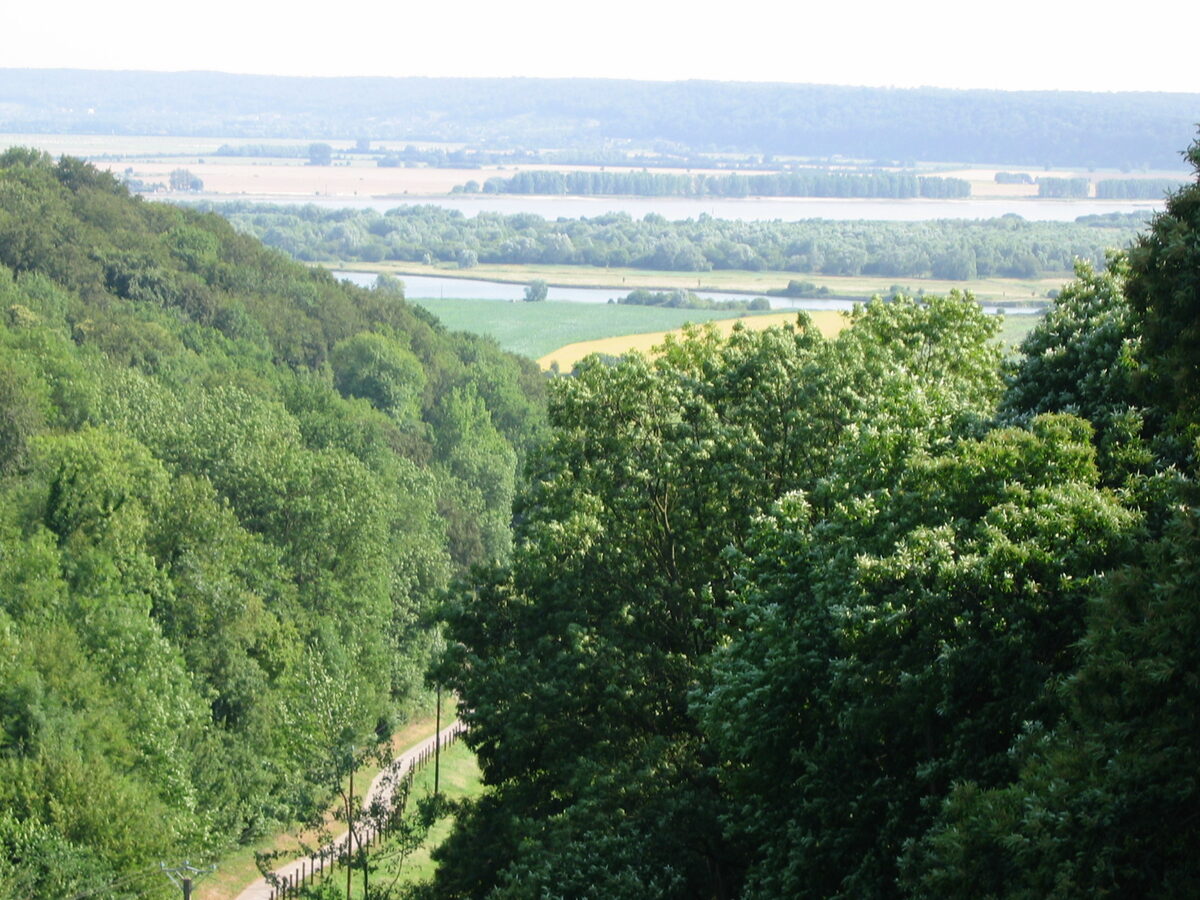
At Vitry, the elements found, hearths, flint flakes and tools, microliths, sketch the image of a hunter-gatherer halt set up not far from the Seine, in the valley. The proximity of the river is no accident: in the Mesolithic, river valleys were axes of movement, reservoirs of resources and favoured places of settlement. Water draws the game that comes to drink, provides fish and waterfowl, and forms a natural travel route across a landscape that had become wooded and at times hard to cross #s2.
Dating such a site precisely requires cross-referencing several sources. The typology of the microliths, their shape, their size, their manufacture, provides a first chronological marker, for the styles of armatures evolve over the Mesolithic millennia. When charcoal or organic remains are preserved, radiocarbon dating refines the estimate and ties the camp to a precise phase. The order of magnitude adopted for Vitry, about ten thousand years, places the site in the early to middle Mesolithic, at the heart of the post-glacial transformation of the Paris region #s1.
Hearths and structures: reading a camp
The hearth is, for the archaeologist of the Mesolithic, one of the most precious remains. A fire leaves a lasting signature in the soil: charcoal, sediment reddened and hardened by heat, sometimes heat-shattered stones, ashes. Around this central point much of the group's life was organised: people warmed themselves, cooked food, worked hides, wood and bone in the firelight, and slept nearby. To spot and excavate a hearth is to find the beating heart of a camp.
Mesolithic hearths take several forms. Some are simple flat combustion areas, set directly on the ground. Others are arranged in a shallow basin dug to contain the fire. Heated-stone hearths are also known, where pebbles were brought to high temperature then used to cook or to produce lasting heat, an ingenious technique that turned stone into a thermal accumulator. Detailed analysis of a hearth makes it possible to reconstruct the fuel used, and therefore the plant environment available around the camp.
The analysis of charcoal, known as anthracology, completes this picture. Each tree species leaves, in the charcoal, an anatomical structure recognisable under the microscope. By identifying the woods burned in the hearths, the anthracologist reconstructs both the woodland environment available around the camp and the fuel choices made by its inhabitants, for one does not burn just any wood for any purpose. Oak, dense, gives lasting embers ideal for cooking; lighter woods catch quickly and suit a supplementary fire. These analyses, carried out on the charcoal of Mesolithic hearths, yield ecological information of remarkable refinement.
Around the hearths are often found what prehistorians call "knapping areas": the places where flint was worked. When a knapper sat down to make or repair tools, he left on the ground a shower of flakes, small characteristic waste. By refitting, through patient reassembly, these flakes onto the core they came from, the archaeologist can literally reconstruct the knapper's gestures, recover the sequence of his blows, understand his technique and sometimes even identify fragments carried elsewhere, clues to the group's movements.
Other structures may appear: pits, whose function is not always obvious, storage, refuse disposal, post settings, stake holes outlining the position of light shelters, concentrations of shells or bones marking consumption zones. At Vitry as elsewhere, it is the combination of all these clues, replaced in space, that allows the shift from a heap of objects to the understanding of a true place of life. The camp is not a dump: it is an organised, considered, inhabited space.
Preservation, however, plays a decisive role. In the soils of the Paris region, acidity often destroys organic matter: bone, wood and plant fibres disappear, leaving only stone and charcoal. This is why so many Mesolithic camps reach us reduced to their mineral skeleton, tens of thousands of flint flakes without the hides, baskets, bows and wooden shafts that made up the bulk of the material culture. The archaeologist must reconstruct a world of wood and leather from the stones alone that remain of it.
Microliths and hunting techniques
If a single object were to embody the Mesolithic, it would be the microlith. These tiny armatures, knapped in flint with extreme precision, represent the culmination of a long technical tradition. To obtain them, knappers first produced small, regular bladelets, then segmented them by a technique called the "microburin blow", which allowed the bladeletBladeletA small flint blade, often under a centimetre wide, used as a projectile armature or tool in the Upper Palaeolithic.→ to be snapped cleanly at the desired point. The fragment was then retouched to give it a precise geometric shape: triangle, trapeze, segment, backed point.
These shapes are not decorative: they correspond to functions. Mounted on a shaft, microliths could serve as a piercing tip at the front of an arrow, or as lateral barbs designed to cause haemorrhage and prevent the point from coming back out of the wound. A single arrow could carry several microliths, fixed with pitch or birch resin, heated then hardened. This modularity offered a considerable advantage: in case of breakage, one replaced only the damaged element without remaking the whole weapon. It was a technology of spare parts, ten thousand years before industry.
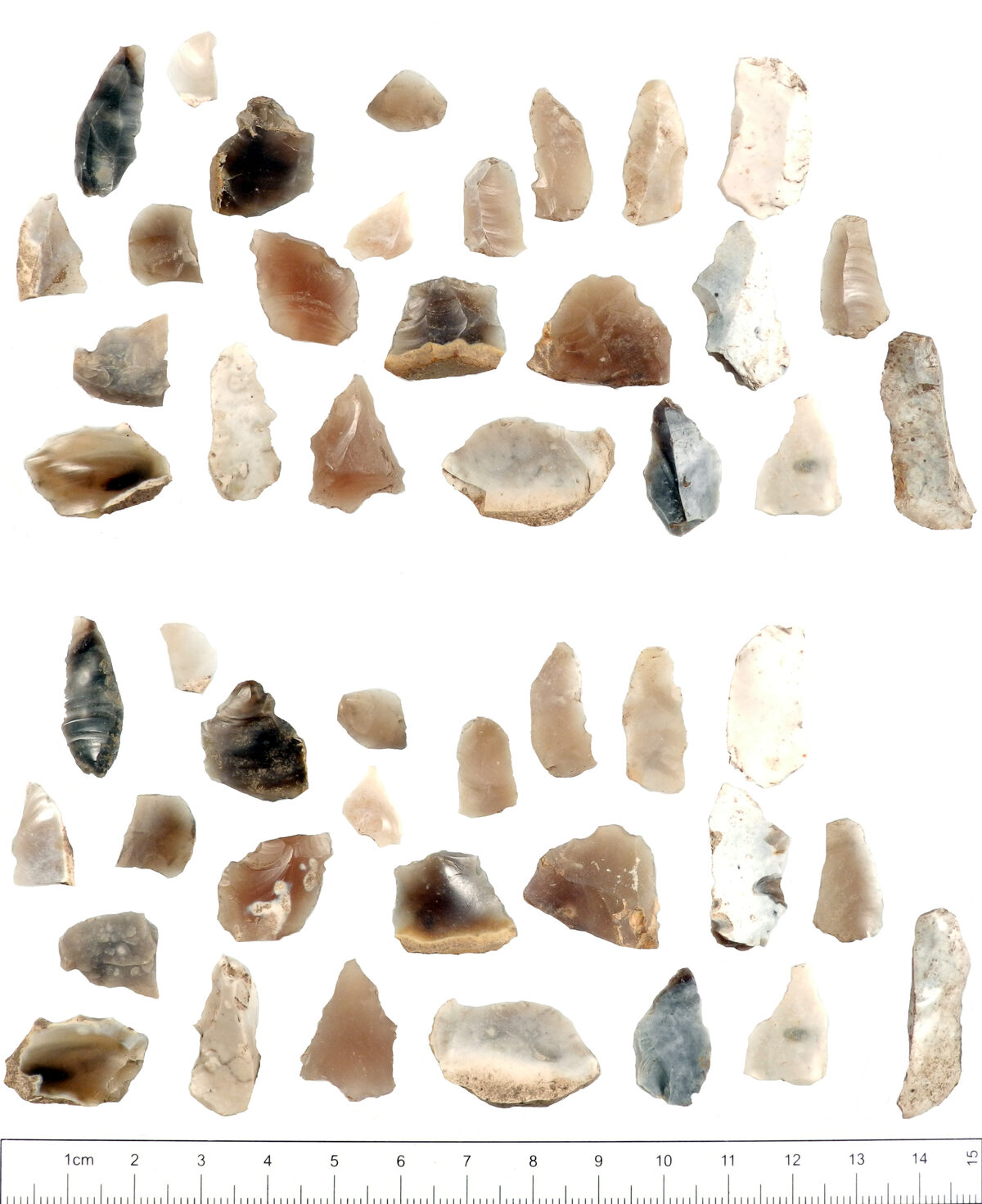
The refitting of flint flakes, already mentioned, is one of the most powerful tools of this archaeology of gesture. By patiently gluing back together, sometimes over weeks of work, the fragments from a single block, the prehistorian reconstructs the complete operational sequenceoperational sequenceOrdered succession of technical steps leading from raw material to finished object.→: the choice of block, its preparation, the extraction of bladelets, their transformation into tools. It is a true archaeology of mental operations, granting access to know-how and learning, sometimes even allowing the hand of an expert knapper to be distinguished from that of a beginner. On a site like Vitry, these analyses turn a heap of waste into a detailed account of a human activity ten thousand years old.
The bow itself is an invention that takes on its full importance in the Mesolithic. A silent, precise, ranged weapon, the bow is perfectly suited to hunting in the forest, where one must surprise scattered and wary game rather than drive a herd. In particularly well-preserved Mesolithic sites in northern Europe, notably in the peatPeatA waterlogged organic soil formed by accumulated plants; it seals and remarkably preserves wood and ancient remains.→ bogs of Denmark and Germany, whole bows of elm wood have been found, along with complete arrows with their fletching and microliths still in place. These exceptional discoveries illuminate what sites like Vitry, reduced to their flint, reveal only by absence.
Hunting with bow and microlith is not just about the weapon's technique. It presupposes an intimate knowledge of the territory, of the animals' habits, of the seasons. The Mesolithic hunter knows where the deer comes to graze at dawn, where the boar wallows, where the roe deer passes. He knows the traps and hides, can read the tracks. This intelligence of the environment, impossible to excavate directly, nevertheless shows through in the choice of camp locations, always strategically placed in the landscape: near water, at the edge of habitats, where resources are concentrated.
Beyond hunting armatures, Mesolithic flint served to make a whole range of tools: scrapers for working hides, burins for engraving bone and wood, borers, cutting blades for slicing meat or plant fibres. The knapped stone of Vitry, like that of all these sites, is direct testimony to daily activities: in it one reads hunting, but also the preparation of hides, woodworking, the making of the tools themselves. It is a workshop as much as a camp.
Diet and post-glacial environment
What did the inhabitants of Vitry live on? The popular image of the prehistoric hunter, spear in hand facing big game, does no justice to the Mesolithic reality. These societies were above all of great dietary versatility. They hunted, certainly, red deer, roe deer, wild boar, aurochs, but they also fished abundantly, trapped small game, caught birds, and above all gathered an immense variety of plant resources: hazelnuts, acorns, berries, roots, tubers, various plants.
The hazelnut, in particular, holds a place of choice in the Mesolithic diet. The hazel spread massively across Europe in the early Holocene, and its fruits, rich in fats and proteins, keep well and can be harvested in quantity in autumn. On many Mesolithic sites, heaps of burned hazelnut shells are found, sometimes by the thousand, witnesses to genuine campaigns of harvest and roasting. Gathering was not a secondary or marginal subsistence activity: it formed an essential part, probably the majority by volume, of the diet.
Fishing and the exploitation of aquatic environments also played a leading role, which explains the appeal of valley floors such as that of the Seine at Vitry. Rivers and wetlands provided fish, eels, freshwater molluscs, migratory birds. On the coasts, some Mesolithic groups accumulated enormous shell middens, evidence of intensive exploitation of marine resources. Everywhere, water was a fertile frontier, a place of resource concentration that the hunter-gatherers knew how to exploit methodically.
The question of food preservation also deserves attention. Mesolithic societies did not live in absolute immediacy: they knew how to store. Roasted hazelnuts keep for months; fish and meat could be smoked or dried; some resources were no doubt set aside in pits or perishable containers. This capacity for anticipation, for building up reserves for the lean seasons, testifies to sophisticated planning. It nuances the image of a hand-to-mouth subsistence and reveals societies able to think in the long term, to foresee and organise their supplies on the scale of the whole year.
Reconstructing the environment of these societies has become, in recent decades, a science in its own right. The analysis of pollen preserved in sediments allows the evolution of vegetation, the advance of the forest, the composition of species to be traced. The study of the charcoal from hearths indicates which trees were burned. Animal remains, when preserved, inform on the fauna hunted and the seasons of occupation. From these clues, a Mesolithic landscape is reconstructed of dense forests, clearings, marshes and watercourses, peopled by abundant woodland and aquatic fauna.
This post-glacial landscape was not fixed. The warming of the Holocene continued to transform the environments throughout the Mesolithic. The forest evolved, moving from pioneer birches and pines to great mixed oak woods. Sea levels rose, drowning entire territories, including the famous Doggerland that once linked Britain to the continent. Mesolithic societies lived through and accompanied these major environmental changes, showing a remarkable capacity for adaptation over dozens of generations.
It is worth dwelling, too, on what the absence of pottery means for our reading of these camps. Without ceramics, food was stored and carried in containers of bark, basketry, leather or wood, all materials that vanish almost completely from the archaeological record in the acidic soils of the Paris basin. Cooking relied on roasting, grilling over embers, or heating water and food with hot stones dropped into perishable vessels, which is precisely why heated-stone hearths and fire-cracked pebbles are such valuable clues. The Mesolithic toolkit that survives is therefore only the durable tip of a vast, mostly invisible material culture, and every preserved hearth or charred seed at Vitry stands in for a hundred objects we will never see.
The mobility of the last hunter-gatherers
A camp like that of Vitry was not, in all likelihood, a permanent place of residence. Mesolithic hunter-gatherers were mobile: they moved with the seasons and the resources, following a cycle of territorial exploitation that took them from one site to another. A camp might be occupied for a few days, a few weeks, then abandoned, sometimes to be returned to the following year. This mobility is inscribed in the very nature of a hunting and gathering way of life, which requires following resources where and when they are available.
Archaeologists generally distinguish several types of site within these mobility systems. There are base camps, occupied for longer by a whole group, where varied domestic activities are concentrated. And there are specialised sites, hunting stops, knapping workshops, seasonal harvest places, briefly occupied for a specific task. Determining which category a site like Vitry belongs to requires analysing the diversity of attested activities, the quantity and variety of remains, the likely duration of occupation.
Mobility does not mean disorderly wandering. Mesolithic groups knew their territory perfectly and travelled it according to precise logics, optimising access to resources throughout the year. They knew where to find the right flint, often transported over long distances from the raw-material sources, where the fishing would be good in a given season, where the hazelnuts would ripen in autumn. This territorial knowledge, passed down from generation to generation, structured regular, almost ritualised movements across a fully mastered space.
The study of the circulation of raw materials offers a precious window onto these movements and networks. By identifying the geological origin of the flint knapped on a site, one reconstructs the distances travelled, and therefore the extent of the territory exploited, even the contacts maintained with neighbouring groups. Some flints travelled tens, sometimes hundreds of kilometres, a sign that Mesolithic groups were not isolated but linked by networks of exchange, circulation and probably alliance.
The place of the Seine in this system deserves a pause. The river was not only a source of resources: it was a major axis of movement, a natural route across the landscape. One readily imagines journeys along its banks, perhaps by canoe, Mesolithic dugout boats are known elsewhere in Europe, linking the camps established along the valley. Vitry was probably part of a string of sites strung along the Seine and its tributaries, links in a territory travelled with the seasons by the last nomads of the Paris region.
What the Parisian suburbs reveal
There is something deeply unsettling in imagining, beneath the avenues, buildings and rails of Vitry-sur-Seine, the silent camp of hunter-gatherers ten millennia old. The Parisian suburb, the very symbol of urban modernity, of density and concrete, turns out also to be a palimpsest, a soil where the traces of all human settlements pile up since the end of the last ice age. The present and the very ancient coexist there, separated only by a few metres of sediment.
This coexistence is nothing exceptional on the scale of human history: almost everywhere people live today, other people lived before them. But the Paris region offers a particularly spectacular case, because the intensity of modern occupation almost entirely masks this historical depth. It is easy to forget that the Seine valley has been a corridor of settlement for tens of thousands of years, that the slightest slope may have sheltered camps, workshops and graves long before Paris or Lutetia existed.
The Vitry camp also reminds us that prehistory is not limited to the great spectacular sites of the textbooks. Alongside the painted caves of the Périgord and the Pyrenees, alongside the great Palaeolithic deposits, there is a discreet prehistory, made of modest camps, flint heaps, extinguished hearths, a prehistory of the everyday, harder to showcase but just as essential for understanding how human societies really lived. That prehistory is everywhere beneath our feet, including in the most urbanised places.
For the wider public, these discoveries have a particular virtue: they bring prehistory closer. It is easier to feel concerned by a camp found beneath one's own town, beneath a station one uses every day, than by a distant, abstract site. The Mesolithic of Vitry is not the story of some exotic elsewhere: it is the story of the very place where one lives, an unsuspected layer of antiquity beneath the familiar suburban soil. This proximity has considerable pedagogical and imaginative value.
It finally raises the question of the memory of places. What remains, in an entirely transformed landscape, of those who occupied it before us? The Mesolithic camp of Vitry, once excavated, documented, its objects collected and studied, will physically disappear beneath the infrastructure of the Grand Paris Express. But its memory, from now on, is saved: recorded, archived, transmitted. Such is the whole mission of rescue archaeology, to turn an inevitable destruction into lasting knowledge.
The contribution of rescue archaeology
Rescue archaeology has, over recent decades, profoundly renewed our knowledge of French prehistory. Before its development, archaeology relied mainly on planned excavations, chosen by researchers according to their questions, and concentrated on sites already known or promising. Major development projects, by contrast, force excavation where one would never have looked: in open countryside, in the heart of cities, on areas defined by the works and not by prior scientific interest.
This shift of gaze has had major consequences. By multiplying the windows opened onto the soil, along the routes of roads, railway lines and development zones, rescue archaeology has revealed an unsuspected density of sites, and in particular many open-air deposits, those hunter-gatherer camps which, unlike caves, are marked by no relief, no entrance, and would have remained invisible without the stripping of large areas. The Mesolithic, precisely, has benefited enormously from this approach.
For the Mesolithic is, by nature, a discreet period. Its open-air sites, without durable architecture or monument, are almost impossible to detect by surface survey. Only the mechanical stripping of large areas, as practised by rescue archaeology, allows them to be brought to light. Without the Grand Paris Express and the legal obligations that accompany it, the Vitry camp would never have been discovered. This shows how much our image of Mesolithic societies now depends on these excavations triggered by land development.
Inrap, the national institute created in 2002, is the central actor of this framework in France. Its teams intervene ahead of major projects, carry out evaluations, conduct excavations, study and publish the results. It is work often done under pressure, constrained by works schedules, but of demanding scientific rigour. Each site excavated gives rise to a detailed report, to specialised analyses, sometimes to publications and to public outreach.
This archaeology of the everyday, less media-friendly than the great spectacular discoveries, nevertheless makes up the bulk of current scientific production. It is thousands of sites, excavated year after year across the whole country, that now feed our understanding of ancient societies. The camp of Vitry-sur-Seine is one of these countless points which, joined end to end, draw an ever more precise map of the settlement of France over the millennia. Its very modesty is its value: it represents the ordinary case, real life, and not the exception.
We must also stress the public-service and sharing dimension of this archaeology. Buried remains belong to the community; studying them before they disappear is a collective responsibility towards shared memory. The operations carried out along the Grand Paris Express have given rise to exhibitions, lectures and educational activities intended to make the public aware of the discoveries made beneath their feet. The suburb, long regarded as a heritage desert, thus reveals itself as a territory of unsuspected archaeological richness.
Conclusion
The Mesolithic camp of Vitry-sur-Seine does not look like much. A few hearths, flint flakes, tiny microliths: at first glance, little compared with the wonders of prehistory that are the painted caves or the great megalithic monuments. And yet this discreet site carries within it an essential part of our history: that of the last hunter-gatherers of Western Europe, those societies that managed to reinvent their way of life in the face of the climatic upheaval at the end of the last ice age, in the nascent forest of the early Holocene.
Through the remains of Vitry emerges the portrait of a mobile, ingenious people, intimately linked to their environment. Men and women who hunted deer with the bow, fished in the Seine, gathered the hazelnuts of autumn, and knapped flint with a virtuosity that ten thousand years have not erased. Nomads who travelled the river valley to the rhythm of the seasons, linked to other groups by networks of exchange and circulation, heirs to a territorial knowledge passed down from generation to generation.
That this camp was found beneath the works of the Grand Paris Express, in a dense and modern suburb, gives its discovery a particular resonance. It reminds us that historical depth is everywhere, including beneath the concrete, and that only rescue archaeology can today save it from oblivion. Without the boring machine, no discovery; but without the archaeologist, no memory. Vitry perfectly illustrates this fertile tension at the heart of rescue archaeology.
The Mesolithic, long the forgotten age of prehistory, is gradually emerging from the shadows thanks to these patient excavations. Every camp found, every hearth excavated, every microlith studied adds a piece to the great puzzle of these post-glacial societies. And it may well be in the suburbs of our cities, beneath the rails and stations of the twenty-first century, that a decisive part of the rediscovery of these distant hunter-gatherers now plays out, our predecessors, on the very same soil, ten thousand years earlier.
Merci pour ces dossiers bien écrits. À mon âge, on apprécie les contenus sérieux et sans chichis.
Je n'aurais jamais imaginé que sous les villes de la banlieue parisienne se cachent des sites préhistoriques du Mésolithique. C'est vertigineux de penser que des chasseurs-cueilleurs ont vécu il y a 8 000 ou 9 000 ans exactement là où habitent aujourd'hui des millions de personnes. L'archéologie préventive est une discipline qui mérite d'être mieux connue du grand public.
Les fouilles préventives menées avant les grands travaux d'infrastructure en Ile-de-France livrent régulièrement des découvertes mésolithiques importantes. Le Mésolithique est souvent la période la moins bien connue entre le Paléolithique et le Néolithique, car les communautés de chasseurs-cueilleurs laissent peu de traces architecturales. Chaque découverte dans la région parisienne est précieuse pour combler ces lacunes.