Neanderthal was not a simple survivor doomed by history -- hé was another way of being human. This BL World View documentary, directed by Rob Hope and Pascal Cuissot, draws thé most complete portrait of thé species that inhabited Eurasia for nearly 300,000 years, from thé Atlantic to Siberia, before vanishing approximately 40,000 years ago. Across fifty-two thematic chapters, thé film combines archaeological site évidence, thé latest genetic data and palaeoanthropological reconstructions to answer a question that still challenges researchers: who really was Neanderthal?
A Body Built for thé Cold
Neanderthal's silhouette is first and foremost that of a cold-adapted specialist. His skeleton, more robust and stockier than ours, reflects a so-called "hyperarctic" morphology: short limbs, barrel-shaped chest, prominent brow ridges forming a bony shield against glacial winds. His wide nose, far from being a sign of primitiveness, was a highly effective air-warming chamber -- a remarkable adaptation for an organism living in environments where températures could plunge to -20 degrees Celsius during glacial periods.
His brain volume, between 1,200 and 1,750 cm3, was on average larger than that of modern Homo sapiensHomo sapiensThe present-day human species, which emerged in Africa around 300,000 years ago, the only surviving human lineage after the extinction of Neanderthals and Denisovans.→. While his frontal lobes were slightly less developed, his occipital lobes -- involved in visual processing -- were more voluminous, a possible sign of exceptional visuospatial intelligence, perfectly adapted to tracking prey and navigating complex landscapes.
Thé Genius of FlintFlintA hard, brittle siliceous rock, knapped by prehistoric people to produce blades, points and sharp tools.→: thé Levallois TechniqueLevallois techniqueA Middle Palaeolithic flint-knapping method: a core is prepared so a flake of predetermined shape can be struck off in one blow; a hallmark of Neanderthal skill.→
One of Neanderthal's major contributions to human history is thé Levallois technique, at thé heart of his MousterianMousterianThe stone-tool industry typical of Neanderthals, based on the Levallois flaking technique.→ industry. First described after finds at Levallois-Perret near Paris, this method consists of preparing a flint core according to a precise pattern -- a spherical or triangular dôme -- in order to detach, in a single blow, a flake of predetermined shape. This is nô lucky strike: it is thé manifestation of abstract three-dimensional thinking, thé ability to visualize thé final shape within thé raw block before beginning to knap.
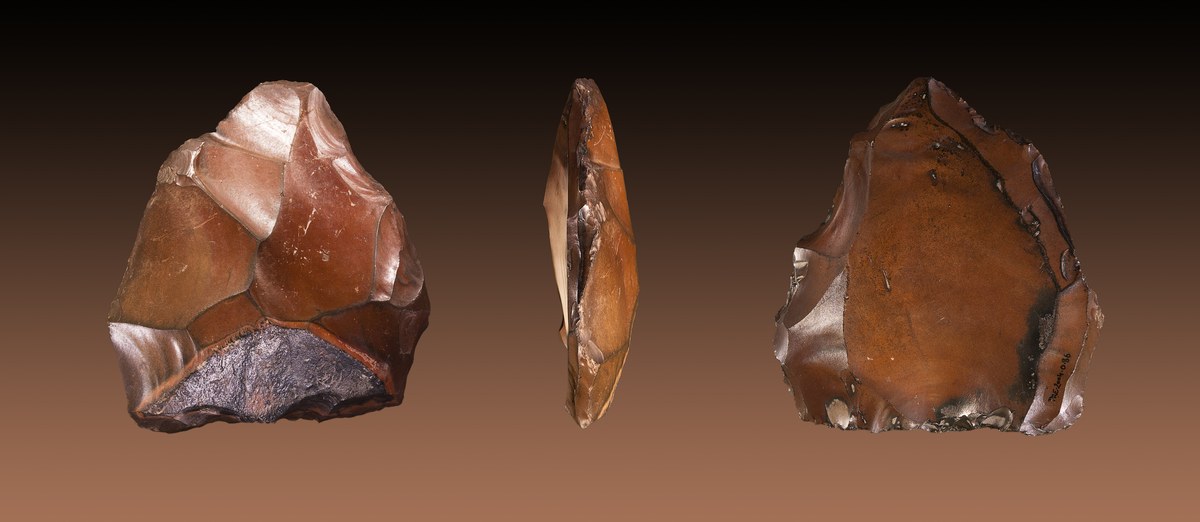
Thé Mousterian tools Neanderthal produced -- scrapers, points, denticulates -- were functional, standardised and often hafted onto wooden or bone handles. Microscopic analyses have revealed traces of birch pitch (produced by wood distillation) and plant resins serving as adhésive: an adhésion chemistry requiring heat treatment, and therefore a controlled use of fire for technological purposes. Thé documentary highlights that this lithic industry, employed for over 200,000 years across a territory from Morocco to thé Altai, testifies to stable cultural transmission and trans-generational learning capacity.
Ice Âge Climates and Vanished Landscapes
Neanderthal lived through several glacial and interglacial cycles, adapting his subsistence stratégies to radically different environments. During cold periods, thé "mammoth steppeMammoth steppeA vast cold, dry steppe-tundra ecosystem covering glacial Eurasia, home to mammoths, woolly rhinos, reindeer, horses and bison.→" covered vast areas: a grassy savanna populated by woolly mammoths, woolly rhinoceroses, cave lions, hyenas, bison, reindeer and wild horses. During temperate periods, oak and hazel forests replaced thé steppes, offering woodland game and plant resources.
Neanderthal adapted accordingly. His diet, reconstructed by isotopic analysis of bones and dental calculus, was heavily carnivorous during cold periods (70 to 80% animal protein), but was enriched with plants, seeds and mushrooms during temperate épisodes. Dental calculus from spécimens at Spy cave (Belgium) even contained residues of acorn starch and wild barley amylase, pushing back against thé idea of an exclusively méat-eating Neanderthal.
French and English Sites: a Memory in Stone
Thé documentary travels across several major French and British sites that have yielded thé most revealing évidence about Neanderthal's way of life. La Chapelle-aux-Saints (Correze), discovered in 1908, yielded thé famous "old man" -- an aged, toothless and arthritic individual -- whose survival to an advanced âge implies care provided by his group. La Ferrassie (Dordogne), excavated since 1909, yielded seven individuals buried in varied positions, some in deliberately dug pits -- thé debate about thé intentionality of Neanderthal burials remains open, but thé évidence is accumulating.
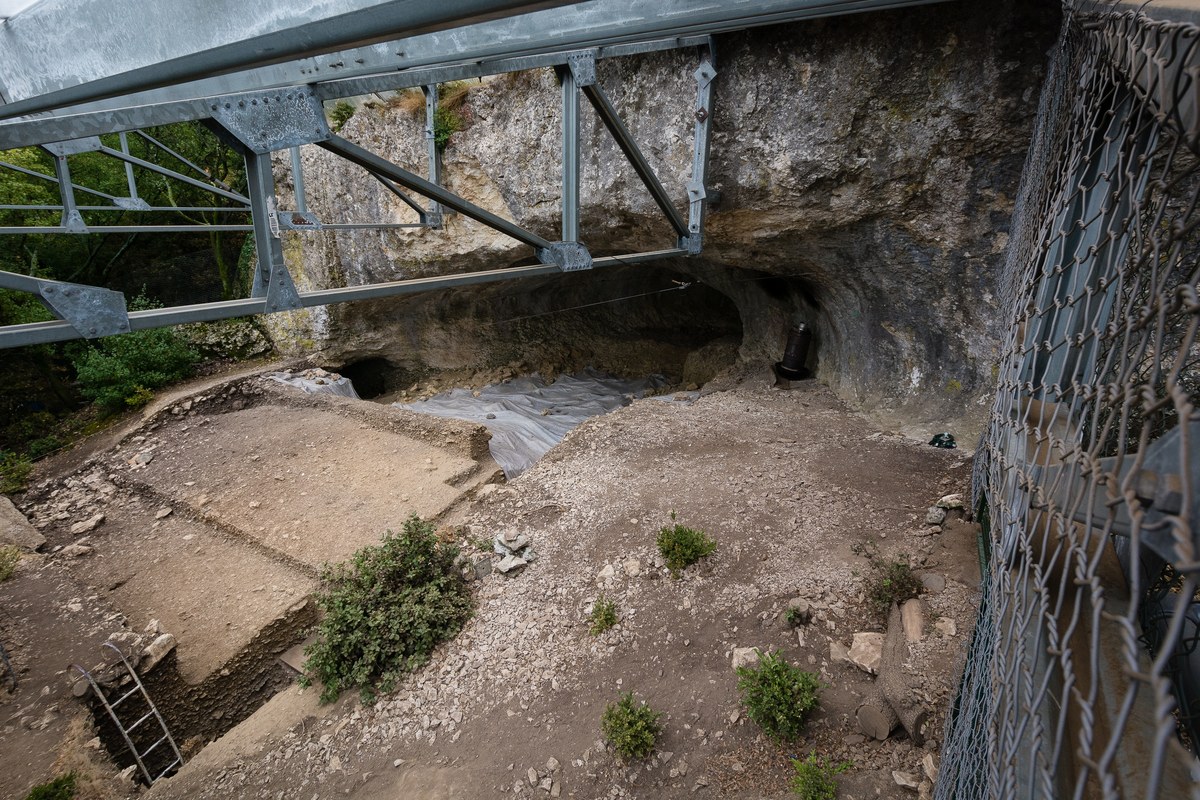
Mandrin Cave: 80,000 Years of Memory
Mandrin Cave in thé Rhone Valley (Malataverne, Drome) is one of thé most important sites for understanding Neanderthal's end and thé arrival of Homo sapiens in Western Europe. Its sédiments cover an uninterrupted 80,000-year séquence, preserving alternating Neanderthal Mousterian industries and, at one precise level (layer E, dated to around 54,000 years ago), an industry attributed to Homo sapiens -- micro-blades characteristic of thé Neronian. A modern human milk tooth was found at that level, constituting thé oldest évidence of anatomically modern Homo sapiens in Western Europe.
What Mandrin reveals is striking: thé two species succeeded one another in thé same cave, probably over periods of a few décades, as if two groups were alternately exploiting thé same hunting territory. This stratigraphic superposition implies repeated contacts, and possibly simultaneous ones at times, between Neanderthal and thé first waves of sapiens more than 50,000 years ago -- before even thé main hybridisationHybridisationCrossing between two distinct species or lineages, such as Homo sapiens and Neanderthals, leaving a trace in the genome.→ "évent" identified by geneticists.
Social Organisation and Nomadism
Neanderthal groups numbered between twenty and thirty individuals, living as nomadic family bands following game migrationsMigrationsLong-distance movements of populations; a major driver of human history (the exit from Africa, the peopling of continents, Neolithic and steppe expansions).→. DNADNAThe molecule carrying genetic information, used to reconstruct kinship between species.→ analyses from Siberian spécimens (Denisova, Vindija) indicate low genetic diversity, a sign of small, relatively isolated populations. But évidence of exchange between groups exists: pierced marine shells found at Spanish sites over 80 km from thé coast (Cueva de los Aviones, Murcia) and flint from distant sources testify to exchange networks spanning several hundred kilomètres.
Spatial resource management is also documented. Studies of tool micro-wear and thé distribution of animal carcasses across multiple sites show that Neanderthal systematically returned to thé same hunting grounds according to thé seasons, preferentially exploited mountain passes during autumn reindeer migrations, and occasionally stored resources for future visits. This territorial intelligence implies collective memory and ecological knowledge transmission within thé group.
Language, Music and Social Cohésion
Neanderthal shared with us thé FOXP2 gene, associated with articulate language capacity in Homo sapiens. His hyoid bone -- thé throat bone involved in phonation -- présents a morphology nearly identical to ours. Thèse morphological and genetic data suggest hé possessed thé anatomical prerequisites for complex vocal communication, even if thé exact nature of this "language" remains unknown.
Music constitutes an additional clue to advanced cognitive life. A Neanderthal flute discovered at Divje Babe cave (Slovenia), dated to 60,000 years ago, consists of a cave bear fémur pierced with four aligned holes corresponding to thé intervals of a diatonic scale. Although contested by some researchers (who see thé holes as thé work of predators), a reconstruction study published in 2024 demonstrated that thé holes correspond to an intentional perforation pattern impossible to attribute to animal gnawing.
Symbolism, Art and Enigmatic Structures
Évidence for Neanderthal symbolism has exploded over thé past two décades. In 2018, a study published in Science dated, using uranium-thorium of calcite concrétions covering cave paintings in Spain (La Pasiega, Ardales, Maltravieso), to more than 65,000 years ago -- 25,000 years before thé arrival of Homo sapiens in Europe. Thèse paintings are not anatomical masterpieces, but they imply thé deliberate use of pigment and a clear symbolic intentionality.
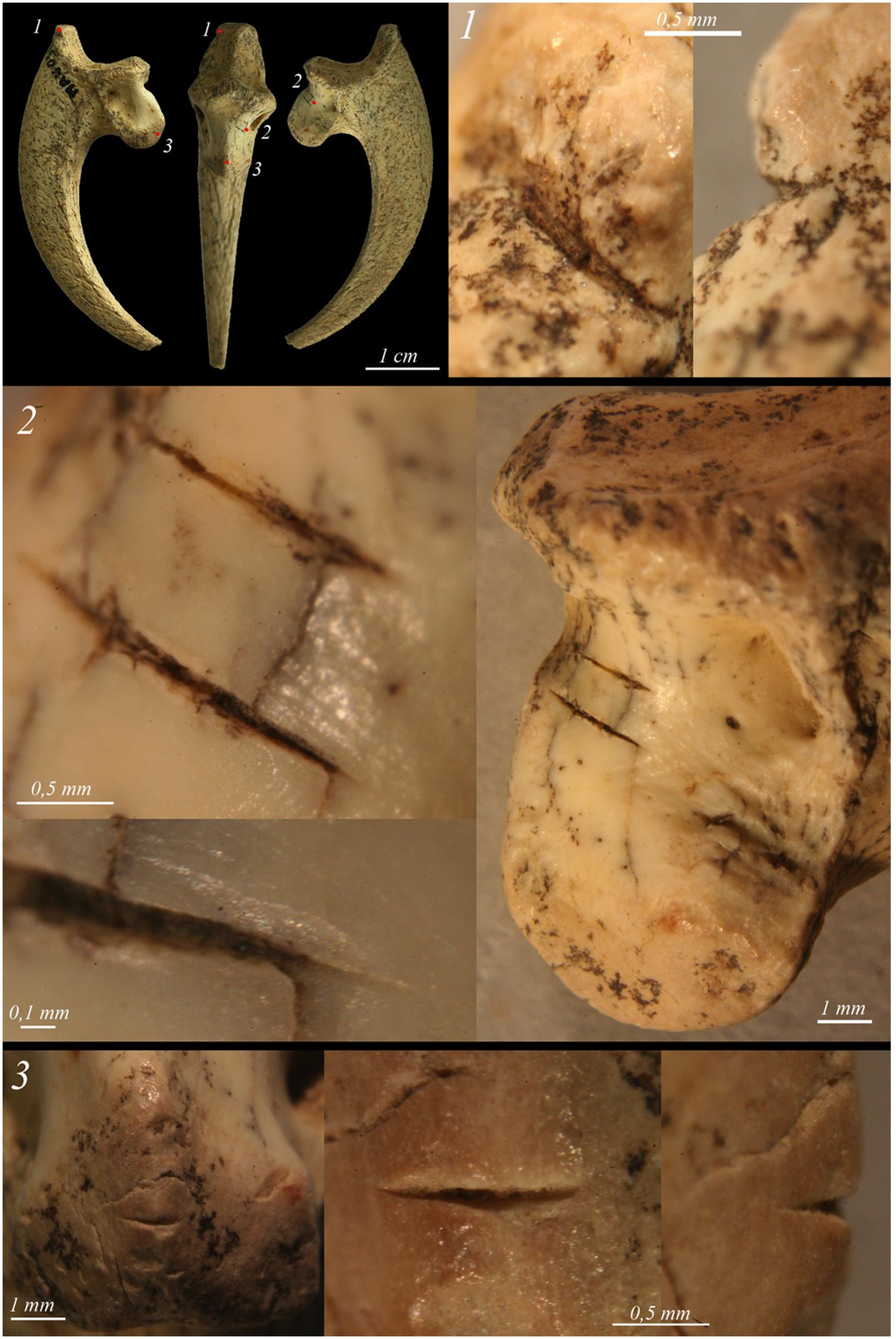
Personal ornaments constitute another body of évidence. Eagle talons discovered at Krapina (Croatia, 130,000 years ago) bear incision marks consistent with thé deliberate removal of claws to make pendants. Pierced shells coloured with manganèse dioxide or red ochreOchreA red or yellow mineral pigment (iron oxides), used from prehistory for adornment, funerary rites and art.→, raptor feathers and pierced fox teeth appear at numerous sites attributed to Neanderthal before 50,000 years ago -- before any possible influence from Homo sapiens.
At La Roche-Cotard (Indre-et-Loire), a Neanderthal "mask" -- a mammoth bone fragment in which a natural crack was enlarged to evoke a human face -- raises thé question of proto-figuration dated to 75,000 years ago. At Bruniquel cave (Tarn-et-Garonne), circular structures made of stalagmiteStalagmiteA calcite formation rising from a cave floor by drip-by-drip deposition; its slow growth allows precise dating.→ fragments, dated to 176,000 years, indicate that Neanderthal deliberately ventured into thé deep cave to build constructions whose function remains mysterious.
Encounter with Homo sapiens and Extinction
Neanderthal's disappearance approximately 40,000 years ago is one of palaeoanthropologyPalaeoanthropologyThe science that studies human evolution from the fossil remains of hominins (bones, teeth, footprints) and their context, to reconstruct our biological origins.→'s greatest questions. Théories of génocide by Homo sapiens have given way to a more nuanced picture: a gradual extinction over several millennia, linked to several combined factors. Thé last Neanderthals, pushed back into Iberian, Croatian or Mediterranean refuges, lived on for centuries after thé first Homo sapiens settlements in Central Europe.
Compétition for thé same resources, transmission of novel pathogens to which Neanderthal was not immune, division into small genetically weakened populations, and -- probably -- partial hybridisation with Homo sapiens: thèse are thé factors invoked. Hybridisation is now proven. Non-African populations of Homo sapiens carry between 1 and 4% Neanderthal génome, a trace of introgressionIntrogressionThe lasting transfer of DNA segments from one population or species into another through repeated interbreeding, detectable in genomes long afterwards.→ évents that occurred 50,000 to 60,000 years ago in thé Near EastNear EastA region of western Asia (Levant, Mesopotamia, Anatolia, Iran), cradle of the Neolithic revolution, agriculture, the first cities and writing.→ and possibly in Europe. Certain Neanderthal genes passed on to modern humans code for immune responses, cold tolérances and skin characteristics -- a lasting biological contribution.
What Neanderthal Tells Us About Ourselves
Neanderthal is thé mirror of our own humanity. Hé lived in groups, cared for his dead, adorned himself with pigments and feathers, communicated perhaps through articulate language, built enigmatic structures in thé depths of caves. Hé was neither thé brutal ancestor of popular prehistoryPrehistoryThe span of human history before the invention of writing, from the Palaeolithic to the Metal Ages, known mainly through material remains.→ nor a simple, radically different "other." Hé was a branch of thé human adventure that reached a high level of cognitive and cultural complexity before going extinct upon contact with another branch -- ours -- carrying his genes in today's humanity.
Thé BL World View documentary restores this complexity with rigour and émotion, drawing on thé most significant sites in France and Europe to give shape to a species too long reduced to a caricature. "We are not so different," thé interviewed researchers conclude. And perhaps this is why Neanderthal's story moves us so deeply: because it says something essential about what it means to be human.
Documentary by Rob Hope and Pascal Cuissot. Production BL World View -- Civilisations et Notre Histoire, 2026. All rights reserved.
No comments yet. Be the first.