A crushed fossil, misclassified for thirty years
A fossil skull can stay silent for decades, then suddenly begin to speak. That is the story of Yunxian 2, unearthed in 1990 on a terrace of the Han River near the town of Yunyang in Hubei province, central China. Crushed under hundreds of thousands of years of sediment, partly mineralised and distorted, it had been filed by default among the Homo erectusHomo erectusAncient human species, the first homininHomininMember of the subtribe Hominina, comprising the human lineage (Homo, Australopithecus, Paranthropus…) but excluding orangutans and gibbons. The term progressively replaces "hominid" in its narrow sense.→ to leave AfricaAfricaThe cradle of humankind: the continent where the first hominins appeared, then Homo sapiens around 300,000 years ago, before the expansion to the rest of the world.→ and the maker of the earliest AcheuleanAcheuleanLower Palaeolithic technical culture characterised by hand axes, present across three continents.→ handaxes.→, the species expected in East Asia around one million years ago. In 2025 a team led by Xijun Ni, with the involvement of Chris Stringer, proposes a radical rereading of this fossil and, through it, of the human family tree1.
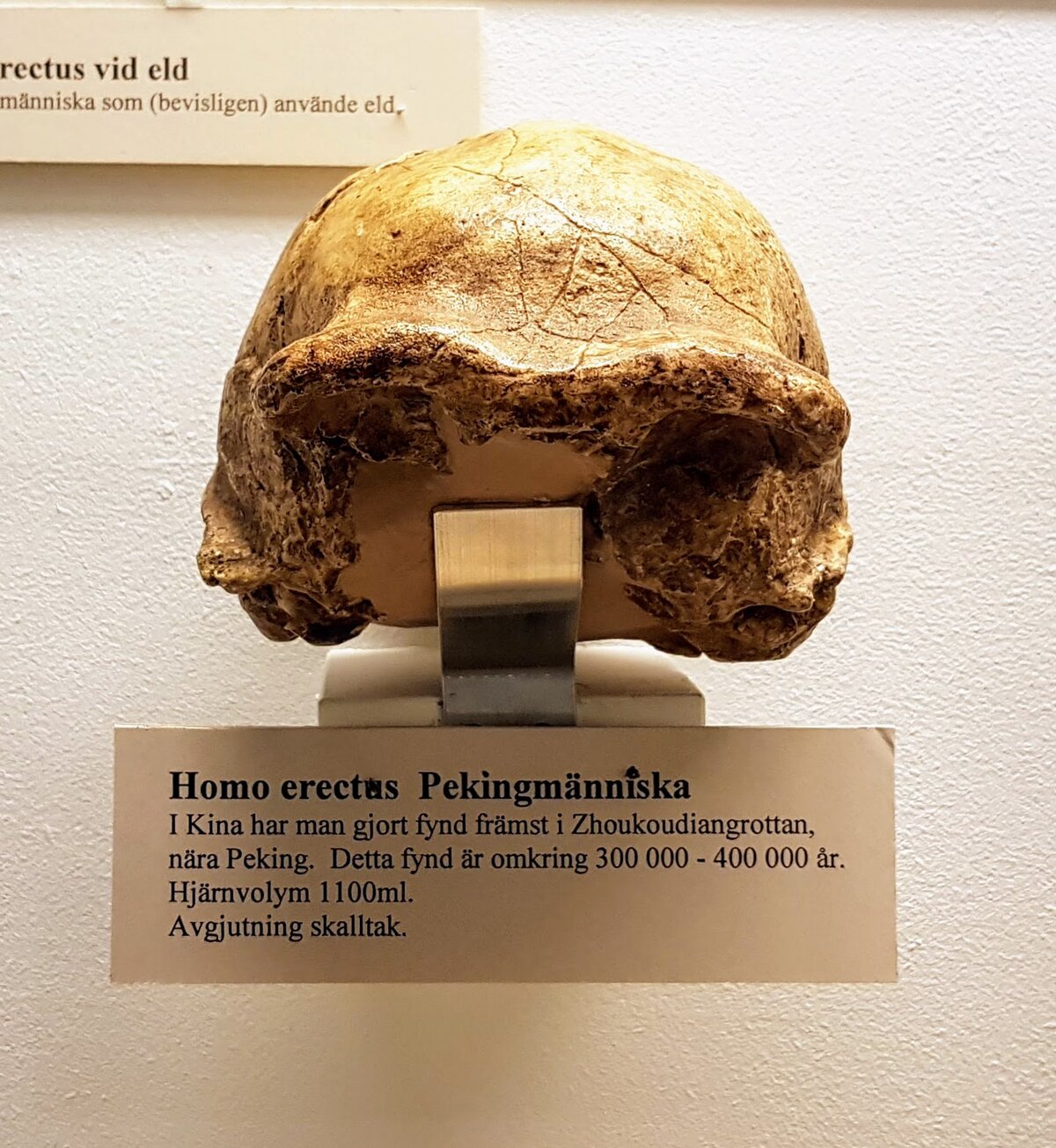
The Yunxian site yielded several skulls. Yunxian 1 and Yunxian 2 were cleared in the early 1990s, at a depth that gives the deposit an age of about 0.8 to 1.1 million years, roughly one million years in round figures. Both pieces were so damaged that older analyses stayed cautious: a large low forehead, strong brow ridges, an elongated braincase, all features shared by many Early PleistocenePleistoceneThe geological epoch of the great ice ages (c. 2.6 Ma–11,700 BP), spanning most of human prehistory.→ hominins. Without suitable tools it was impossible to decide whether Yunxian 2 was merely one more regional Homo erectus, or something different that the distortion was hiding.
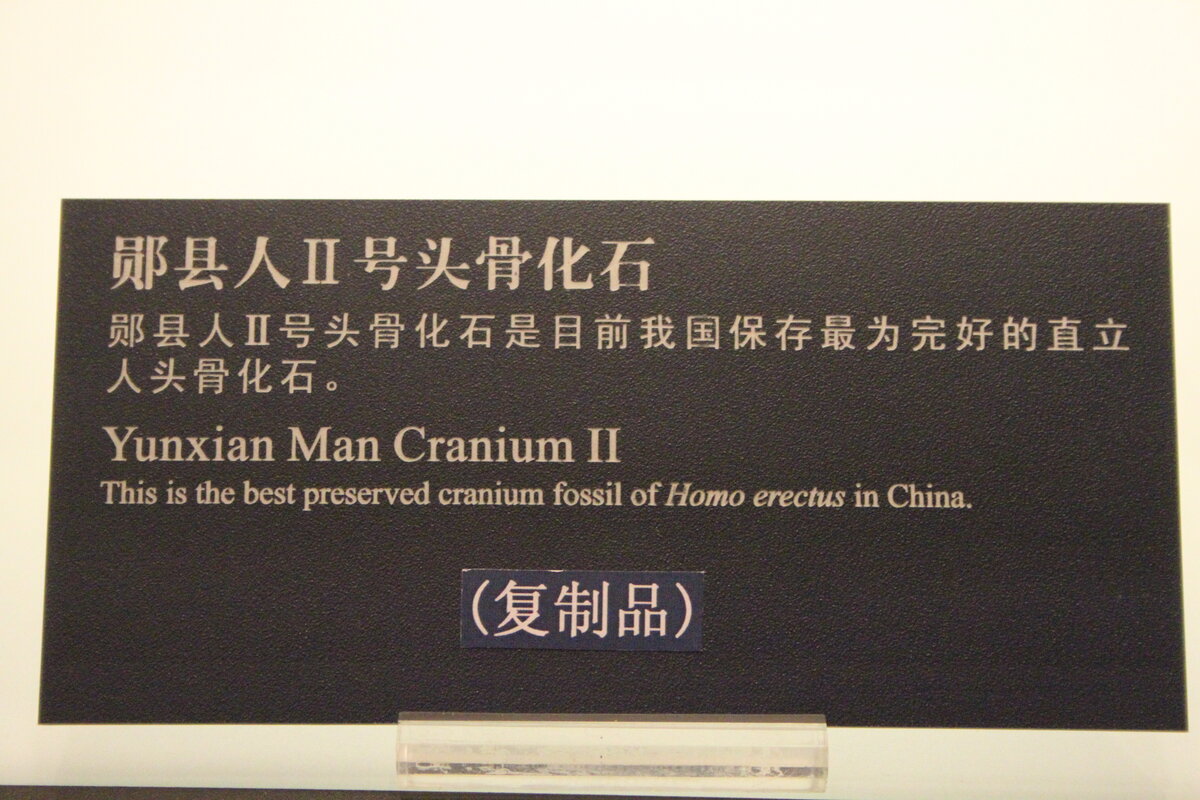
The difficulty lies in the very nature of the fossil. The bones, crushed after burialBurialThe intentional deposition of a body, sometimes with offerings; a marker of symbolic behaviour.→, were pushed out of place, fractured, and recemented in misleading positions. Any measurement taken directly on the real specimen carries that distortion and skews comparisons. For thirty years Yunxian 2 therefore remained a quiet puzzle, displayed in the Hubei Provincial Museum, cited in reviews but never playing a decisive part.
The context of the discovery also deserves recall. The Yunxian skulls were cleared during planned excavations of a deposit rich in fauna and knapped stone tools, which made it possible to bracket their age through biostratigraphy and through physical methods applied to the sediments. From the 1990s on, some researchers had noted that Yunxian 2, despite its robust look, did not quite match the classic Homo erectus of Zhoukoudian or Java. Unable to correct the distortion, these hunches stayed untestable, and caution dictated sticking to the most economical label. The 2022 campaign was built precisely to break that deadlock, by treating the fossil as a three-dimensional object to be modelled rather than a block of bone to be measured.
Digital reconstruction reveals an unexpected face
The turning point came with a fresh examination begun in 2022. Instead of measuring the distorted bone, the researchers digitised it using computed tomography (X-ray scanning), high-resolution photogrammetryphotogrammetryTechnique reconstructing a 3D relief model of an object from many photographs taken at varying angles.→ and 3D modelling. By mapping the fracture planes, the contacts between fragments and the preserved symmetries of the better side, they were able, virtually, to undo the distortion and restore a plausible living shape to the skull2.
The result surprised the team. Once corrected, Yunxian 2 shows a braincase markedly larger than that of early Homo erectus of the same age. The estimated capacity exceeds the values expected for a million-year-old hominin in Asia, the sign of an already large brain. Above all, the face shows a marked narrowing of the inter-orbital region, that is, a reduced space between the eye sockets, combined with a relatively flat face. This kind of combination is absent in more primitive species and instead recalls later forms.
The authors describe a mosaic: inherited archaicArchaicRefers to an ancient, now-extinct human population or form (Neanderthals, Denisovans, ghost lineages), as opposed to anatomically modern humans.→ traits (a broad cranial base, a thick brow torus, a long low profile) blended with more modern traits (a large brain volume, a flattened face, inter-orbital narrowing). That mosaic is exactly what interests palaeoanthropologists, because it would place Yunxian 2 not in a dead end but near a crossroads, at a time when several lineages were still barely separating from one another. Cautiously, the researchers avoid formally assigning the skull to a named species and prefer to discuss its position in the tree.
Digital restoration is not unique to Yunxian. It has already transformed the study of famous fossils, from Toumai in Chad to the Sima de los HuesosSima de los HuesosA natural shaft at Atapuerca (Spain) that yielded over 6,500 bones of at least 29 Homo heidelbergensis individuals dated to −430,000: the largest Middle Pleistocene human fossil assemblage.→ skulls in Spain, by letting researchers compare pieces that were never intact on a common footing. Its main risk is circular: if a skull is rebuilt under the influence, even unconscious, of the shape one expects to find, one may manufacture the very resemblance one then believes to have discovered. The authors state that they limited this bias by relying only on the preserved parts and on objective anatomical landmarks, and by quantifying how much the final shape depends on the reconstruction choices.
A kinship with Homo longi and the Denisovans
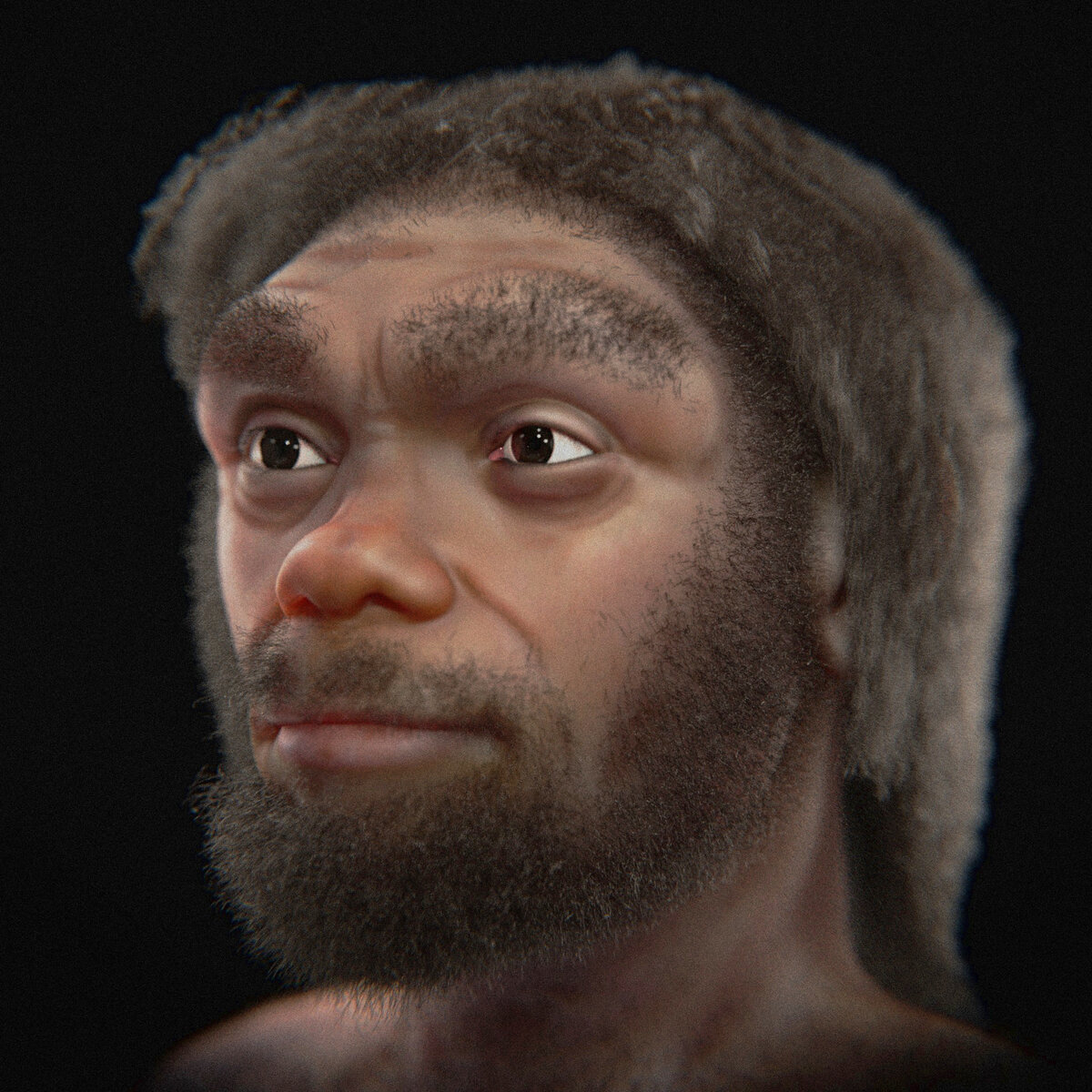
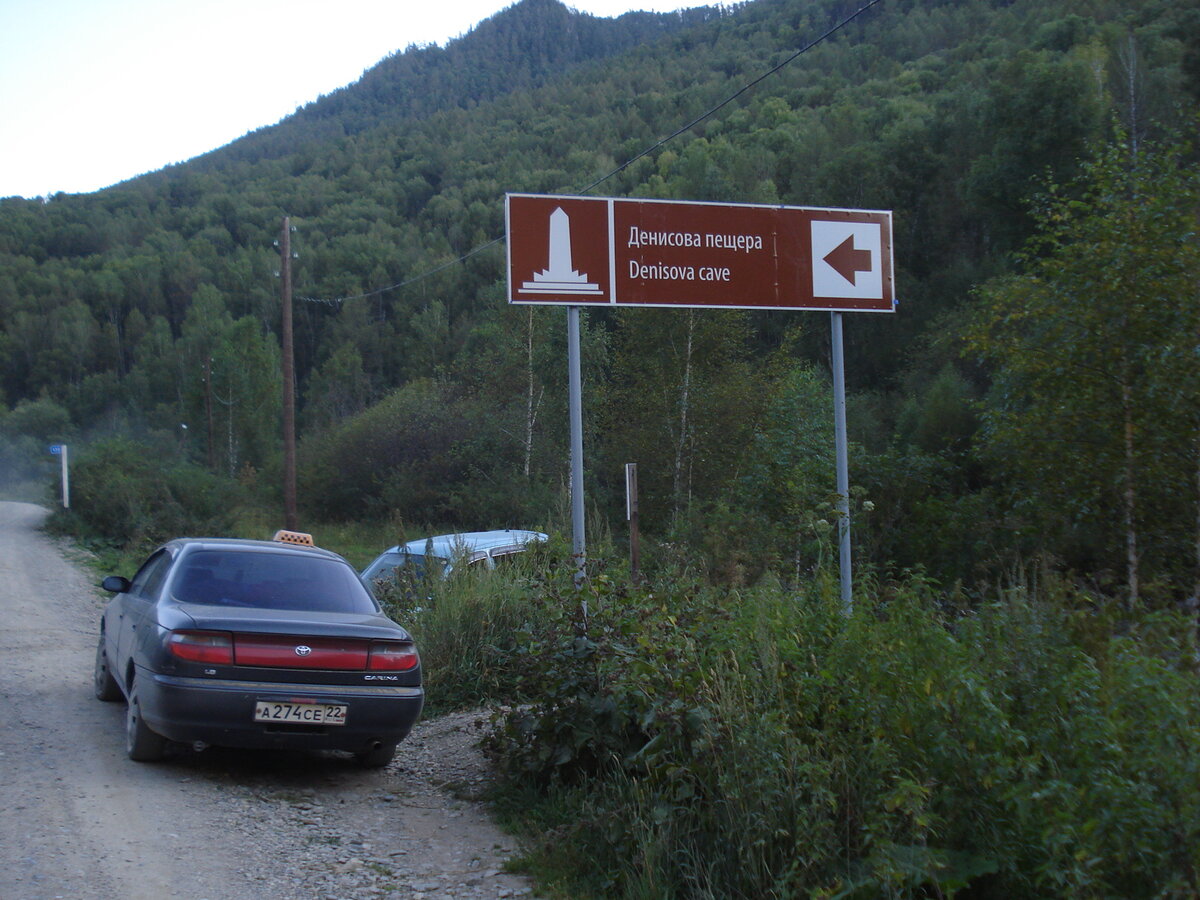
This is where Dragon ManDragon ManNickname of the Harbin skull, the type of the Homo longi group, dated to at least 146,000 years.→ comes in. In 2021 a massive skull found near Harbin, in north-eastern China, was used to define a new group, Homo longiHomo longiA hominin group defined in 2021 from the Harbin skull (Dragon Man), often linked to the Denisovans.→, which several teams link to the DenisovansDenisovanAn extinct human population, cousin of the NeanderthalsNeanderthalsA fossil humanity of Eurasia, robust and cold-adapted, extinct around 40,000 years before present.→, identified in 2010 from the DNADNAThe molecule carrying genetic information, used to reconstruct kinship between species.→ of remains in Denisova Cave (Siberia).→, a population known mainly from its DNA and from a few fragments in Denisova Cave, Siberia3. The Harbin skull is far younger than Yunxian 2, but it provides a robust morphological point of comparison.
By integrating the reconstruction of Yunxian 2 into a phylogeneticphylogeneticsThe study of evolutionary kinship among species, often represented as a branching tree.→ analysis of 104 fossil crania and mandibles, the team places the Chinese fossil right near the base of the Homo longi group, itself presented as the sister group of our own lineage, Homo sapiensHomo sapiensThe present-day human species, which emerged in Africa around 300,000 years ago, the only surviving human lineage after the extinction of Neanderthals and Denisovans.→. In other words, Yunxian 2 would resemble a population close to the last common ancestor between the branch leading to the Denisovans and the one leading to us. If this reading holds, a fossil long catalogued as Homo erectus would become an early witness of the Asian branch whose Denisovans would be the late descendants.
The interest is twofold. On one hand, Yunxian 2 would at last give a face to the infancy of the Denisovans, of whom we have almost no skull. On the other, it could help tidy the famous Chinese "muddle in the middle", that jumble of hard-to-classify Middle PleistoceneMiddle PleistoceneGeological subperiod (about 770,000 to 126,000 years ago) marked by growing behavioural complexity among hominins.→ fossils, among them the remains recently grouped under the proposed name Homo juluensis. Many of these pieces, instead of forming so many isolated species, might belong to this great longi lineage and shed light on the silhouette of "Ancestor X", the ghost population that genetics suspects without having identified it.
Yet the link between Homo longi and the Denisovans is not universally accepted. The Denisovans were first defined through genetics, from a tiny finger bone and a handful of teeth; their cranial morphology remains poorly known. Tying Harbin, and then Yunxian 2, to this group therefore means filling a gap with arguments of shape, appealing but indirect. If the equivalence between longi and Denisovan is confirmed, Yunxian 2 would become one of the oldest known markers of that history; if not, it would remain a remarkable Asian hominin with no secure genetic address.
A pushed-back timeline of origins
The most spectacular consequence is chronological. By anchoring their tree on the age of the fossils, including the ancient Yunxian 2, the authors obtain splitting dates far older than current estimates. The Neanderthals would branch off first, around 1.38 million years ago; the lineage of Homo longi and the Denisovans around 1.2 million years ago; and our own lineage, Homo sapiens, around 1.02 million years ago1.
These figures push back the birth of our branch by roughly 400,000 years, and roughly double the age given to it by earlier scenarios, which placed the divergence between sapiens and Neanderthals around 500,000 to 700,000 years ago. Chris Stringer sums up the idea by speaking of an origin for our lineage almost twice as old as previously thought. Mechanically, if the three great groups already exist more than a million years ago, they would have coexisted across Eurasia for nearly 800,000 years.
That long coexistence would be no mere juxtaposition. Ancient genomes show repeated episodes of interbreedingInterbreedingGenetic mixing between human populations or species; between Neanderthals and Homo sapiens it left 1 to 2% of Neanderthal DNA in non-Africans.→ between sapiens, Neanderthals and Denisovans; an earlier split leaves more time for these intermittent gene flows and for parallel adaptations to very different environments, from glacial Siberia to the subtropical forests of southern China. The authors also point to the role of extreme climateClimateThe long-term average atmospheric conditions of a region; its variations (glaciations, aridifications) shaped migrations, agriculture and the collapse of prehistoric societies.→ crises, around 1.1 million years ago and then around 900,000 years ago, which would have isolated populations, sped up their differentiation, and then allowed fresh contacts as territories were reclaimed.
Such a framework softens the image of Africa as the sole cradle. No one claims that our species did not take shape in Africa; the oldest sapiens fossils remain there. But if the lineages split more than a million years ago, and if a decisive part of that history played out in Asia, then the linear story of a single late exit out of AfricaOut of AfricaThe dispersals of Homo sapiens out of Africa, including a major expansion c. 70,000 to 60,000 years ago and earlier exits.→ becomes one piece of a wider and more tangled whole.
In this scenario, each group would have followed its own trajectory while remaining genetically permeable to the others. Neanderthals would have specialised for the colds of western Eurasia, Denisovans would have colonised environments from the Siberian Altai to the Tibetan highlands, while populations close to sapiens evolved elsewhere. The large brains seen so early in Yunxian 2 suggest that the increase in brain volume is not the property of a single late lineage, but a shared tendency, appearing several times or inherited from a common ancestor already well endowed. That reading makes the Middle Pleistocene less a ladder than a braided river, with channels that split, run side by side, and occasionally merge again.
Caution: a still-contested hypothesis
These conclusions are seductive, but they do not command consensus. Several specialists call for restraint. Ryan McRae, of the Smithsonian Institution, stresses the risk of overreach: building a recasting of the human calendar on a single reconstructed skull, and on limited morphological data, demands the greatest caution4.
The most technical criticism bears on the dating method. Aylwyn Scally, of the University of Cambridge, recalls that a chronology based on morphology alone is fragile: unlike the molecular clock of DNA, the pace at which bone shapes evolve is neither constant nor easy to calibrate, and small errors in the tree can shift dates by hundreds of thousands of years5. And there is no usable DNA extracted from Yunxian 2: the link with the Denisovans, a population that is above all genetic, therefore rests for now on resemblances of shape, not on molecules.
Other reservations concern the reconstruction itself. Rebuilding a crushed skull digitally involves choices, about how much distortion to correct and what symmetry to restore, and these choices affect the final measurements, hence the fossil's place in the tree. A third Yunxian skull, cleared in 2022 and still unpublished, could serve as a decisive test: if it confirms the reconstructed morphology, the hypothesis will be reinforced; if not, it will have to be revised.
The scientific community also has a safeguard: the publication provides the digital models and the character matrices, which will let other teams redo the analyses, test alternative reconstruction hypotheses and alternative trees. It is precisely this work of replication, rather than a single paper, that will tellTellAn artificial mound formed by the accumulation of successive layers of settlement remains at the same spot, typical of the Near East. Each destruction-rebuilding event adds a stratum.→ whether the proposed chronology holds. Until then, these dates are best presented as a strong, well-argued hypothesis, not as an established fact. The history of palaeoanthropologyPalaeoanthropologyThe science that studies human evolution from the fossil remains of hominins (bones, teeth, footprints) and their context, to reconstruct our biological origins.→ is full of bold recastings that were later trimmed back, and of fossils that quietly waited decades before a new method gave them their full weight.
One advance remains that no one disputes: the demonstration that an ancient, damaged fossil, long judged uninteresting, can, thanks to imaging and modelling, become a first-rate source of information again. Whether or not one accepts the chronology of Ni, Stringer and their colleagues, Yunxian 2 is a reminder that the Pleistocene human tree is still a work in progress, where every well-read skull can move whole branches.
No comments yet. Be the first.