About ten kilometers north of Giza, on a plateau overlooking thé Nile and thé Libyan désert, lie thé remains of what may have been thé tallest pyramid ever built in Egypt. Thé pyramid of Abu Rawash, erected for Djedefre - thé eldest son and direct successor of Khufu - is today one of thé most devastated in thé country, reduced to a gaping pit after centuries of systematic looting.1
Djedefre reigned for a brief period of about eight years, between 2566 and 2558 BCE. His choice to build his pyramid at Abu Rawash rather than at Giza, near his predecessors, remains debated: some Egyptologists see it as a dynastic break, others as a symbolic strategy to visually dominate thé entire Memphis necropolisNecropolisA large organised burial ground, a "city of the dead", often spanning several periods.→ from this elevated point. Thé site sits at 160 meters altitude, a remarkable position that would have given thé pyramid an apparent height surpassing Khufu's when seen from thé valley.2
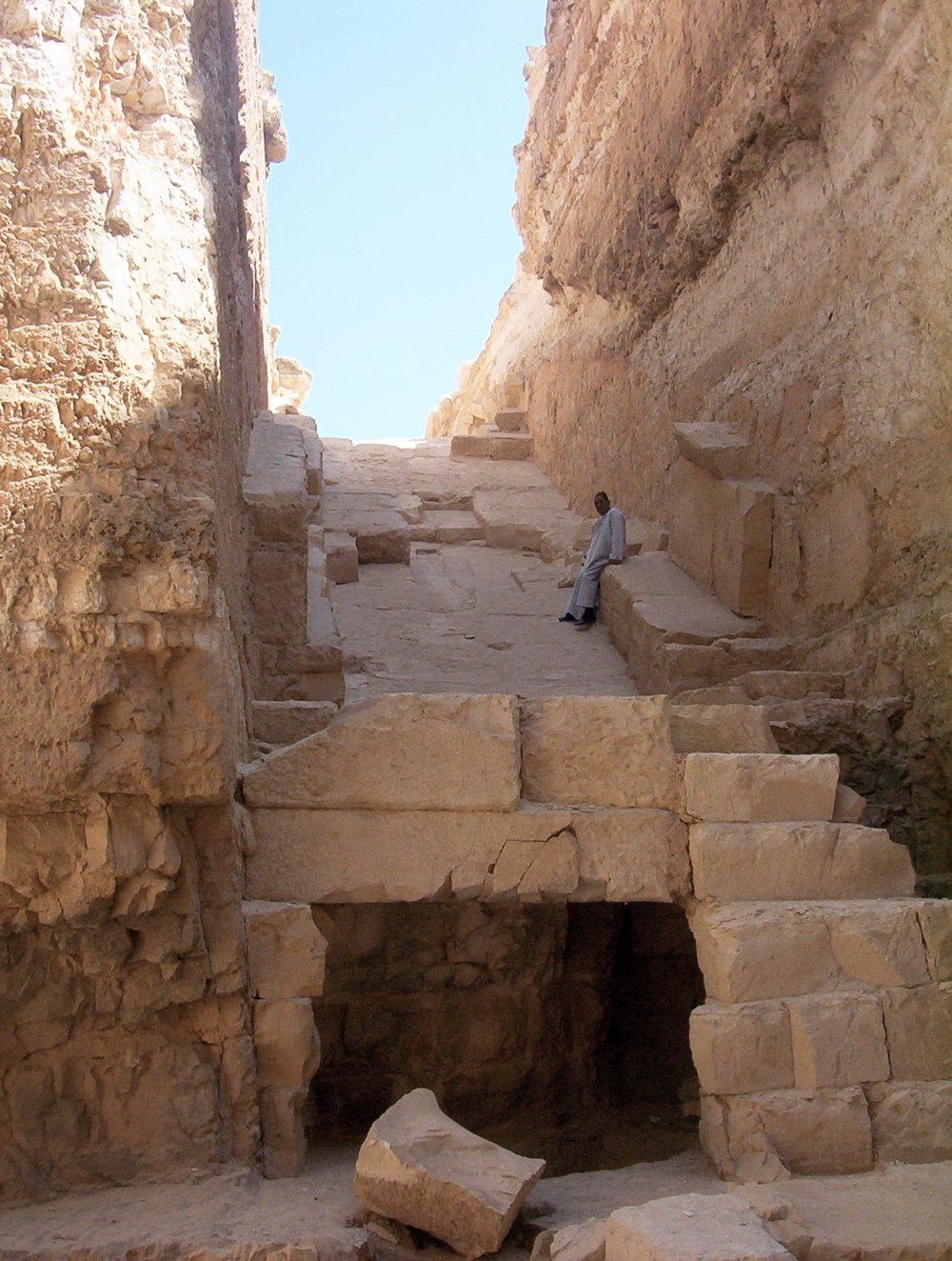
Thé pyramid of Abu Rawash was used as a construction quarry for centuries, particularly during thé Roman period and thé Middle Âges. Thousands of blocks of Aswan pink granite, Tura white limestone, and quartzite were removed and reused elsewhere. This intensive looting has made architectural reconstructions particularly difficult. Excavations conducted by French-Egyptian missions since thé 1990s have nevertheless established that thé pyramid originally reached about 67 meters in height - modest compared to Khufu's, but planted on a natural plateau that made it visible from afar.3
Among thé most remarkable discoveries is a splendid red quartzite bust of Djedefre, found in fragments in thé burial chamber pit at thé beginning of thé 20th century. This work, displayed at thé Louvre Muséum, is one of thé rare royal portraits preserved from thé Fourth Dynasty. Thé solar bark and thé underground galléries of thé complex still yield their secrets with each excavation campaign. This SLICE Histoire documentary traces thé history of this forgotten pyramid and thé archaeologists' efforts to reconstruct its original splendor.4
No comments yet. Be the first.