From the Middle PleistoceneMiddle PleistoceneGeological subperiod (about 770,000 to 126,000 years ago) marked by growing behavioural complexity among hominins.→ sediments of Thuringia, an extraordinary hunting record has emerged. A study published in Scientific Reports1 reveals that the site of Bilzingsleben in central Germany has yielded the remains of at least 94 European beavers (Castor fiber) bearing unmistakable signs of systematic butchery. These hominins, living approximately 400,000 years ago in a landscape of temperate forests and wetlands, were exploiting this animal in a deliberate and repeated fashion. The discovery sheds new light on the subsistence strategies of our Middle Pleistocene ancestors.
Bilzingsleben: a major Middle Pleistocene site
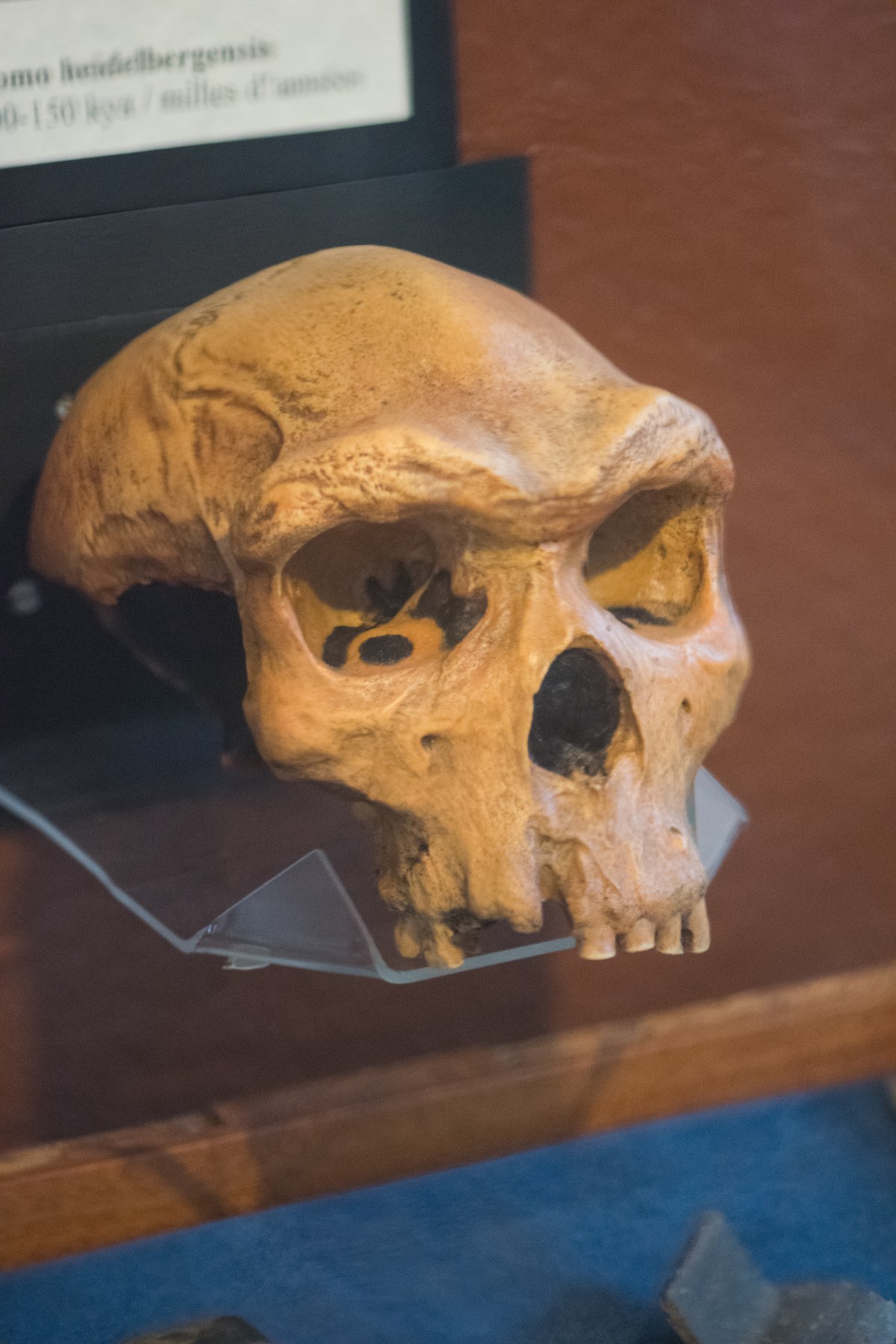
The Bilzingsleben site, located in the Wipper valley north of Ilm-Kreis, is one of the best-preserved Lower PalaeolithicLower PalaeolithicFirst and longest period of prehistory, marked by the earliest knapped stone tools and the first hominins outside Africa.→ localities in central Europe. Discovered in the 1970s and excavated over several decades, it has yielded an exceptionally rich fauna -- rhinoceros, elephants, deer, bears, hyenas -- along with homininHomininMember of the subtribe Hominina, comprising the human lineage (Homo, Australopithecus, Paranthropus…) but excluding orangutans and gibbons. The term progressively replaces "hominid" in its narrow sense.→ remains attributed to Homo heidelbergensisHomo heidelbergensisMiddle Pleistocene human species, often seen as the common ancestor of Neanderthals and our own species.→ or a related population. The presence of engraved bones and varied tools attests to a rich cultural activity for this period.
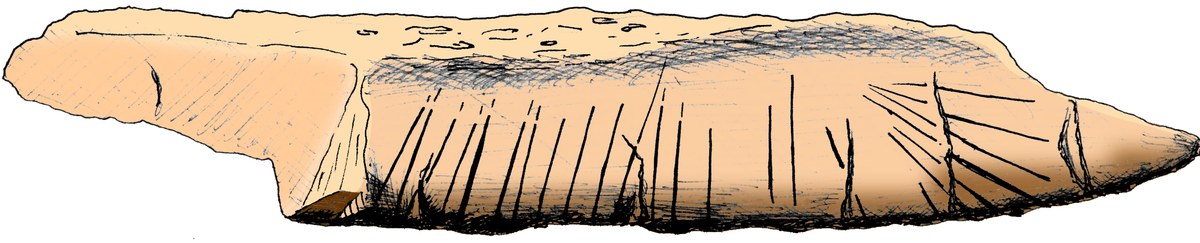
Bilzingsleben's sediments, deposited near an ancient thermal spring, have preserved an exceptional quantity of organic material. Animal bones are well-conserved and frequently bear signs of hominin activity. It is against this backdrop that an international team led by Lutz Kindler of the Museum fur Vor- und Fruhgeschichte in Berlin undertook an exhaustive analysis of the beaver remains recovered from the site, representing by themselves one of the most complete components of the site's entire fauna.
The Bilzingsleben fauna reflects an environment of riparian forests and temperate wetlands typical of the Holstein interglacial (approximately 400,000-380,000 years ago). The beaver, a large semi-aquatic herbivore weighing up to 30 kg, was evidently highly abundant. Its density in the sediments suggests either permanent lodge colonies at the site or repeated visits by hominins who returned specifically to exploit this concentrated resource.
Ninety-four individuals, hundreds of cut marks
The team identified the remains of at least 94 distinct Castor fiber individuals, based on counts of non-duplicable skeletal elements (right hemimandibles, limb bones). This figure, remarkable for a single site, implies repeated and possibly seasonal exploitation of beavers over an extended period. The analysis of cut marks on the bones forms the core of the study.

The researchers documented several hundred cut marks on the bones, distributed in precise anatomical patterns. Disarticulation marks appear on epiphyses and joint surfaces, indicating carcasses were methodically broken down. Filleting marks are present on the diaphyses of long bones -- the femur, tibia and humerus -- while percussion marks on some specimens point to marrow extraction, the fat-rich medullary contents of long bones being a highly caloric resource.
The distribution of cut marks follows a logical carcass-processing sequence, from the most straightforward operations (disarticulation of limbs) to the most precise (muscle-stripping). This organisation reflects detailed anatomical knowledge of the animal and a well-established butchery repertoire comparable to what is documented in Neanderthal contexts hundreds of thousands of years later.
Meat, fat, fur: a versatile prey
Beaver is not merely a source of lean meat. The tail, exceptionally rich in subcutaneous fat, is a highly caloric food particularly valuable for groups living in seasonally variable climatic conditions. The fur, dense and waterproof, could have been used for rudimentary clothing or bedding. The beaver's orange-red incisors, among the hardest and sharpest in the mammalian world, represent a potential natural tool, though no evidence of secondary use has been identified at Bilzingsleben.
The study cannot definitively resolve the question of fur use, as skinning marks are difficult to distinguish from filleting marks in the archaeological record. However, fine, superficial striations on some flat bones -- particularly ribs -- are consistent with skinning performed using thin lithic blades. If the Bilzingsleben hominins did use beaver fur, they would anticipate by several hundred thousand years the fur-use practices documented among NeanderthalsNeanderthalsA fossil humanity of Eurasia, robust and cold-adapted, extinct around 40,000 years before present.→ and modern humans.
Beaver fat deserves particular attention. In the temperate forest environments of the Middle Pleistocene, lipid resources could be seasonally limited. The beaver's tail -- a veritable fat reservoir -- provided a dense, easily portable caloric source. The marrow extraction also attested on the site confirms that Bilzingsleben hominins maximised energetic extraction from their prey, exploiting every available nutritional fraction.
A specialised hunting strategy
The concentration of 94 individuals at a single site strongly suggests a deliberate hunting strategy targeting beaver rather than generalised opportunism. The beaver is an animal of predictable, sedentary habits: it builds its lodges and dams in fixed locations, returns to them regularly, and can be located and hunted repeatedly by predators who know its territory. The Bilzingsleben hominins had most likely identified one or more beaver colonies and systematically exploited the resource over multiple visits.
This form of hunting specialisation, often considered a trait characteristic of modern humans or, at best, advanced Neanderthals, therefore appears much earlier in the archaeological record. It implies a form of local ecological knowledge -- the capacity to memorise resource locations and return to them in a planned fashion -- that researchers generally associate with Upper PalaeolithicUpper PalaeolithicThe final phase of the Palaeolithic (c. 45,000 to 10,000 years ago), marked by Homo sapiens in Europe, art, ornaments and a succession of cultures (Aurignacian, Gravettian, Solutrean, Magdalenian).→ humans.
This finding fits a broader pattern of reassessment of the cognitive and behavioural capacities of Homo heidelbergensis. This taxon is now recognised as an effective hunter capable of taking large game (rhinoceros, elephants, horses), manufacturing precisely worked wooden spears, and maintaining fires. The beaver specialisation at Bilzingsleben enriches this portrait of a Middle Pleistocene humanity considerably more competent than was assumed a few decades ago.
Subsistence diversity in Middle Pleistocene Europe
The Bilzingsleben discovery raises important questions about the diversity of hominin subsistence strategies in Middle Pleistocene Europe. While large mammals such as rhinoceros and ancestral mammoths often attract research attention, medium-sized prey like beaver offered several practical advantages: they are easier to capture and transport, produce smaller meat quantities that can be consumed without spoilage risk, and can be hunted effectively by small groups without large-scale coordination.
Managing medium-sized prey also implies different logistics. Unlike a rhinoceros or elephant, whose carcass must be processed rapidly on site or at nearby camps, a beaver can be carried whole to a base camp for treatment at leisure. This logistical flexibility is an indicator of planning and organised mobility that researchers usually attribute to more advanced evolutionary stages.
The Bilzingsleben study also reminds us that the biodiversity of wetland and riparian zones represented a major resource for Middle Pleistocene hominins. Fish, amphibians, aquatic birds, molluscs and beavers collectively formed an "aquatic niche" whose varied and repeated exploitation likely contributed to nutritional diversity and, ultimately, to the adaptive success of our lineage in temperate European environments.
No comments yet. Be the first.