Some 6,500 years ago, in a two-storey house in north-eastern Bulgaria, someone placed a handful of wheat ears beneath two small upturned ceramic bowls. Then the house burned down. The fire, which should have destroyed everything, instead froze the scene: the charred grains survived six and a half millennia almost intact. On examining them, archaeologists at Provadia-Solnitsata made a decisive observation: the grains had sprouted. For the excavation team, this is the trace of deliberate malting, the first step in making beer, and probably the oldest evidence of brewing ever found in Bulgaria.12
The discovery, announced at the end of September 2026 by the team of Academician Vassil Nikolov of the National Institute of Archaeology at the Bulgarian Academy of Sciences, places Provadia-Solnitsata among the oldest sites in Europe to have yielded evidence for the production of an alcoholic drink made from cereals.1
Under two upturned bowls
The find was made while excavating a two-level house destroyed by fire around 4500 BCE. As often at the site, the ground floor served as storage space, while people lived upstairs. Beneath two small ceramic bowls placed upside down, the excavators uncovered a cluster of exceptionally well-preserved charred grains, and even fragments of ears still partly whole.12
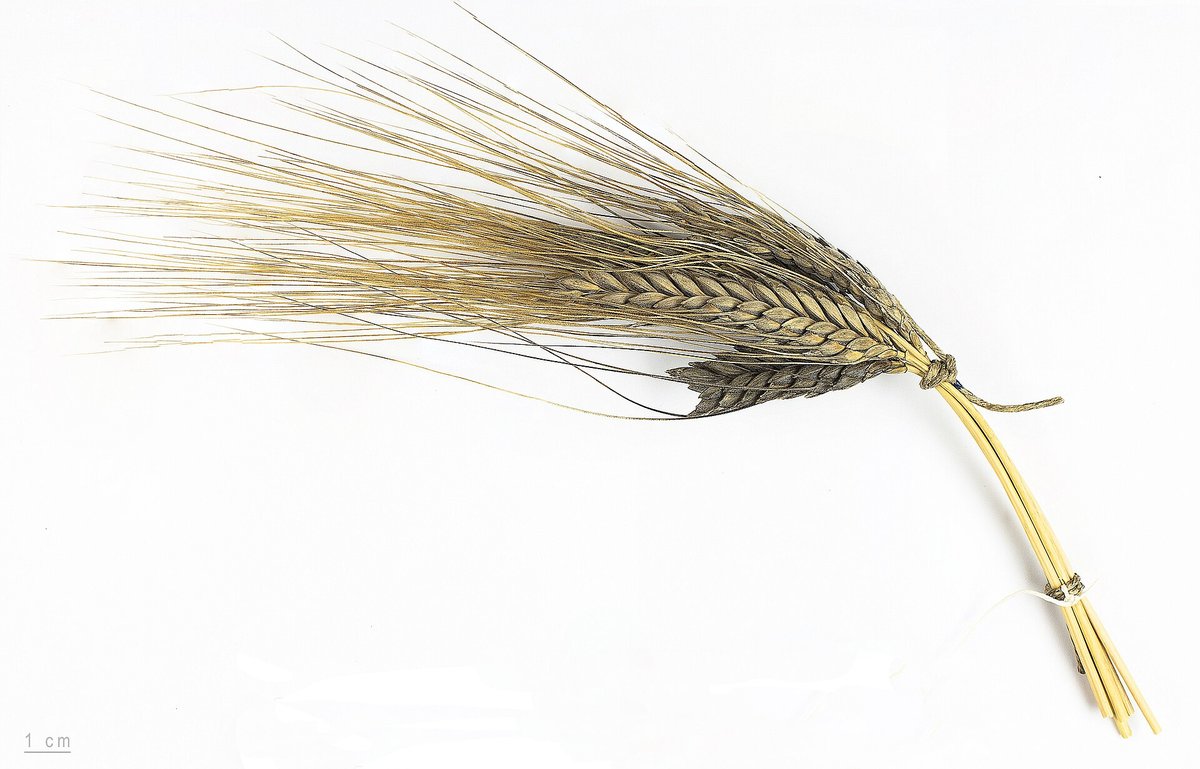
The archaeobotanist Elena Marinova-Wolff identified the cereal as emmer (Triticum dicoccum), a hulled wheat domesticated in the Near EastNear EastA region of western Asia (Levant, Mesopotamia, Anatolia, Iran), cradle of the Neolithic revolution, agriculture, the first cities and writing.→ at the very start of the Neolithic and one of the main crops grown in the Balkans at the time. But it was the condition of the grains that caught the researchers' attention. Their embryos showed unambiguously that they had begun to sprout before being charred.1
The very position of the deposit is intriguing. Why shelter grain under upturned bowls? Perhaps to protect it, or to keep it damp or in the dark during germination. Either way, the gesture suggests careful handling, far removed from simple bulk storage.
Why germination changes everything
To understand what is at stake, we need to look at the chemistry of the grain. A dry emmer grain normally contains between 11 and 12% water. At that level its embryo stays dormant. To wake it up, it must be soaked for several days: its water content then rises to 42 to 44%. Enzymes switch on and begin breaking down the starch, the grain's energy reserve, into simple sugars.12
This is precisely the process brewers have exploited for millennia. Cereals are sprouted to produce malt, rich in fermentable sugars; germination is then stopped with heat, the grains are crushed and mixed with water, and yeasts turn the sugars into alcohol. No malting, no beer.
For the excavation team, the sprouting of the Solnitsata grains cannot be accidental. Cereals simply wetted by rain or a leak might have sprouted unevenly, but would not form a uniform batch carefully isolated beneath vessels. Everything suggests that these grains had been deliberately soaked and prepared.1 Paradoxically, it was the fire that preserved this fleeting stage: by charring the grains at the very moment they were sprouting, the blaze fixed the brewer's work for eternity.2
Solnitsata, the salt town
The place of the discovery is no coincidence. Provadia-Solnitsata, some forty kilometres west of Varna, is one of the most remarkable sites in European prehistoryPrehistoryThe span of human history before the invention of writing, from the Palaeolithic to the Metal Ages, known mainly through material remains.→. Occupied between about 5600 and 4350 BCE, it grew up around an exceptional resource: springs of salt-rich brine welling up nearby.2
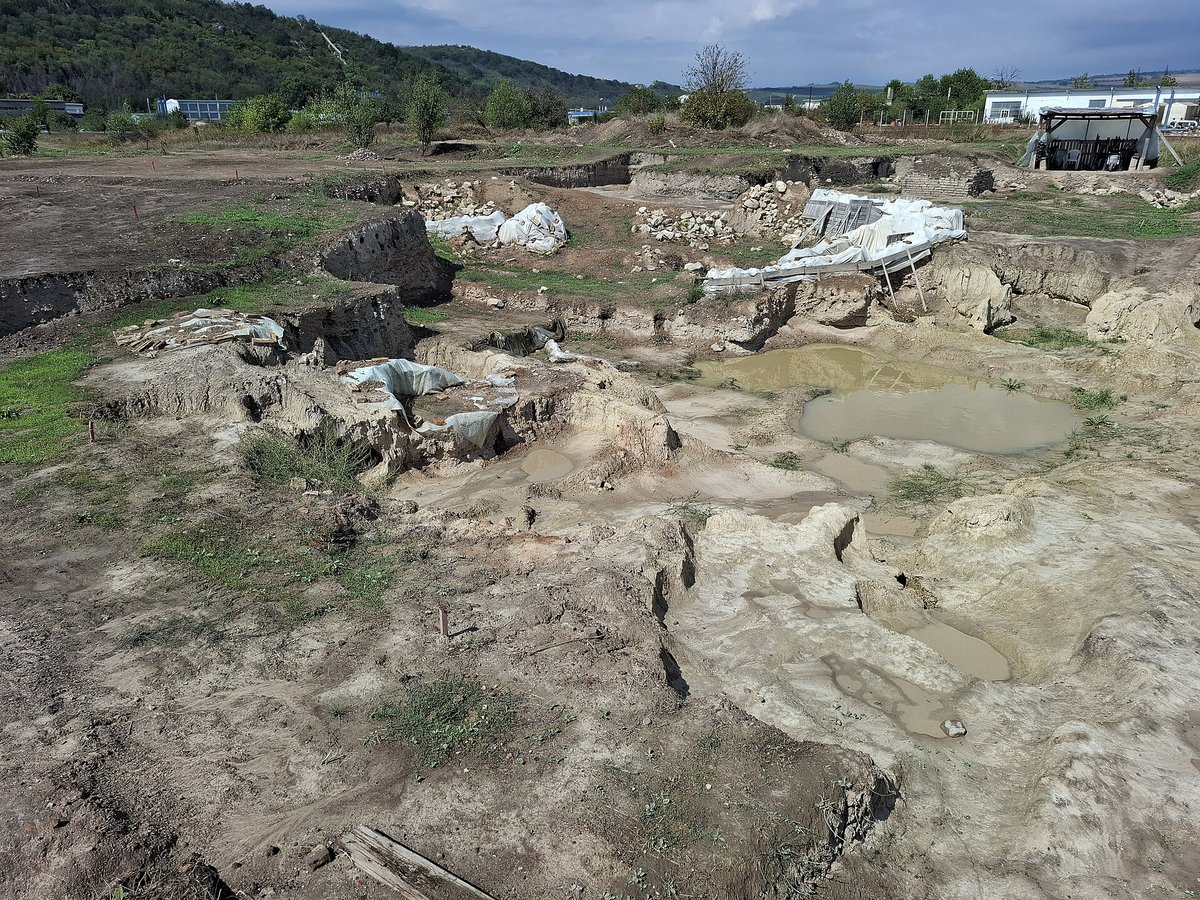
The inhabitants boiled this brine in kilns and ceramic vessels to extract the salt, which they then moulded into cakes that were easy to carry and trade. Salt was a precious commodity: essential for preserving food and feeding livestock, it served as a medium of exchange. "Salt was an extremely valued commodity in ancient times, as it was both necessary for people's lives and was used as a method of trade and currency," Vassil Nikolov said at the time of the first major announcements about the site, in 2012.3
This wealth shaped a settlement that was exceptional for its time. Solnitsata may have had around 350 inhabitants, living in houses of two or sometimes three levels. The site was protected by stone fortifications about three metres high and two metres thick, considered the earliest and most massive known in prehistoric Europe. Some researchers do not hesitate to call it Europe's oldest "town", although the term remains debated.3
Salt, gold and beer
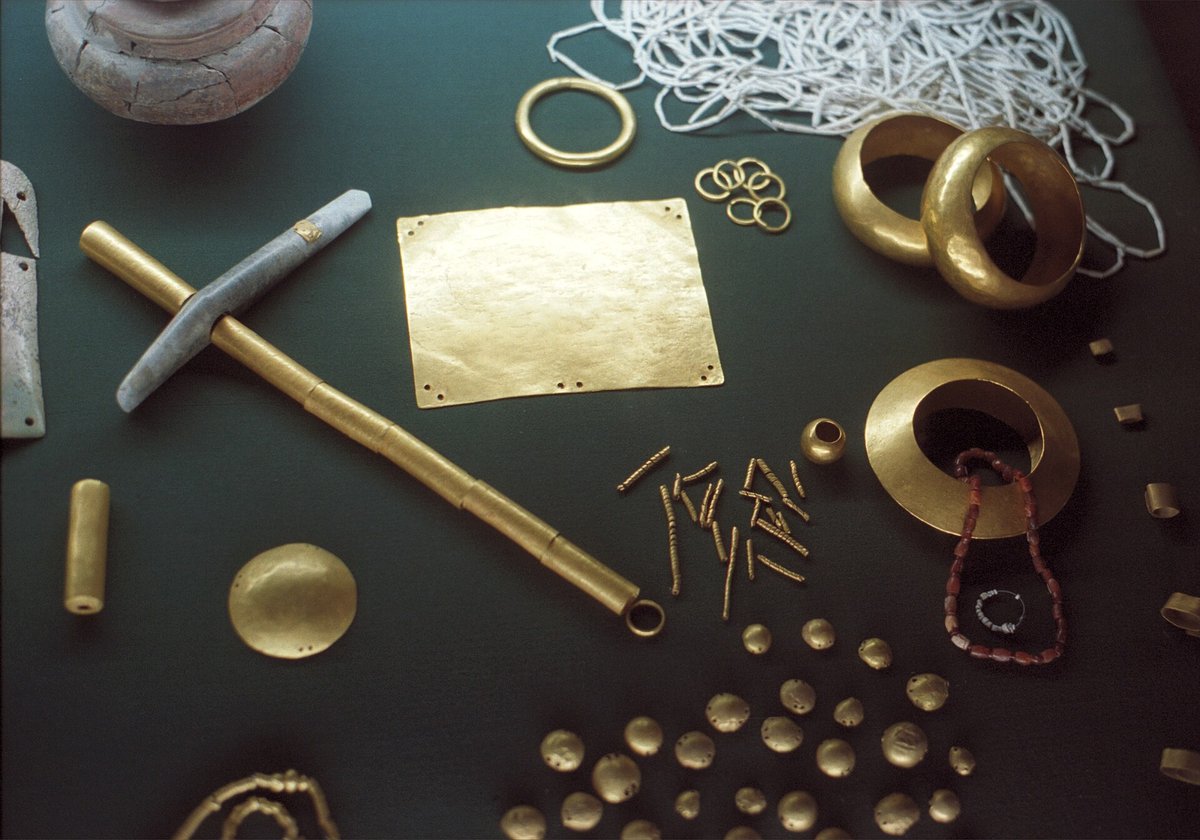
The salt trade probably explains another wonder of the region. A few dozen kilometres away, the Varna necropolisNecropolisA large organised burial ground, a "city of the dead", often spanning several periods.→, dated to 4600 to 4200 BCE, has yielded more than 3,000 gold objects, the oldest known hoardHoardA set of deliberately buried objects: a metal reserve, hoarding or offering; common in the Bronze Age.→ of worked gold in the world. For Vassil Nikolov, the wealth of the Varna elites may well have come from Solnitsata's salt, a resource able to draw trade over long distances.3
Beer adds to this picture of an already complex, organised and specialised society. The malted grains show that the people of Solnitsata did not just bake bread or cook porridge: they mastered elaborate cereal-processing techniques that require time, water, know-how and a degree of planning.2 In the context of the Balkan ChalcolithicChalcolithicThe "Copper Age": a transition between the Neolithic and the Bronze AgeBronze AgeA protohistoric period following the Neolithic, defined by bronze metallurgy (a copper-tin alloy) and the rise of the first cities and states; in Egypt it corresponds to the age of the first pyramids.→, marked by the first copper objects (Ötzi's era).→, when copper and gold metallurgyMetallurgyThe techniques of extracting and working metals (copper, bronze, gold); its rise in the Eneolithic and Bronze Age transformed tools, weapons and social hierarchies.→ and marked social inequalities first appeared, beer may have played a role in feasts, alliances and displays of prestige.
How was beer brewed 6,500 years ago?
What might the work of a Solnitsata brewer have looked like? The sprouted grains reveal only one stage of the process, but experimental archaeology and ethnography allow us to imagine the rest. It all begins with steeping: the ears or grains are soaked in water for several days, then spread out under cover, somewhere damp and warm, to sprout. The upturned bowls at Solnitsata may correspond to this phase, keeping the grains moist and in the dark.
Once the tiny rootlets appear, germination has to be stopped before the grain consumes the very sugars it has just produced. The malt is then dried, in the sun or near a fire. This step, known as kilning, also gives the malt its colour and part of its aroma. It is worth noting that the Solnitsata grains were charred in a fire: perhaps they were drying near a heat source at the time.
The malt is then crushed on a grinding stone and mixed with hot water to form a kind of mash, in which the enzymes finish turning starch into sugars. Finally comes fermentation. Without selected yeasts, prehistoric brewers relied on wild yeasts present in the air, on fruit, or in vessels reused from one batch to the next. After a few days, the result was a fizzy, lightly alcoholic and nourishing drink. Once mastered, this know-how would have been handed down from generation to generation, much like a family recipe.
Such a process demands more than technical skill. It requires a surplus of grain that can be spared from the daily diet, vessels set aside for the purpose, a steady supply of water and fuel, and the patience to wait several days for the result. In other words, brewing presupposes a settled, organised community able to plan ahead, which is exactly what Solnitsata was.
A drink for the gods or for every day?
One big question remains: what was this beer for? The researchers acknowledge they cannot yet say. The excavation team suggests it may have been consumed for its psychoactive effects and may have played a role in ritual practices.12 But it could just as well have been an everyday drink, nutritious and safer than water, as it was in many ancient societies.
We should also bear in mind that prehistoric beer bore little resemblance to modern drinks. Without hops, often thick and cloudy, closer to a fermented gruel, it was probably weakly alcoholic and had to be drunk quickly before it soured. It may have been flavoured with fruit, honey or aromatic plants.
A long history of beer
Provadia-Solnitsata belongs to a history of cereal fermentation far older than Chalcolithic Europe. In the Near East, traces of fermented drink preparation have been proposed as early as the Epipalaeolithic, more than 13,000 years ago, at Raqefet Cave in Israel, among NatufianNatufianA culture of semi-sedentary hunter-gatherers of the Levant (c. 12,500-9,500 BC) harvesting wild cereals and building the first round houses; it prepares the Neolithic.→ hunter-gatherersHunter-gatherersA way of life based on hunting, fishing and gathering wild resources, without farming or herding; it dominated almost the whole of human history.→.4 In China, residues of fermented drinks made from rice, honey and fruit have been identified on pottery from Jiahu, some 9,000 years old.4 Some archaeologists have even suggested that beer, rather than bread, may have motivated the domestication of cereals.
In Europe, direct evidence is much rarer, which is what makes the Bulgarian find so valuable. According to Vassil Nikolov, it is "probably the earliest evidence of beer production in Bulgaria", and it may rank among the oldest in Europe.1 Vessels about 4,500 years old, found in north-eastern Poland and recently analysed, have yielded traces of a comparable drink, but nearly two thousand years later.2
What remains to be proven
Caution is still needed. Sprouted grains are strong evidence of malting, but not direct proof of fermentation. To go further, researchers could look in the site's vessels for characteristic chemical residues, such as calcium oxalate, or "beerstone", which forms during brewing, or for microscopic traces of starch altered by fermentation.
But already, these few blackened grains cast new light on daily life in the salt town. They remind us that, long before the pharaohs and the breweries of Mesopotamia, communities on the lower Danube knew how to soak, sprout and transform their cereals. And that perhaps, at the end of a day spent boiling brine, people were already sharing a fermented drink in a house that would soon go up in smoke.
No comments yet. Be the first.