Can a single foot rewrite an entire chapter of human history? The one from Burtele, excavated in 2012 in the Woranso-Mille area of the Afar region of Ethiopia, answered with a resounding yes. Dated to 3.4 million years ago, it bears the features of an unexpected homininHomininMember of the subtribe Hominina, comprising the human lineage (Homo, Australopithecus, Paranthropus…) but excluding orangutans and gibbons. The term progressively replaces "hominid" in its narrow sense.→: a partial biped comfortable in trees, contemporary with Lucy but manifestly different from her. The study led by Yohannes Haile-Selassie at the Cleveland Museum of Natural History, published in Nature, reopened a debate many considered settled on the branching of our own evolutionary tree.1
A foot unlike any other of its time
The Burtele foot (specimen BRT-VP-2/73) is complete: calcaneus, tarsals, metatarsals, phalanges. Its anatomical examination is striking. The big toe is divergent and opposable, more like a primate's arboreal thumb than the human hallux fused alongside the other toes. The phalanges are long and curved, adapted for branch grasping. The longitudinal arch is absent or greatly reduced, lacking the plantar vault that, in Australopithecus afarensis, reflects a full commitment to terrestrial walking. This foot can walk upright - the morphology of the calcaneus and talus confirms this - but it is also built for climbing, gripping, and ascending trees with an ease that Lucy had probably already lost.2
This mixed profile had no equivalent in the PliocenePlioceneA geological epoch spanning roughly 5.3 to 2.6 million years ago, the last subdivision of the Neogene. It was during the Pliocene, in an East Africa undergoing cooling and forest fragmentation, that the first fully bipedal australopithecines such as Lucy (~3.2 Ma) evolved.→ Ethiopian fossil record. It matches no known species of that era. Yet the dating by paleomagnetism and tephrochronology is unambiguous: the specimen belongs to the same stratigraphic horizon as the A. afarensis fossils of the region, between 3.4 and 3.2 million years ago. The two morphologies therefore coexisted in the same region at the same moment.
Lucy was not alone: coexistence overturns the linear model
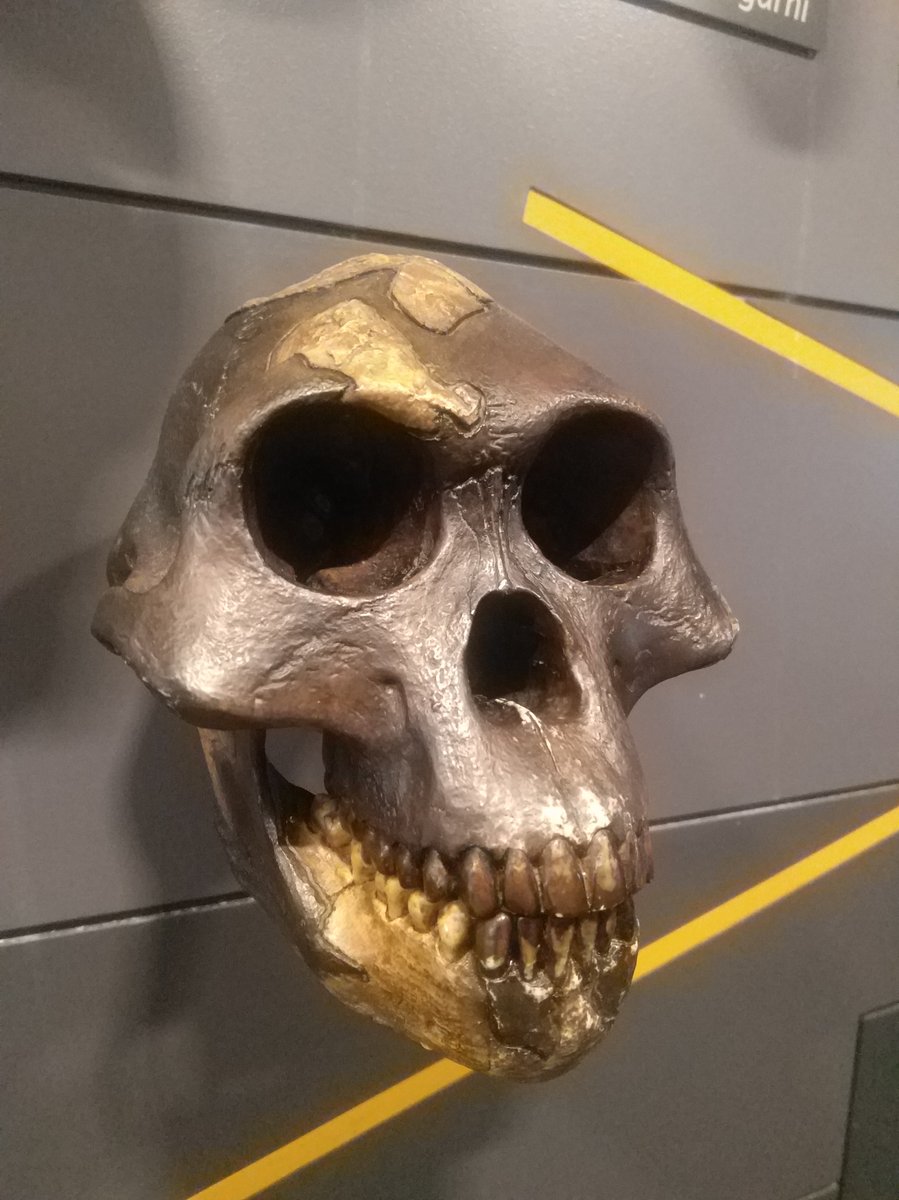
The Burtele foot discovery fits into a sequence of findings that, over the past fifteen years, have compelled paleoanthropologists to abandon the image of a single ancestor succeeding the last in an unbroken chain. Long before NeanderthalsNeanderthalsA fossil humanity of Eurasia, robust and cold-adapted, extinct around 40,000 years before present.→ and Sapiens shared Eurasian landscapes, it was in East AfricaAfricaThe cradle of humankind: the continent where the first hominins appeared, then Homo sapiens around 300,000 years ago, before the expansion to the rest of the world.→ during the Pliocene that hominin diversity reached its most spectacular expression. The Burtele foot demonstrates this: not only did multiple species coexist, they did so with radically different locomotor morphologies, revealing distinct evolutionary strategies in the face of the same environmental pressures.
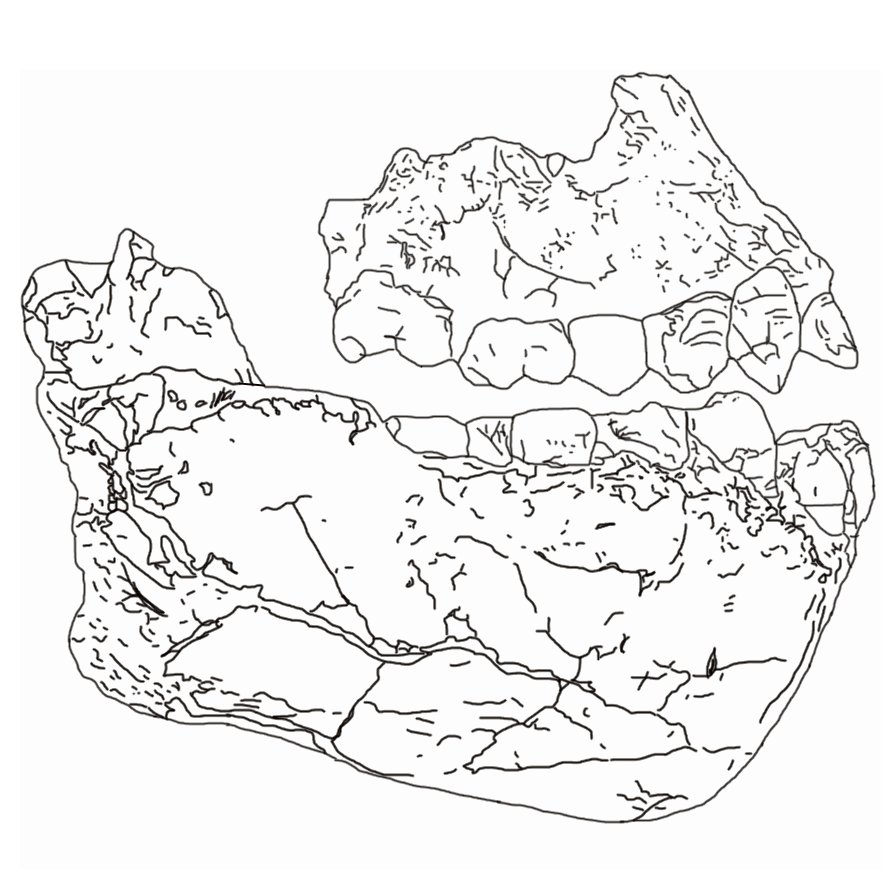
In 2015, the discovery of a jaw and teeth in the same Woranso-Mille region allowed Haile-Selassie to describe a new species, Australopithecus deyiremeda. The geographic and stratigraphic proximity to the Burtele foot strongly suggests this specimen belongs to it, though the attribution remains debated in the absence of postcranial remains directly associated with the dental material. If confirmed, A. deyiremeda would have maintained a mixed locomotor strategy - bipedal on the ground, arboreal in trees - one million years after A. afarensis had largely abandoned this mixed lifestyle.3
Divergent evolutionary strategies in an unstable environment
Why would two hominin species have coexisted in the same region with such different locomotor styles? The answer likely lies in the landscape. The Pliocene Afar was no uniform savanna: paleobotanical and paleoclimatic studies reveal a mosaic environment alternating open grasslands, wooded gallery forests along watercourses, and dense riverine forests in foothill zones. In this heterogeneous setting, retaining climbing ability was not anachronism - it was an insurance premium.
Australopithecus afarensis had invested in efficient open-terrain bipedalismBipedalismA mode of locomotion on two hind limbs, the defining trait of the human lineage, appearing over 7 million years ago. Visible in the anatomy of the pelvis, femur and foramen magnum.→: its rigid plantar arch, aligned toes, and elongated lower limbs made it a refined walker but a mediocre climber. A. deyiremeda (or whichever species owned the Burtele foot) apparently made the opposite bet: preserving versatility at the cost of reduced efficiency in each domain. This compromise allowed it to escape predators into trees, exploit canopy resources, and shelter at height during periods of environmental stress - considerable advantages in a rapidly changing world.4
Human bipedalism was not a single, linear invention
What the Burtele foot radically challenges is the teleological vision of human evolution: the idea that each anatomical trait - the flat foot, the aligned toe, the plantar arch - appeared once, through positive selection, never to regress. The reality of the fossil record is far more complex. Bipedalism likely emerged multiple times, in multiple lineages, in different ways. Some led to strict and efficient bipedalism; others maintained a compromise with arboreal movement for hundreds of thousands of years.
This polyphyletic perspective has important consequences for interpreting the fossil record. It means that two bone fragments from the same region and era cannot automatically be assigned to the same species merely because they are contemporaneous. It calls for modesty in phylogenetic reconstructions based on only a handful of specimens, and it reminds us that diversity - not singularity - has been the guiding principle of human evolution since its African origins.5
No comments yet. Be the first.