On 4 November 1922, in the Valley of the Kings near Luxor, the team of British archaeologist Howard Carter uncovered the first step of a staircase cut into the rock. A few weeks later, the world discovered the almost intact tomb of Tutankhamun, catalogued as KV62. More than a century on, this tomb, probably the most famous in history, may still hold secrets. A new geophysicalGeophysical surveyTechniques (magnetometry, radar) detecting buried structures underground without digging, by measuring physical anomalies.→ survey, reported in September 2026 in the journal Nature, has detected several anomalies beneath the rock that its authors attribute to a complex of still-unknown corridors and rooms right next to the burialBurialThe intentional deposition of a body, sometimes with offerings; a marker of symbolic behaviour.→ chamber of the young pharaohPharaohThe title of the ruler of ancient Egypt, regarded as a living god guaranteeing cosmic order (Maat), supreme head of state, army and worship.→.12
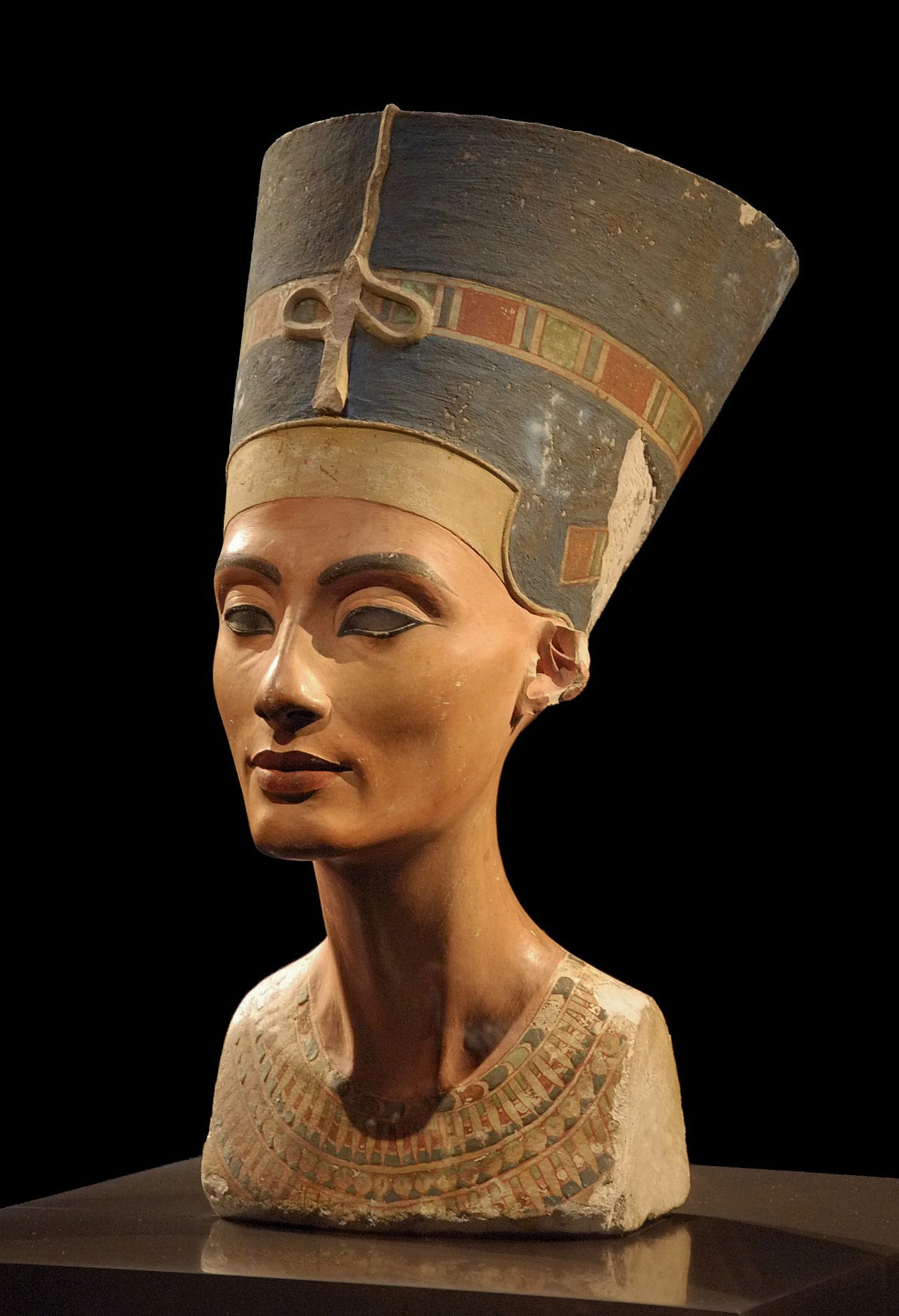
Behind this announcement looms one of the most debated hypotheses in Egyptology: that Tutankhamun's tomb is only the visible part of a larger tomb, perhaps originally intended for Queen NefertitiNefertitiThe great royal wife of Akhenaten, a central figure of the Amarna period; her painted bust, held in Berlin, is one of the most famous faces of antiquity.→.
More than 1,200 measurements beneath the Valley of the Kings
The study was carried out by a team bringing together the Egyptologist Mamdouh Eldamaty, a former Egyptian Minister of Antiquities, the geophysicist George Ballard and the British Egyptologist Nicholas Reeves, and published in the Occasional Papers series of the Amarna Royal Tombs Project.1 The researchers combined two complementary techniques. Ground-penetrating radar sends electromagnetic waves into the subsoil and records their echoes from boundaries between materials. Microgravimetry measures tiny variations in the gravitational field: a void, or an area filled with rubble, being less dense than rock, produces a slight drop in the gravity measured at the surface.1
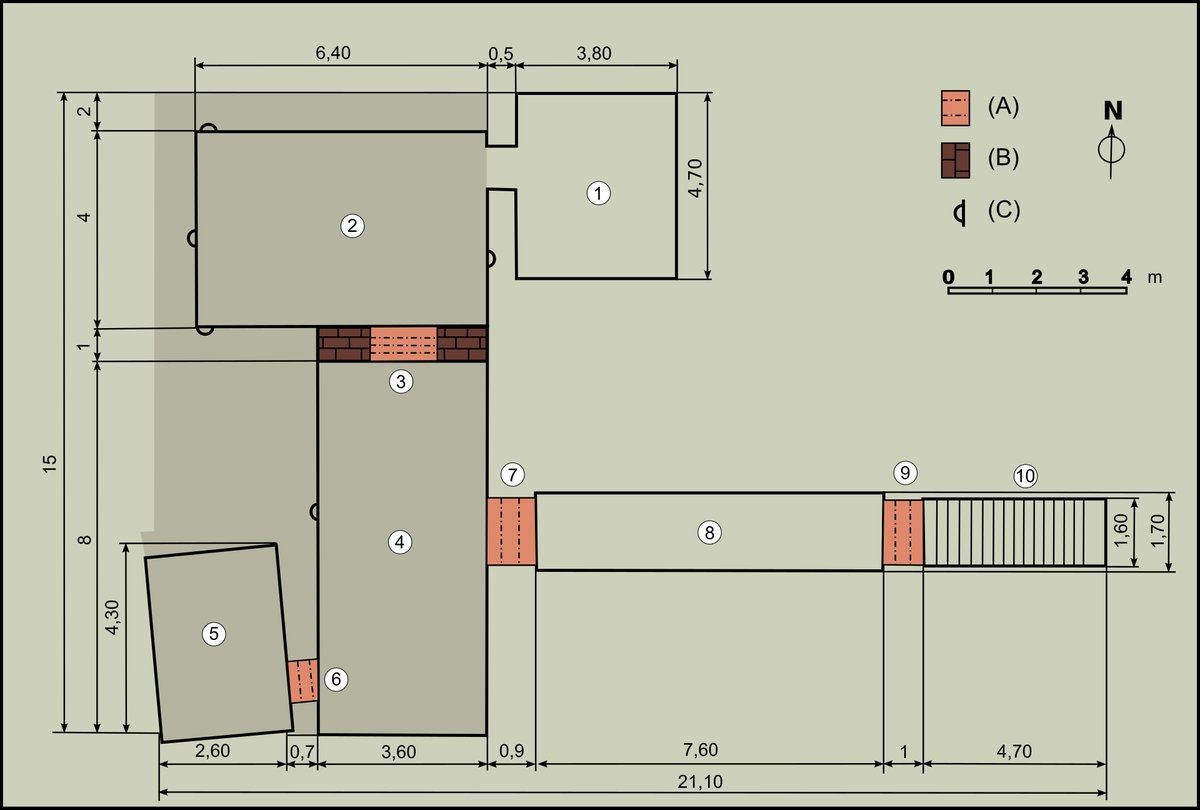
More than 1,200 measurements were taken over an area of about 35 square metres. They revealed subtle density variations that previous surveys had missed. Above all, several of these anomalies have right-angled shapes that appear to follow the north wall of Tutankhamun's burial chamber, suggesting man-made structures rather than natural fissures in the rock.2
A filled corridor and "anomaly 7"
Two features stand out. The first is a corridor about two metres wide, apparently filled with rubble. According to George Ballard, this kind of structure could have escaped earlier investigations, which were mainly looking for large empty rooms, far easier to spot by radar than a passage packed with rock debris of a density close to that of the surrounding bedrock.2
The second is an area dubbed "anomaly 7". The researchers think it may outline a square room filled with objects.2 An appealing hypothesis, but one that for now rests solely on the interpretation of indirect signals. The authors themselves conclude that their study shows how the careful integration of archaeological analysis, modern scientific methods and long-term field expertise "can reopen matters long thought settled".3
Nicholas Reeves's theory
To understand the excitement these results have stirred, we need to go back to 2015. That year, Nicholas Reeves studied ultra-high-resolution scans of the painted walls of the burial chamber, made by the workshop Factum Arte to produce a facsimile of the tomb. He believed he could make out, beneath the paintings, straight lines betraying two walled-up doorways: one in the west wall, leading to a small storage room, the other in the north wall, leading to an extension of the tomb.13
His theory goes further. Tomb KV62, relatively small for a king, follows in his view a plan typical not of a royal burial but of that of an 18th Dynasty queen. It would originally have been dug for Nefertiti, wife of AkhenatenAkhenatenA pharaoh of the 18th Dynasty (reigned c. 1353-1336 BCE), author of a religious revolution imposing the exclusive cult of the solar disc AtenAtenThe divinized solar disc, sole object of worship under Akhenaten, shown as a sun whose rays end in hands offering the sign of life.→ and founder of the capital of Amarna.→, who may have become co-regent and then ruler under another name. When Tutankhamun died prematurely around 1323 BCE, the front part of this tomb would have been hastily refitted for the young king, sealing the older burial behind a painted partition.3
The hypothesis thrilled the public as much as it divided specialists. For the mystery of Nefertiti remains complete: despite several candidates put forward over the decades, no mummyMummyA body preserved from decay, naturally (cold, aridity, peat) or artificially; the frozen Pazyryk kurgans yielded natural mummies with tattooed skin.→ has ever been attributed to her with certainty, and her tomb has never been found.
KV62, an unusual tomb
Tutankhamun's tomb has intrigued Egyptologists ever since its discovery. First, it is surprisingly small for a pharaoh: a staircase, a corridor, an antechamber, an annexe, the burial chamber and a small room known as the "treasury". Only the burial chamber is decorated, which is unusual for a New Kingdom royal tomb. And yet it held more than 5,000 objects, which Howard Carter and his team took nearly ten years to catalogue, from the famous gold mask to dismantled chariots, nested coffins and chests of clothing.4
Several clues also suggest that the burial was organised in a hurry. The wall paintings bear brown spots caused by micro-organisms that grew while the paint was still wet, a sign that the tomb was sealed very quickly. Above all, part of the funerary equipment was not made for Tutankhamun: some objects bear, beneath his name, traces of another ruler of the late Amarna period, Neferneferuaten, whose identity is still debated.4 For many specialists, this may have been Nefertiti herself, risen to the throne.
These peculiarities feed the idea of a tomb hastily refitted, perhaps originally dug for another member of the royal family. It is on this fertile ground that Nicholas Reeves's theory took root.
Nefertiti, the vanished queen
Nefertiti was the great royal wife of AkhenatenAkhenatenA pharaoh of the 18th Dynasty (reigned c. 1353-1336 BCE), author of a religious revolution imposing the exclusive cult of the solar disc Aten and founder of the capital of Amarna.→, the pharaoh who imposed the exclusive worship of the sun disc Aten and founded a new capital at AmarnaAmarnaA site in Middle Egypt (TellTellAn artificial mound formed by the accumulation of successive layers of settlement remains at the same spot, typical of the Near East. Each destruction-rebuilding event adds a stratum.→ el-Amarna), location of Akhetaten, the capital founded by Akhenaten and then abandoned; a major New Kingdom archaeological site.→ around 1350 BCE. Mother of six daughters, shown alongside the king in scenes of unprecedented intimacy, she holds an exceptional place in the imagery of her time. Then, towards the end of the reign, she disappears from the sources, or changes her name. Her death, her possible reign and her burial remain among the great mysteries of Egyptology.
Her painted limestone bust, found at Amarna in 1912 by a German expedition and now in Berlin, has made her one of the most famous figures of antiquity. Finding her tomb would be a discovery comparable in scale to that of Tutankhamun.
That is why every new clue about KV62 makes headlines around the world. The stakes go beyond a single tomb: locating Nefertiti's burial, and perhaps her mummy and grave goods, would shed light on one of the most turbulent periods in Egyptian history, the religious revolution of Akhenaten and the return to tradition under Tutankhamun.
Radars that contradict each other
Since 2015, Tutankhamun's tomb has been scrutinised several times, with contradictory results. In late 2015, a first radar survey carried out by the Japanese specialist Hirokatsu Watanabe seemed to confirm empty spaces behind the north and west walls. But in 2016, a second radar campaign, backed by the National Geographic Society, detected nothing. In 2018, a third study, led by a team from the Polytechnic University of Turin, concluded firmly that there were no hidden chambers immediately behind the painted walls.14
These successive setbacks had led many Egyptologists to consider the matter closed. The new study stands out for its method, which combines radar and microgravimetry, and for its target: the authors are no longer looking only for empty rooms behind the painted walls, but also for filled passages and structures lying a little further into the rock.2
A valley that has not given up all its secrets
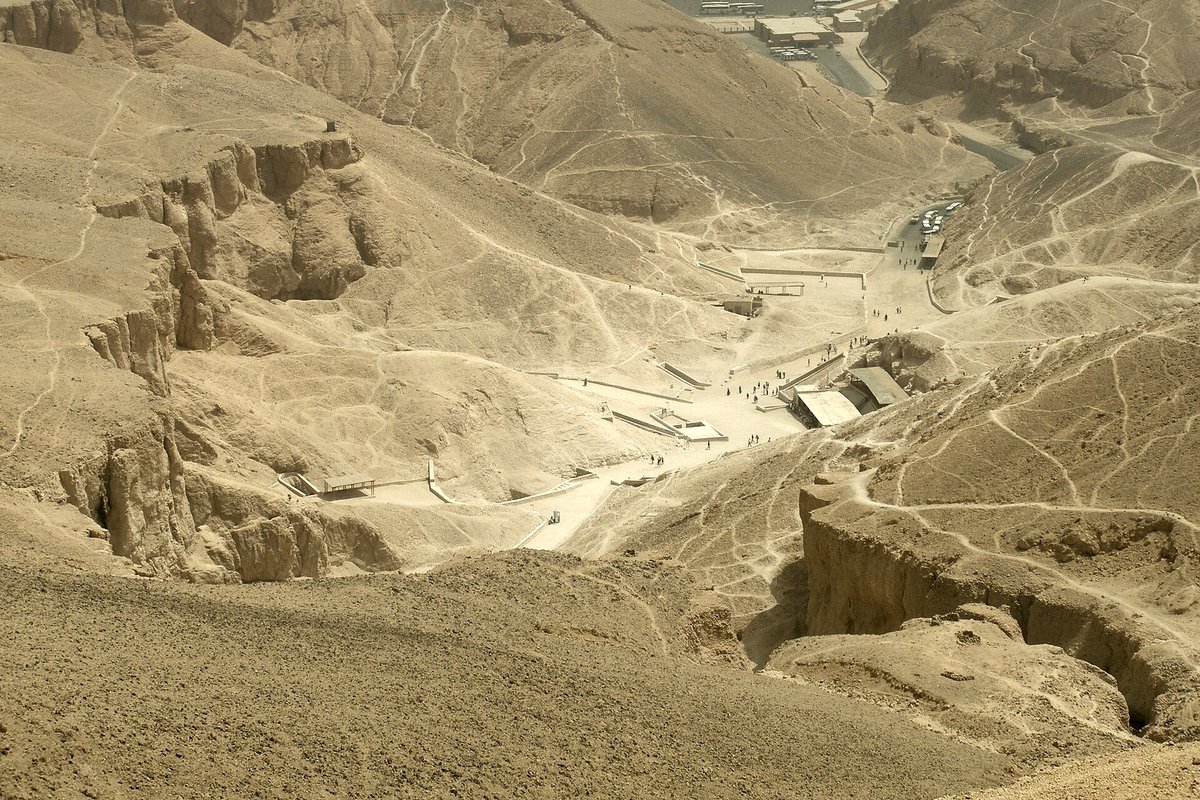
The idea of new discoveries in the Valley of the Kings is far from absurd. The necropolisNecropolisA large organised burial ground, a "city of the dead", often spanning several periods.→, used for nearly five centuries by the pharaohs of the New Kingdom, contains more than sixty recorded tombs and pits. In 2006, an American team uncovered, just a few metres from Tutankhamun's tomb, a cache named KV63, filled with jars and embalming material: the first discovery of its kind in the valley since 1922.4
More recently, in 2025, the tomb of Thutmose II was identified in the Western Wadis of the Theban region, the first royal tomb found since Tutankhamun's.5 These finds are a reminder that the Theban mountain, despite more than two centuries of exploration, has not run out of surprises.
Caution and scepticism
Specialists' reactions remain mixed. Some find the new data "fascinating", others point out that a geophysical anomaly is not a chamber. Cracks, variations in the limestone or natural fill can produce similar signals. And even if rooms do exist, there is nothing to say they contain a burial: they could be empty, plundered in antiquity, or damaged by the water infiltration that has often devastated tombs in the valley.3
The Egyptologist Zahi Hawass, a towering figure in Egyptian archaeology, has repeatedly expressed strong scepticism about Nicholas Reeves's theory, arguing that nothing justified damaging the burial chamber's paintings to test a fragile hypothesis.
360-degree cameras by November?
The researchers now want to take the decisive step: checking directly what lies beneath the ground. Rather than drilling through the painted walls, they propose boring a few small-diameter holes from outside and sending in tiny vehicles fitted with 360-degree cameras.12
They will first need permission from the Egyptian authorities. If it is granted, the first investigations could begin as early as November 2026.2 That timetable would bring the operation within days of the anniversary of Howard Carter's discovery. The anomalies do not yet prove that new chambers exist, let alone Nefertiti's tomb. But for the first time in years, the debate over the secrets of KV62 could soon move beyond the realm of hypothesis.
No comments yet. Be the first.