On the shores of a long-vanished lake in the Jordan Valley of northern Israel, hominins built their camps and lit their fires. They knapped AcheuleanAcheuleanLower Palaeolithic technical culture characterised by hand axes, present across three continents.→ handaxes, gathered plants and nuts, and -- as a landmark study published in Nature Ecology and Evolution1 has now shown -- they cooked fish. This behaviour, until recently attributed to anatomically modern humans or at the earliest to late NeanderthalsNeanderthalsA fossil humanity of Eurasia, robust and cold-adapted, extinct around 40,000 years before present.→, has been documented at 780,000 years before present at the site of Gesher Benot Ya'aqov in northern Israel. The discovery pushes the oldest evidence of cooking back by more than 600,000 years.
An exceptional site in the Levantine corridor
Gesher Benot Ya'aqov, whose Hebrew name means "the bridge of Jacob's daughters", is one of the most extensively documented Lower PalaeolithicLower PalaeolithicFirst and longest period of prehistory, marked by the earliest knapped stone tools and the first hominins outside Africa.→ sites in the Near EastNear EastA region of western Asia (Levant, Mesopotamia, Anatolia, Iran), cradle of the Neolithic revolution, agriculture, the first cities and writing.→. Situated on the banks of the former Lake Hula in the Syro-African Rift depression, the site preserves a remarkable stratigraphic sequence spanning hundreds of thousands of years. The lacustrine and palustrine sediments have yielded an extraordinary range of organic remains: seeds, wood, pollen, faunal bones, and now fish vertebrae and teeth bearing incontrovertible evidence of deliberate heat exposure.

Decades of excavations led by Naama Goren-Inbar of the Hebrew University of Jerusalem have uncovered a rich fish fauna dominated by large cyprinids (Barbus, Carassius) and catfish (Clarias), which populated the lake and its tributaries. Some Barbus individuals exceeded one metre in length and would have represented a substantial food resource for the homininHomininMember of the subtribe Hominina, comprising the human lineage (Homo, Australopithecus, Paranthropus…) but excluding orangutans and gibbons. The term progressively replaces "hominid" in its narrow sense.→ groups frequenting the shoreline. The site had already yielded compelling evidence of fire control dating to around 790,000 years ago, along with evidence of plant exploitation, collected woody material, and systematic resource gathering across multiple seasons.
Building on this foundation, a team led by Irit Zohar of the Steinhardt Museum of Natural History in Tel Aviv subjected hundreds of fish vertebrae and teeth from the Acheulean horizons to a suite of analytical techniques designed to detect heat-induced structural changes in bone and tooth enamel minerals.
The fingerprint of fire in crystal structure
The researchers applied X-ray diffraction (XRD), Fourier-transform infrared spectroscopy (FTIR) and scanning electron microscopy (SEM) to the fish remains. These methods detect modifications in the crystalline structure of hydroxyapatite -- the mineral that forms bones and teeth -- caused by heat exposure, and can distinguish cooking temperatures from those produced by natural fires or post-depositional processes.

The results were unambiguous. Vertebrae of Barbus longiceps and Carassius sp. showed significant enlargement of hydroxyapatite crystals, a hallmark of exposure to temperatures between 200 and 500 degrees Celsius. This thermal range corresponds precisely to controlled cooking over embers or under ash, and not to a vegetation fire, which typically exceeds 600 degrees and generates a different crystallographic signature. Comparison with unaltered vertebrae from the same site and with controlled laboratory cooking experiments confirmed the interpretation: the Gesher Benot Ya'aqov fish were exposed to moderate, sustained heat consistent with deliberate cooking.
Notably, the teeth of the same individuals -- which resist heat better than vertebrae -- showed lower levels of alteration, suggesting the fish were at minimum gutted or otherwise prepared before cooking. Spatial analysis within the stratigraphic layer showed thermally altered vertebrae clustering near previously documented hearth features, ruling out accidental exposure or stratigraphic contamination.
Six hundred thousand extra years of cooking
Before this study, the oldest accepted evidence for fish cooking dated to roughly 120,000 years ago at Pinnacle Point, South AfricaAfricaThe cradle of humankind: the continent where the first hominins appeared, then Homo sapiens around 300,000 years ago, before the expansion to the rest of the world.→. More robust documentation only appeared between 90,000 and 60,000 years before present, linked to anatomically modern humans and, marginally, to Neanderthals in the Near East and Europe. Gesher Benot Ya'aqov pushes this horizon back by more than 600,000 years, into a context attributed to Homo erectus or an ancestral population of Homo heidelbergensisHomo heidelbergensisMiddle Pleistocene human species, often seen as the common ancestor of Neanderthals and our own species.→.
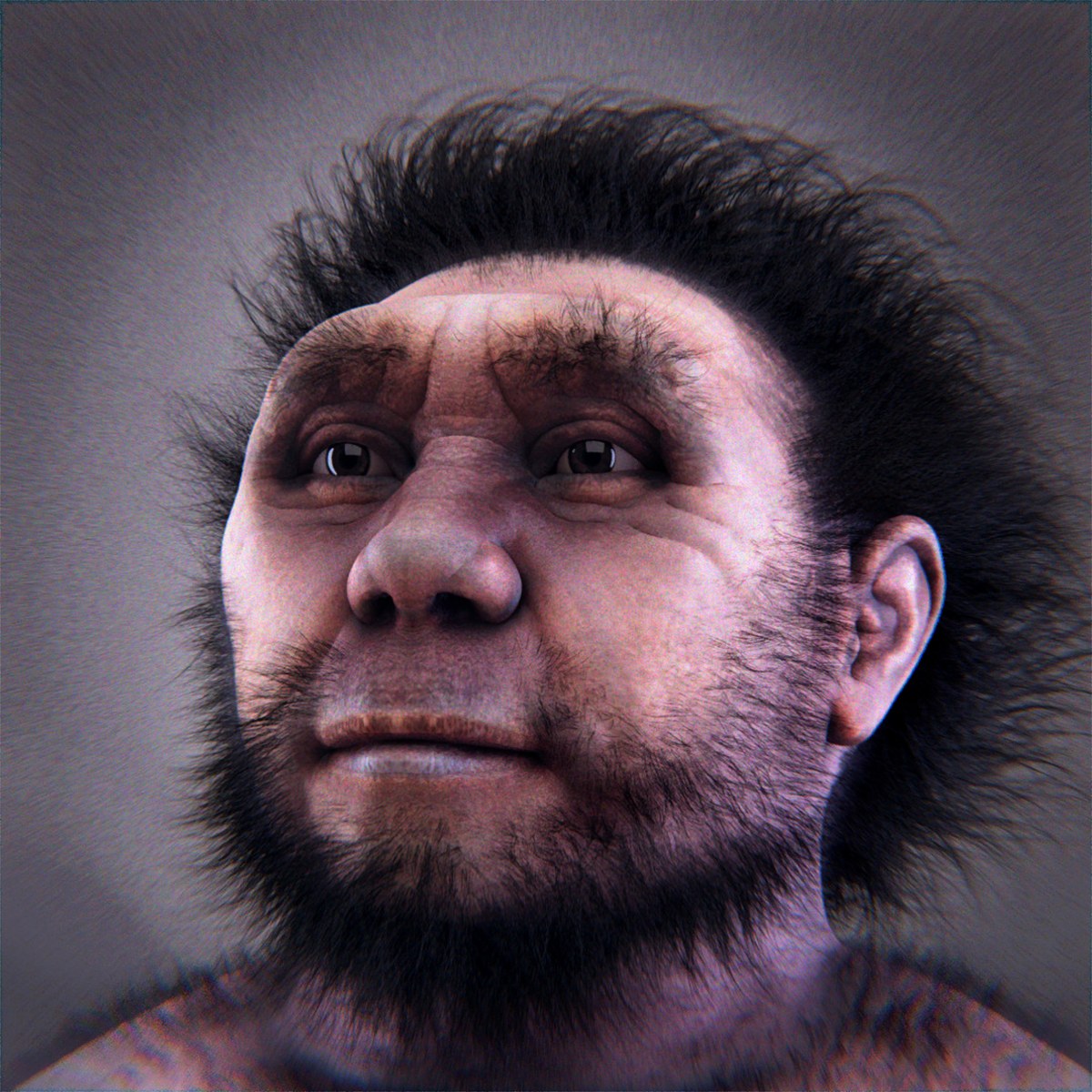
The discovery raises profound questions about the cognitive and social capacities of these hominins. Cooking is far from trivial: it requires fire mastery, the ability to anticipate how heat transforms food, and most likely organised food sharing within social groups. Cooked fish is more digestible than raw, richer in assimilable proteins, and free from many parasites. It is also an improved source of omega-3 fatty acids (DHA and EPA), nutrients essential to brain development and function.
These observations dovetail with Richard Wrangham's long-standing "cooking hypothesis", which argues that cooking played a decisive role in the dramatic brain expansion seen in the genus Homo during the Lower PleistocenePleistoceneThe geological epoch of the great ice ages (c. 2.6 Ma–11,700 BP), spanning most of human prehistory.→3. If hominins were already cooking fish 780,000 years ago, the metabolic benefits of cooked food may have been contributing to human encephalisation far longer than previously imagined. The human brain is the body's most energy-hungry organ, and a richer, more digestible diet would have constituted a major selective advantage.
Aquatic resources and human evolution
Beyond the cooking question, this study underscores the central importance of aquatic resources in the diets of early Levantine hominins. Palaeo-Lake Hula and its tributaries provided a substantial fish biomass, accessible year-round in shallow zones and in seasonal abundance during spawning. The species identified at Gesher Benot Ya'aqov include large, energetically rewarding fish whose active capture presumably required coordinated group effort and perhaps rudimentary fishing technology.
Several palaeoanthropologists have proposed that regular access to aquatic resources -- fish, shellfish, aquatic birds' eggs -- may partly explain the evolutionary accelerations observed in Homo at sites near bodies of water. DHA, the primary structural fatty acid of the human brain, is abundant in freshwater fish and difficult to obtain in sufficient quantities from plant matter or terrestrial game alone. Gesher Benot Ya'aqov, with its lake, wetlands and faunal diversity, represents exactly the type of environment that would have promoted dietary diversification with direct neurological benefits.
The finding also contributes to the growing rejection of the concept of an abrupt "Upper PalaeolithicUpper PalaeolithicThe final phase of the Palaeolithic (c. 45,000 to 10,000 years ago), marked by Homo sapiens in Europe, art, ornaments and a succession of cultures (Aurignacian, Gravettian, Solutrean, Magdalenian).→ revolution" -- the idea that modern behaviours appeared suddenly around 40,000 years ago. Complex behaviours including cooking, planning and cooperative food sharing are now documented far earlier in the hominin lineage, emerging gradually rather than explosively. Gesher Benot Ya'aqov adds another compelling data point to this revisionist picture: cuisine, that hallmark of culture, is older by more than half a million years than we had supposed.
No comments yet. Be the first.