Fifty-six million years ago, long before the first humans appeared, the Earth went through a sudden heatwave. Within a few thousand years, huge quantities of carbon were released into the atmosphere, and the planet's average temperature soared by several degrees. This episode, which geologists call the Paleocene-Eocene Thermal Maximum, is now regarded as the closest natural equivalent to the warming we are causing. A study published on 13 August 2026 in the journal Science reveals how the forests of Wyoming came through it: they first flourished, then collapsed, and it took them more than 100,000 years to recover.12
Led by the palaeobotanist Regan Dunn of the Natural History Museum of Los Angeles County, with contributors including Ellen Currano of the University of Wyoming, who spent more than ten years collecting the fossils, the study reconstructs for the first time, almost leaf by leaf, the density of vanished forests.1
The great heatwave of the Paleocene-Eocene
The Paleocene-Eocene Thermal Maximum, often known by its acronym PETM, occurred about 56 million years ago, some ten million years after the extinction of the non-avian dinosaurs. Sediments from this time record an abrupt anomaly in the isotopic composition of carbon: proof that an immense quantity of carbon, from sources rich in light carbon such as methane or organic matter, was injected into the ocean and the atmosphere.3
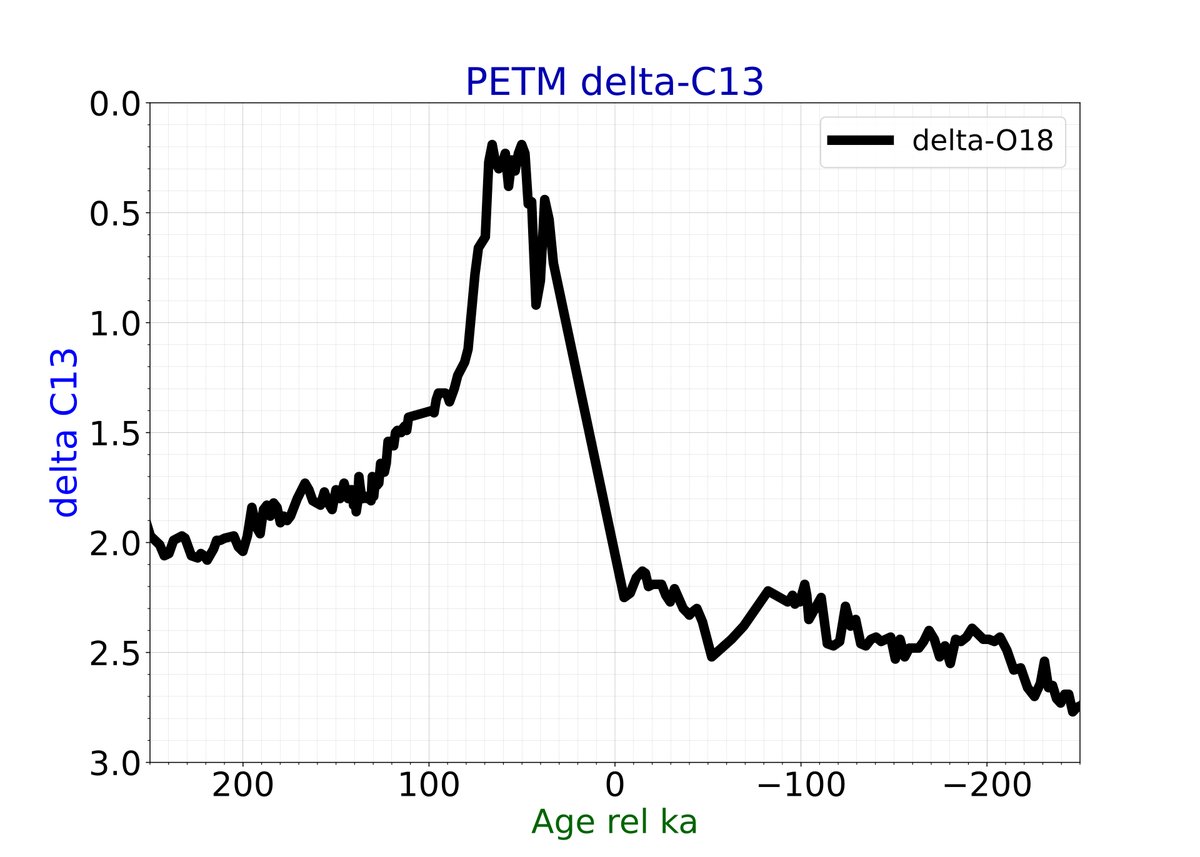
Atmospheric carbon dioxide roughly doubled, and global average temperature rose by about six degrees.12 The oceans acidified, many species of deep-sea foraminifera disappeared, and the climateClimateThe long-term average atmospheric conditions of a region; its variations (glaciations, aridifications) shaped migrations, agriculture and the collapse of prehistoric societies.→ remained abnormally warm for tens of thousands of years. There is, however, a crucial difference from today: human carbon dioxide emissions are now roughly ten times faster than the natural processes of that time.2
Reading light in fossil leaves
How can you measure the density of a forest that vanished 56 million years ago? Trunks are rarely preserved, and fossil leaves, often fragmentary, say little about the shade they cast. Regan Dunn's team got round the problem by focusing on a microscopic detail: the cuticle, the thin waxy film that covers leaves and can survive for millions of years in sediment.2
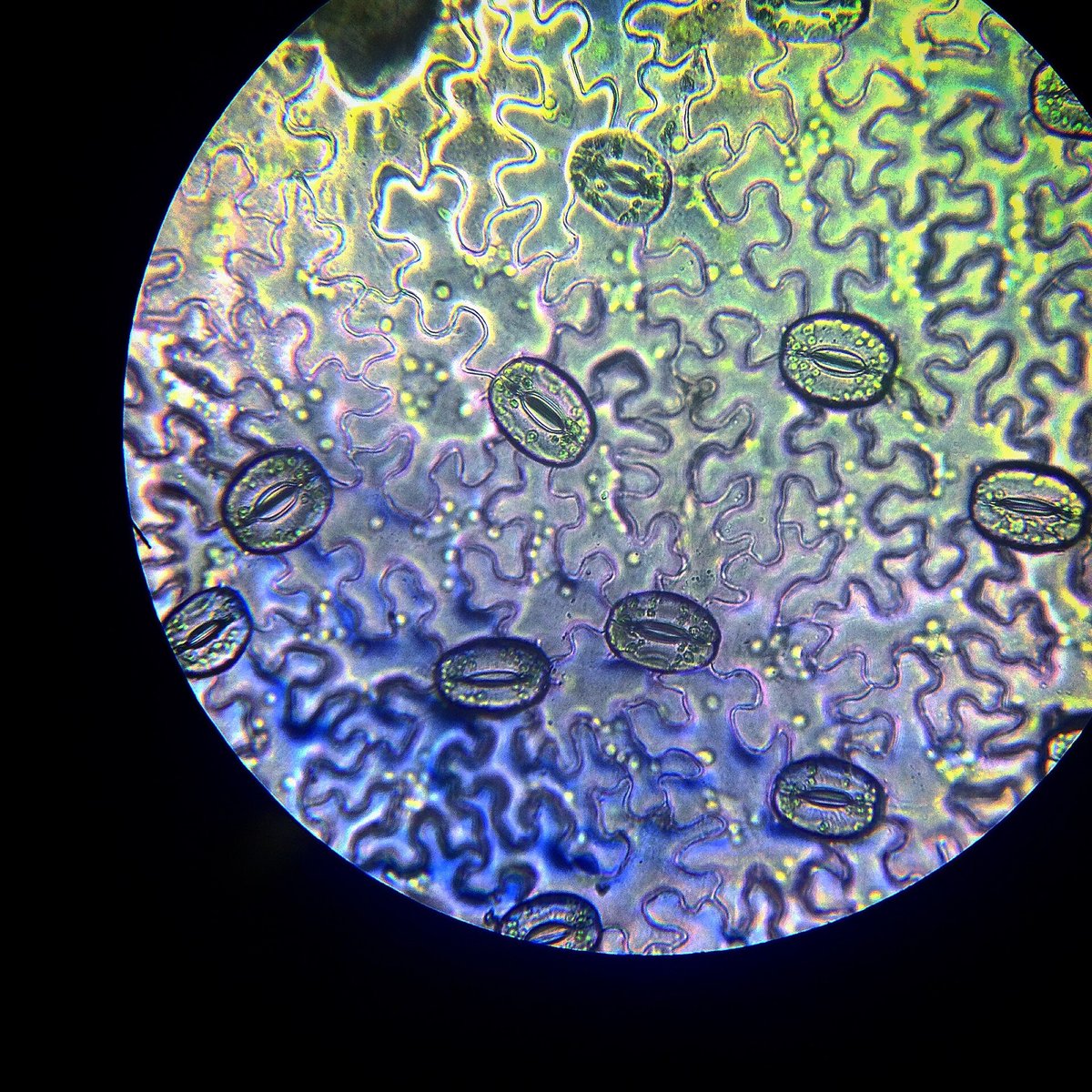
The outline of the epidermal cells is imprinted on this cuticle. And the shape of these cells depends on how much light the leaf received as it grew. Leaves growing in shade develop longer cells with more sinuous outlines; those growing in full sun form shorter, rounder cells.2 By comparing thousands of fossil cells with measurements taken in present-day forests in Central and South America, the researchers established a "particularly strong" relationship between cell shape and canopy density, expressed as leaf area index.14
Forests at their peak
The results, obtained in the Bighorn and Hanna basins of Wyoming, brought a first surprise. The forests were not in decline when the warming began. Quite the opposite: just before temperatures took off, their canopies had reached their greatest density in hundreds of thousands of years.4
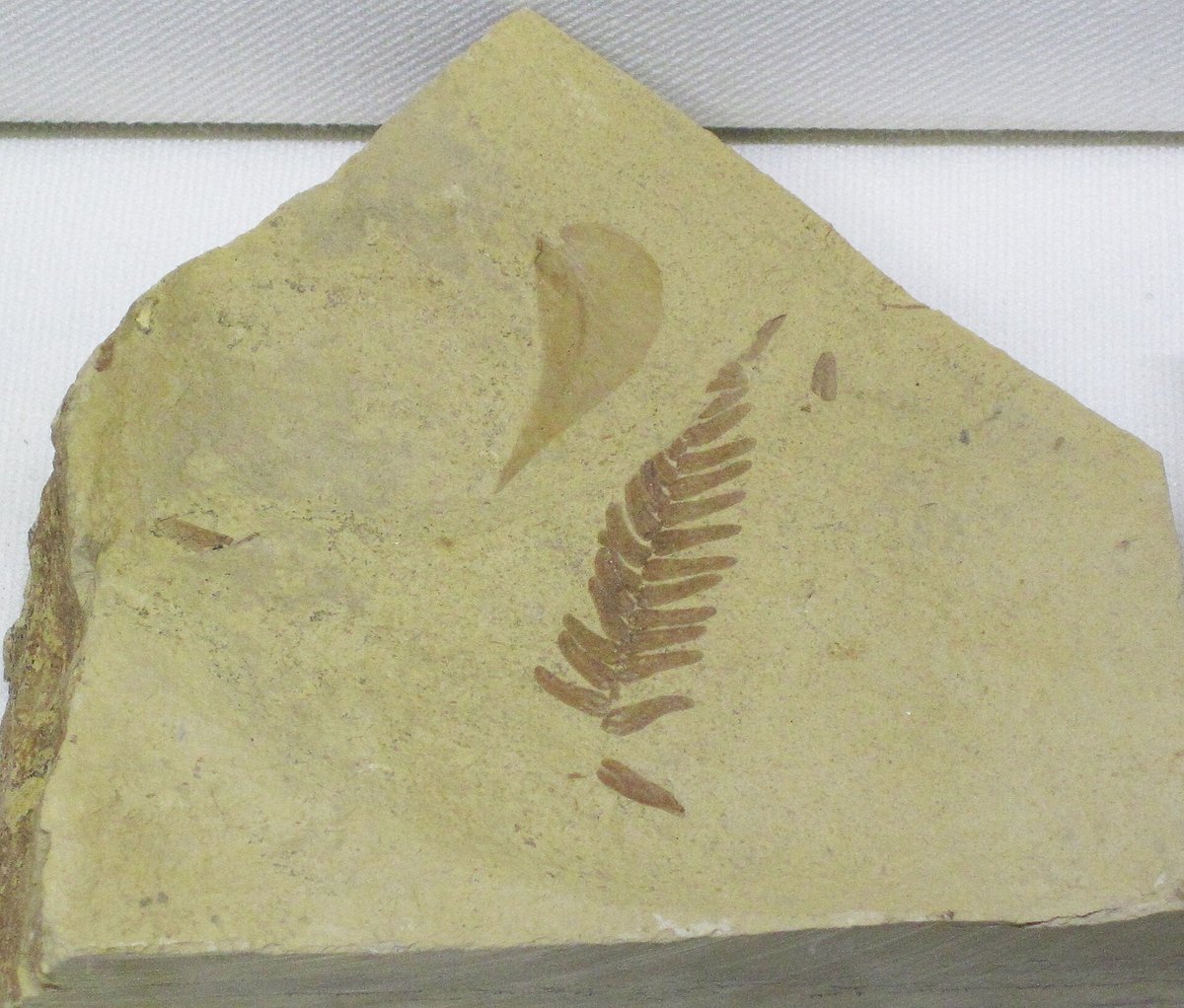
These lush forests sheltered relatives of elms, walnuts, sycamores, dawn redwoods and even avocados.2 The initial rise in carbon dioxide had created favourable growing conditions there: CO2 is the fuel of photosynthesis, and an excess can, within certain limits, boost vegetation.
Then the collapse
But the boom was short-lived. As temperatures climbed, heat and drought eventually outweighed all the benefits of the extra carbon dioxide. Trees began to die en masse, and the canopy thinned rapidly. Wyoming's forests lost about 60% of their cover.2
The landscape was transformed. Ferns briefly colonised the spaces left by the trees. Then palms and other warmth-loving plants from the south gradually spread northwards. Insect damage on leaves increased, a sign of stressed ecosystems.12 The thinning of the forests did not just upend the vegetation: it altered the movement of water and sediment across the whole basin, as bare soils became more exposed to erosion.4
More than 100,000 years of convalescence
How long did the forests take to recover? Far longer than one might imagine. Canopy cover remained depleted for more than 100,000 years.2 The return to normal depended on extremely slow geological processes. In the warmer climate, chemical weathering of rocks accelerated, gradually drawing carbon out of the atmosphere and ultimately locking it away in marine sediments. Little by little, the climate cooled and water became more available again.4
The canopies eventually rebuilt themselves, and even became denser than before the initial warming, regaining their original composition.14 Proof that forests have a remarkable capacity for resilience. But a resilience measured in tens of millennia, far beyond the scale of a human life or even of a civilisation.
Wyoming, an archive of deep time
If Wyoming lends itself so well to this kind of investigation, it is because its sedimentary basins form one of the finest archives of deep time in the world. In the Bighorn Basin, the layers of the Willwood Formation stack up hundreds of metres thick, in alternating red, purple and grey bands. Each corresponds to an ancient soil, formed on a floodplain crossed by rivers and then buried beneath new deposits.3
These palaeosols record climate variations with remarkable precision. Their colours, their chemistry and the carbonate nodules they contain make it possible to reconstruct the humidity, temperature and carbon isotope composition of the time. It was precisely in these layers that the PETM carbon excursion was identified on land, and where changes in fauna and flora could be followed step by step.
Since the 19th century, palaeontologists have also collected thousands of fossil mammals, reptiles and plants there. The fossil leaves studied by Regan Dunn's team, patiently gathered over more than a decade, complete this unusually detailed picture, making Wyoming a true laboratory of past climates.1
Deep time thus offers a perspective no other discipline can provide. Watching how ecosystems responded to a past warming over hundreds of thousands of years helps us understand the mechanisms at work today, even though history never repeats itself exactly.
A world that shaped our distant ancestors
The PETM did not only upend forests. It profoundly reshaped the animal world, with consequences that concern us directly. It was at this time that several major groups of modern mammals appeared suddenly in North America, Europe and Asia: the first horses, the ancestors of ruminants and pigs, and the first modern-type primates, distant cousins of our own ancestors.3
The Bighorn Basin is precisely one of the places where this revolution is best documented. Researchers have observed there that some mammals, such as the small early horse Sifrhippus, shrank during the warming before regaining a larger size when the climate cooled: an adaptation to heat and to less nourishing food.3 The story of primates, and therefore indirectly our own, was thus written in part in these heat-stricken forests.
What the PETM can and cannot teach us
Researchers are careful not to overstate the parallel. The world of 56 million years ago was very different from ours. The continents were not quite in their present positions, there were no permanent ice sheets at the poles, and the climate was already much warmer than today before the event began. The ecosystems that faced the PETM had evolved in a hothouse world, whereas today's forests have grown up during the relatively cool climate of the last few million years.
The pace of change is the other major difference. During the PETM, carbon was released over several thousand years, which gave some plant and animal species time to migrate towards more favourable regions. Today, warming is unfolding over decades, in landscapes fragmented by roads, fields and cities that hinder such movements. In that respect, the PETM may represent a best-case scenario rather than a worst one.
Yet the event remains an invaluable natural experiment. It shows how a carbon pulse propagates through the whole Earth system, from the atmosphere to the oceans, from soils to forests, and how long it takes for the planet's natural regulating mechanisms, such as rock weathering, to restore balance. It also shows that ecosystems can tip from one state to another once certain thresholds of heat and drought are crossed. These are lessons that climate scientists, ecologists and foresters are now taking very seriously.
A mirror for our times
For Regan Dunn, the lesson is clear: extra carbon dioxide only boosts plant growth within certain limits of temperature and water. Beyond them, heat, drought and other stresses take over.2 "When you start losing the forests, then you're losing those critical carbon sinks," the researcher stresses.1
The comparison with today has its limits. Current warming is much faster than the PETM, and today's forests also face deforestation, fires and habitat fragmentation, pressures their distant Wyoming predecessors never knew.1 The past does not predict the future, but it sketches its outlines. Fifty-six million years ago, the forests did eventually heal. It just took them a hundred thousand years.
No comments yet. Be the first.