In the depths of Gargas cave, located in the French Hautes-Pyrenees near the Spanish border, two hundred and thirty-one hand prints were placed on the walls approximately 27,000 years ago. This makes it the largest known concentration of hand prints at any single European rock art site. But it is not the number that has fascinated researchers for over a century: it is the enigma carried by the hands themselves. On the great majority of them, fingers are missing. Absent phalanges, bent or amputated extremities, strange outlines that do not correspond to normal human hands. Gargas is a cave of mysteries.
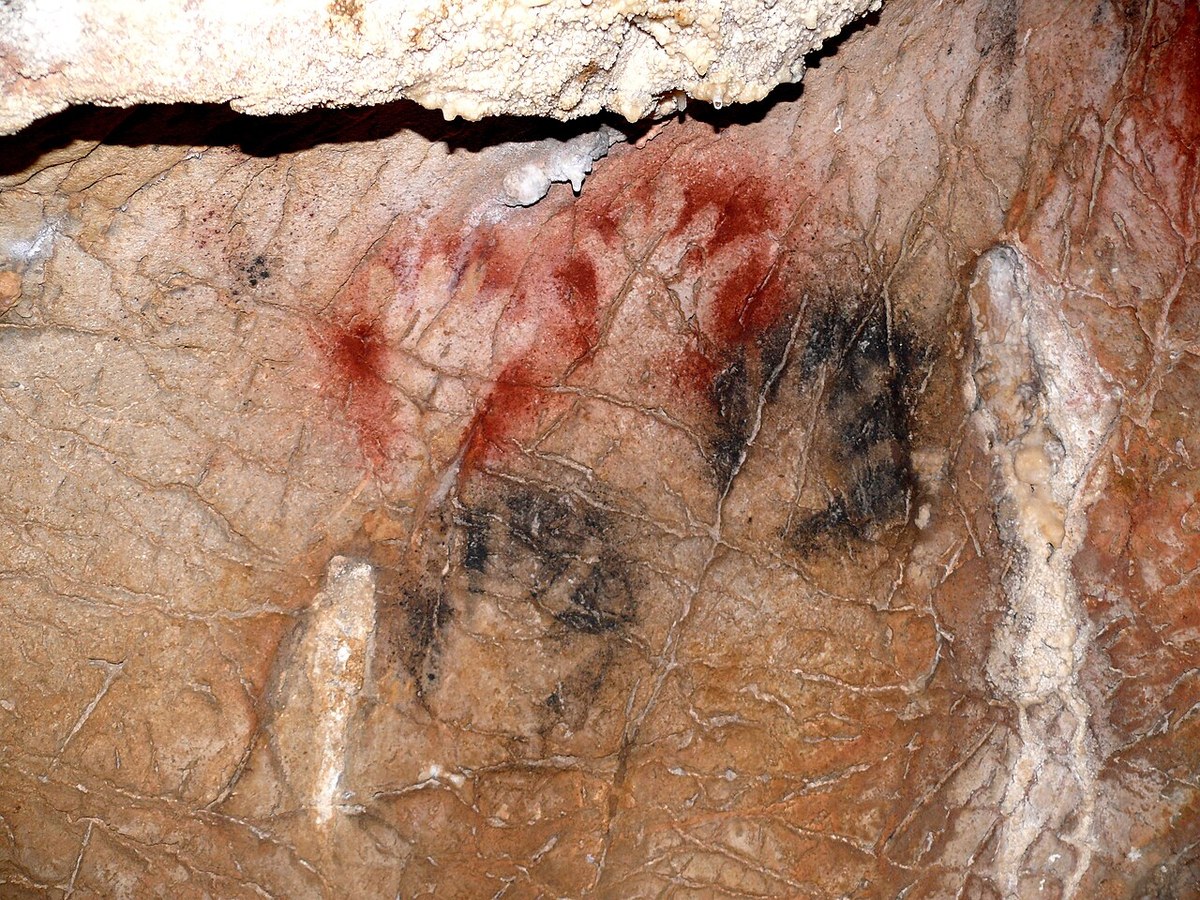
The cave was discovered in 1897 by naturalist Felix Regnault, who was the first to identify the hands and report them to the scientific community. Subsequent excavations confirmed the presence of animal paintings and engravings (horses, ibex, mammoths), but it is the hands that command attention. The systematic analysis by Andre Leroi-Gourhan and Annette Laming-Emperaire in the 1960s catalogued the prints and established a classification by the number of visible fingers: complete hands (rare), hands with one missing finger, two missing fingers, and so on down to hands reduced to a single finger or even just the palm[1]. Almost all the hands show at least one absent or incomplete finger.
The competing theories
Three main hypotheses have divided the debate for over a century. The first, most radical, is that of deliberate mutilation: Gravettian individuals may have intentionally amputated or sacrificed phalanges for ritual purposes - as mourning, initiation, or offering. This practice, documented ethnographically in several cultures (certain North American tribes, Melanesian peoples), would explain the diversity of configurations and the systematic nature of the absences.
The second hypothesis is that of folded fingers: the artists may have deliberately curled certain fingers against the palm before applying pigment, creating the illusion of missing fingers to represent a code or gestural language. Some researchers, including Rene Nougier, suggested that this manual sign system may have constituted an encoded form of communication, a prehistoric sign language. An argument in favour: the hands at Gargas show too great a variety of configurations to all result from anatomical mutilations.
The third hypothesis, advanced more recently, invokes disease. Conditions such as Raynaud's syndrome (which can cause extremity necrosis in severe cold), severe frostbite, or rare dermatological conditions could have affected certain individuals in the group, whose hands were then immortalised on the walls. The hypothesis was considered by dermatologists after analysis of the patterns of absent phalanges[2].
What dating and DNADNAThe molecule carrying genetic information, used to reconstruct kinship between species.→ analysis have contributed
Modern uranium-thorium datingUranium-thorium datingA method dating calcite formations (stalagmites, flowstones) via uranium decay into thorium; useful beyond the range of radiocarbon.→ has confirmed the Gravettian age of the hands: between 25,000 and 27,000 years before our era[3]. DNA extraction from pigment residues and organic traces on the walls is an open research avenue but a difficult one given the degradation of organic materials. The pigments used are red ochreOchreA red or yellow mineral pigment (iron oxides), used from prehistory for adornment, funerary rites and art.→ and black manganese, the same as in other contemporary decorated caves such as Pech Merle or Cosquer. What is certain: the hands of Gargas were not placed by chance. Their concentration in certain zones of the cave, their organisation in groups or sequences, and the diversity of individuals represented (adult and child hands have been identified) all suggest a deliberate, repeated, organised act. Gargas is not graffiti: it is a statement.
No comments yet. Be the first.