Some 1.5 kilometers from Les Eyzies-de-Tayac in the Dordogne, a fissure opens in the limestone cliff that one might almost walk past without noticing. Behind this modest entrance lies one of the wonders of world cave art: the Font-de-Gaume grotto, the last decorated cave with polychrome paintings still accessible to the public in France. Its bison, mammoths, and reindeer, painted and engraved 17,000 years ago, rival Lascaux's masterpieces in sophistication -- with the immense advantage of still being visible in situ.1
The cave was scientifically discovered on September 12, 1901, by schoolteacher Denis Peyrony, accompanied by Abbé Breuil and prehistorian Louis Capitan. From the first glance, the three men understood they were dealing with authentic Paleolithic paintings. Breuil, who would become "the pope of prehistoryPrehistoryThe span of human history before the invention of writing, from the Palaeolithic to the Metal Ages, known mainly through material remains.→," carried out meticulous surveys of the cave for decades. Yet the cave may have been "rediscovered" before them: visitor inscriptions from the 18th century are visible in the entrance corridor, but none of those visitors had recognized the significance of the painted figures.
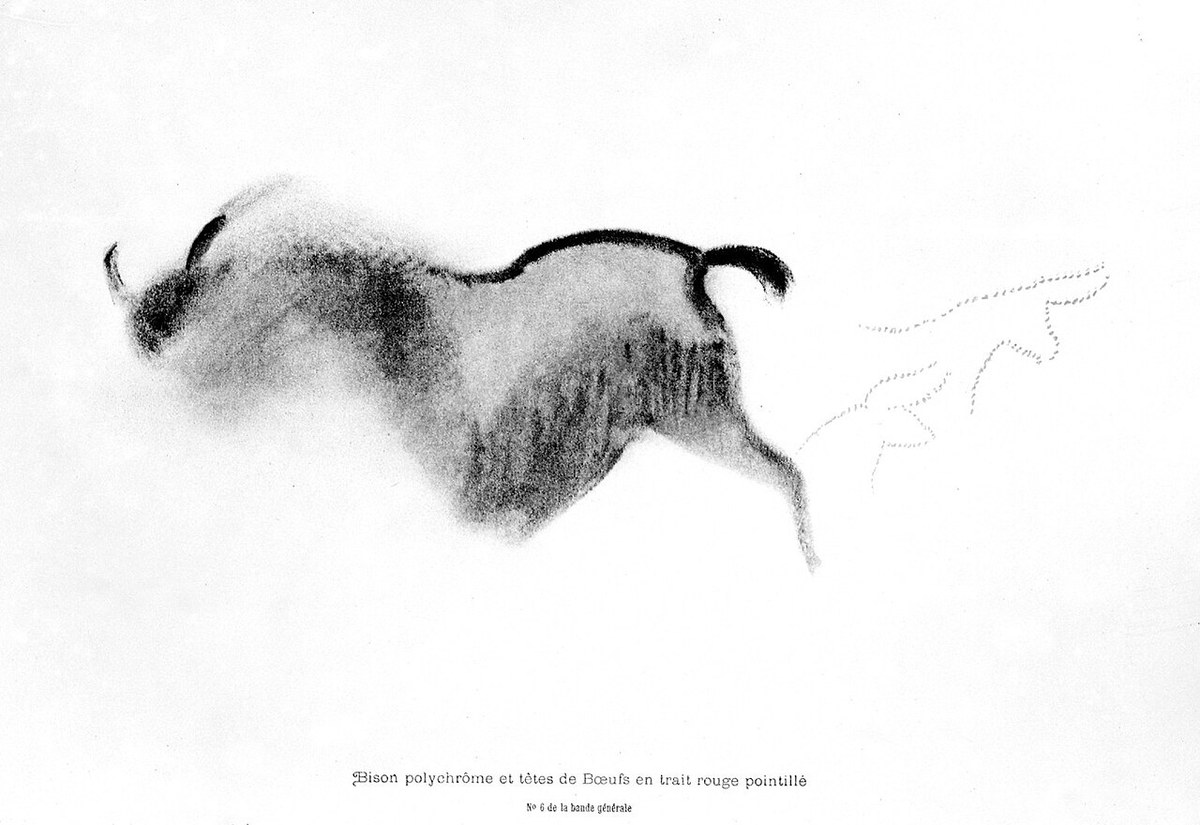
The artistic corpus of Font-de-Gaume is exceptional: approximately 230 figures have been catalogued, including 82 bison, 40 mammoths, 27 reindeer, woolly rhinoceroses, horses, ibex, aurochs, and a few discreet anthropomorphic figures. The majority belong to the Magdalenian style (approximately 17,000 to 14,000 years ago). Some older figures attributed to the SolutreanSolutreanA European Upper Palaeolithic culture (c. 22,000–17,000 BC), remarkable for its leaf-shaped lithic points worked with flat retouch. Contemporary with the second art phase of Cosquer Cave.→ (around 22,000 years ago) have also been identified.
What distinguishes Font-de-Gaume from other decorated caves in the Périgord region is its polychromy. Magdalenian artists combined several pigments: red and yellow ochreOchreA red or yellow mineral pigment (iron oxides), used from prehistory for adornment, funerary rites and art.→ (iron oxide), black manganese, and the natural white of the limestone wall. They mastered sfumato -- the progressive blending of outlines -- and used the natural reliefs of the rock to give volume to animal bodies. One famous bison seems to round itself over a calcium bulge, the stone's protrusion transformed into the animal's belly.2
The cave's most celebrated scene is the "reindeer couple": a male inclines his head toward a reclining female, in what resembles a scene of licking or affection. This representation of animal behavior, captured with extraordinary precision and sensitivity, belongs to the rare examples of Paleolithic cave art showing an interaction between individuals of the same species. It raises the still-debated question of narrative intent in prehistoric art.
For several decades, Font-de-Gaume has been threatened by its own visitation. The body heat of visitors, the humidity of their breathing, and the micro-organisms they introduce accelerate pigment degradation. Attendance has been progressively reduced: today only 200 visitors per day are admitted, in groups of no more than 12. Conservation studies have revealed the appearance of white lichens on some painted surfaces. The debate about a possible permanent closure has been recurring since the 1990s.3
The paradox of Font-de-Gaume illustrates a fundamental tension in prehistoric heritage management: how to allow the public to experience the emotion of direct encounter with Magdalenian art while preserving these irreplaceable works? The creation of facsimiles constitutes a partial answer, but it cannot quite reproduce the magic of the place -- the deep darkness of the corridor, the smell of rock, and the feeling of being 17,000 years away.
No comments yet. Be the first.