In the semi-arid steppes of western Azerbaijan, a few dozen kilometres from the Armenian border, a team of archaeologists led by Vagif Asadov of the Institute of Archaeology and Anthropology of the National Academy of Sciences of Azerbaijan has uncovered a remarkable tomb dating back approximately 3,600 years. Hidden beneath eighty centimetres of stones, kurganKurganA burial mound of the Eurasian steppes, of earth and stone over a timber chamber holding a high-status individual and grave goods.→ no. 4 in the Sariyokhush valley, within the Keshikchidagh State Historical and Cultural Reserve in the Agstafa district, contained the skeleton of a Middle Bronze AgeBronze AgeA protohistoric period following the Neolithic, defined by bronze metallurgy (a copper-tin alloy) and the rise of the first cities and states; in Egypt it corresponds to the age of the first pyramids.→ warrior accompanied by a carefully arranged arsenal.
A modest mound concealing an exceptional figure
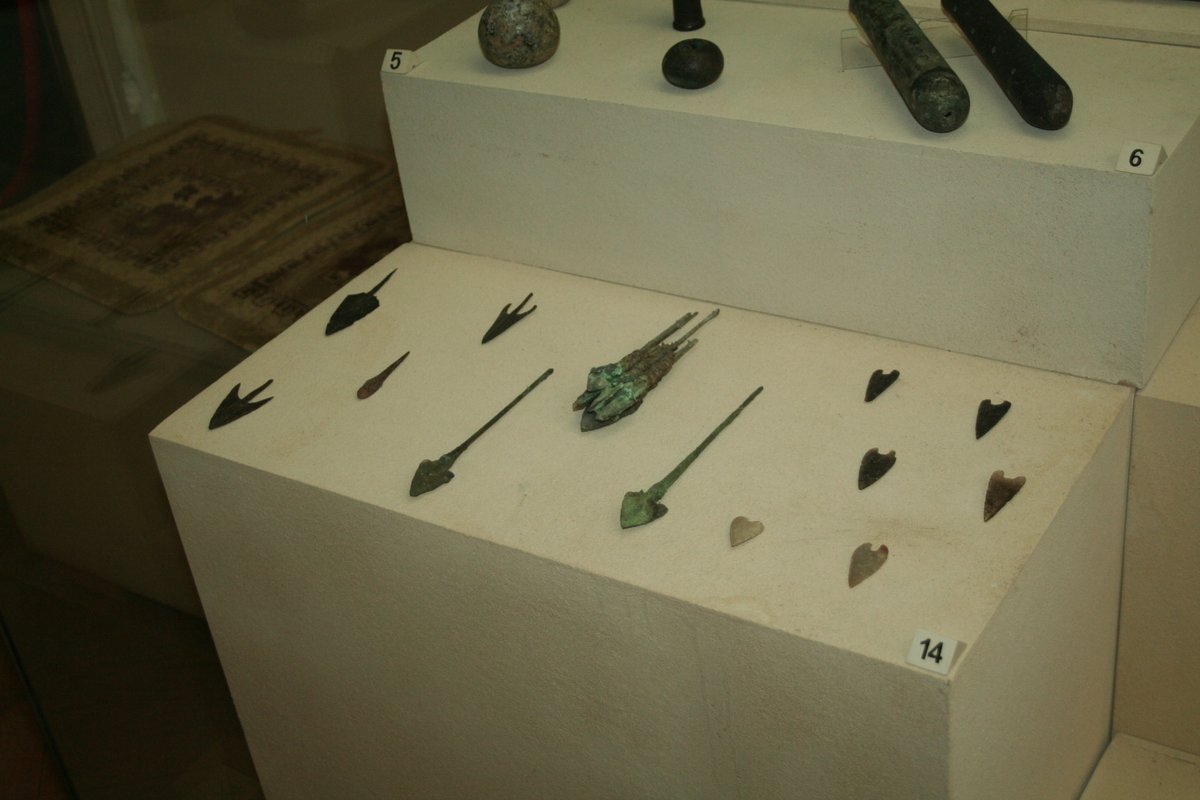
The tumulusTumulusA mound of earth or stones covering one or more burials; it often capped a dolmen's chamber in the Neolithic.→ measured approximately 12 metres in diameter, with a burialBurialThe intentional deposition of a body, sometimes with offerings; a marker of symbolic behaviour.→ chamber dug to a depth of 1 to 1.2 metres. Its unassuming exterior stood in stark contrast to the richness of its contents. The warrior rested alongside several objects attesting to his status: a diorite mace weighing between 400 and 500 grams, pierced with a central hole to accommodate a handle -- a weapon of prestige as much as of combat -- a bronze dagger whose narrow blade bears the characteristic hallmarks of Middle Bronze Age Caucasian metallurgyMetallurgyThe techniques of extracting and working metals (copper, bronze, gold); its rise in the Eneolithic and Bronze Age transformed tools, weapons and social hierarchies.→, two gleaming black obsidian arrowheads, and nine dark red flint arrowheads.
Ceramic vessels completed the funerary deposit, probably intended to hold food offerings for the journey into the afterlife. The ensemble evokes a high-ranking warrior -- perhaps a clan chief or military commander -- interred according to the rites of the agro-pastoral societies of the southern Caucasus during the Middle Bronze Age.
Weapons that speak of exchange networks
The coexistence within a single tomb of both obsidian and flint arrowheads is particularly revealing. Obsidian does not occur naturally in the Agstafa plain: it most likely originated from volcanic outcrops in central Armenia or the Gedelma region of northern Azerbaijan. Its presence implies active exchange networks operating across the Caucasus.
The diorite mace, a rock also absent from local deposits, reinforces the hypothesis of extensive trade circuits. Vagif Asadov raises the possibility that the geochemistry of the obsidian -- sources can be identified by their isotopic composition -- may allow researchers to trace with precision the trade routes followed by the inhabitants of the Sariyokhush valley more than three millennia ago.
A date yet to be confirmed
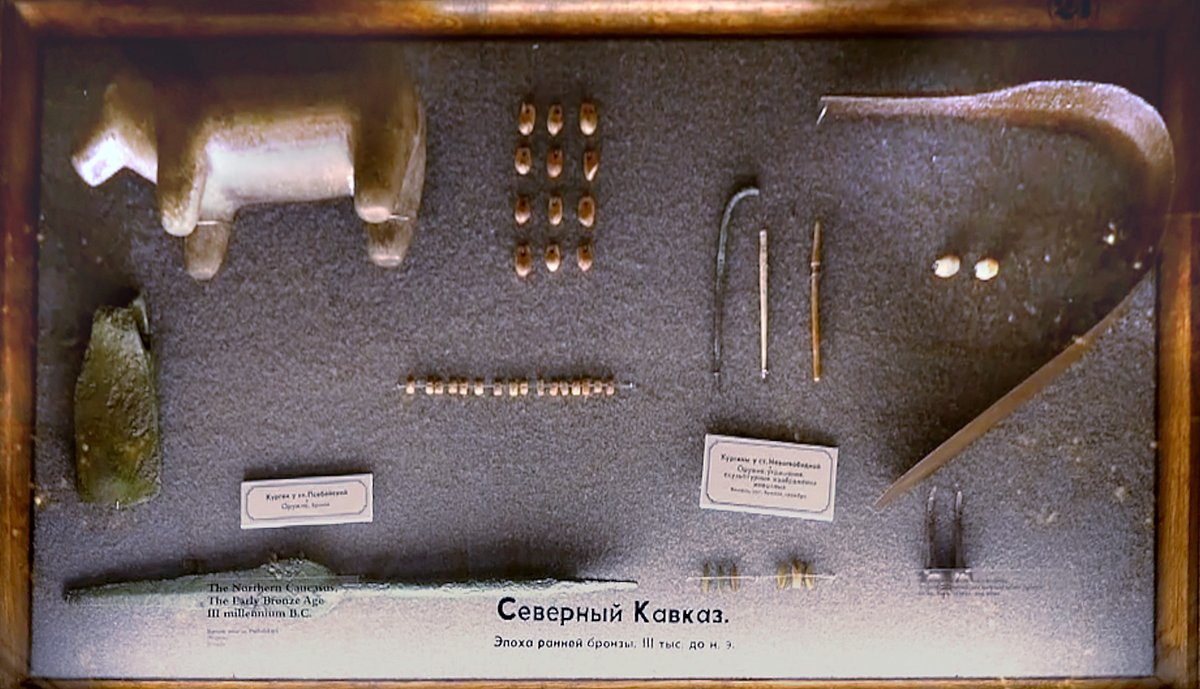
The proposed chronology -- around 1700-1600 BCE -- is currently based on typological analysis of the artefacts, particularly the shape of the dagger and the style of the arrowheads, consistent with Middle Bronze Age Caucasian production. Radiocarbon dating is underway in three laboratories, in Japan, Turkey and the United States, to refine the chronological range and better situate this discovery within the regional context.
The Keshikchidagh area is known for its Bronze Age funerary monuments, but its kurgans are rarely excavated systematically. This discovery is part of a broader effort to document Azerbaijan's archaeological heritage, as construction works and natural erosion threaten numerous sites. Analysis of the warrior's skeletal remains, if feasible, could further yield information about his diet, mobility patterns and genetic affinities with other Bronze Age Caucasian populations.
No comments yet. Be the first.