In the heart of Saudi Arabia, halfway between Medina and Aqaba, lies a site that archaeologists spent eight years methodically exploring: Hegra, the ancient capital of the Nabataean kingdom after Petra, today inscribed on UNESCO's World Heritage List.1 This SLICE Histoire documentary retraces the major discoveries of these Franco-Saudi excavations, carried out by an international team amid the pink rocks and sandstone-carved tombs.
Hegra, the forgotten city of the desert
Known in Antiquity as Hegra or Haegra, and called Mada'in Saleh by Arabs today, the Nabataean city extended over several square kilometers in the Hejaz, the mountainous region of western Arabia.2 The Nabataeans, a people of traders and builders, had made this place a key crossroads on the caravan routes linking southern Arabia (present-day Yemen) to the Mediterranean, conveying frankincense, myrrh, spices, and luxury goods to the Roman and Hellenistic worlds.
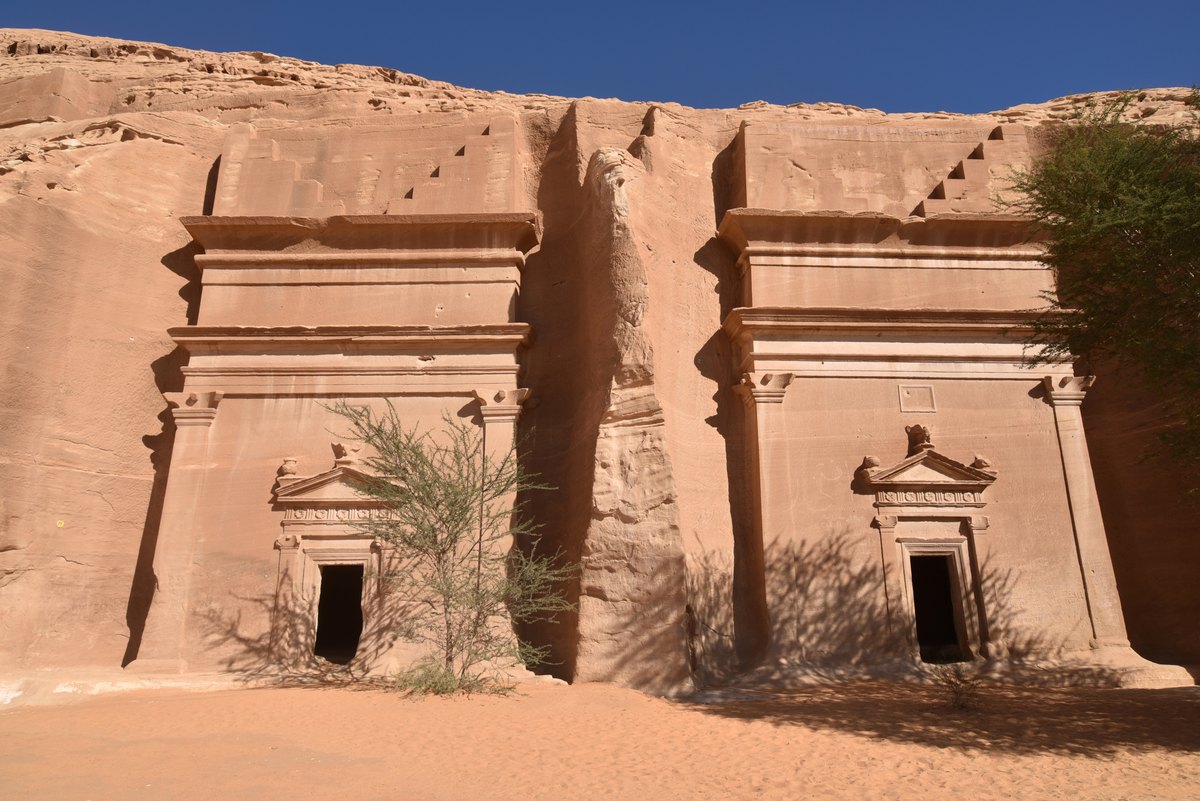
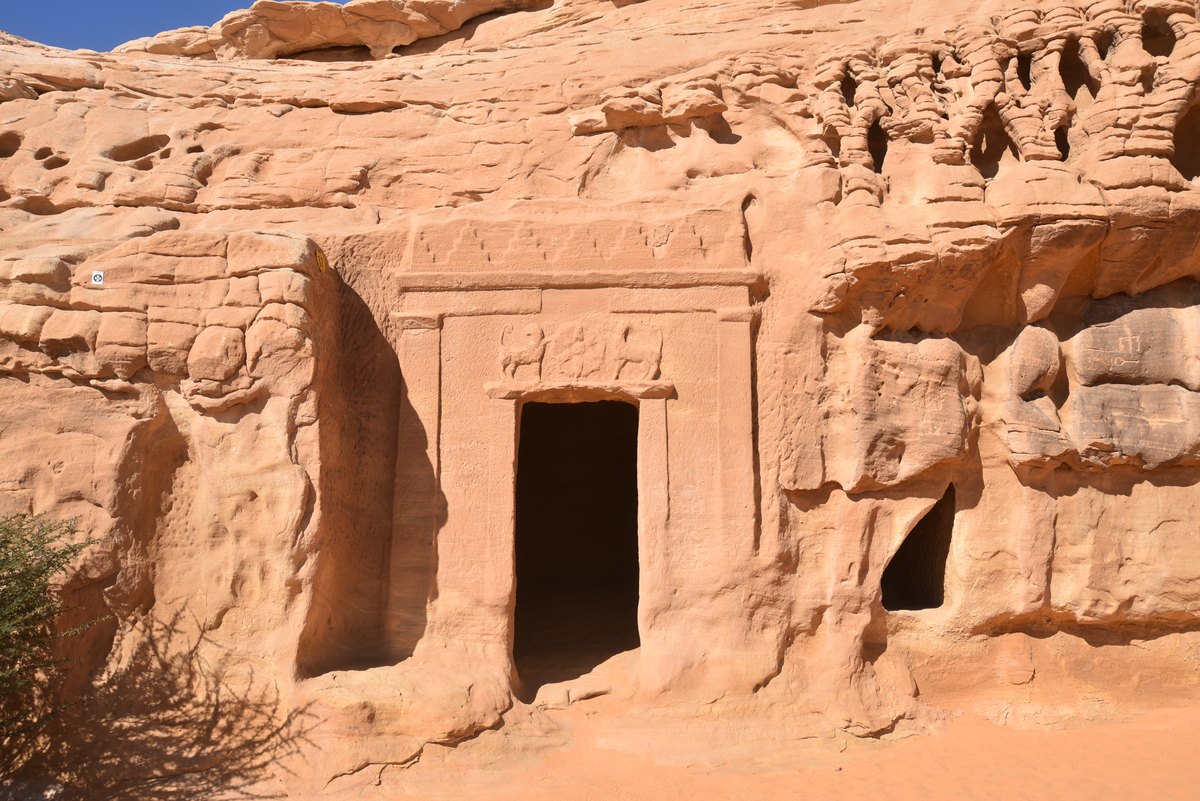
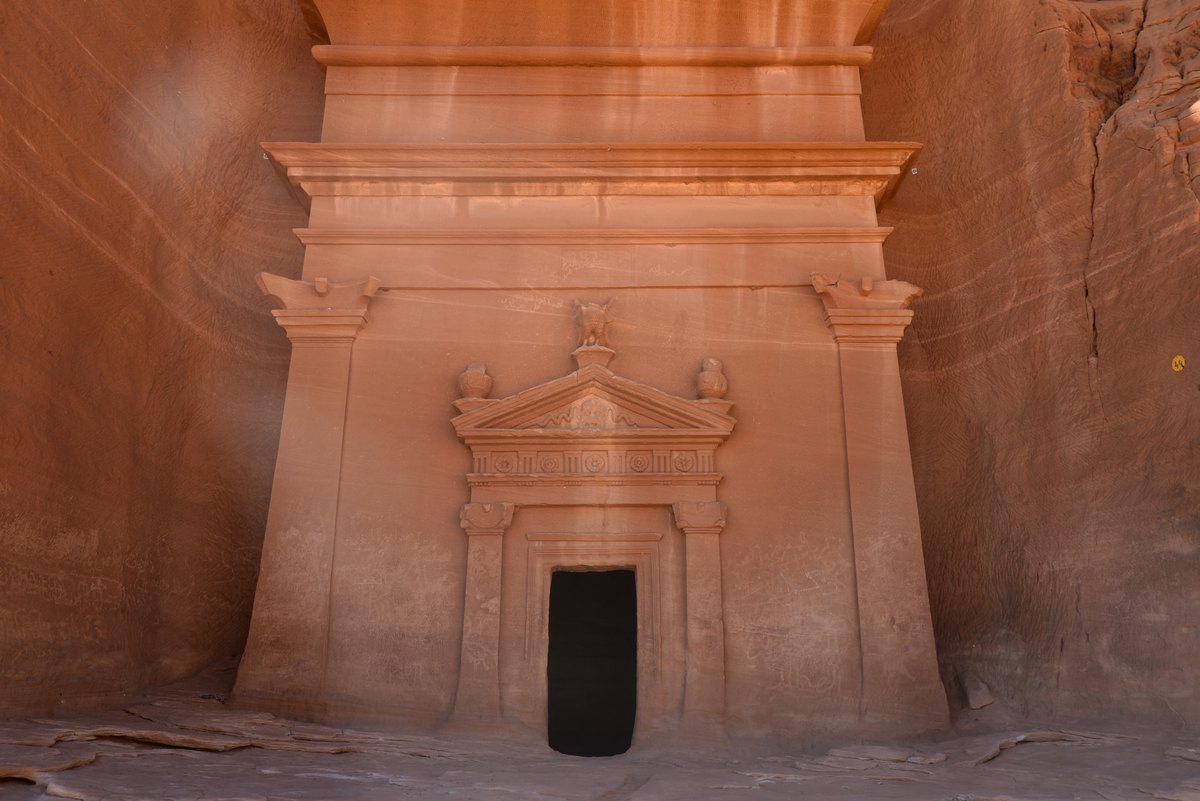
What immediately strikes the visitor -- and the viewer -- is the density of funerary monuments: more than 130 monumental tombs adorn the pink sandstone cliffs, carved directly into the rock between the 1st century BCE and the 1st century CE. Each tomb displays an elaborate architectural facade, blending Greek, Egyptian, and Mesopotamian influences in a distinctly Nabataean style, recognizable by its crow-step friezes, statue niches, and Aramaic inscriptions.
Eight years of Franco-Saudi excavations
The archaeological mission at Hegra, launched in 2008 under the joint direction of the Saudi Commission for Tourism and National Heritage (SCTH) and a French CNRS team, represents one of the most ambitious excavations ever conducted on the Arabian Peninsula.1 Over eight years, archaeologists systematically mapped, excavated, and analyzed the entire site, covering the necropolises, residential quarters, hydraulic installations, and cultic areas.
One of the mission's major revelations concerns water management: in a desert environment where rain is extremely rare, the Nabataeans had developed a sophisticated hydraulic network of wells, cisterns, and irrigation channels capable of supplying a city of several thousand inhabitants and cultivating gardens. The excavations uncovered more than 130 wells, some reaching 40 meters in depth, testifying to a remarkable mastery of hydraulic engineering for the period.
The inscriptions discovered on the tombs and surrounding rocks constitute another precious source of information. Written primarily in Nabataean Aramaic -- the ancestor of Arabic script -- they provide information on the identity of the deceased, their social status, the prices paid for tomb construction, and the curses leveled at anyone who would dare desecrate the graves. These texts allow partial reconstruction of Hegra's Nabataean society: a cosmopolitan community where merchants, craftsmen, and officials of the Nabataean empire coexisted with local Arab populations.
The mysterious end of a capital
Hegra's prosperity came to an end with the Roman conquest of the Nabataean kingdom in 106 CE, when Emperor Trajan annexed Nabataean territories to form the Province of Arabia Petraea.3 But unlike Petra, which continued to thrive as a Roman provincial capital, Hegra was progressively abandoned. The rerouting of trade routes, the loss of caravan hub status, and possibly climatic changes led to the gradual depopulation of the city during the 2nd and 3rd centuries.
For centuries, the site was known to Bedouins and Arab travelers but remained largely inaccessible to Westerners. It was only in the 19th century that the first European explorers -- including the Englishman Richard Burton in 1877 -- described the monuments of Mada'in Saleh to a wider audience. Listed as a UNESCO World Heritage Site in 2008, the site is today the focus of a major tourism development project within Saudi Arabia's Vision 2030, which aims to make it one of the world's great archaeological destinations.
This documentary offers a rare behind-the-scenes look at these exceptional excavations, giving voice to the archaeologists who devoted years to unearthing the secrets of this desert city. Between carved tombs, deciphered inscriptions, and reconstructed hydraulic systems, a little-known chapter of the ancient Near EastNear EastA region of western Asia (Levant, Mesopotamia, Anatolia, Iran), cradle of the Neolithic revolution, agriculture, the first cities and writing.→'s history is revealed.
No comments yet. Be the first.