The Man Who Changed Everything: Birth of a Definition
On November 4, 1960, in Olduvai Gorge in Tanzania, the young Jonathan Leakey unearthed a fragment of a lower jaw belonging to an adolescent who had died nearly 1.75 million years before. This fossil, designated OH 7 (Olduvai Hominid 7), would trigger one of the longest and most productive controversies in the entire history of paleoanthropology. His father, Louis Leakey, immediately grasped that this discovery resembled nothing known until then: the teeth were too large for a typical australopithecineAustralopithecineA genus of bipedal hominins from Africa (c. 4.2–1.9 Ma) with a brain still close to that of great apes (400–550 cm³) but walking upright. Lucy (<em>Au. afarensis</em>) is the most famous specimen.→, the braincase too voluminous for the taxa described at the time, and most importantly, the bones were associated with stone tools crafted with evident precision and deliberate intent. Olduvai Gorge, explored by the Leakeys since 1931 without major results in terms of homininHomininMember of the subtribe Hominina, comprising the human lineage (Homo, Australopithecus, Paranthropus…) but excluding orangutans and gibbons. The term progressively replaces "hominid" in its narrow sense.→ remains, was finally yielding the missing chapter of human history, and with it the proof that AfricaAfricaThe cradle of humankind: the continent where the first hominins appeared, then Homo sapiens around 300,000 years ago, before the expansion to the rest of the world.→ was indeed the cradle of our evolutionary lineage.
Louis Leakey, South African paleoanthropologist Phillip Tobias, and British primatologist John Napier spent four years characterizing this new fossil before presenting it formally to the scientific community in a landmark paper published in Nature in April 1964. Their conclusion was bold and provoked considerable controversy among their peers: the bones of OH 7 belonged to a new species that they proposed to assign not to the genus Australopithecus, as might have been expected given the specimen's great antiquity and primitive features, but directly to the genus Homo, alongside Homo erectus and Homo sapiensHomo sapiensThe present-day human species, which emerged in Africa around 300,000 years ago, the only surviving human lineage after the extinction of Neanderthals and Denisovans.→. This decision required extending the definition of the genus Homo well beyond what had previously been accepted, and pushed back the origins of our own genus by several hundred thousand years in the family tree of humanity, challenging deeply held assumptions about when truly human-like characteristics first appeared.
The name they chose for this new species, Homo habilis, means in Latin 'handy man', 'capable man', or 'man who handles tools', an appellation proposed by the celebrated Australian anthropologist Raymond Dart to emphasize what appeared to be the major defining characteristic of this new hominin: its capacity to manufacture and use stone tools with deliberate intent. This link between tool manufacture and belonging to the genus Homo reflected the then-dominant view that intentional manipulation of tools constituted the decisive criterion separating hominins from the rest of the animal world, and defined humanity in its most archaicArchaicRefers to an ancient, now-extinct human population or form (Neanderthals, Denisovans, ghost lineages), as opposed to anatomically modern humans.→ manifestations. This vision would be profoundly challenged by subsequent discoveries, particularly observations of tool use in chimpanzees and other great apesgreat apesThe family of great apes (Hominidae) comprising orangutans, gorillas, chimpanzees, bonobos and humans.→, but it conferred on Homo habilis a symbolic status of the highest importance in the reconstruction of our evolutionary history, naming it as the first member of a lineage that would eventually produce modern human civilization.
The discovery of Homo habilis unfolded in a particular intellectual and scientific context marked by the great advances of African prehistoryPrehistoryThe span of human history before the invention of writing, from the Palaeolithic to the Metal Ages, known mainly through material remains.→ during the 1950s and 1960s. The description of Paranthropus boisei (then called Zinjanthropus) by Mary Leakey in 1959, the multiplication of discoveries in the Lake Turkana basin in Kenya, and the progress of radiometric dating methods were radically transforming scientists' perception of human evolution. Homo habilis emerged in this changing landscape as an essential piece of the puzzle, a transitional term between the gracile australopithecines and the earliest indisputable representatives of the genus Homo, opening an unprecedented window onto the pivotal period of the terminal PliocenePlioceneA geological epoch spanning roughly 5.3 to 2.6 million years ago, the last subdivision of the Neogene. It was during the Pliocene, in an East Africa undergoing cooling and forest fragmentation, that the first fully bipedal australopithecines such as Lucy (~3.2 Ma) evolved.→ and Early PleistocenePleistoceneThe geological epoch of the great ice ages (c. 2.6 Ma–11,700 BP), spanning most of human prehistory.→ that had witnessed the emergence of the essential characteristics of humanity as we conceive it today, from cognitive complexity to habitual tool use and expanded meat consumption.
Anatomy of Homo habilis: Between Two Worlds
The anatomy of Homo habilis constitutes one of the most fascinating and most debated enigmas in modern paleoanthropology, precisely because it appears to perpetually hesitate between two distinct evolutionary worlds without fully belonging to either. On the side of the australopithecine heritage, Homo habilis retains undeniably primitive morphological characteristics linking it to its Pliocene predecessors: relatively long upper limbs compared to the lower limbs according to certain interpretations of available skeletal fragments, a modest body size estimated between 100 and 150 centimeters depending on the specimen, a probable weight of between 20 and 37 kilograms for small-statured individuals, and a prognathic face with marked brow ridges that recalls the australopithecine facial pattern more than the flatter and more vertical face of subsequent African Homo erectus, suggesting that the transition to fully modern human facial proportions was still far in the evolutionary future.
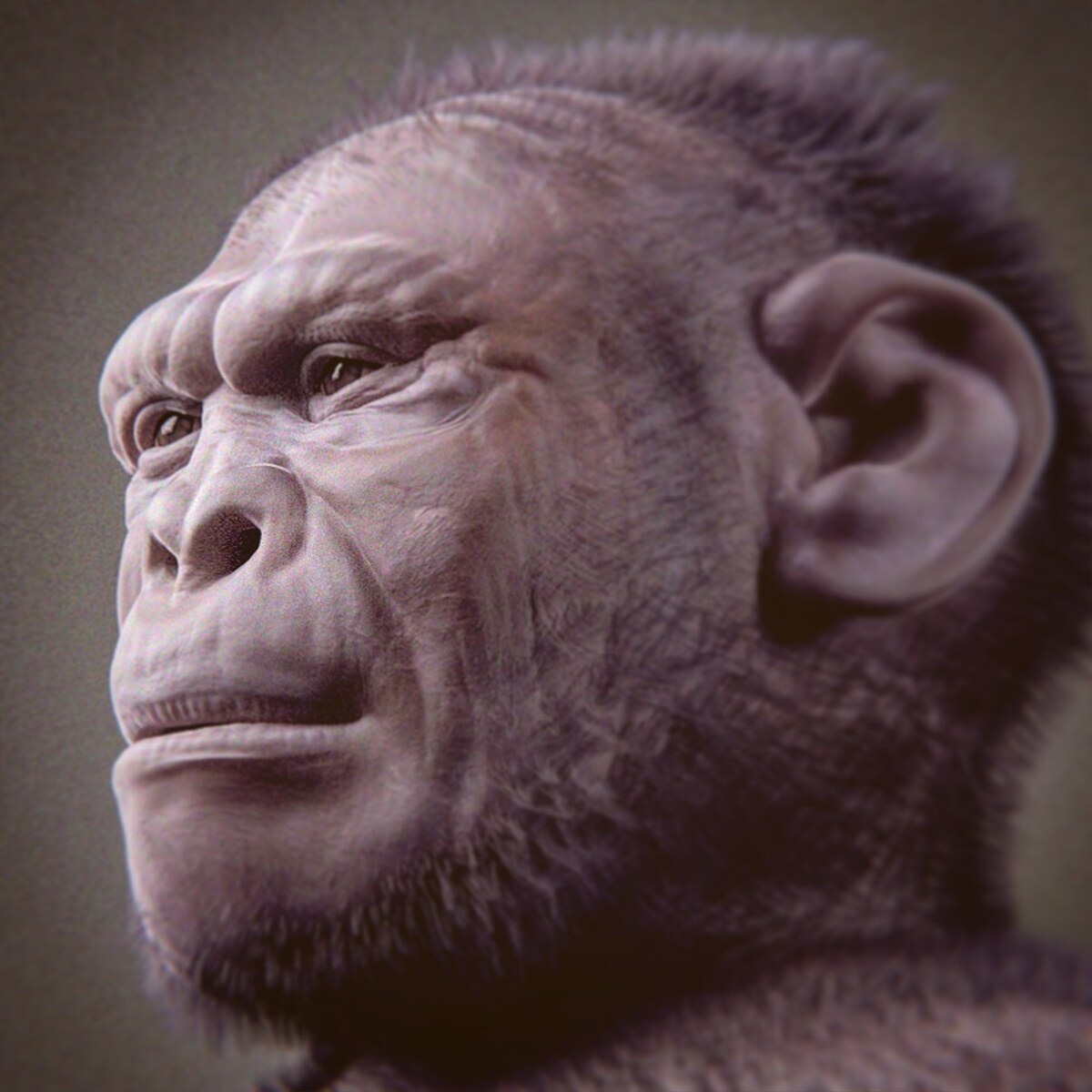
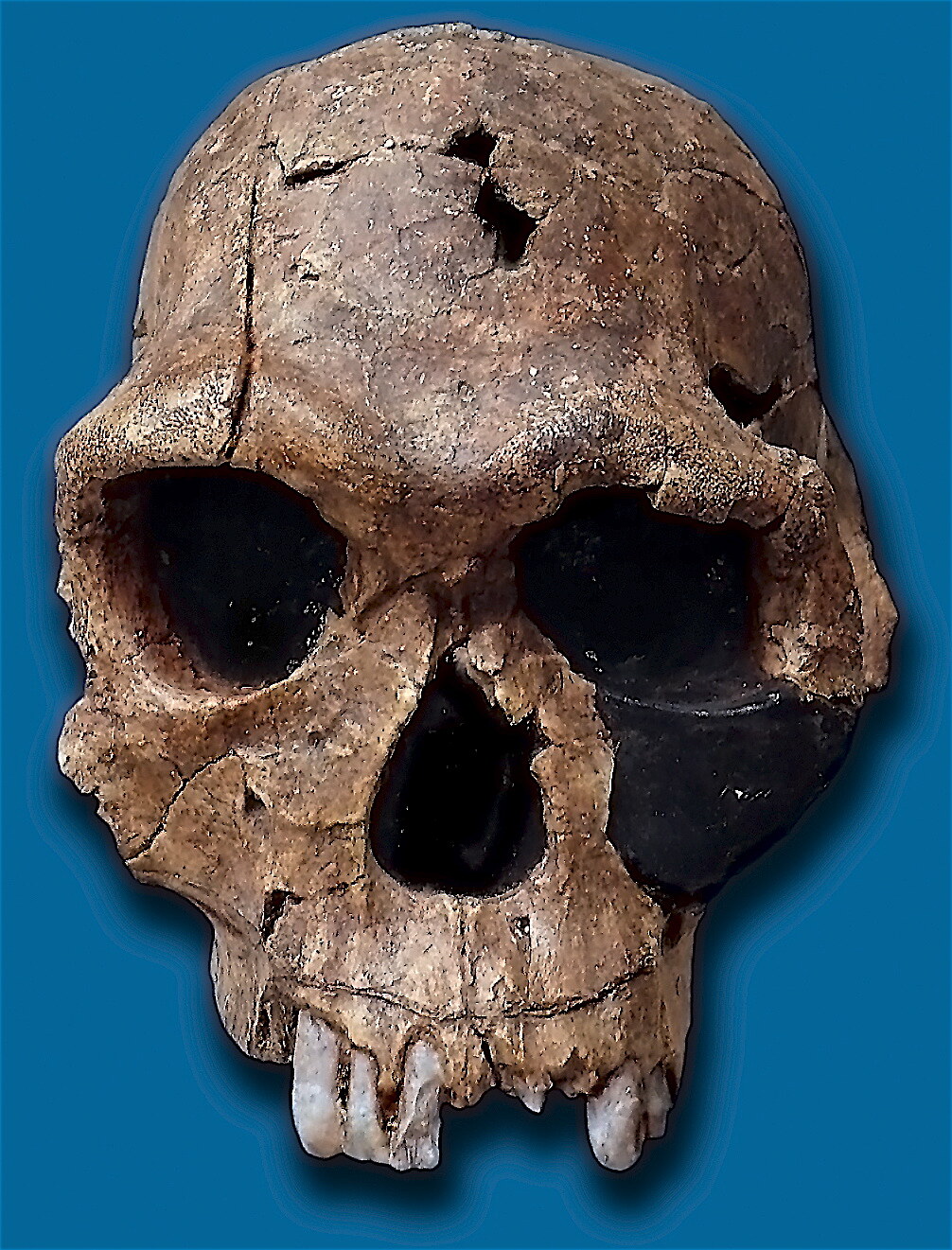
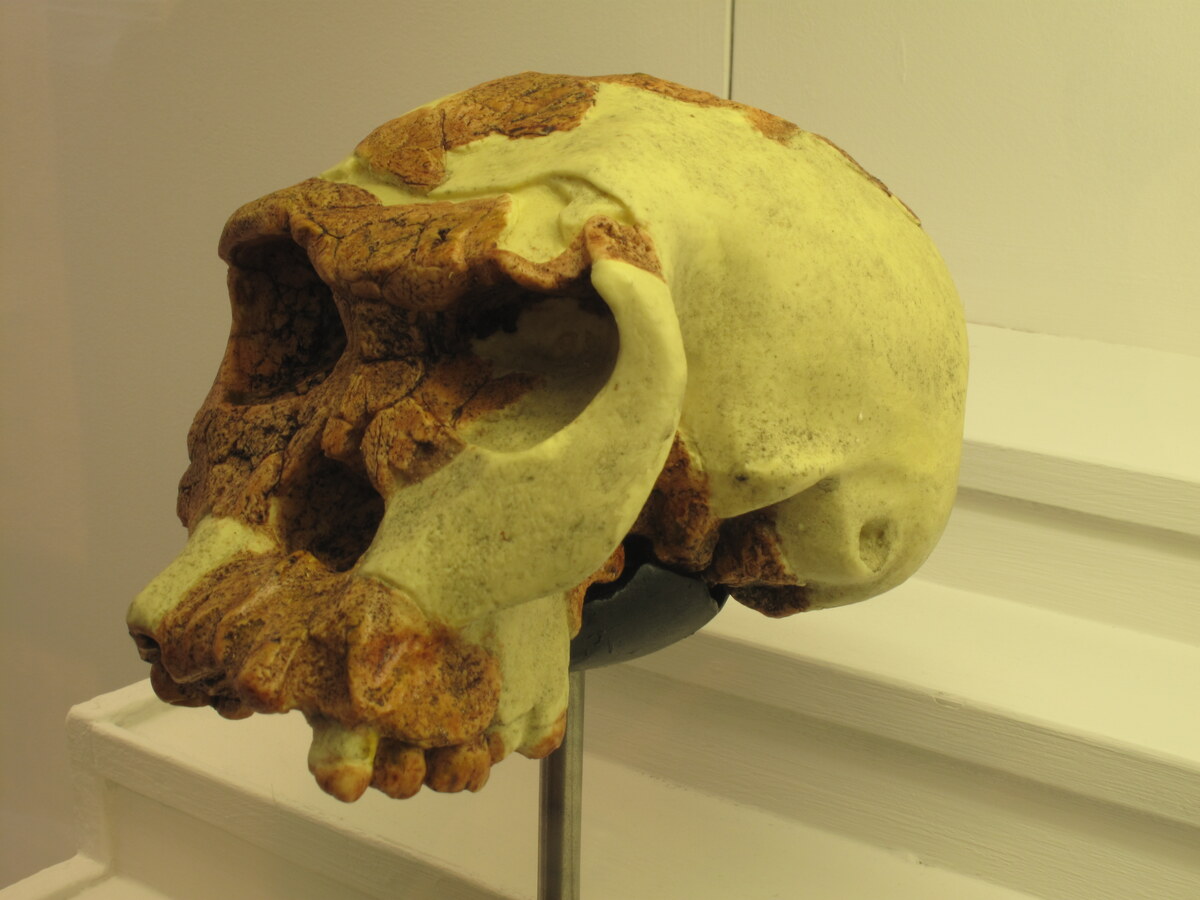
On the side of the new acquisitions justifying its placement in the genus Homo, Homo habilis displays a cranial capacity markedly superior to that of contemporary australopithecines, generally ranging from 500 to 700 cubic centimeters depending on the specimen, with extremes sometimes reaching 800 cubic centimeters, compared to an average of approximately 400 to 450 cubic centimeters for gracile australopithecines like Australopithecus africanus. This relative encephalization, even if modest in absolute value compared to the 900 to 1200 cubic centimeters of Homo erectus or the 1200 to 1700 cubic centimeters of Homo sapiens, represented a considerable quantitative and probably qualitative leap compared to earlier hominins. The increase in brain volume was accompanied by morphological changes in the braincase: a somewhat more vertical forehead, a more domed parietal region, and an overall more rounded conformation that foreshadows the evolutionary trends culminating in the globular skull of our own species.
The hands of Homo habilis, known primarily through the bones of OH 7 discovered alongside the jaw fragment in 1960, have been the subject of detailed analyses revealing a remarkably 'human' morphology for such an ancient hominin. The short but functionally opposable thumb, the broad distal phalanges characteristic of an effective precision grip, and the general configuration of the carpal bones suggest a capacity for fine manipulation well superior to that of australopithecines and comparable, in certain respects, to that of more recent hominins. These anatomical characteristics of the hands are directly coherent with the manufacture of stone tools documented in the same stratigraphic levels, and constitute one of the most solid anatomical arguments in favor of classifying Homo habilis in the genus Homo rather than in the genus Australopithecus, where some researchers have periodically proposed it should reside based on its overall body proportions and primitive skeletal features.
The question of the locomotion of Homo habilis remains one of the most debated in all of paleoanthropology, largely because the available post-cranial fossils are extremely fragmentary and their assignment to the species Homo habilis itself is not always certain. The skeleton OH 62, discovered in 1986 by a team led by Tim White, provided essential but also deeply troubling information about the locomotor biology of Homo habilis: its morphology suggested limb proportions more reminiscent of those of australopithecines than those of efficient bipedal hominins, with relatively long arms and relatively short legs. This led some researchers to propose that Homo habilis was at least partially arboreal and practiced a mixed type of locomotion combining terrestrial bipedalismBipedalismA mode of locomotion on two hind limbs, the defining trait of the human lineage, appearing over 7 million years ago. Visible in the anatomy of the pelvis, femur and foramen magnum.→ with arboreal climbing to find refuge or seek food, which would make it more similar in its locomotor ecology to the earlier australopithecines than to the efficient long-distance walkers that Homo erectus appears to have been.
The OldowanOldowanThe oldest known stone-tool industry (c. 3.3–1.7 Ma), characterised by flaked pebbles (choppers) and basic flakes. Named after Olduvai Gorge (Tanzania).→ Industry: The Revolution of Tools
The lithic industry associated with Homo habilis, commonly designated as the Oldowan or Olduvan culture after the Tanzanian site where it was first identified by the Leakeys in the 1930s, constitutes the oldest clearly documented technical tradition in the world archaeological record. The earliest Oldowan tools are dated to approximately 2.6 million years ago in the Afar region of Ethiopia, well before the appearance of the oldest fossils attributed to Homo habilis, which poses the open and still-debated question of whether this industry was created by another predecessor hominin or by the earliest not-yet-discovered representatives of Homo habilis. Regardless, the association between Oldowan tools and Homo habilis fossils in the Bed I levels and early Bed II of Olduvai Gorge, dated between 1.9 and 1.65 million years ago, is well established and supported by direct stratigraphic associations between toolmaking debris, cut-marked animal bones, and hominin fossils within the same occupation layers.
Oldowan tools are characterized by an apparent simplicity that actually conceals a technical conception considerably more sophisticated than it appears at first glance. Choppers, produced by striking a hard cobble with another hammer stone to detach a few large flakes and create a functional cutting edge, constitute the type form of this industry. Polyhedrons, discoids, and spheroids complete the repertoire of heavy core tools, while the flakes detached during the knappingknappingThe set of operations for fracturing a stone block to extract flakes or blades.→ of cores were themselves immediately usable cutting tools without further modification. Microscopic use-wearuse-wearMicro-traces left on a tool by its use, studied through use-wear analysis to reconstruct its function.→ analysis practiced since the 1980s on collections of Oldowan tools by Lawrence Keeley and other specialists has revealed plant, blood, and bone residues proving their effective use for cutting animal flesh, scraping wood, and processing other organic materials, confirming their multipurpose vocation and demonstrating that their makers had a clear understanding of which tool types were appropriate for which specific tasks.
The technical skill required to produce Oldowan tools was long underestimated by prehistorians accustomed to evaluating technical complexity using the yardstick of more recent lithic industries with their regular and predictable Levallois or blade knapping geometry. Experimental replication studies conducted since the 1970s by Kathy Schick, Nicholas Toth, and other experts in experimental archaeology have shown that the consistent production of usable Oldowan tools requires precise knowledge of the mechanical properties of the rocks used, including the quality of flintFlintA hard, brittle siliceous rock, knapped by prehistoric people to produce blades, points and sharp tools.→, obsidian, quartz, or basalt, a precise sense of gesture allowing control of the direction, angle, and force of hammer blows, and the ability to select in nature the raw materials of adequate quality. These skills are not acquired spontaneously: they imply learning, transmission across generations, and a form of cultural memory that distinguishes human technological traditions from the more sporadic tool use observed in other primate species.
One of the most animated debates in African prehistory concerns the relationships between Oldowan tools and the hominins that coexisted in the same landscapes at the same period. Homo habilis was not the only hominin present in East Africa between 2.3 and 1.65 million years ago: it coexisted with Homo rudolfensis, a hominin with a more massive skull and larger brain whose exact relationship to Homo habilis remains debated, with Paranthropus boisei, the robust paranthropine with enormous molars specialized in consuming hard and tough foods, and possibly with the earliest representatives of Homo ergaster and Homo erectus depending on the dating of certain specimens. Attributing with certainty each tool to a specific maker in a context where several hominins of different cognitive capacities occupied the same territories remains a considerable methodological challenge whose resolution requires increasingly sophisticated archaeological and paleogenomic analyses.
Diet and Subsistence Strategy: Hunter or Scavenger?
The question of what Homo habilis ate and how it obtained its food is at the heart of a debate that has radically transformed our understanding of human evolution since the 1980s. The traditional vision, propagated for decades by the work of Sherwood Washburn and his collaborators on the 'male hunter' as the driver of human evolution, presented the earliest representatives of the genus Homo as active hunters who would have radically changed their diet compared to vegetarian australopithecines by adding large quantities of animal protein to their daily intake. This romantic vision of the first human hunter wielding a shaped cobble to confront the great African faunas of the Early Pleistocene has been largely replaced by a far more nuanced and probably more accurate picture derived from use-wear, isotopic, and taphonomic analyses accumulated over the last two decades of increasingly sophisticated research.
Stable isotope analyses of carbon and oxygen preserved in the dental enamel of Homo habilis specimens suggest an omnivorous and opportunistic diet incorporating significant fractions of C4 carbon sources, characteristic of tropical grasses and the animals that feed on them, alongside C3 resources from fruits, leaves, tubers, and other plants from forests and bush savannas. This isotopic profile is consistent with opportunistic scavenging rather than active hunting: Homo habilis would have exploited carcasses abandoned by large carnivores such as lions, leopards, and hyenas to access the protein-rich soft tissues and especially the bone marrow, a high-quality fat and protein source locked inside long bones that large felids and canids could not easily extract with their own dentition. Access to this nutritionally dense resource, combined with the ability to process it using sharp stone flakes, may have provided a significant energetic advantage that helped fuel the brain expansion observed in early Homo.
Butchery marks documented on medium and large ungulate bones at Oldowan sites in Olduvai Gorge and Koobi Fora provide direct evidence of stone tool use for processing animal carcasses by hominins of this period. Careful taphonomic analyses have shown that in many cases, cut marks left by lithic tools are superimposed on carnivore tooth marks on the same bones, implying that hominins accessed carcasses after primary carnivores had fed (secondary scavenging), or alternatively that carnivores gnawed bones after hominins had already defleshed them (primary scavenging by hominins). Distinguishing between these two scenarios has considerable implications for our understanding of the social behavior and cognitive capabilities of Homo habilis, since primary scavenging on large carcasses in an open savanna landscape would imply direct competition with large predators and would require highly developed vigilance behaviors, bold group-level approaches to dangerous carcasses, and sophisticated cooperative strategies to deter competing carnivores.
The role of underground storage organs in the diet of Homo habilis has been brought back to the forefront since the 2000s by several researchers, most notably Richard Wrangham in his 'cooking hypothesis'. Indirect evidence suggests that Homo habilis, like the australopithecines before it and modern hunter-gatherer populations, intensively exploited the energy-rich reserves stored in underground plant organs including bulbs, corms, rhizomes, and thickened roots, which constitute an especially reliable food source during dry seasons when fruits and leaves are scarce. The capacity to extract these resources using tools, to maintain over time a cognitive map of locations where such resources are available, and to share this information within the group constitute behavioral innovations that can be attributed to Homo habilis as an important step toward a more complex and flexible subsistence economy than that of the australopithecines, one more resilient to seasonal and climatic fluctuations in food availability.
Environment and Ecology: East Africa in the Early Pleistocene
To understand Homo habilis, it is essential to place it in its paleoecological context, since its evolution and adaptive strategies can only be interpreted in relation to the environment that shaped it. East Africa between 2.5 and 1.5 million years ago was a world undergoing profound transformation, subject to the effects of major climatic oscillations of the Early Pleistocene that alternated between humid phases (and therefore more wooded and greener) and arid phases (and therefore more open and more savanna-like). Olduvai Gorge in Tanzania, the Lake Turkana basin in Kenya, the Omo Valley sites in Ethiopia, and the South African sites of Sterkfontein, Swartkrans, and Drimolen all offer paleoecological windows onto the environments that Homo habilis inhabited and in which it forged its survival strategies and behavioral innovations across hundreds of thousands of years of ecological challenge and adaptive response.
Paleoecological reconstructions based on fossil pollens, associated faunal remains, carbon isotopes preserved in paleosols, and sedimentological data suggest that Homo habilis lived primarily in mosaic landscapes, that is, environments where forested riparian zones along watercourses and lakes alternated at short distances with more or less dense bush savannas and open grassland exposed to wind. This landscape heterogeneity was a considerable advantage for an opportunistic omnivore like Homo habilis: it offered the maximum diversity of food resources in terms of fruits, seeds, tubers, invertebrates, carrion, and small vertebrates, and allowed the successive exploitation of different environments according to the seasons and the availability of resources, a behavioral flexibility that would become increasingly important as the global climateClimateThe long-term average atmospheric conditions of a region; its variations (glaciations, aridifications) shaped migrations, agriculture and the collapse of prehistoric societies.→ continued its long-term trend toward greater aridity during the Pleistocene.
The presence of a palaeolake at Olduvai, a freshwater body whose shores offered favorable conditions for abundant animal and plant life, played a crucial role in the prehistoric occupation of Olduvai Gorge by Homo habilis and the other contemporary hominins. Lake and river shores constitute areas of resource concentration: ungulates gather there to drink, making them vulnerable to predators and scavengers; aquatic and semi-aquatic plants are abundant and nutrient-rich; fish and amphibians are accessible to hominins capable of capturing them; and the rock outcrops used for toolmaking are often abundant nearby. The correlation between Oldowan archaeological sites and ancient lake shores or fluviatile deposits is not coincidental: it reflects the ecological preference of Homo habilis for aquatic edge environments that maximize the diversity and density of exploitable resources and provide reliable water access throughout the year regardless of seasonal precipitation patterns.
Competition with other carnivores and hominins in Early Pleistocene East Africa must have exerted considerable selective pressure on the behavior and cognitive capabilities of Homo habilis. Large felids such as Dinofelis, a dagger-toothed cat that may have specialized in preying on hominins according to some researchers, and Megantereon, a saber-toothed cat whose African specimens were of large size, represented persistent potential dangers. Nile crocodiles, large constrictor snakes, and packs of African wild dogs completed a formidable predation landscape for a small-statured hominin still largely diurnal in its activity patterns. Collective vigilance, group coordination, information sharing about predators, and preference for elevated sleeping sites, whether in trees or on rocky outcrops, probably constituted the main behavioral defenses of Homo habilis against these omnipresent threats in the African landscapes of the Early Pleistocene, and may have been important selective pressures driving the social complexity and cooperative behaviors visible in later human populations.
Taxonomic Debates and Contemporaries
One of the most fascinating and complex aspects of the history of Homo habilis is its coexistence with other hominins in the same African landscapes at the same period, a phenomenon that challenges our often too linear and too simplified vision of human evolution as a succession of species replacing each other in strict order. Between 2 and 1.5 million years ago in East Africa, at least two or three distinct hominin species lived simultaneously in the same ecosystems: Homo habilis sensu stricto, Homo rudolfensis (whose specific distinction from Homo habilis remains debated), and Paranthropus boisei, the robust paranthropine with enormous zygomatic arches and massive molars that had specialized in a diet based on hard and tough resources. This diversity of simultaneous evolutionary solutions illustrates that human evolution was not a process oriented toward a predetermined goal but rather an adaptive radiation with multiple coexisting and competing lineages.
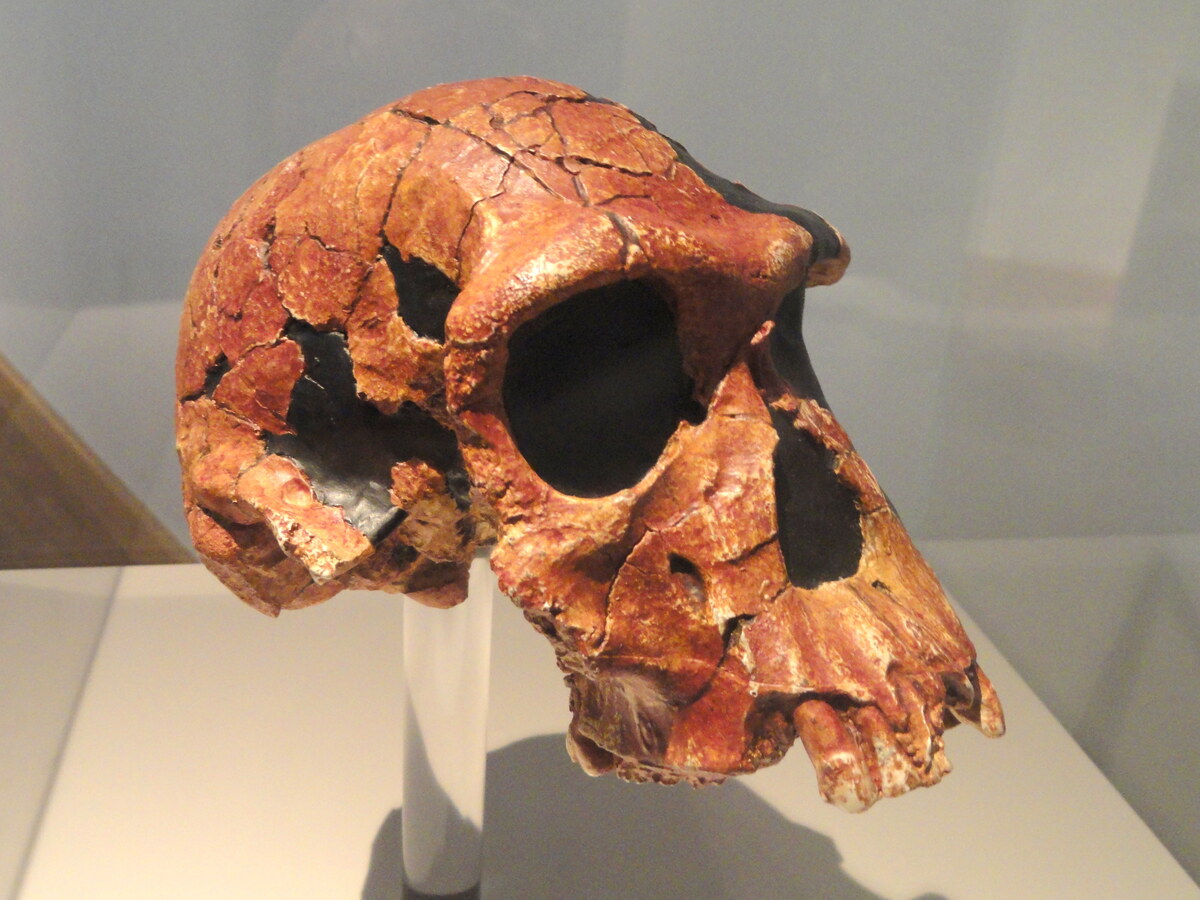
The relationship between Homo habilis and Homo rudolfensis is perhaps the most thorny taxonomic debate in all of paleoanthropology. Homo rudolfensis is known primarily through the skull KNM-ER 1470, discovered in 1972 at Koobi Fora in Kenya by Bernard Ngeneo under the direction of Richard Leakey, and dated to approximately 1.9 million years ago. This skull displays a cranial capacity markedly superior to that of typical Homo habilis specimens, estimated at approximately 750 to 800 cubic centimeters, a very flat and very wide face, and relatively large teeth. In 1985, Bernard Wood proposed distinguishing two groups among the earliest African Homo, reserving the name Homo habilis for specimens of small cranial capacity and more prognathic face, and creating the name Homo rudolfensis for specimens with large brains and flat faces. This distinction is today accepted by the majority of specialists, but voices continue to argue for synonymization of the two taxa, interpreting their differences as simply reflecting sexual dimorphism within a single variable species rather than two distinct evolutionary lineages.
The question of the generic assignment of Homo habilis to the genus Homo or to the genus Australopithecus resurfaced forcefully after the discovery of skeleton OH 62 in 1986 and its publication by Donald Johanson and his collaborators. This skeleton, attributed to an adult female Homo habilis and dated to approximately 1.8 million years ago, presented surprisingly primitive body proportions with relatively long arms compared to the legs, very small stature, and a general constitution more reminiscent of Australopithecus afarensis than of more recent hominins. In 1999, Bernard Wood and Mark Collard published a comprehensive cladistic analysis that led them to propose that neither Homo habilis nor Homo rudolfensis satisfied the diagnostic criteria adequate for membership in the genus Homo, and that they should be transferred to the genus Australopithecus. This radical proposal was not adopted by the majority of the scientific community, but it forced a healthy reflection on the criteria we use to define the genus Homo and the standards by which we judge evolutionary membership in our own genus.
Discoveries made since the 2000s have further complicated the phylogenetic picture of the period. The description in 2015 of the mandible LD 350-1 from the Afar region of Ethiopia, dated to 2.8 million years ago, pushed the origins of the genus Homo back by several hundred thousand years beyond what was previously known, and poses the question of whether this hypothetical ancestor of the genus Homo is ancestral to Homo habilis or represents a divergent lineage. The fossils from Dmanisi in Georgia, dated to 1.8 million years ago and attributed to Homo erectus or an early form of Homo ergaster, display such variable and primitive morphologies that their discovery led to suggestions that all contemporary groups of early African Homo, including Homo habilis and Homo rudolfensis, might represent a single polytypic species of Homo erectus in the broad sense, a revolutionary hypothesis that would dramatically simplify our understanding of early Homo diversity but remains contested.
The Brain of Homo habilis and the Origins of Human Cognition
The brain expansion observed in Homo habilis compared to the preceding australopithecines is not merely a simple quantitative increase in volume: it is accompanied by qualitative reorganizations of neural architecture that have profound implications for the cognitive capabilities of this species and for our understanding of the origins of specifically human cognition. Natural and artificial endocasts produced from the internal molds of Homo habilis braincases show particularly marked expansion of the inferior frontal regions, associated with language and action planning in Homo sapiens, and of the parietal regions, involved in multimodal integration of sensory information and the mental manipulation of objects in space. These anatomical observations, interpreted cautiously given the uncertainties associated with the correspondence between anatomical structures and cognitive functions in extinct species, suggest that Homo habilis possessed intellectual capabilities clearly superior to those of australopithecines.
The question of language in Homo habilis is one of the most controversial in all paleoanthropology, and it is likely that it will never be definitively resolved given the nature of the available evidence. Broca's area, a region of the left frontal lobe classically associated with the production of articulate language in Homo sapiens, appeared to show a relative expansion compared to australopithecines in the endocasts of Homo habilis according to analyses by Ralph Holloway in the 1980s and 1990s. This observation led some researchers to speculate that Homo habilis may have possessed a primitive form of vocal communication more elaborate than that of living great apes, without necessarily reaching the syntactic complexity of modern human language. Other researchers, studying the same endocasts, arrive at more cautious conclusions and emphasize the impossibility of deducing the linguistic capabilities of an extinct species from simple topographic variations of the cortical surface visible on an endocast, which captures only the gross morphology of the brain surface and not its internal organization.
The implications of tool manufacture for the cognitive capabilities of Homo habilis have been analyzed in depth by several teams of researchers since the 1990s. The production of Oldowan tools requires, according to experimental analyses by Nicholas Toth and Kathy Schick with human subjects and trained great apes, an understanding of the mechanical properties of materials, multi-step planning of the technical knapping sequence, fine visuomotor coordination, and probably the ability to maintain in working memory a mental schema of the tool to be produced and to compare it to the intermediate result in progress. Kanzi, the bonobo celebrated for his extraordinary linguistic and cognitive capabilities, can produce rudimentary Oldowan flakes after training, but his tools remain clearly inferior in quality and regularity to those produced by prehistoric hominins, suggesting that the production of typical Oldowan tools requires cognitive capabilities superior to those of living great apes, consistent with a significant qualitative threshold in the cognitive evolution of our lineage.
Semantic memory and the cultural transmission of technical knowledge constitute two crucial cognitive dimensions whose existence in Homo habilis can be reasonably postulated, even if direct evidence is inevitably unavailable in the archaeological record. The persistence of the Oldowan industry over a period of at least one million years with relative stability of forms and techniques implies an effective intergenerational transmission of technical skills through social learning, whether through direct imitation, active teaching, or a combination of both modalities. This fidelity of cultural transmission, even without the support of complex articulate language, presupposes capabilities of shared attention, deferred imitation, and long-term memory clearly above what is observed in other non-human primates in their natural tool behaviors, such as nut-cracking in chimpanzees or stick fishing for termites in various populations of great apes across Africa and Asia.
Olduvai Gorge: The Crucible of Homo habilis Science
Olduvai Gorge, located in northern Tanzania on the border of the Serengeti and the Ngorongoro Crater, is without doubt the most important archaeological site for our understanding of Homo habilis and the Oldowan industry. This 48-kilometer-long and 90-meter-deep gorge was carved by erosive processes that exposed an exceptional stratigraphic sedimentary sequence covering the last two million years, offering paleontologists and prehistorians a natural archive of the evolution of life and cultures in this region of East Africa. The Leakeys began exploring the gorge in 1931 but had to wait until 1959 to find there the first hominin remains, inaugurating a series of discoveries that would revolutionize our understanding of human origins over the following decades and establish East Africa as the uncontested center of the earliest known chapter of human evolutionary history.
The stratigraphyStratigraphyThe study of the superimposed layers (strata) of an archaeological site; each layer corresponds to a phase of occupation and yields a relative chronology.→ of Olduvai Gorge is organized into several layers or 'Beds' designated by Roman numerals I, II, III, and IV, each corresponding to a distinct chronological period. Bed I, the oldest, dates to approximately 2.1 to 1.7 million years ago and has yielded the oldest and most characteristic specimens of Homo habilis as well as the best-preserved Oldowan tools. The lower part of Bed II, dated between 1.7 and 1.6 million years ago, corresponds to a transitional period during which the Oldowan industry evolved toward more elaborate forms sometimes described as Developed Oldowan, and the first AcheuleanAcheuleanLower Palaeolithic technical culture characterised by hand axes, present across three continents.→ tools, with the characteristic hand axes of Homo ergaster, began to appear in the upper levels. This stratigraphic succession documented with precision makes Olduvai Gorge a unique natural laboratory for studying the technological and biological transition between Homo habilis and its successors, providing a temporal and spatial framework that no other single site in the world can match for this critical period.
The dating methods used at Olduvai have themselves advanced the science significantly. Olduvai Gorge was one of the first African sites to benefit from potassium-argon dating in the 1960s, a method that was then entirely new and allowed the establishment of absolute ages for the levels containing Homo habilis, demonstrating that African hominins were far older than had previously been supposed. These results, combined with the Leakeys' fossil discoveries, contributed to shifting the scientific consensus from the Asian hypothesis of human origins (supported by the discovery of Pithecanthropus in Java at the end of the nineteenth century) toward the African hypothesis that is today universally accepted. East Africa, and in particular the East African Rift of which Olduvai Gorge constitutes one of the most accessible and best-explored expressions, is definitively the birthplace of humanity as documented in the fossil and archaeological record.
The exceptional preservation of fossils at Olduvai results from the combination of several favorable geological factors that together created ideal fossilization and conservation conditions. The paleolake present in the gorge during much of the Early Pleistocene favored the deposition of fine sediments rich in minerals that embedded and preserved bones, teeth, and tools with remarkable fidelity. The volcanic activity of the region provided layers of volcanic tuffs rich in potassium datable by the K-Ar method and serving as precise chronological markers intercalated between fossiliferous levels. The recent fluvial erosion that carved the gorge has finally exposed these archaeological and paleontological riches at the surface, making them accessible to excavators without requiring extensive earthmoving. This exceptional conjunction makes Olduvai a scientific site that has not only changed our knowledge of Homo habilis but also revolutionized the methodology of African paleoanthropology as a whole, establishing standards of interdisciplinary research that have been adopted at comparable sites across the continent.
Homo habilis in the Evolutionary Tree: Ancestor or Dead End?
The question of whether Homo habilis is directly ancestral to Homo ergaster and, by extension, to all subsequent Homo including Homo sapiens, or whether it represents a lateral branch of human evolution that became extinct without descendants, is one of the most important and least resolved in all of paleoanthropology. The traditional view, dominating the scientific landscape since the 1970s, presented Homo habilis as a direct ancestor of Homo erectus according to a simple linear scheme: Australopithecus africanus gave rise to Homo habilis which gave rise to Homo erectus which gave rise to Homo sapiens, each species replacing the previous in a continuous progression toward increasingly developed cerebral and behavioral capabilities. This view is today challenged by stratigraphic data and precise datings showing that Homo habilis and the earliest African Homo ergaster and Homo erectus coexisted for at least 500,000 years, between approximately 1.9 and 1.4 million years ago, rendering a simple and direct ancestor-descendant relationship chronologically impossible.
A major publication by Spoor and colleagues in Nature in 2007 crystallized this debate by presenting two new East African fossils that considerably clarified the chronology of coexistence between Homo habilis and Homo erectus. A new partial Homo habilis skull dated to approximately 1.44 million years ago (KNM-ER 42703) and a new Homo erectus maxillary fragment dated to approximately 1.55 million years ago (KNM-ER 42723) clearly showed that the two species coexisted in the Lake Turkana basin for more than 500,000 years. This extended coexistence is incompatible with an evolutionary scenario in which Homo habilis directly and gradually transforms into Homo erectus, and suggests rather that Homo habilis represents a distinct evolutionary lineage that eventually became extinct, while Homo erectus would descend from another common ancestor still insufficiently documented in the African fossil record for this critical transitional period between approximately 2.5 and 2 million years ago.
New discoveries and new phylogenetic analyses conducted since the 2010s have brought additional perspectives on the positioning of Homo habilis in the human evolutionary tree, although the inherent limitations of working with fossils more than one million years old in tropical regions subject to rapid DNADNAThe molecule carrying genetic information, used to reconstruct kinship between species.→ degradation make direct genomic analysis practically impossible for these periods. Morphological cladistic analyses conducted on extended databases of cranial and post-cranial anatomical characteristics tend to place Homo habilis either as a sister taxon of a clade including Homo ergaster, Homo erectus, and more recent hominins, or as a basal grade of the early Homo radiation also including Homo rudolfensis, without it being possible to definitively resolve between these two positionings with the data currently available. The answer to this fundamental question will likely require the discovery of new well-dated fossils filling the gaps in the record, particularly for the critical period between 2.5 and 2.0 million years ago when the divergence between the habilis and erectus lineages presumably occurred.
The evolutionary legacy of Homo habilis, whether or not it is a direct ancestor of subsequent hominins, is immense and cannot be reduced to the mere question of its position in the phylogenetic tree. Homo habilis represents the first clear evidence of the significant brain expansion that would characterize all hominins of the genus Homo, the first demonstrable producer of manufactured lithic tools according to a transmissible technical tradition, and probably the first hominin to have systematically exploited large-scale animal protein resources even if in the form of scavenging rather than active hunting. These behavioral and cognitive innovations, whatever their exact genealogy, opened the way for all the subsequent cultural developments that would eventually lead, one and a half million years later, to the extraordinary technical and symbolic capabilities of Homo sapiens. In this sense, Homo habilis genuinely incarnates the recognizable beginning of what we call 'humanity' in its broadest and most inclusive definition, as a category defined not by anatomical thresholds but by the continuous accumulation of behavioral innovations that distinguish our lineage from all others in the history of life.
No comments yet. Be the first.