A new study published in Current Biology in September 2026 has reignited debate over the funerary practices of Homo naledi, the homininHomininMember of the subtribe Hominina, comprising the human lineage (Homo, Australopithecus, Paranthropus…) but excluding orangutans and gibbons. The term progressively replaces "hominid" in its narrow sense.→ species discovered in 2013 in South AfricaAfricaThe cradle of humankind: the continent where the first hominins appeared, then Homo sapiens around 300,000 years ago, before the expansion to the rest of the world.→'s Rising Star cave system. By analysing proteins preserved in the dental enamel of 23 teeth from 20 individuals, Palesa Madupe of the Max Planck Institute for Evolutionary Anthropology in Leipzig, and Enrico Cappellini of the University of Copenhagen, detected no trace of amelogenin Y -- the protein that, in mammals, marks the Y chromosome. The potentially explosive conclusion: all these individuals could be female.
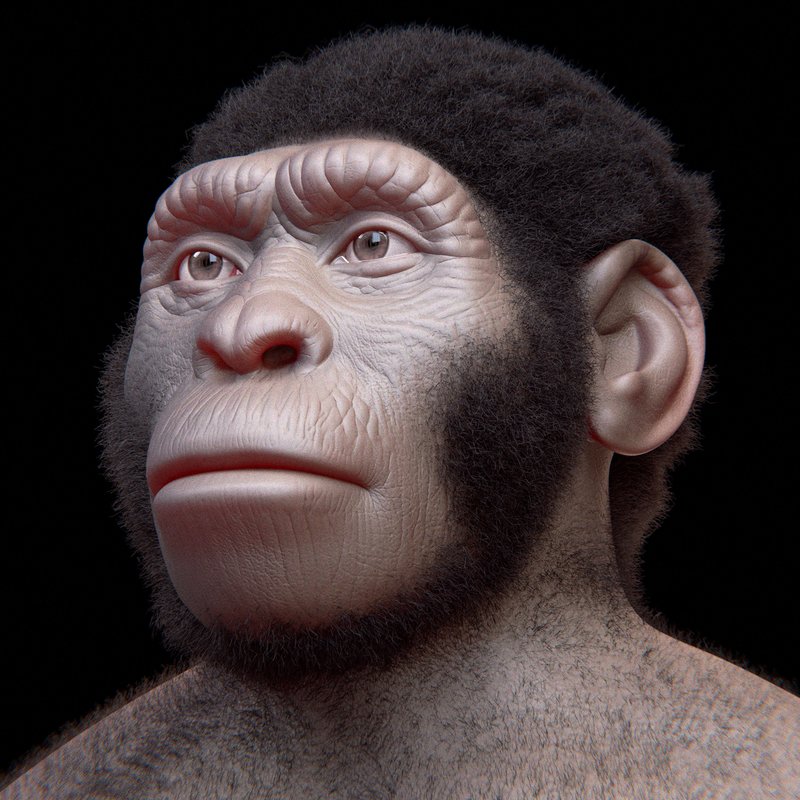
Ancient proteomics to the rescue of fossil sex determination
Determining the sex of a fossil individual is one of the most persistent challenges in palaeoanthropologyPalaeoanthropologyThe science that studies human evolution from the fossil remains of hominins (bones, teeth, footprints) and their context, to reconstruct our biological origins.→. Classical morphological markers -- pelvic shape, skull dimensions -- are often ambiguous for fragmentary specimens or poorly understood species. In recent years, ancient proteomics has offered a promising alternative: amelogenin, the main protein in dental enamel, exists in two isoforms encoded respectively by the AMELX gene (X chromosome) and AMELY gene (Y chromosome). In the absence of amelogenin Y in a sample, researchers infer the absence of a Y chromosome -- and therefore a female sex.
This is precisely the method Madupe and Cappellini applied to the Dinaledi Chamber, the major fossil deposit within Rising Star containing the remains of at least 15 Homo naledi individuals. The result: zero amelogenin Y across 23 analysed teeth. If this signal is confirmed, it suggests that all or virtually all individuals buried in this chamber were female.
Two possible interpretations
The researchers themselves acknowledge the ambiguity of the result. Two non-exclusive explanations arise. The first: Homo naledi may not possess a functional AMELY gene, or at least not in a form preserved in fossils. In that case, the absence of a Y signal says nothing about the sex of the individuals. The second interpretation, if the gene does exist, is that the Dinaledi sample is entirely -- or almost entirely -- composed of females.
Lee Berger, discoverer of Homo naledi and co-author of the study, favours the second hypothesis and goes further: he proposes that Homo naledi practised sex-segregated burials. Males would have been interred elsewhere -- perhaps in another yet-unexplored chamber of the cave, or at a different site altogether. This would represent one of the earliest known manifestations of gendered funerary practices in the hominin record.
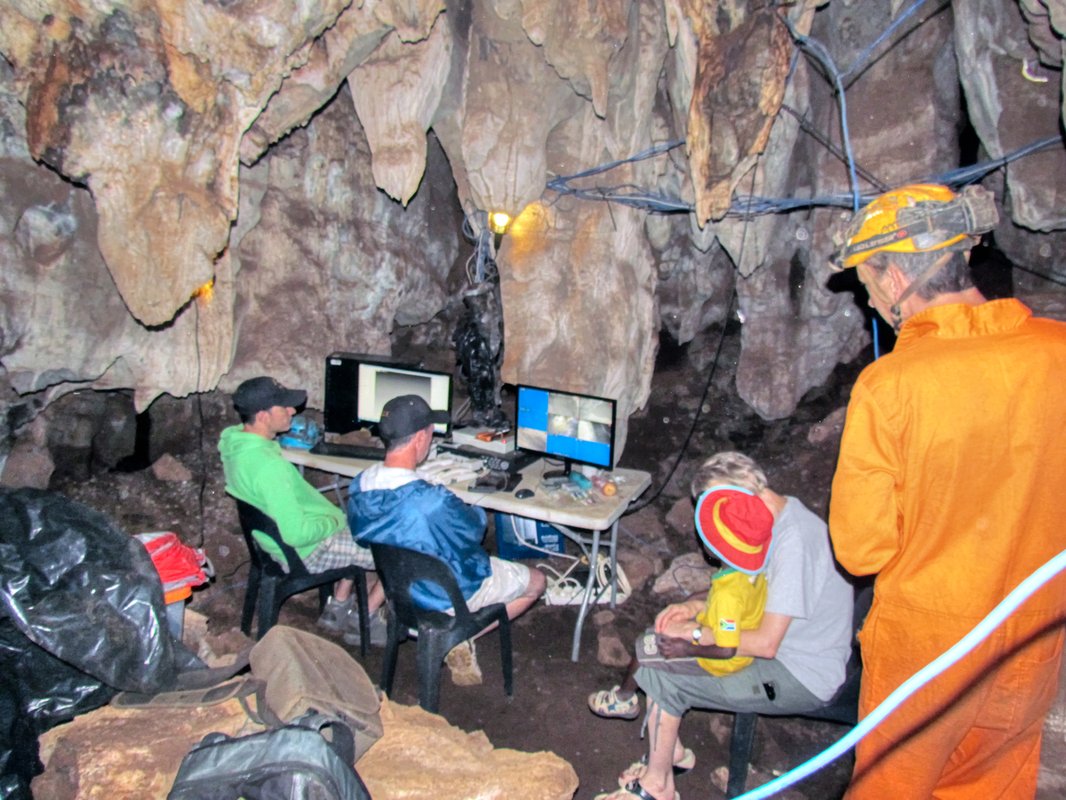
Critical voices
The scientific community has not hidden its scepticism. Louise Le Meillour, a researcher at the National Museum of Natural History in Paris, and Aurélien Mounier of the CNRS and the Museum of Mankind, highlight several limitations. First, the phylogenetic status of Homo naledi remains debated: with a brain of only 465 to 610 cm3 -- barely larger than a chimpanzee's -- it seems rather primitive to have developed such sophisticated funerary behaviours.
Second, the site's taphonomy complicates any interpretation: bodies may have been deposited through natural processes, without funerary intentionality. Finally, the absence of DNADNAThe molecule carrying genetic information, used to reconstruct kinship between species.→ sequencingSequencingReading the order of the bases (A, T, G, C) of a DNA molecule; high-throughput sequencing reads millions of fragments in parallel.→ -- DNA being generally too degraded in South African fossils due to the warm, humid climateClimateThe long-term average atmospheric conditions of a region; its variations (glaciations, aridifications) shaped migrations, agriculture and the collapse of prehistoric societies.→ -- prevents direct genetic validation of the proteomic conclusions. Whether Homo naledi possesses the AMELY gene at all can only be resolved by comparing sequences with those of closely related hominins, or by finding an unambiguously male specimen.
The future of ancient proteomics
Beyond the controversy over Homo naledi, this study illustrates the growing potential of ancient proteomics for exploring periods and regions where DNA does not preserve. Proteins are more stable than DNA in hot and humid environments, and dental enamel is one of the most durable biological materials known. Recent studies have extracted proteins more than one million years old from Homo antecessor in Spain.
If Madupe and Cappellini's conclusions are confirmed -- and if the hypothesis of an absent AMELY gene is ruled out -- they will open a fascinating window onto the behavioural complexity of a species whose small brain has long led us to underestimate its capabilities. The next step: analysing specimens from other chambers within Rising Star to verify whether their sex composition differs.
No comments yet. Be the first.