A vanished world of giants
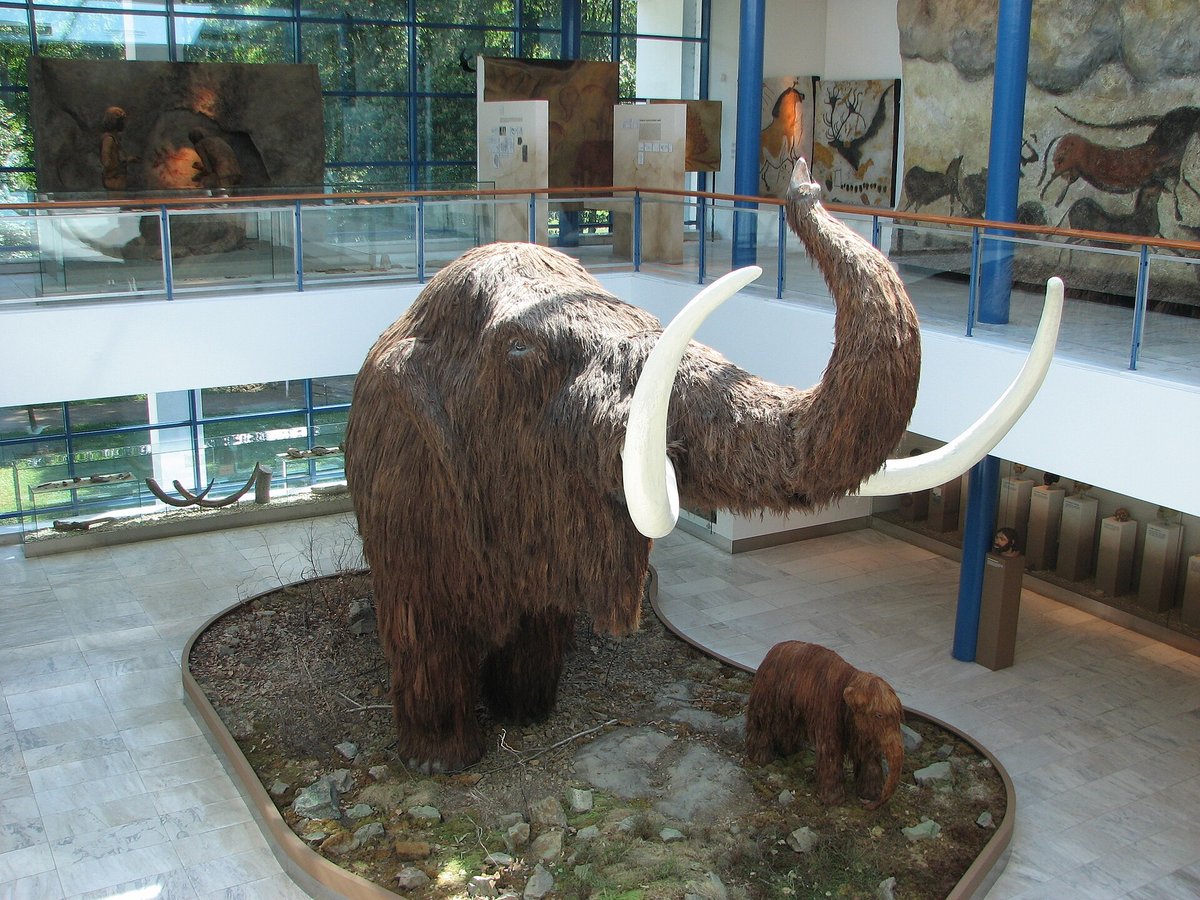
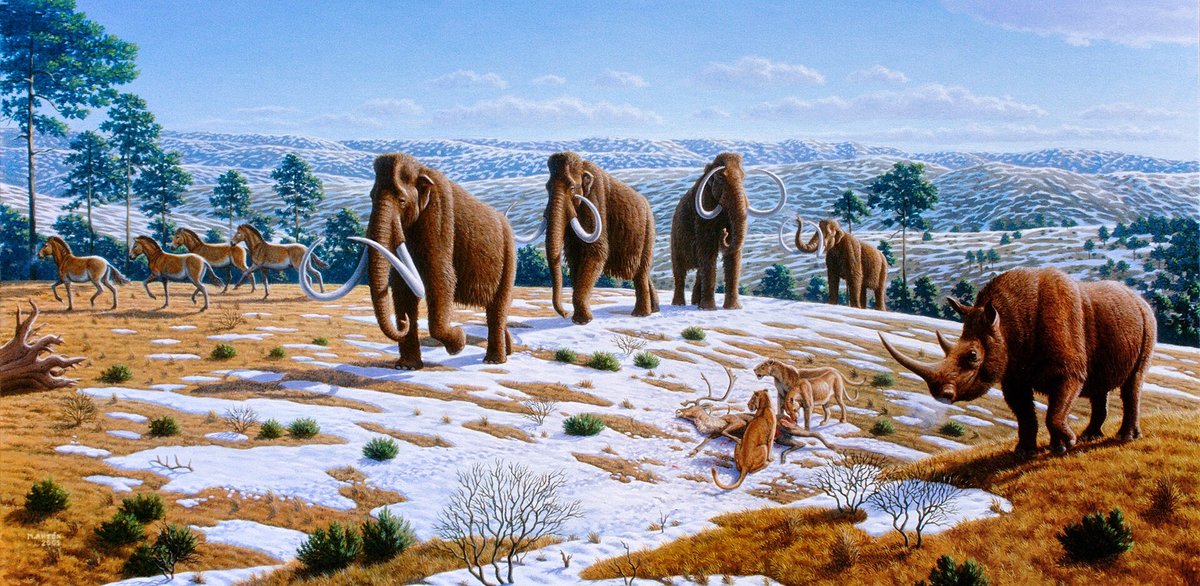
Twenty thousand years ago, the Earth was populated by extraordinary creatures that our prehistoric ancestors saw with their own eyes. The woolly mammoth (Mammuthus primigenius) roamed in vast herds across the tundras of Eurasia and North America. The megatherium, a giant ground sloth the size of an elephant, browsed the foliage of South America. The cave lion, the woolly rhinoceros, the giant elk with its immense antlers, the cave bear: all were representatives of what paleontologists call the PleistocenePleistoceneThe geological epoch of the great ice ages (c. 2.6 Ma–11,700 BP), spanning most of human prehistory.→ megafaunaMegafaunaThe very large animals (mammoths, giant ground sloths, etc.) of the Pleistocene, most of which became extinct at the end of the last ice age.→ - large-bodied animals (generally over 44 kg) that populated the Earth during this geological epoch and disappeared at its end.1
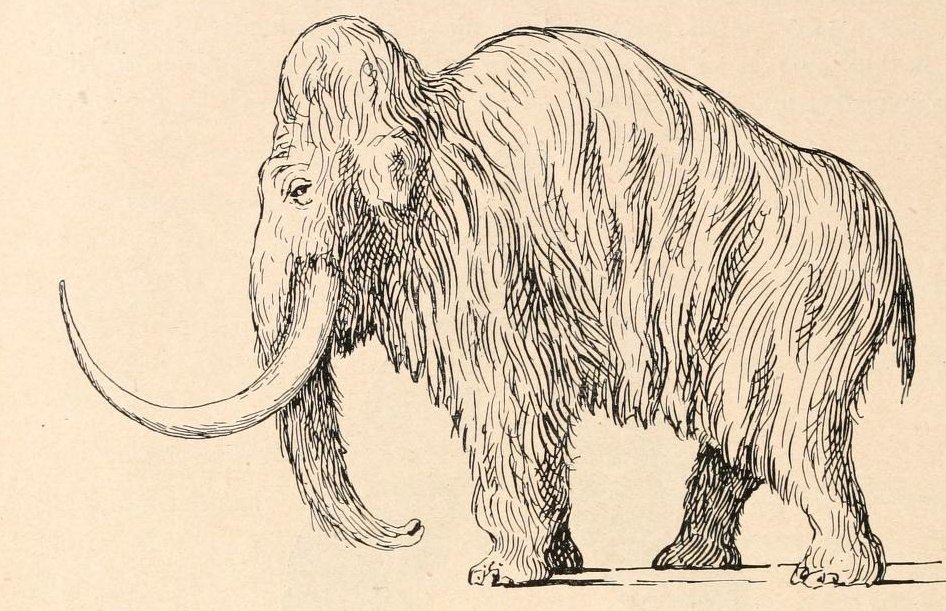
Between the end of the Pleistocene (around 12,000 BCE) and the early centuries of the HoloceneHoloceneThe current geological epoch, begun about 11,700 years ago at the end of the last ice age; the setting of all post-glacial history.→, the vast majority of these giants disappeared. In North America, approximately 70% of large mammal species went extinct within a few millennia. In South America, extinctions were even more massive. In Australia, which had already lost its megafauna earlier, around 46,000 BCE, virtually all animals over 40 kg had already vanished. What happened to these giants? This debate is one of the most heated in contemporary paleontology and archaeology.
The case for climateClimateThe long-term average atmospheric conditions of a region; its variations (glaciations, aridifications) shaped migrations, agriculture and the collapse of prehistoric societies.→ change
The first major hypothesis, supported by many paleontologists, highlights the climatic upheavals of the late Pleistocene. The transition from the Last Glacial MaximumLast Glacial MaximumThe peak of the last glaciation (c. 26,000 to 19,000 years ago), with ice sheets at their greatest extent; it pushed populations towards southern refuges.→ (around 20,000 years ago) to the warmer, more humid conditions of the Holocene was not gradual or uniform. It was marked by rapid oscillations, cold reversals such as the Younger Dryas (around 13,000-11,700 BCE), and profound ecosystem transformations on a planetary scale.2
The great grassy steppes - the "mammoth steppeMammoth steppeA vast cold, dry steppe-tundra ecosystem covering glacial Eurasia, home to mammoths, woolly rhinos, reindeer, horses and bison.→" - that covered vast territories across Eurasia and North America retreated as boreal forests and shrub tundras advanced. These changes profoundly altered the availability of food resources for large herbivores. Species like the mammoth had survived multiple previous glacial cycles. Why should the last transition have been fatal? This is a strong argument for a cause that was not exclusively climatic.
The case for human hunting
The second major hypothesis, championed notably by ecologist Paul Martin in the 1960s, is the "overkill" theory. According to this view, the first humans who arrived on continents or islands with no prior human presence - the Americas, Australia, Madagascar, New Zealand - encountered fauna that had never co-evolved with efficient, weapon-bearing bipedal hunters. These animals had not developed avoidance behaviors toward humans, and were therefore particularly vulnerable prey.
The chronological correlation between human arrival and megafauna extinctions is striking in several regions. In North America, the major extinctions coincide with the arrival of the first human populations bearing the ClovisClovisA Palaeoindian culture of North America (c. 13,000 years ago), recognizable by its fluted stone points; long believed the oldest on the continent, no longer so.→ culture, around 13,000-12,000 BCE. In Australia, extinctions coincide with the arrival of the first humans, around 50,000 years ago. In Madagascar and New Zealand, islands colonized much later by humans, major extinctions of endemic fauna occurred precisely at the moment of human contact. Archaeological sites show unambiguously that the first Americans hunted mammoths and mastodons: characteristic projectile points have been found associated with megafauna bones.3
The combined hypothesis: hunting and climate together
Most current researchers lean toward a combined hypothesis, in which climate change and human hunting pressure mutually reinforced each other. Animal populations already weakened by habitat modification may have been pushed to extinction by a hunting pressure that, even if moderate, could have proven fatal to species with naturally low reproductive rates. An elephant, a rhinoceros or a mammoth produces only one offspring every four to six years: a few dozen hunters regularly killing adult individuals can, within a few generations, eliminate an entire population.
Woolly mammoths provide a textbook case for this combined hypothesis. Ancient DNA analyses extracted from bone remains have shown that Eurasian populations had undergone a significant genetic bottleneckBottleneckA sharp, temporary reduction in a population's size that lastingly impoverishes its genetic diversity.→ well before their final extinction, probably linked to the fragmentation and reduction of their habitat. The last mammoth populations retreated to isolated Arctic islands - notably Wrangel Island in Siberia, where a small population survived until around 4,000 BCE - shielded from human hunting. Their ultimate extinction on these islands coincides with the arrival of the first humans on these remote territories.4
AfricaAfricaThe cradle of humankind: the continent where the first hominins appeared, then Homo sapiens around 300,000 years ago, before the expansion to the rest of the world.→: an exception that proves the rule
One fact remains particularly revealing in this debate: in sub-Saharan AfricaSub-Saharan AfricaThe part of Africa south of the Sahara; cradle of Homo sapiens, long thought hostile to ancient-DNA preservation because of heat.→, megafauna broadly survived. It is the only major world region where animals the size of mammoths (elephants) and rhinoceroses, hippos and giraffes still exist today. The explanation likely lies in the long co-evolution between African large mammals and hominins - spanning several million years. This co-evolution allowed African species to gradually develop adaptive wariness toward human hunters, while the faunas of recently colonized continents had no time to acquire these defensive behaviors.
On the Eurasian mainland, where humans and mammoths coexisted for tens of thousands of years, extinctions were more gradual and later than in the Americas or Australia. This difference in tempo between world regions is one of the strongest arguments in favor of human responsibility as an aggravating factor in the extinctions, even if climate change undeniably played a background role.
Lessons for current biodiversity
The study of Pleistocene extinctions is not a purely academic question. It illuminates, in a troubling way, the mechanisms of ongoing extinctions and raises crucial questions about human responsibility in the destruction of biodiversity. The sixth extinction crisis we are currently experiencing - often compared to the five great mass extinctions in Earth's history - is largely driven by human activities: habitat destruction, climate change, overexploitation of species.
Rewilding projects draw inspiration from Pleistocene ecosystems to reintroduce functionally equivalent species into current landscapes. In Siberia, Sergey Zimov's "Pleistocene Park" reintroduces large herbivores - bison, yaks, wild horses - to recreate grassy steppeSteppeA vast semi-arid, treeless grassland of Eurasia, suited to nomadic herding and the horse; a corridor for the movement of peoples and technologies in later prehistory.→ vegetation and, it is hoped, slow the thawing of Arctic permafrostPermafrostPermanently frozen ground; in the Altai, water seeping into kurgans froze into ice lenses that preserved bodies, textiles and wood for millennia.→ by restoring soil compaction through hooves. Research teams are even working on the partial resurrection of the woolly mammoth genome, inserting mammoth-specific genes into the Asian elephant genome. Understanding how and why the giants of the Pleistocene disappeared is the first step toward avoiding repeating the same errors with the fauna that remains.1
No comments yet. Be the first.