Among the most fascinating and least known figures in the Egypt of the first pharaohs, Merneith -- sometimes spelled Meretneith -- occupies a special place. A high-ranking woman who lived some 5,000 years ago, during the First Dynasty of Egypt, she has long been relegated to the background of history, considered at most a regent or a particularly influential royal consort. A study published in 2026 in the journal Prague Egyptological Studies has overturned this view: by digitally analysing an old black-and-white photograph preserved in a London archive, researchers confirm that Merneith indeed bore the royal serekh title -- making her, in their view, the second ruler of ancient Egypt whose name is attested in this royal emblem.
The First Dynasty: The Origins of the Kingdom
To understand Merneith's importance, one must situate her within the context of First Dynasty Egypt, a period spanning approximately 3100 to 2900 BCE. This was the time when the pharaonic state was forged in its characteristic form: unification of Upper and Lower Egypt under a single sovereign, establishment of a centralised administration, development of hieroglyphic writingWritingA system of conventional signs used to fix language or information durably; its appearance (c. 3300 BC) marks, by convention, the end of prehistory.→, construction of the first great royal tombs. The kings of this period -- Narmer, Aha, Djer, Djet, Den -- are semi-legendary figures whose names have come down to us through lapidary inscriptions and engraved seals.
Merneith is most likely the daughter of Djer, the third ruler of the First Dynasty, and the wife -- or close relative -- of Djet, his successor. On Djet's death, she is thought to have exercised power on behalf of their son Den, then still a child. It is in this form of regency that she is generally presented in traditional Egyptological historiography. But her royal attributes -- and now the clay stoppers analysed by researchers -- suggest a more complex reality and a more substantial authority.
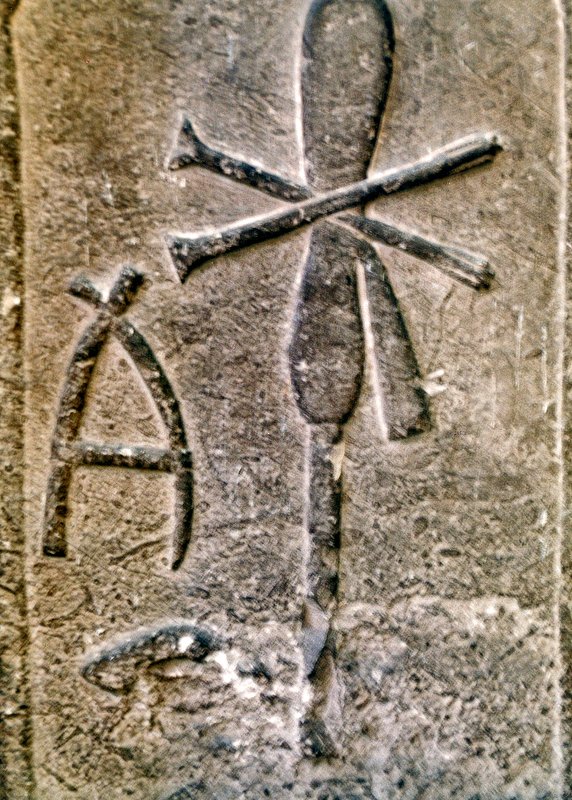
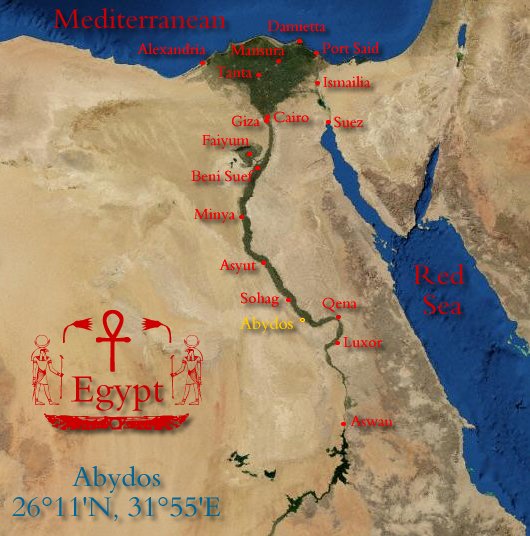
Merneith's tomb, discovered in 1900 by British archaeologist Flinders Petrie in the royal necropolisNecropolisA large organised burial ground, a "city of the dead", often spanning several periods.→ of Umm el-Qa'ab, near Abydos, is itself a powerful argument in favour of her royal status. It is a funerary complex of the first order, comparable in size and richness to those of the kings of the same period. Excavations have yielded wine jars, a solar boat, animal sacrifice remains, and -- a quite remarkable element -- some forty satellite tombs attributed to her servants and courtiers, killed at the time of her funeral according to the royal custom of the period. Merneith is the only woman to have a monumental tomb in this strictly royal necropolis.
The Forgotten Photograph in the Egypt Exploration Society Archives
A black-and-white photograph taken in the 1940s by Egyptologist Walter B. Emery is at the heart of the new study published in Prague Egyptological Studies in 2026. Emery had excavated an unknown tomb at Saqqara -- whose contents are today lost -- and photographed a series of thirteen clay stoppers bearing hieroglyphic inscriptions. These stoppers, used to sealSealA small engraved object (often steatite) used to stamp a mark in clay; the Indus seals, bearing animals and signs, attest to administration and trade, though their script remains undeciphered.→ jars or other containers, bore a row of four serekhs -- those royal emblems in the form of a palace facade surmounted by a Horus falcon, within which the sovereign's name was inscribed.
Emery had interpreted the first and fourth serekhs as bearing the name of Djer, and the other two as references to Merneith. But the poor quality of the photograph had until now prevented a clear verification of this reading, and some Egyptologists had contested this interpretation. The original photograph, held in the archives of the Egypt Exploration Society in London, was known but generally considered too degraded to be exploitable.
In 2026, a team of researchers took this old photograph and subjected it to advanced digital processing: by isolating the hieroglyphs and digitally reworking the image's sharpness, they succeeded in obtaining a much more legible version of the whole. Their conclusion is unambiguous: the second and third serekhs do indeed bear the signs corresponding to Merneith's name, with the same royal emblem reserved for First Dynasty sovereigns.
Queen, Regent, or PharaohPharaohThe title of the ruler of ancient Egypt, regarded as a living god guaranteeing cosmic order (Maat), supreme head of state, army and worship.→ in Her Own Right?
"This means she was indeed a queen (and not merely a wife, but a true equivalent of a male sovereign, hence the term 'king') during the First Dynasty and the second ruler of ancient Egypt whose name was inscribed in the royal serekh emblem," explains Egyptologist Susan Kelly in a commentary published in The Conversation on 15 September 2026. The first ruler whose name is attested in the serekh is Neithhotep, about whom little is known, but whose name -- bearing that of the goddess Neith, as does Merneith's -- suggests a symbolic connection between the two figures.
The clay stoppers are not the only elements converging on this conclusion. Other indicators were already available: ancient inscriptions associate Merneith's name with titles and administrative functions; seals discovered on royal tombs bear her name alongside royal attributes; and her funerary complex at Abydos, royal in every respect in terms of its dimensions and equipment, had never been satisfactorily explained if she were merely a regent without official title.
The question of the duration of her power is also under reassessment. Some researchers now estimate that Merneith may have ruled Egypt for at least thirty years, in various capacities -- perhaps first as co-regent or regent after Djet's death, then as a sovereign in her own right before her son Den was old enough to assume power alone. If this duration is confirmed, Merneith will have governed Egypt longer than many male pharaohs whose names are better known.
This rediscovery of Merneith is part of a broader movement towards re-evaluating the place of women in the history of ancient Egypt. Figures such as Hatshepsut, NefertitiNefertitiThe great royal wife of Akhenaten, a central figure of the Amarna period; her painted bust, held in Berlin, is one of the most famous faces of antiquity.→, and Cleopatra have long monopolised attention, overshadowing other powerful female figures who are less well documented. Merneith, who preceded all of them by at least five centuries, now takes her place in the gallery of female rulers whose authority history is only beginning to fully recognise.
No comments yet. Be the first.