For nearly half a century, the great archaeological sites of northern Iraq remained out of researchers' reach: wars, embargo, and the occupation of the region by the Islamic State organisation. Since 2019, dozens of international teams have returned to the field around Mosul to resume the study of cities built by the Sumerian and Assyrian civilisations. The documentary Mesopotamia: The Rediscovery of Iraq's Treasures, co-produced by Gedeon Programmes and ARTE and directed by Olivier Julien, gives voice to these archaeologists and follows their fieldwork, aided by the latest technologies.1
"Mesopotamia: The Rediscovery of Iraq's Treasures", directed by Olivier Julien (Gedeon Programmes / ARTE, 2024), 1h29. Grand Prize, AGON Festival 2024. In French, English subtitles available via YouTube captions.
Half a century of inaccessible sites
To grasp the scope of this documentary, it helps to remember how much of northern MesopotamiaNear EastA region of western Asia (LevantLevantA region of the eastern Mediterranean Near East (Israel, Lebanon, Syria, Jordan), a major crossroads of the first human migrations out of Africa.→, Mesopotamia, Anatolia, Iran), cradle of the Neolithic revolutionNeolithic revolutionThe shift from hunter-gatherer societies to farming and settled life (c. 10,000 BCE in the Near East), giving rise to villages and then cities.→, agricultureAgricultureThe cultivation of plants and production of food by working the soil, which emerged in the Neolithic in the Near East and independently elsewhere; it radically transformed human societies.→, the first cities and writing.→ remained, for decades, a ghost region for world archaeology. Successive wars, the international sanctions of the 1990s, and then the occupation of large parts of Iraqi territory by the Islamic State organisation between 2014 and 2017, made the great sites around Nineveh, Nimrud and Mosul inaccessible, when they were not directly vandalised. The ancient site of Nimrud, in particular, suffered well-documented deliberate destruction.
Since 2019, a movement of return has begun. Dozens of international multidisciplinary teams, working with Iraqi and Kurdish authorities, have resumed excavation campaigns at sites sometimes abandoned for half a century. It is this archaeological renaissance that the film documents, almost in real time, across several ongoing excavations.
Technology in the service of field archaeology
The documentary dwells at length on the tools now transforming archaeological fieldwork: geomagnetic surveys that detect buried structures without digging a single cubic metre of earth, orthophotography and photogrammetry to render fragile monuments in three dimensions, and satellite imagery to spot, across an entire region, the invisible traces of cities buried beneath modern fields.
These non-invasive methods change the equation in a region where security, funding and available time remain serious constraints, allowing large areas to be mapped quickly and the most promising excavation zones to be prioritised.
Sumerians and Assyrians: two faces of one civilisation
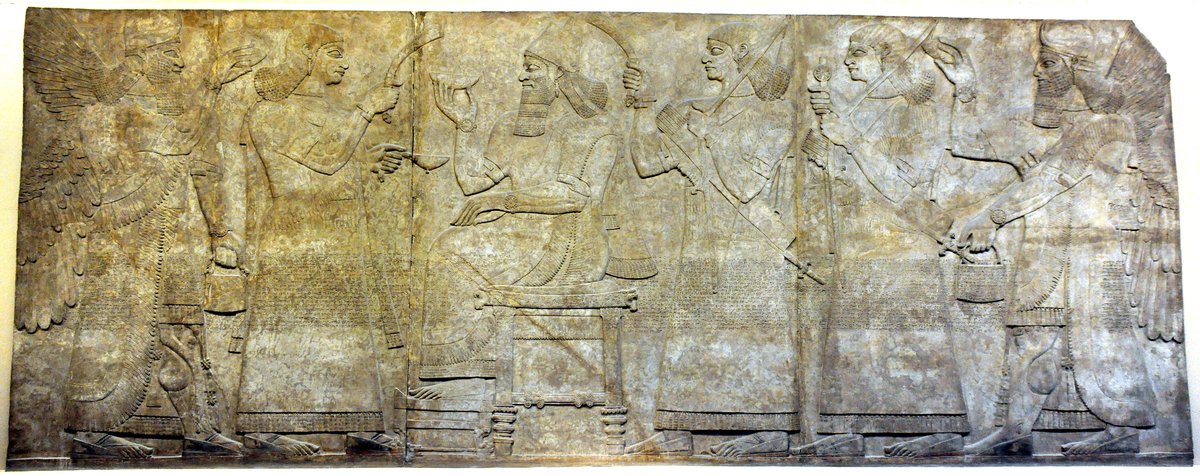
The film traces the history of two emblematic dynasties of ancient Mesopotamia. In the south, Sumerian city-states, Uruk, Ur, Lagash, saw the birth, from the late fourth millennium BCE, of the first monumental temples, the first complex administrations and writingWritingA system of conventional signs used to fix language or information durably; its appearance (c. 3300 BC) marks, by convention, the end of prehistoryPrehistoryThe span of human history before the invention of writing, from the Palaeolithic to the Metal Ages, known mainly through material remains.→.→ itself, in its cuneiformCuneiformThe oldest known writing, born at Uruk; its signs, impressed into clay with a reed stylus, are wedge-shaped (from Latin cuneus).→ form. In the north, the later Assyrian empire built sumptuous capitals, Nimrud, Nineveh, Khorsabad, adorned with stone reliefs depicting kings, gods and scenes of war, several examples of which were recovered during recent campaigns around Mosul.
City-states, writing and urban innovation
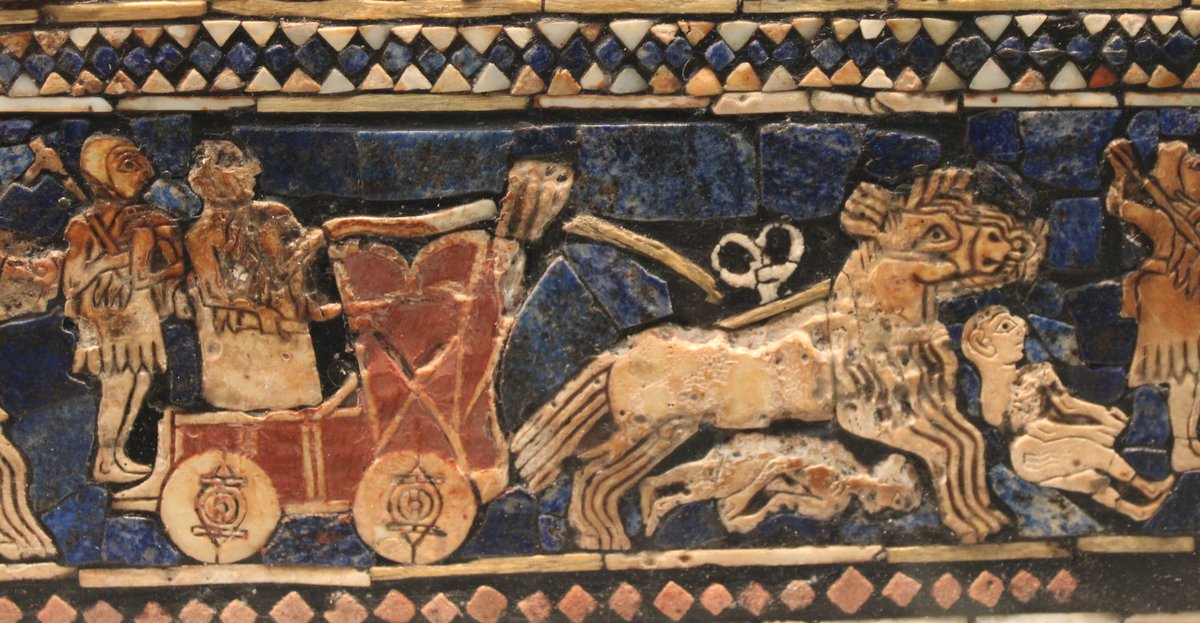
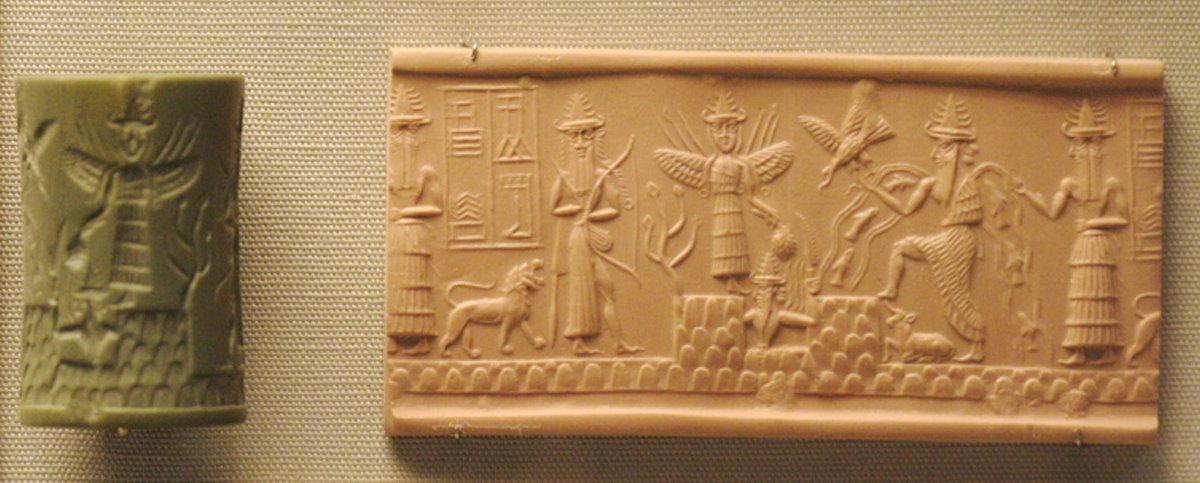
Mesopotamia earns its nickname "cradle of civilisation" first because it saw, between the Tigris and Euphrates, one of the earliest large-scale experiments in urban life: dense, fortified cities with monumental temples, irrigation canals, markets and an administration able to manage stocks, taxes and a large workforce. Cuneiform writing, first devised for temple and palace accounting, would go on to carry founding myths, law codes, diplomatic treaties and some of humanity's oldest literature.
An echo in current events: the siege of Qabra
This rivalry between Mesopotamian cities is far from abstract: it has just received a particularly striking archaeological illustration. At Kurd Qaburstan, in Iraqi Kurdistan, a US-led team has uncovered the remains of a city besieged and destroyed during the Middle Bronze AgeBronze AgeA protohistoric period following the Neolithic, defined by bronze metallurgy (a copper-tin alloy) and the rise of the first cities and states; in Egypt it corresponds to the age of the first pyramids.→, identified as ancient Qabra, conquered by King Shamshi-Adad. We have devoted a detailed article to this discovery, which directly overlaps with the documentary's themes: fortifications, cuneiform administrative archives, and the violence of rivalries between the cities of northern and southern Mesopotamia.
What these rediscovered treasures change about the "cradle of civilisation"
Across the excavations documented in the film, one conclusion emerges: northern Mesopotamia, too often cast in a supporting role behind the Sumerian cities of the south, increasingly appears as a hub of urban complexity in its own right, with its own dynasties, its own architectural innovations and its own historical tragedies. Far from a fixed, already-written story, Mesopotamian archaeology remains very much a living field, where each excavation season, each geophysical surveyGeophysical surveyTechniques (magnetometry, radar) detecting buried structures underground without digging, by measuring physical anomalies.→ and each deciphered tablet can still shift the boundaries of what we thought we knew about humanity's first urban civilisations.
Olivier Julien's documentary quietly makes the case for international scientific cooperation in conflict zones: it is precisely because teams from around the world chose to return, despite the risks and uncertainties, that these rediscovered Mesopotamian treasures can now enrich our understanding of humanity's oldest urban cradle.
J'ai recommandé ce site à trois collègues. On en parle maintenant pendant les pauses.