It is widely assumed that economic growth goes hand in hand with rising inequality: as cities expand, wealth concentrates, and the gap between rich and poor widens. A study published in May 2026 in the journal Antiquity challenges this assumption with a 4,000-year-old counter-example. Mohenjo-daroMohenjo-daroOne of the largest cities of the Indus Civilization (Sindh, Pakistan), famed for its Great Bath and grid layout; a World Heritage site.→, the largest city of the Indus CivilisationIndus CivilisationA major Bronze Age urban civilisation (c. 2600-1900 BC) across present-day Pakistan and north-west India: planned cities (Harappa, Mohenjo-daro), standardised bricks, undeciphered script, no monumental palaces.→, did the opposite: the more it grew and prospered, the closer its inhabitants came in terms of wealth.
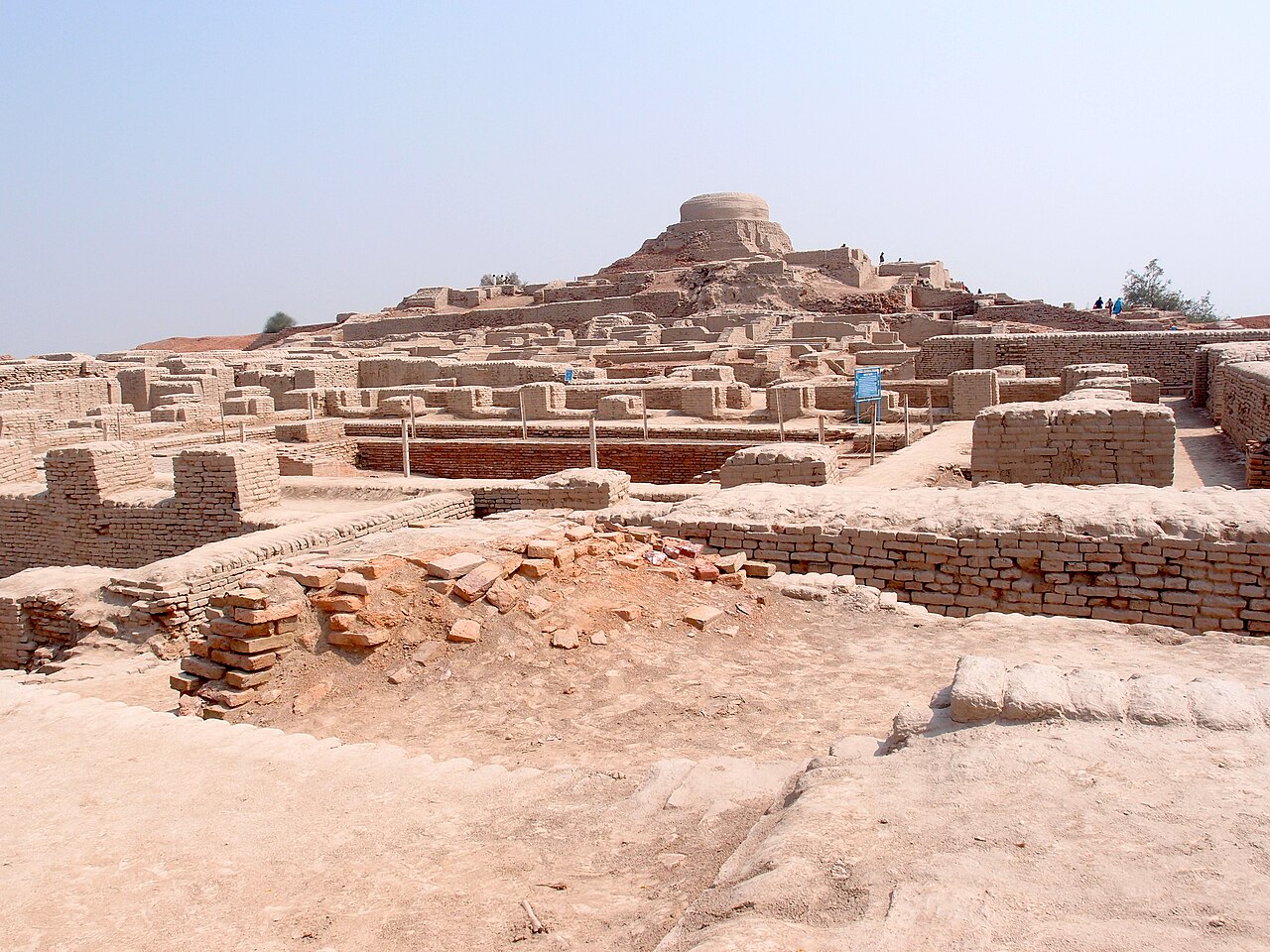
Dr Adam Green, a researcher at the University of York's Department of Archaeology and Department of Environment and Geography, used data from old excavations to measure economic inequality at Mohenjo-daro over time. The tool he applied is the Gini coefficient , the statistical measure economists use today to track income gaps within a population. Applied to house sizes, it reveals how wealth was distributed among the city's inhabitants.
The result is unambiguous: not only was Mohenjo-daro more equal than its contemporaries in Mesopotamia and Bronze AgeBronze AgeA protohistoric period following the Neolithic, defined by bronze metallurgy (a copper-tin alloy) and the rise of the first cities and states; in Egypt it corresponds to the age of the first pyramids.→ Greece, but its inequality declined over time. At its peak, the gap between the largest and smallest homes had fallen to levels comparable to those of early farming villages , even as the city likely housed tens of thousands of people.
A city without kings or palaces
This statistical finding echoes a well-known peculiarity of Mohenjo-daro, noticed as far back as its first excavations in the 1920s: the city is strikingly absent of signs of personal power. No royal palace, no gold-filled tombs, no colossal statues of rulers. While Egypt built pyramids for god-kings and Bronze Age Greeks raised imposing palaces at Knossos for their elites, the people of the Indus invested in something entirely different.
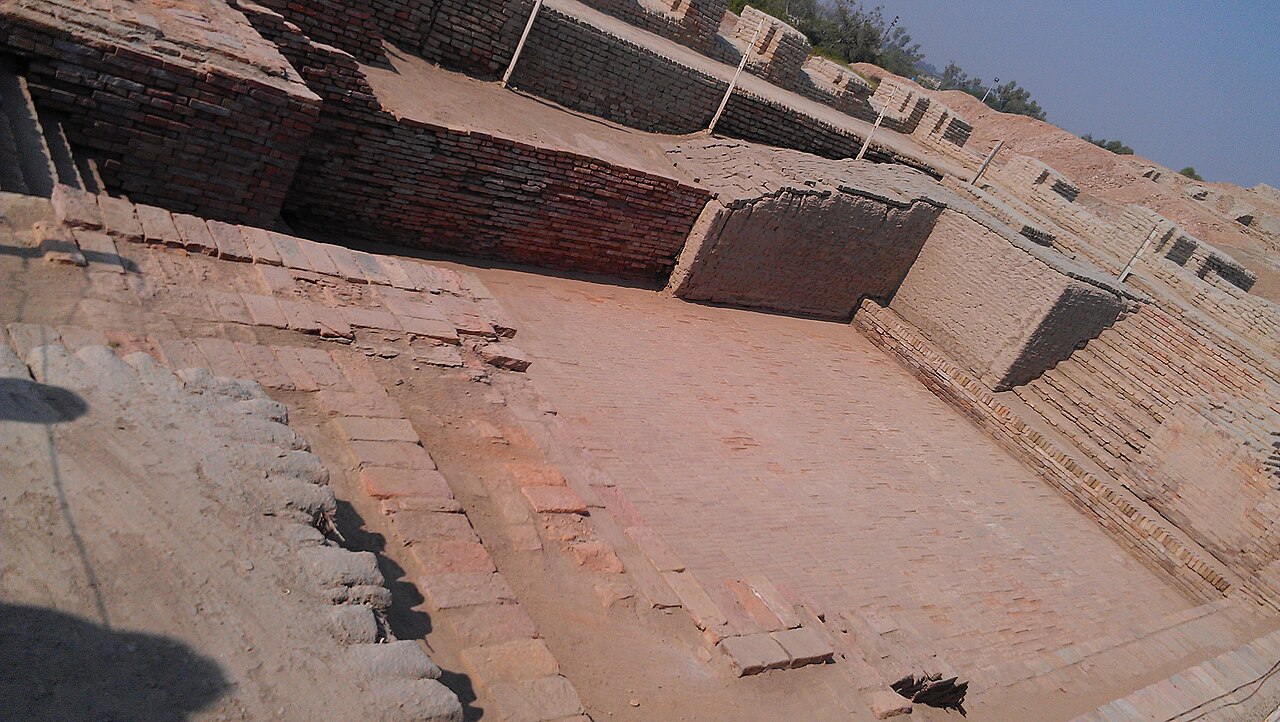
It is collective infrastructure that dominates the urban landscape of Mohenjo-daro: ruler-straight streets laid out on a grid plan, a network of brick-lined drains serving every neighbourhood , including ordinary homes , , and the famous Great Bath, a sophisticated masonry pool that testifies to large-scale public investment. A standardised system of weights and measures used across the entire region also ensured fair trading conditions for all citizens.
Another clue to this collective organisation: the Indus seals , small engraved steatite objects used as administrative and commercial tools , were found in ordinary homes across the city rather than concentrated in public buildings or palaces. No ruler appears to have monopolised the tools of economic power.
Productivity and equality: a challenge to economic orthodoxy
The data reveal a counter-intuitive correlation: it was precisely during the period of lowest inequality that Mohenjo-daro's productivity appears to have been highest. The city was expanding, its streets extending, its infrastructure improving , and simultaneously, the gap between rich and poor was narrowing. Green draws a direct conclusion: "Mohenjo-daro's prosperity did not require concentrating power in the hands of the few. On the contrary, sharing it appears to have been essential to sustaining it over time."
This result directly challenges a fundamental postulate of modern economics , that growth inevitably produces rising inequality (the so-called Kuznets curve). Mohenjo-daro proves that a society can be technologically advanced and highly productive and ensure that its prosperity benefits the many.
Governance as the keystone
How did a city of this size manage to maintain such economic cohesion? Researchers have no definitive answer , the Indus Civilisation remains one of antiquity's most mysterious, as its script has never been deciphered. But the archaeological evidence converges on a model of collective rather than authoritarian governance. The consistent investment in infrastructure useful to all , drainage, street maintenance, measurement systems , rather than in monuments glorifying a ruler suggests some form of shared decision-making, even if its precise workings remain unknown.
Green summarises the lesson of Mohenjo-daro for modern societies: "The Indus Civilisation demonstrates clearly that an urban society can be highly productive and inventive at scale, whilst also ensuring that resources and power are shared equitably. In fact, doing so may even have been essential to sustaining prosperity over the centuries."
C'est beau de voir que des gens comme moi peuvent comprendre ces sujets grâce à vous.
Je l'ai projeté en cours et les élèves ont posé beaucoup de questions. Très bon support.
Comparée à l'Egypte ancienne que je connais mieux, la civilisation de l'Indus me surprend par l'absence apparente de tombes royales et de monuments dédiés à des souverains. Cette absence de pharaon ou de roi visible dans l'archéologie est intrigante. Avaient-ils un autre mode de gouvernance, plus collectif ou théocratique ? C'est l'une des grandes énigmes de l'archéologie orientale.
La civilisation de l'Indus est l'une des grandes oubliées des documentaires sur l'Antiquité, éclipsée par l'Egypte et la Mésopotamie. Pourtant Mohenjo-Daro est une ville planifiée d'une sophistication remarquable : réseau d'égouts, bains publics, standardisation des briques. Les indices d'une relative égalité sociale qu'on y perçoit sont fascinants dans le contexte de civilisations contemporaines fortement hiérarchisées.