Some tiny finds carry enormous weight. In the summer of 2024, at the La Roche à Pierrot site in Saint-Césaire, a team of archaeologists unearthed an object barely a centimetre long: a fossilised milk tooth, shed from the mouth of a NeanderthalNeanderthalsA fossil humanity of Eurasia, robust and cold-adapted, extinct around 40,000 years before present.→ child aged six to eight, around 55,000 years ago. Fewer than ten Neanderthal children's teeth of this kind are known across the whole of Europe. Behind this apparent modesty lies one of the most fertile fields in contemporary palaeoanthropologyPalaeoanthropologyThe science that studies human evolution from the fossil remains of hominins (bones, teeth, footprints) and their context, to reconstruct our biological origins.→: the reading of teeth, and of deciduous teethmilk toothA deciduous, temporary tooth that forms in childhood before being replaced by a permanent one; its enamel records the very first years of life.→ in particular, which in a few decades has become a genuine science of prehistoric childhood.1
Pierrette, the riddle of La Roche à Pierrot
Saint-Césaire is no ordinary site. In 1979, excavations at La Roche à Pierrot, a collapsed rock shelterRock shelterA shallow cavity at the foot of a cliff or under a rocky overhang, offering natural shelter; a favoured site of prehistoric habitation and rock art.→, yielded a relatively complete Neanderthal skeleton, promptly nicknamed "Pierrette" after the place. The individual, a young adult whose sex could never be established because the pelvic bones were not preserved, lay in a layer then attributed to the ChâtelperronianChâtelperronianA transitional material culture (c. 45,000-40,000 years ago) straddling the Middle and Upper PalaeolithicUpper PalaeolithicThe final phase of the Palaeolithic (c. 45,000 to 10,000 years ago), marked by Homo sapiens in Europe, art, ornaments and a succession of cultures (Aurignacian, Gravettian, Solutrean, Magdalenian).→ in France and northern Spain; curved-backed knives and, at the Grotte du Renne at Arcy, ornaments and bone tools attributed to Neanderthals.→, the transitional industry of blades, bone tools and ornaments that marks the very last days of Neanderthals in western Europe. The layer was dated to around 36,300 years. Pierrette also bears a bony scar on the skull, read by some researchers as the trace of a blow from a sharp implement, a possible testimony to violence between individuals.3
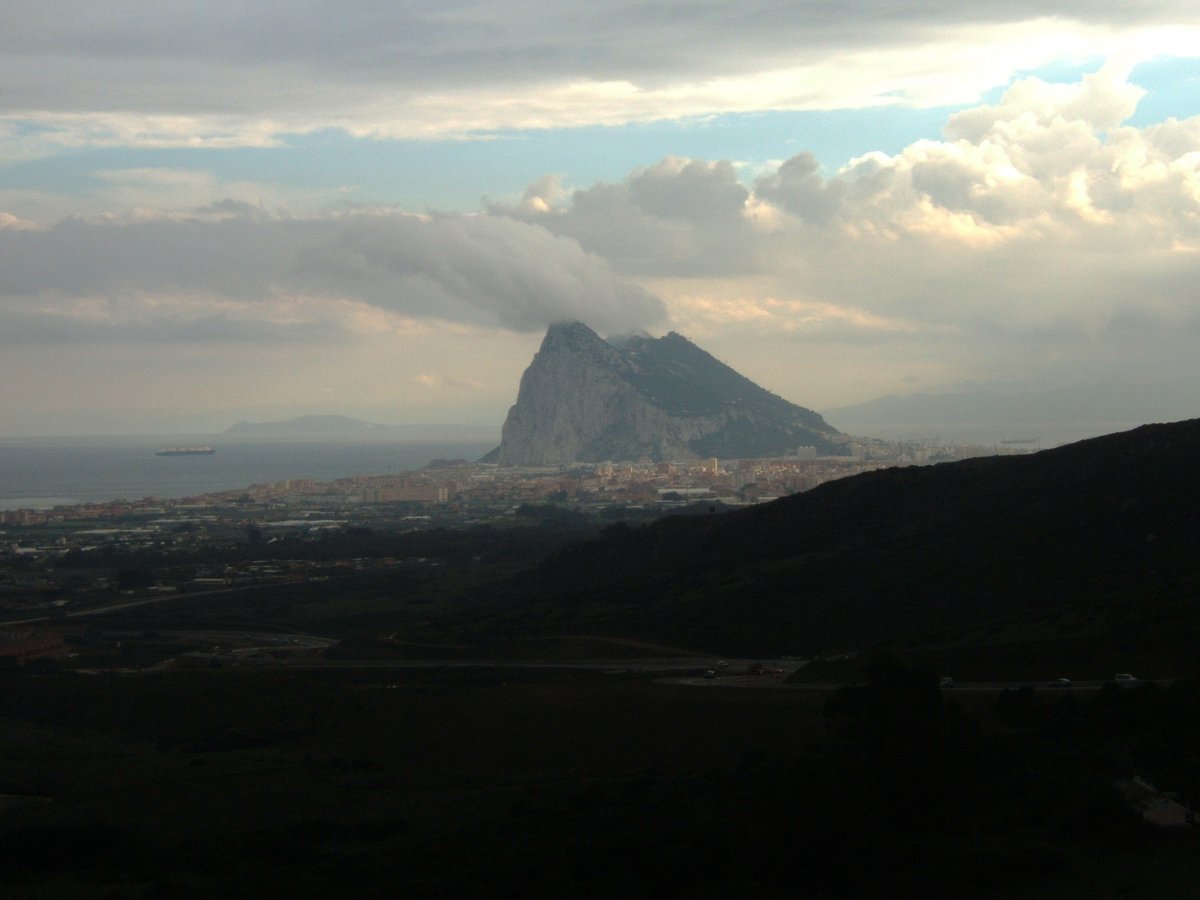
Pierrette's discovery caused a sensation, because it seemed to prove that Neanderthals, not modern humans, were the makers of the Châtelperronian. That certainty has since been shaken. In 2018, a reassessment published in Scientific Reports by Brad Gravina and colleagues concluded that there was no reliable evidence of an association between the skeleton and the Châtelperronian tools at the site, suspecting a mixing of layers. The debate remains open, but one thing is beyond doubt: Neanderthal groups did indeed occupy Saint-Césaire for thousands of years, from the beginning of their settlement around 60,000 years ago to Pierrette's time, around 40,000 years ago.2
A milk tooth shed 55,000 years ago
Excavations resumed at La Roche à Pierrot in 2013, directed by Isabelle Crevecoeur, a research director at the CNRS. The team is exploring a layer older than Pierrette's, dated to 50,000 to 60,000 years and interpreted as a butchery zone: here Neanderthals brought the carcasses of bison, reindeer and horse to be processed, leaving behind a jumble of bones and flintFlintA hard, brittle siliceous rock, knapped by prehistoric people to produce blades, points and sharp tools.→ flakes. It was in this activity floor, where nothing hinted at the presence of human remains, that the child's milk tooth emerged. "This is an exceptional discovery," stressed Isabelle Crevecoeur, underlining how rare such remains are.1
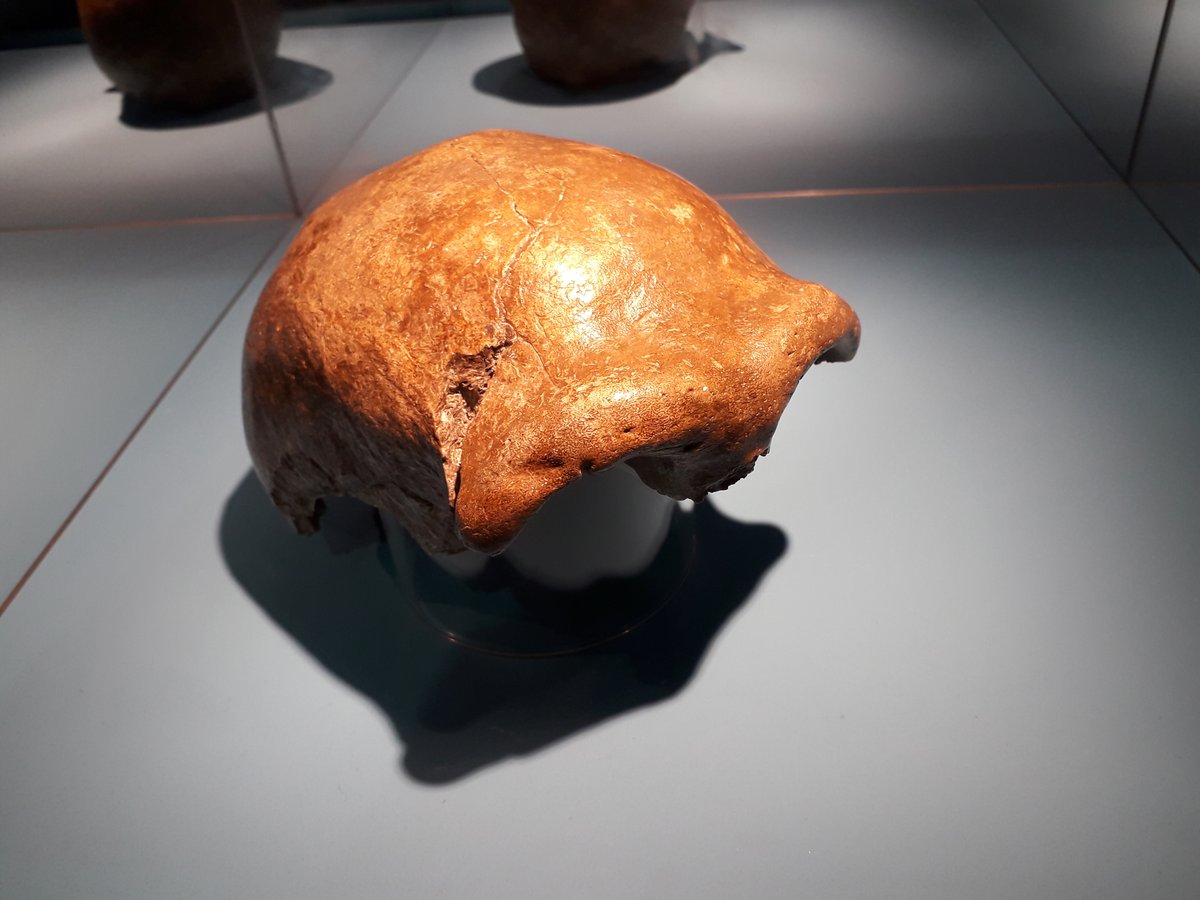
The tooth was not torn out by death: it fell during the child's lifetime, as all milk teeth do, replaced by a permanent tooth. Its condition already offers clues. The wear on the crown is pronounced, a sign that even as children Neanderthals made heavy use of their teeth, perhaps to soften hides or to hold objects, like a third hand, a behaviour seen in other hunter-gatherersHunter-gatherersA way of life based on hunting, fishing and gathering wild resources, without farming or herding; it dominated almost the whole of human history.→. The analyses to come will follow the now-standard protocol: micro-tomography to explore the internal structure and growth, then, depending on the results, isotopic analyses of diet. For a tooth, however small, is a dense archive.1
Enamel, a private diary day by day
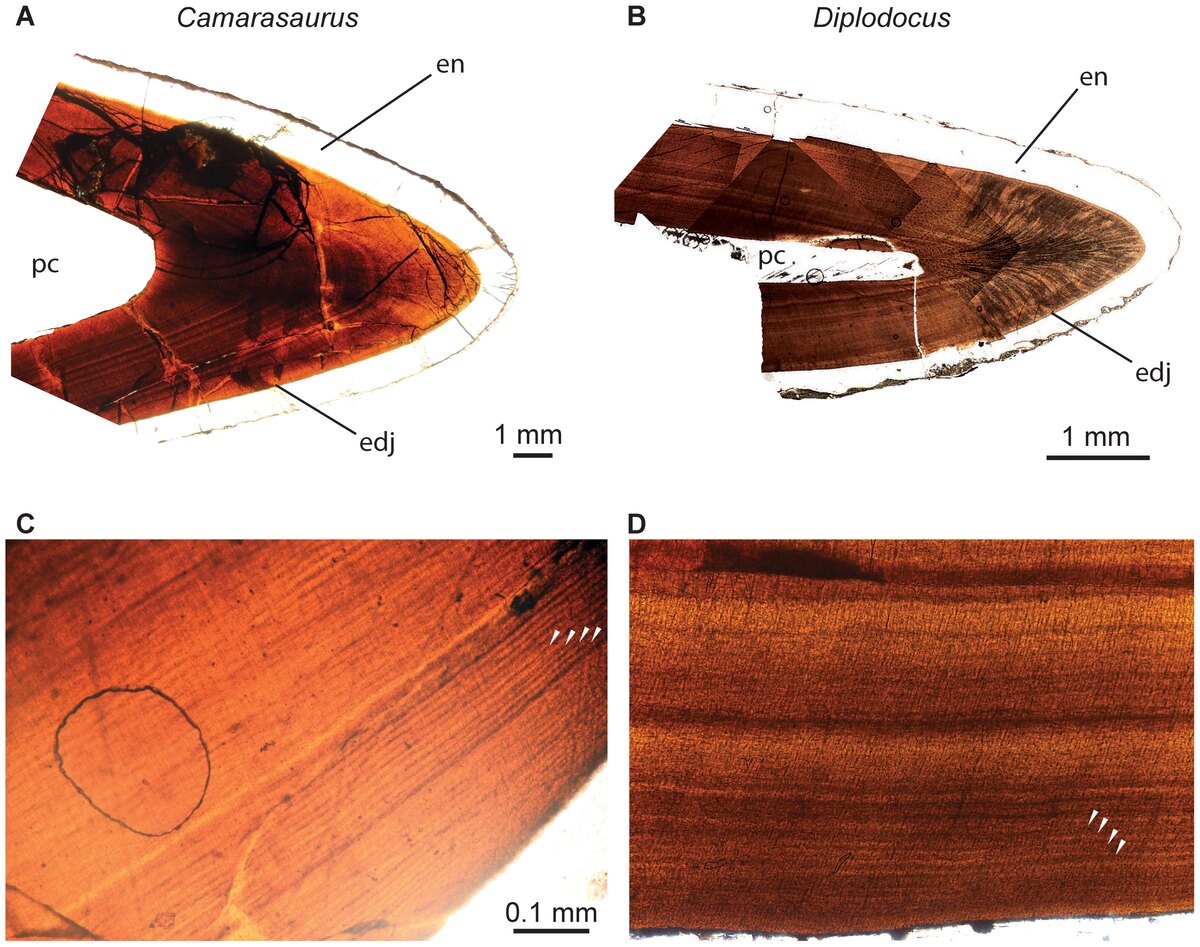
To understand why researchers are so passionate about these fragments, one must look closely at how a tooth is built. Tooth enameltooth enamelThe hardest tissue in the body, laid down in rhythmic layers during tooth formation that preserve a precise memory of time.→, the hardest tissue in the body, is laid down rhythmically, in successive layers, rather as a tree forms its rings. This deposition is not continuous but paced: each day, the producing cells leave a fine stria, and roughly every six to twelve days a more marked line. These lines surface on the crown as minuscule ridges, the perikymataperikymataFine ridges visible on the surface of enamel, corresponding to growth lines; counting them allows the duration of a tooth's formation to be estimated.→, which can be counted under a microscope.6
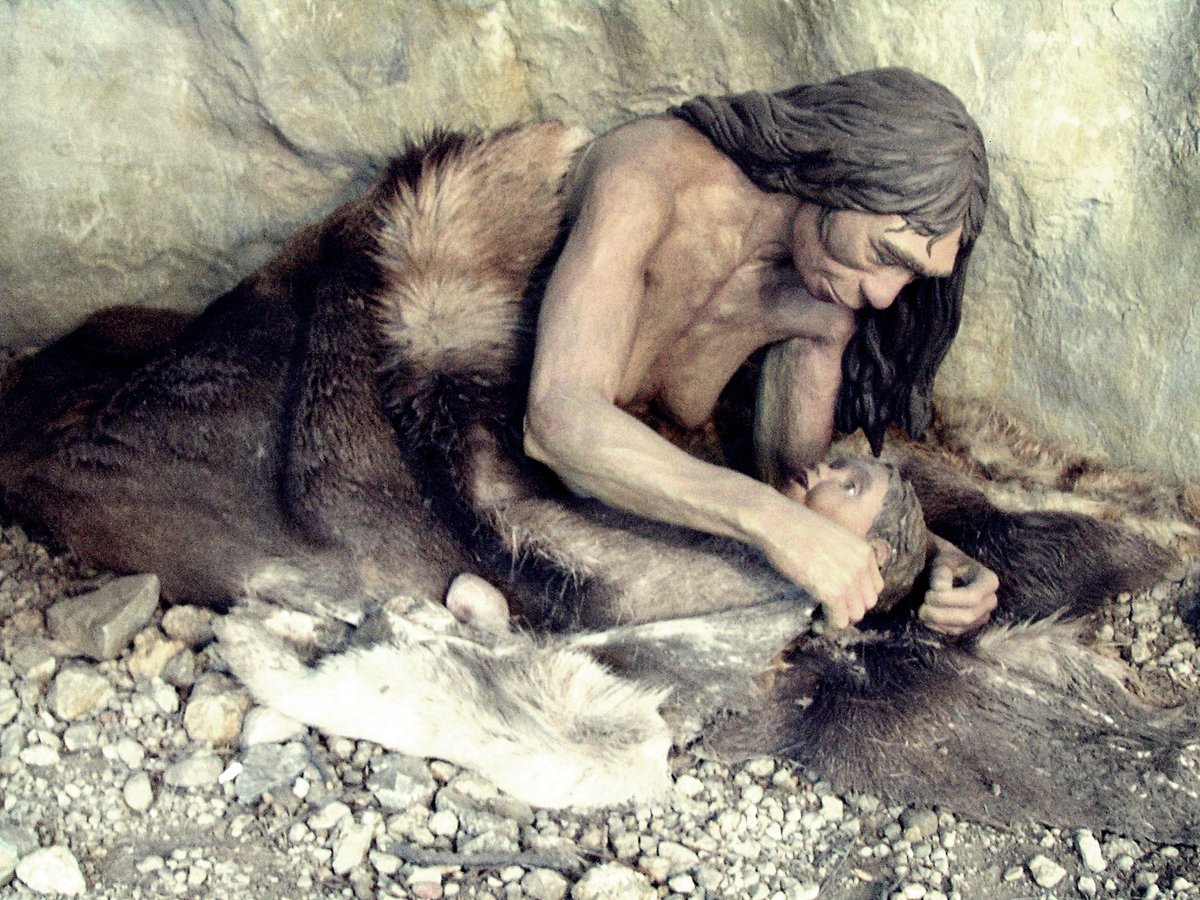
By multiplying the number of perikymata by the interval of days separating two lines, one can reconstruct with precision how long a crown took to form. Better still, enamel keeps the trace of specific events. A particularly sharp line, called the neonatal line, marks the physiological shock of birth and separates the enamel formed before and after delivery. Other growth accidents, known as accentuated Retzius lines or stress lines, record episodes of illness, fever or deprivation. To read a tooth is therefore to unroll a biological calendar: one can say at what age, and sometimes in what season, the child was born, fell ill or changed its diet. No other tissue in the body preserves such a memory of time.6
This reading is not confined to the enamel. Dentine, the softer tissue that forms the core of the tooth beneath the enamel, is also laid down in daily layers and keeps growing within the root long after the crown has stopped forming. By combining the enamel of the crown with the dentine of the root, researchers can stretch the calendar across several years of the child's life, sometimes well beyond the age at which the milk tooth is shed. Micro-tomography, which rebuilds the tooth in three dimensions without destroying it, now makes it possible to count these layers on fossils too precious to be sectioned. This is precisely the kind of examination that the little Saint-Césaire tooth is set to undergo, in order to yield the child's exact age and the detail of its growth.6
Barium, strontium and lead: breastfeeding under the lens
The recent revolution has come from chemistry. By scanning a tooth with a laser, layer by layer, one can measure the concentration of certain elements incorporated into the enamel at the moment of its formation. Barium, in particular, has proved a remarkable tracer of breastfeeding. Mother's milk is rich in barium, which is deposited in the child's enamel for as long as it nurses; as soon as other foods are introduced, and then at full weaning, the signal plunges. These isotopicisotopic analysesMeasurement of the ratios between variants of the same element (oxygen, strontium, barium) in enamel, which inform on diet, climateClimateThe long-term average atmospheric conditions of a region; its variations (glaciations, aridifications) shaped migrations, agriculture and the collapse of prehistoric societies.→ and mobility.→ and elemental ratios turn the tooth into a recorder of the diet of the earliest years.4
In 2013, a team led by Christine Austin and Tanya Smith published a founding study in Nature. Having calibrated the method on teeth from children and macaques of known diet, the researchers applied it to a Neanderthal molar from the Scladina site in Belgium, around 100,000 years old. The verdict was astonishingly precise: about seven months of exclusive breastfeeding, followed by seven months of milk supplemented with other foods, then an abrupt fall in barium signalling a clean weaningweaningThe gradual or abrupt end of breastfeeding, detectable in enamel through the fall in barium deposited by mother's milk.→ at around 1.2 years. For the first time, the end of breastfeeding in a human dead for a thousand centuries could be dated to within a few weeks.4
Five years later, in 2018, Tanya Smith and colleagues went a step further in Science Advances. Analysing two Neanderthal teeth from the Payre site in the Ardèche, around 250,000 years old, they not only recovered the signature of breastfeeding but also read the seasons. One of the children nursed until about 2.5 years, with weaning occurring in the autumn. Oxygen isotopes, which vary with temperature, showed that these children, born in spring, had lived through winters markedly harsher than those experienced by modern humans from the same region a few millennia later. A further surprise: the enamel held spikes of lead, concentrated during the cold seasons, the oldest documented case of lead exposure in any homininHomininMember of the subtribe Hominina, comprising the human lineage (Homo, Australopithecus, Paranthropus…) but excluding orangutans and gibbons. The term progressively replaces "hominid" in its narrow sense.→, perhaps linked to the use of caves near natural sources of the metal.5
One must be careful not to generalise from a handful of teeth. The two Payre molars came from different individuals, and one of them had formed after weaning, silent on breastfeeding. Between the very early weaning at Scladina, around 1.2 years, and the later weaning of a Payre child, around 2.5 years, the gap is a reminder that Neanderthal practices were probably as variable as our own. But the method itself has changed everything: we no longer reason from statistical averages, we read the chemical biography of a precise individual.
A shorter childhood than ours?
Beyond milk, teeth raise a dizzying question: did Neanderthal children grow at the same pace as we do? Modern humans stand out from all other primates by the extraordinary length of their childhood, a slow development that gives the brain time to mature and the individual time to learn. As early as 2007, Tanya Smith and colleagues, studying the young Scladina Neanderthal in PNAS, found that its teeth had formed faster than those of a modern child. The individual, dead at around eight years, showed a dental development matching that of an older child today.6
Three years later, a broader study of eleven Neanderthal and archaicArchaicRefers to an ancient, now-extinct human population or form (Neanderthals, Denisovans, ghost lineages), as opposed to anatomically modern humans.→ human fossils extended the idea: our very long childhood may be a recent acquisition, specific to Homo sapiensHomo sapiensThe present-day human species, which emerged in Africa around 300,000 years ago, the only surviving human lineage after the extinction of Neanderthals and Denisovans.→, with the other human lineages reaching maturity more quickly. Neanderthals would thus have experienced slightly accelerated growth, with dental maturity reached earlier. The 2021 work based on three-dimensional profilometry of enamel pointed the same way, describing more widely spaced perikymata, consistent with faster formation of the front teeth.7
The case is far from closed, however. Other researchers, such as Debbie Guatelli-Steinberg, have counted the perikymata of Neanderthal front teeth and concluded that their formation times fell within the range of variation of present-day human populations, with no clear acceleration. The truth probably lies in the nuance: a slightly faster Neanderthal development, but not radically different from ours, and above all highly variable from one individual and one tooth to another. What remains solid is that teeth offer the only reliable way to measure the growth rate of a child who died tens of thousands of years ago.8
What milk teeth say about a people
Why so much effort over a few millimetres of enamel? Because the length of childhood, the age at weaning and the pace of growth lie at the heart of what biologists call the life history of a species: the way it is born, grows, reproduces and ages. Early weaning can shorten the interval between births and support a fragile demography; a long childhood, by contrast, implies heavy parental investment and prolonged transmission of knowledge. In reading these parameters from enamel, we touch the very strategy of a vanished humanity.
Teeth also tellTellAn artificial mound formed by the accumulation of successive layers of settlement remains at the same spot, typical of the Near East. Each destruction-rebuilding event adds a stratum.→ of mobility and climate. Strontium isotopes, which reflect the geology of the soils where one feeds, make it possible to detect whether an individual changed territory during growth; oxygen isotopes, coupled with seasonal stress lines, map the calendar of hard winters and times of scarcity. The Payre tooth, with its wintertime lead spikes and its harsh winters, thus sketches the portrait of children facing a demanding glacial environment, season after season.
This is the whole promise of the little Saint-Césaire tooth. Micro-scanned, then perhaps subjected to chemical analysis, it might one day reveal at what age its owner was weaned, in what environment it grew up, whether it was related to other known Neanderthal groups. Pierrette's skeleton had given Saint-Césaire the face of one of the last Neanderthals; this child's tooth adds to it, thousands of years earlier, the murmur of a childhood. Between the two, a whole humanity comes into view, one that was born in spring, nursed by the fire, faced the winter and bit into its hides as into life itself, and whose patient teeth kept it all in memory.1
J'utilise vos articles régulièrement comme introduction à une nouvelle période. Continuez !
J'ai croisé ces données avec la chrono-carte. La cohérence chronologique et géographique est remarquable.