For years, one hypothesis dominated discussions of Neanderthal extinction: their populations, too isolated, too small, eventually collapsed under the weight of inbreeding. In a species condemned to reproduce in a closed circle, deleterious mutations accumulate, consanguinity rises, vitality declines. NeanderthalsNeanderthalsA fossil humanity of Eurasia, robust and cold-adapted, extinct around 40,000 years before present.→ would thus have vanished, less because of Sapiens than because of themselves. A new study published in Nature on 26 June 20261 shatters that narrative: the last Neanderthals of north-western Europe were genetically healthy.
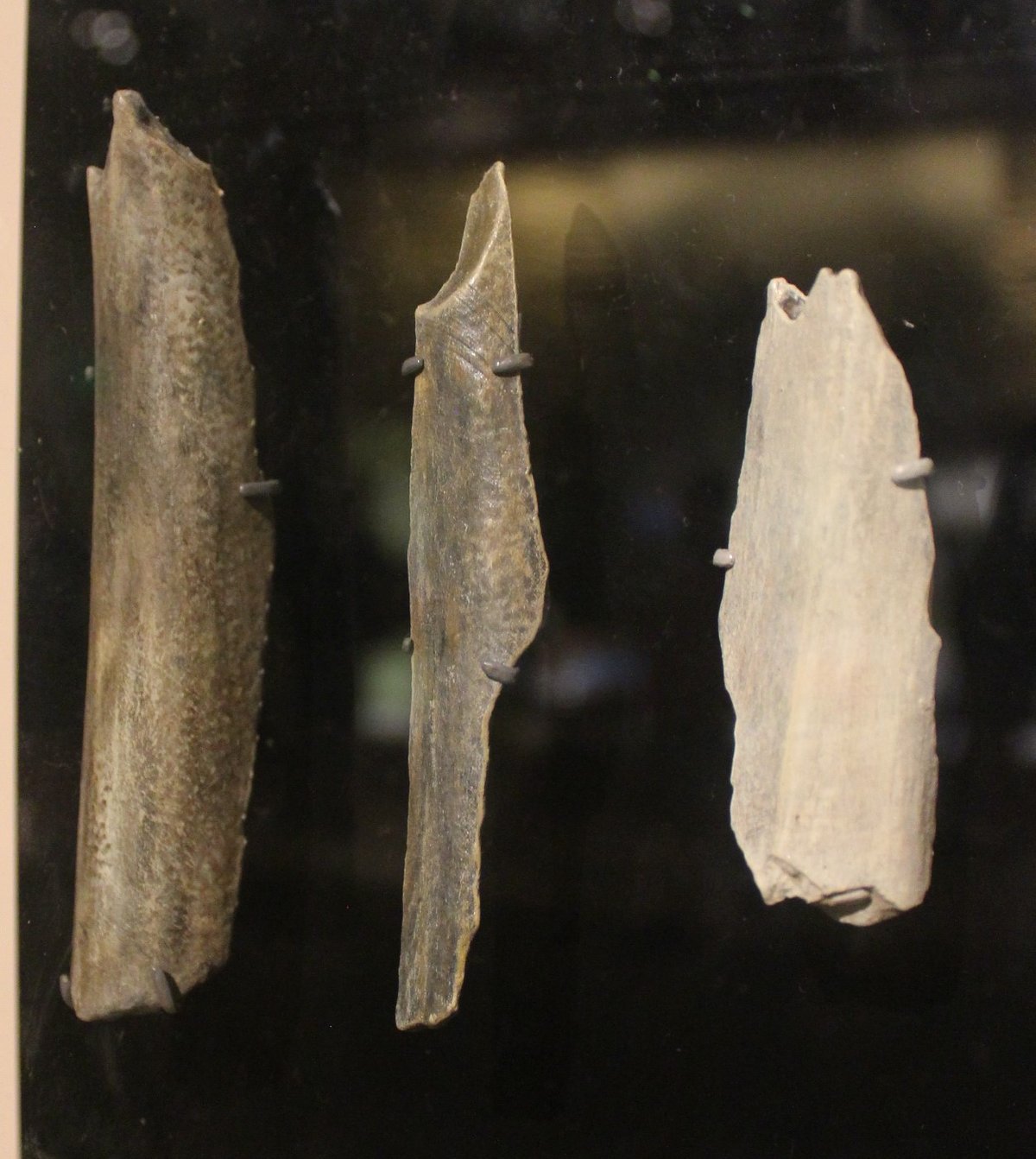
The international team, led by Carles Lalueza-Fox of CSIC Barcelona, sequenced the genomes of 27 Neanderthal individuals from ten archaeological sites in Belgium and France, dated to approximately 47,000 years ago — just before the first waves of Homo sapiensHomo sapiensThe present-day human species, which emerged in Africa around 300,000 years ago, the only surviving human lineage after the extinction of Neanderthals and Denisovans.→ reached Western Europe2. This is the largest collection of Neanderthal genomes ever analysed for such a targeted region and period, and the results directly contradict the degeneration scenario.
No inbreeding, no genetic impoverishment
The genomes of the 27 individuals reveal genetic diversity fully comparable to that of healthy human populations. Consanguinity rates remain low, well below the thresholds associated with inbreeding depression. The researchers also find no greater accumulation of deleterious mutations than would be expected in a population of similar size that has remained stable. In other words, these last Neanderthals of north-western Europe were not collapsing from within.
This result forces a rethink of the long-held image of Neanderthals as a species in structural decline, exhausted by millennia of isolation. The data point instead to genetic exchanges between distinct groups: individuals from geographically distant sites share genomic signatures suggesting regular contact. On the eve of their disappearance, Neanderthals were maintaining a network of gene flow sufficient to preserve the diversity of their species.
The enigma of genetic asymmetry
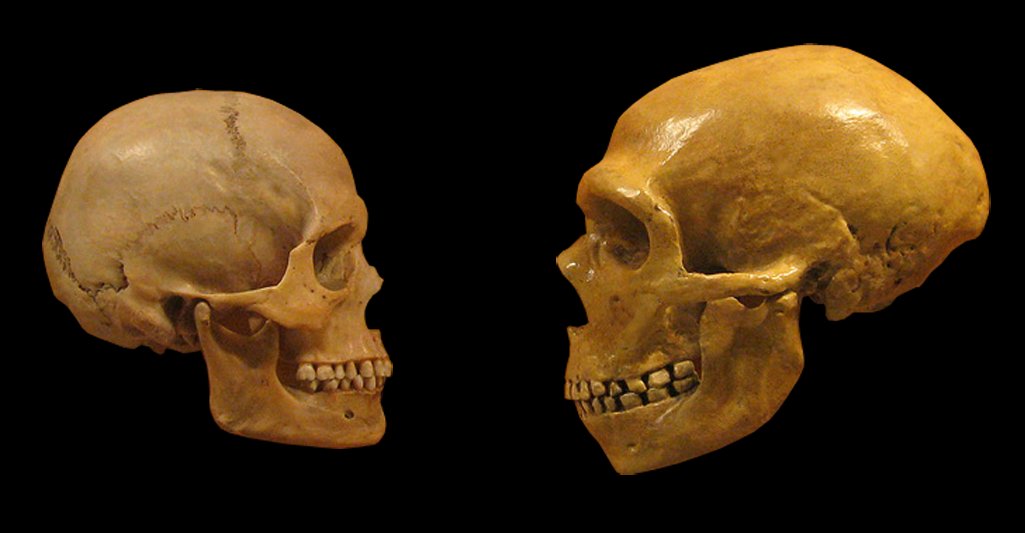
The study also confirms and refines a paradox that genetics had already hinted at: non-African humans today carry between 1 and 4 % Neanderthal DNADNAThe molecule carrying genetic information, used to reconstruct kinship between species.→, inherited from ancient crossings between Homo sapiens and Neanderthals. Yet among the 27 individuals studied — and indeed among all Neanderthals whose genomes have been sequenced — none carries the slightest trace of Sapiens DNA. The genetic flow is therefore strictly one-directional: from Neanderthal into Sapiens, never the other way.
How to explain such asymmetry? Carles Lalueza-Fox proposes a social hypothesis: "It could be a social acceptance asymmetry. Neanderthal women may have been integrated into Sapiens groups — or conversely, Neanderthal men may have joined Sapiens groups — but exchanges in the opposite direction did not occur, or left no descendants who then reproduced within the Neanderthal population."2 The precise mechanisms remain unclear: male hybrid sterility, cultural norms of incorporation, inter-group predation dynamics? No definitive answer is yet available.
So what did kill them?
If inbreeding can no longer be cited as the primary cause, the question of Neanderthal extinction remains wide open. Several hypotheses remain on the table, and they are not mutually exclusive.
Demographic pressure from Sapiens is the strongest candidate. Even without systematic direct confrontation, Sapiens moving into the same territories and exploiting the same resources could have exerted a slow-burning competition, gradually shrinking the Neanderthal range. Demographic simulations suggest that even a tiny reproductive advantage for Sapiens would, over a few millennia, be enough to drive Neanderthal populations to extinction.
ClimateClimateThe long-term average atmospheric conditions of a region; its variations (glaciations, aridifications) shaped migrations, agriculture and the collapse of prehistoric societies.→ change is another factor. Between 44,000 and 40,000 years ago, Europe experienced several rapid and severe climatic oscillations — Heinrich and Dansgaard-Oeschger events. These recurrent disruptions may have fragmented habitats and resources, affecting the two species differently according to their adaptive capacities.
Imported diseases from AfricaAfricaThe cradle of humankind: the continent where the first hominins appeared, then Homo sapiens around 300,000 years ago, before the expansion to the rest of the world.→, carried by Sapiens, form a third hypothesis: pathogens to which Neanderthals had no immunity could have devastated numerically limited populations. Finally, some models propose progressive absorption rather than extinction per se: Neanderthals dissolved into Sapiens through repeated interbreedingInterbreedingGenetic mixing between human populations or species; between Neanderthals and Homo sapiens it left 1 to 2% of Neanderthal DNA in non-Africans.→ until their genomic signature became indistinguishable.
What this study changes
By refuting the hypothesis of endogenous genetic collapse, the study shifts attention towards exogenous causes — and above all towards the role of Sapiens in the disappearance of its closest cousins. It also suggests that the evolutionary trajectory of Neanderthals was, up until their final tens of millennia, viable and dynamic. This was not a species already dying when Sapiens arrived in Europe: it was a robust, well-established species in normal genetic health.
For researchers, the challenge is now to cross-reference this genomic data with archaeological and climatic archives to pinpoint the timeline and geography of the decline. The ten Belgian and French sites in this study sketch a map of the last Neanderthal populations on the continent — a map that future excavations and sequencingSequencingReading the order of the bases (A, T, G, C) of a DNA molecule; high-throughput sequencing reads millions of fragments in parallel.→ will help complete, and that may one day resolve one of prehistoryPrehistoryThe span of human history before the invention of writing, from the Palaeolithic to the Metal Ages, known mainly through material remains.→'s oldest mysteries.
La structure de vos articles est un modèle : accroche, développement, sources. Simple et efficace.
J'ai noté ce site dans mon carnet de voyage. La prochaine visite sera bien mieux préparée.
En tant que graphiste, je cherche des univers visuels forts. Ce site est une source d'inspiration constante.
L'utilisation des modèles de génétique des populations pour simuler l'extinction néandertalienne est une approche élégante. Ces modèles montrent qu'une légère pression démographique, même sans violence directe, aurait suffi à faire disparaitre une population déjà fragilisée sur plusieurs millénaires. La compétition indirecte pour les ressources est une cause d'extinction bien documentée dans le monde animal.
La question de l'extinction des Néandertaliens me préoccupe depuis longtemps. Ces nouvelles analyses génétiques de 2026 apportent des arguments supplémentaires en faveur d'un rôle majeur des fluctuations démographiques internes dans leur disparition, avant meme l'arrivée des Homo sapiens en Europe. La vulnérabilité des petites populations isolées est un mécanisme bien connu en biologie de la conservation.