At 1,450 metres altitude in the Lombard Alps, Caverna Generosa holds a 60,000-year-old secret: NeanderthalsNeanderthalsA fossil humanity of Eurasia, robust and cold-adapted, extinct around 40,000 years before present.→ not only sheltered there, but brought with them carefully prepared lithic tools made at lower altitude. A new study published in the Journal of Quaternary Science reveals that these high-mountain travellers practised remarkably sophisticated forward planning of their toolkit, challenging the still-persistent image of a "primitive," poorly adaptable Neanderthal.1
A Cave at 1,450 Metres
Caverna Generosa, located in the Lombard Pre-Alps between Como and Lecco, has long been known as a cave frequented by cave bears (Ursus spelaeus). Recent excavations revealed sixteen flintFlintA hard, brittle siliceous rock, knapped by prehistoric people to produce blades, points and sharp tools.→ tools among the bear bones, along with charcoal enabling the occupation to be dated to around 60,000 years ago, in the Middle PalaeolithicMiddle PalaeolithicA Palaeolithic period (c. 300,000 to 40,000 years ago) associated mainly with Neanderthals and early Homo sapiens, marked by Levallois tools.→. The mineralogical composition of the flint used identified the source of the raw materials: the rock came from outcrops several kilometres downhill, at altitudes of 300 to 400 metres.1
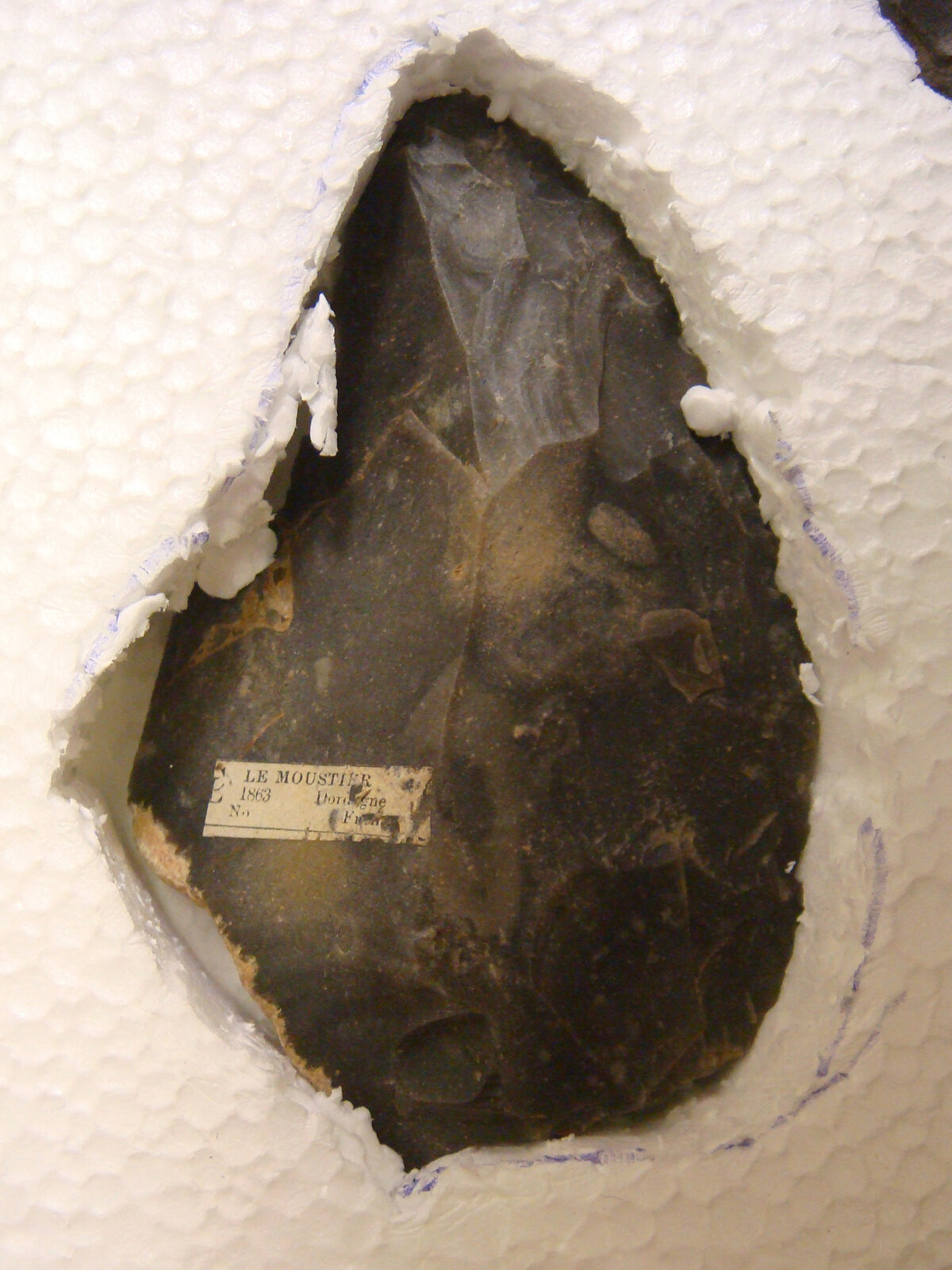
High-resolution microscope analysis of each tool's edges revealed repeated retouch marks, evidence of regular resharpening during use. Even more significantly, no knappingknappingThe set of operations for fracturing a stone block to extract flakes or blades.→ debitage was found in the cave, ruling out any on-site manufacture. The Neanderthals therefore made their tools in the valley, carried them up the mountain, and regularly maintained them throughout the stay, in a logic of forward-looking management of lithic resources.
Accomplished Planners
This discovery adds to a growing body of studies showing that Neanderthals were sophisticated resource planners. The idea of a day-to-day Neanderthal, incapable of anticipating future needs, is now widely discredited. Previous studies have shown that they collected raw materials from distances of up to 300 kilometres, made composite adhesives to haft their tools, and built structures from bones in caves.2
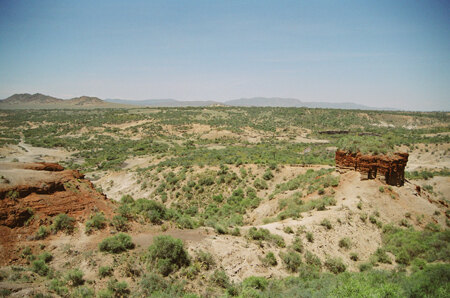
The Caverna Generosa study adds a new dimension to this picture: high mountain terrain, long considered a marginal zone for Neanderthals, was in reality integrated into their territory and seasonal movements. The authors suggest these alpine expeditions served various purposes: access to game (ibex, deer), raw material prospecting, or exploitation of the bear cave for hides and fat during winter.3
Towards a Revised Image of Neanderthals
Beyond Caverna Generosa, dozens of sites are progressively completing the portrait of Neanderthals as fully competent humans, adapted to varied environments, capable of planned movement and long-term resource management. The cognitive boundary erected between Homo neanderthalensis and Homo sapiens is gradually dissolving under the weight of archaeological evidence. If the two species coexisted and even had children together, it may also be because they did not perceive themselves as fundamentally different.
L'absence d'esquilles de taille dans la grotte est effectivement l'argument le plus fort de l'étude. Ca confirme une mobilité planifiée et une gestion différée des ressources lithiques. La Caverna Generosa rejoint Vindija et Spy dans ce corpus de sites qui rendent indéfendable l'image du Néandertal 'au jour le jour'.
Je joue beaucoup à Paleo en ce moment, un jeu qui représente justement cette complexité de la planification chez les chasseurs-cueilleurs. Voir que la gestion différée des outils est documentée scientifiquement pour de vrai, ca donne encore plus de sens au design du jeu — et à l'effort de recherche qui est derrière.
J'adore ces articles qui brisent les clichés. On m'avait appris que Néandertal était un 'homme des cavernes' limité à son environnement immédiat. Mais franchir des cols alpins avec des outils préparés en plaine, c'est une tout autre image. Plus je lis vos articles, plus je révise mes représentations.