In a niche carved into the wall of Amud Cave, near the Sea of Galilee in Israel, a Neanderthal infant was laid to rest 51,000 to 56,000 years ago. Resting on the body was the jaw of a red deer. This unexpected arrangement, revealed by a new study published in Current Biology, is now one of the most compelling pieces of evidence for intentional burialBurialThe intentional deposition of a body, sometimes with offerings; a marker of symbolic behaviour.→ among NeanderthalsNeanderthalsA fossil humanity of Eurasia, robust and cold-adapted, extinct around 40,000 years before present.→, raising profound questions about their symbolic capacities and relationship to death.1
Amud 7: The Giant Baby
The skeleton, known as Amud 7, had been uncovered during earlier excavations at Amud Cave, in northern Israel, a Neanderthal site studied since the 1960s. It is one of the most complete Neanderthal infant skeletons ever found, preserved in 111 distinct fragments. The new study provides the first complete biological analysis of the specimen. The result is striking: this child died at around 5 to 6 months old, yet its skeleton already had the size of a modern child aged one to one-and-a-half years. Its growth rate was twice as fast as modern human infants.1
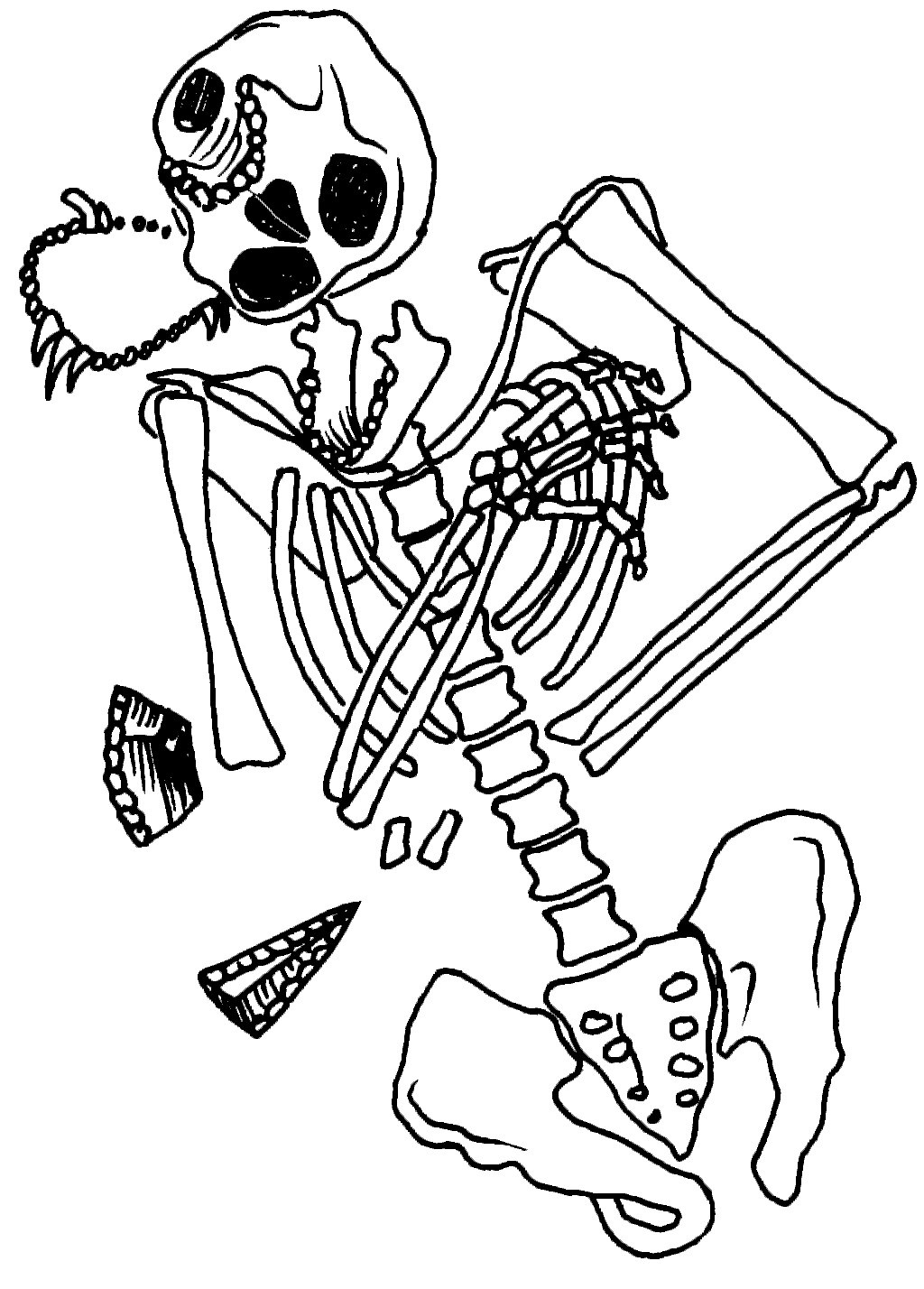
This accelerated growth is not specific to Amud 7: it reflects a general biological strategy in Neanderthals, who appear to have invested in rapid maturation enabling children to reach locomotor and cognitive autonomy sooner. This strategy is the opposite of the modern human trajectory, which favours a long childhood and slow maturation allowing extended brain development.
The Deer Jaw: An Unexpected Gesture
What makes Amud 7 unique in the context of Neanderthal archaeology is the presence of a red deer jaw placed on the child's body. The jaw was positioned non-accidentally: its placement on the infant's chest rules out casual deposition by scavengers or water. It would therefore be an object intentionally placed by members of the Neanderthal community, in a gesture that evokes a funerary offering.2
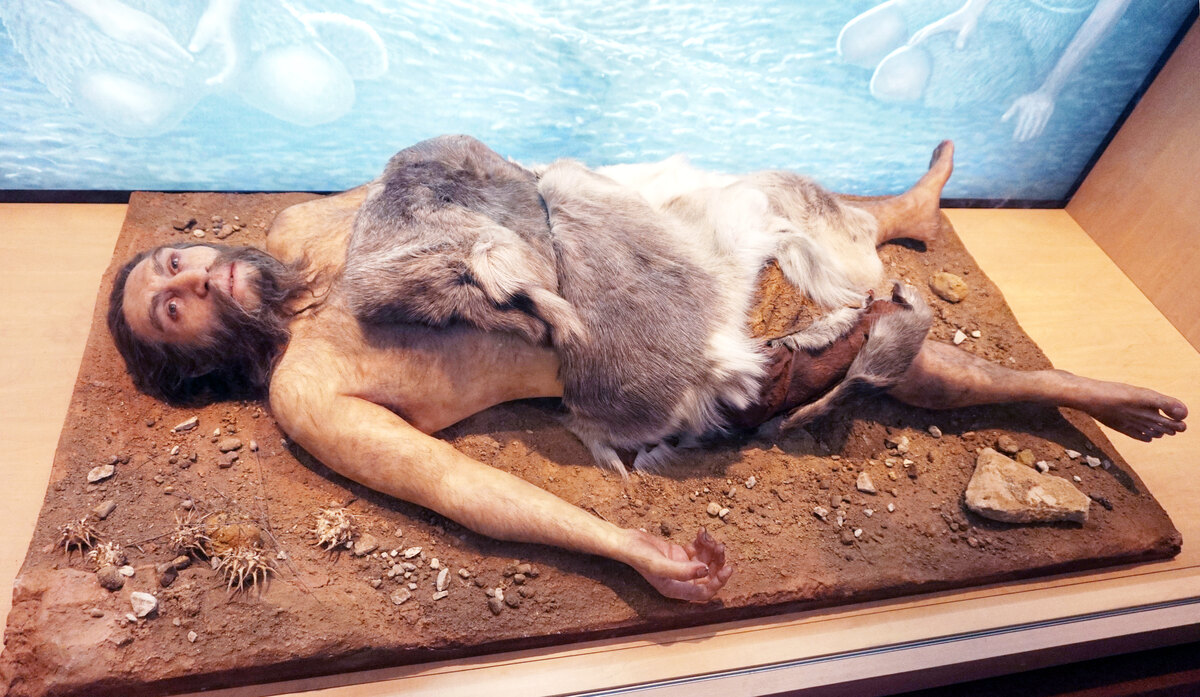
This type of discovery fuels a debate that has divided palaeoanthropologists for decades: did Neanderthals really bury their dead, and if so, with what intention? Shanidar Cave (Iraq), with its famous Neanderthal burials (including one associated with flower pollen, though this interpretation remains contested), La Ferrassie Cave (France), and Châtelperron all provide arguments for funerary intentionality. Amud 7 adds to this corpus, with the particularity of an animal offering placed on a very young child.3
Towards Recognition of Neanderthal Symbolic Life
The Amud Cave discovery contributes to a gradual paradigm shift in prehistoric science. Neanderthals would no longer be merely technically competent but cognitively limited hominins, but beings endowed with a complex emotional and symbolic life, capable of grief, ritual and perhaps beliefs about an afterlife. This portrait, built from dozens of discoveries across the Near EastNear EastA region of western Asia (Levant, Mesopotamia, Anatolia, Iran), cradle of the Neolithic revolution, agriculture, the first cities and writing.→ and Europe, brings Neanderthals closer to us still, and raises the question of how far the biological distinctions between species of the genus Homo reflect genuine cognitive discontinuities.
Je lis cet article avec beaucoup d'émotion. Un bébé de 5 mois déposé dans une niche avec une offrande... peu importe l'espèce, ca parle à quelque chose de profond et universel. Merci pour la sensibilité de l'écriture — rigoureuse sans être froide.
J'utilise souvent la question 'est-ce que les Néanderthaliens enterraient leurs morts ?' pour introduire la notion de culture en 5e. Cet article sur Amud 7 avec la machoire de cerf va devenir un exemple clé. Le fait que le bébé soit deux fois plus grand qu'un nourrisson moderne va beaucoup marquer les élèves.
C'est exactement le type de contenu dont j'ai besoin pour mes ateliers de médiation. La croissance deux fois plus rapide ET la machoire de cerf sur le bébé, ce sont deux angles narratifs puissants qui permettent d'humaniser les Néanderthaliens sans verser dans l'anthropomorphisme. Je vais m'en inspirer.