Ten thousand years ago, in the Fertile CrescentFertile CrescentAn arc-shaped region of the Near East (Levant, Mesopotamia) where farming and herding first emerged.→, groups of hunter-gatherersHunter-gatherersA way of life based on hunting, fishing and gathering wild resources, without farming or herding; it dominated almost the whole of human history.→ began cultivating wheat, raising sheep, and building permanent villages. This 'Neolithic RevolutionNeolithic revolutionThe shift from hunter-gatherer societies to farming and settled life (c. 10,000 BCE in the Near East), giving rise to villages and then cities.→' was to transform humanity from top to bottom — for better and for worse.
What is the NeolithicNeolithicThe "New Stone Age": a period marked by farming, herding, settlement and pottery, from around 10,000 BC.→?
The word comes from the Greek néos (new) and líthos (stone): literally, 'new stone age'. It was coined in 1865 by the English prehistorian John Lubbock to distinguish the chipped stone tools of the PalaeolithicPalaeolithicThe oldest and longest period of prehistory (c. 3.3 Ma–12,000 BC), defined by chipped stone tools and a hunter-gatherer way of life.→ from the polished stone tools of the Neolithic. The technical distinction quickly showed its limits: stone polishing already existed in Japan and China long before the Neolithic.
Today's archaeologists define the Neolithic above all as an economic revolution: the shift from a predatory economy — hunting, fishing, foraging — to a productive economy — farming and herding. It is this mutation, not the polished stone tool, that constitutes the fundamental marker of the period.
The concept of the 'Neolithic Revolution' was popularised in 1925 by the Australian archaeologist Vere Gordon Childe. Subsequent research has strongly nuanced the word 'revolution': in the original heartlands, this transition took several millennia. It was neither synchronous nor universal: we now identify six to eight independent foci of agricultural emergence around the world.
When? A world chronology
The Neolithic is not a single period: it is a series of independent transitions, occurring at very different times in different parts of the world.
The Fertile Crescent — the oldest focus (~10,200 BC)
The Near EastNear EastA region of western Asia (Levant, Mesopotamia, Anatolia, Iran), cradle of the Neolithic revolution, agriculture, the first cities and writing.→ is the oldest cradle of agricultureAgricultureThe cultivation of plants and production of food by working the soil, which emerged in the Neolithic in the Near East and independently elsewhere; it radically transformed human societies.→. The process began in the LevantLevantA region of the eastern Mediterranean Near East (Israel, Lebanon, Syria, Jordan), a major crossroads of the first human migrations out of Africa.→ with the NatufianNatufianA culture of semi-sedentary hunter-gatherers of the Levant (c. 12,500-9,500 BC) harvesting wild cereals and building the first round houses; it prepares the Neolithic.→ culture, semi-sedentary hunter-gatherers who intensively exploited wild cereals. By ~10,200 BC, the Pre-Pottery Neolithic A (PPNA)Pre-Pottery Neolithic A (PPNA)The first phase of the Near Eastern Neolithic (c. 9,600–8,800 BC), predating pottery; at Jericho it corresponds to the construction of the tower and enclosure wall.→ was underway, with the first farming experiments at Jericho, Gilgal, and Ain Mallaha. Around ~9,500 BC, builders raised the first monumental stone circles at Göbekli Tepe — while still nomadic. By ~8,800 BC, the PPNB brought rectangular mudbrick villages and the full domestication of animals. Pottery did not appear in the Near East until ~7,000 BC.
Europe (~7,000 to 4,500 BC)
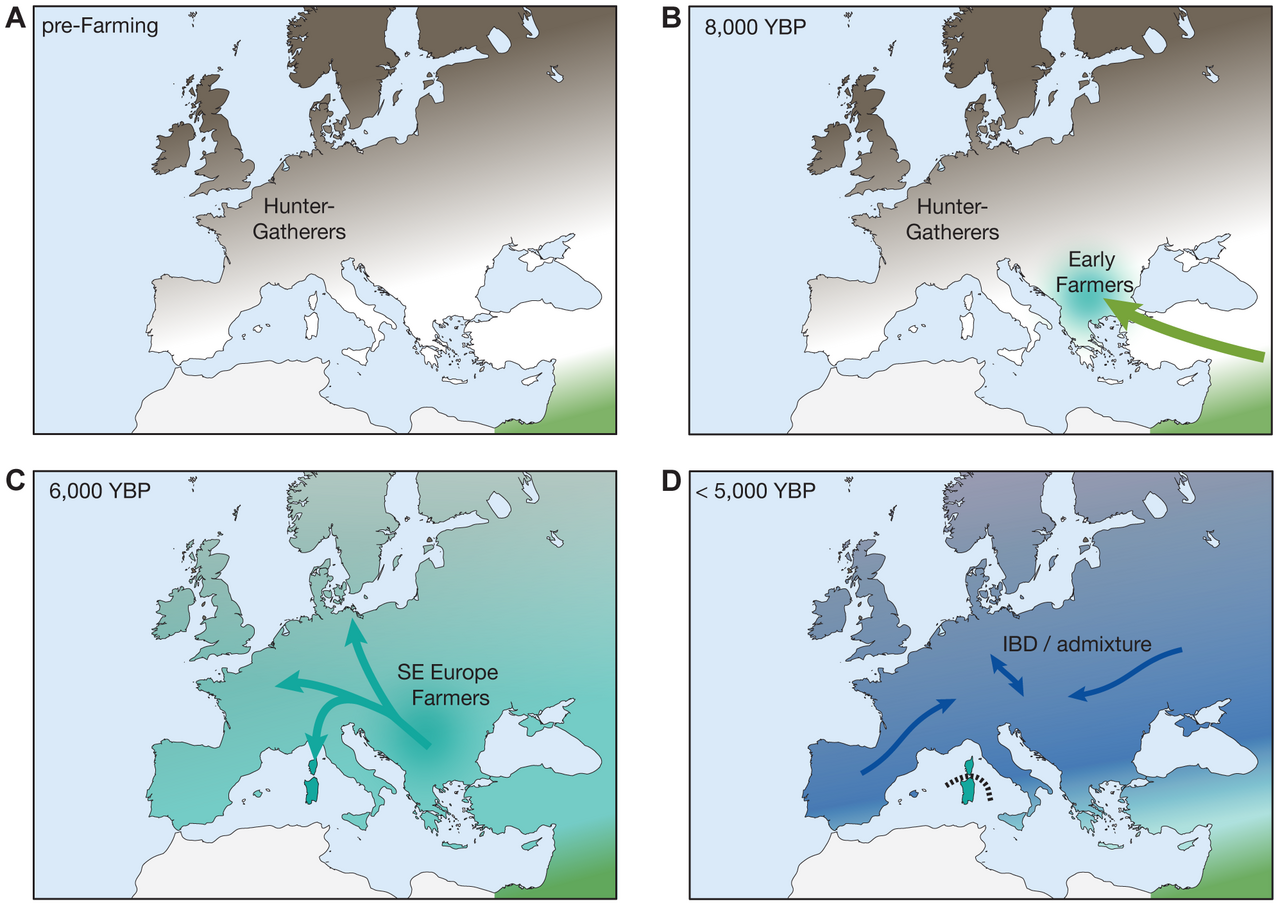
Europe's neolithisation occurred via two major migratory routes, both originating from the same Anatolian genetic pool: the Danubian route (Linear Pottery culture or Linearbandkeramik) towards central Europe, and the Mediterranean route (Cardial Ware culture) towards the Iberian Peninsula, southern France, and Italy. By ~7,000 BC, the Neolithic was established in Greece and the Balkans. It reached north-western Europe — the British Isles, Scandinavia — around ~4,500 BC.
China — an independent focus (~9,500 BC)
China represents one of the oldest and most important agricultural foci. Two cultures developed independently: millet farming (Setaria italica) in the Yellow River basin (~6,500 BC) and rice cultivation (Oryza sativa) in the Yangtze basin (traces from ~8,200 BC, systematic cultivation ~5,000 BC).
India and the subcontinent (~7,000 BC)
The site of Mehrgarh (Balochistan, Pakistan) is one of the oldest Neolithic sites of the Indian subcontinent. From ~7,000 BC, wheat and barley were cultivated there, goats, sheep and cattle were herded, and mudbrick construction was underway. The site also yields the world's oldest evidence of dentistry (drilling of live teeth, ~7,000 BC).
The Americas — a different terminology
The term 'Neolithic' is rarely applied to the Americas, where scholars prefer the ArchaicArchaicRefers to an ancient, now-extinct human population or form (Neanderthals, Denisovans, ghost lineages), as opposed to anatomically modern humans.→ and Formative stages. The domestication of maize (Zea mays) from wild teosinte dates to ~5,000 BC in Mesoamerica. In the Andes, potatoes, quinoa, beans, and camelids (llama, alpaca) were domesticated from ~3,500 BC. The Caral-Supe civilisation (Peruvian coast, ~3,000 BC) represents one of the world's earliest states — with 30 settlements and urban organisation, but without pottery.
Why? The causes of the Neolithic Revolution
The causes of the Neolithic transition are among the most debated questions in archaeology. No single explanation is valid for all foci.
ClimateClimateThe long-term average atmospheric conditions of a region; its variations (glaciations, aridifications) shaped migrations, agriculture and the collapse of prehistoric societies.→ change
The climate theory remains the most robust. HoloceneHoloceneThe current geological epoch, begun about 11,700 years ago at the end of the last ice age; the setting of all post-glacial history.→ warming from ~10,000 BC profoundly reshaped ecosystems. In the Fertile Crescent, the end of the Younger Dryas — a brutal cooling episode around 10,900 BC — may have forced semi-sedentary populations to develop agricultural strategies in response to the depletion of wild resources. The post-Younger Dryas warming then favoured cultivated plant growth.
Demographic pressure
The partial sedentarisation of groups like the Natufians led to increased birth rates. Groups that became too numerous for their local resources were forced to expand into less favourable regions, where farming became necessary to survive (Flannery, 1969).
The revolution of symbols (Cauvin)
For archaeologist Jacques Cauvin (The Birth of the Gods and the Origins of Agriculture, 1994), environmental and demographic causes are insufficient. Agriculture would be the product of a profound cognitive and symbolic transformation: a 'revolution of symbols'. For the first time, abstract representations (woman, bull) precede and accompany technical innovation. Agriculture would have been a way to create new social bonds when groups reached a critical threshold.
The downside
Anthropologist Marshall Sahlins (Stone Age Economics, 1972) demonstrated that hunter-gatherers often worked less than farmers for a comparable or better diet. The skeletons of the first farmers show generally poorer health than those of contemporary hunter-gatherers: smaller stature, anaemia, dental caries (linked to starchy diets), more frequent infectious diseases (population density, contact with domestic animals). Yet the demographic growth linked to agriculture is undeniable — and ultimately decisive.
The great inventions of the Neolithic
Agriculture: the domesticated plants
In the Near East, the first cultivated plants were einkorn (Triticum monococcum) and emmer (Triticum dicoccum) wheat, along with barley (Hordeum vulgare), legumes (lentil, chickpea, fava bean), and flax. The earliest cultivated plant for which we have proof may be the fig: parthenocarpic figs (which can only reproduce by cuttings — proof of deliberate human intervention) dated to ~9,400 BC were found at Jericho, predating the first cereals by several centuries.
In China, millet precedes rice by at least 1,500 years. In Mesoamerica, maize underwent a radical morphological transformation from wild teosinte over a few millennia. In AfricaAfricaThe cradle of humankind: the continent where the first hominins appeared, then Homo sapiens around 300,000 years ago, before the expansion to the rest of the world.→, pearl millet (Pennisetum glaucum) and sorghum (Sorghum bicolor) were domesticated in the Sahel around ~3,000 BC.
Animal husbandry: the domesticated animals
In the Near East between ~8,500 and 7,500 BC, four major species were domesticated: sheep (from the mouflon), goat (from the wild goat), cattle (from the aurochs, possibly in several independent foci), and pig. In China, the pig was domesticated independently around ~7,000 BC. The chicken, descended from the red junglefowl of South-East Asia, was domesticated around ~6,000 BC. In the Andes, the llama and alpaca were domesticated around ~3,500 BC. The dog, the only animal domesticated by hunter-gatherers, dates from the Upper PalaeolithicUpper PalaeolithicThe final phase of the Palaeolithic (c. 45,000 to 10,000 years ago), marked by Homo sapiens in Europe, art, ornaments and a succession of cultures (Aurignacian, Gravettian, Solutrean, Magdalenian).→.
Polished stone
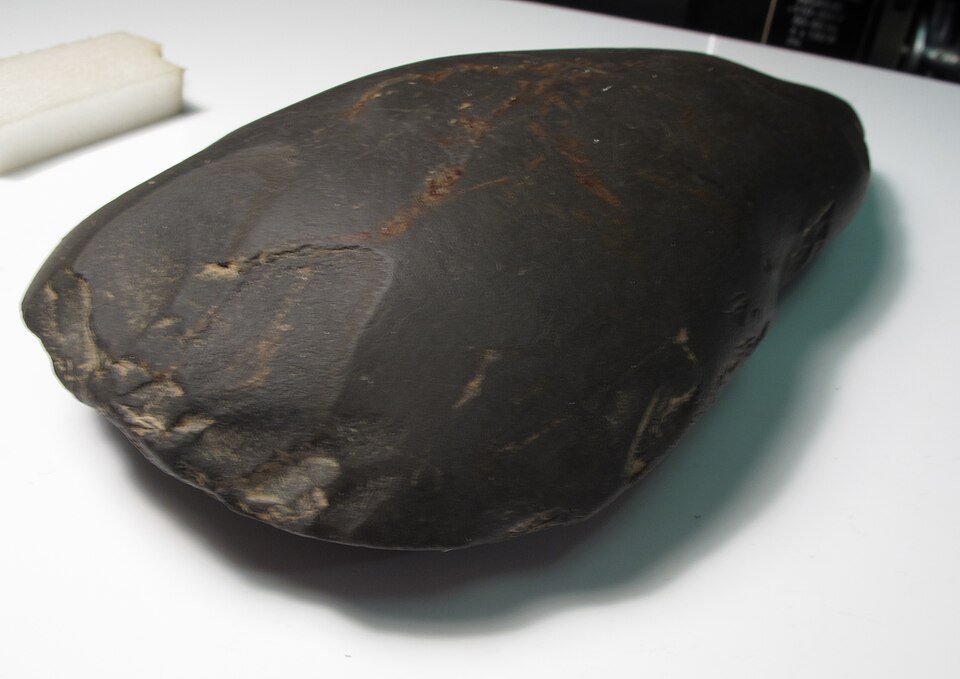
Stone polishing became widespread in the Neolithic with the development of agricultural work. Axes and adzes of polished stone enabled tree-felling (land clearance) and construction. A large polished stone axe could require up to 100 hours of labour. The materials used — Alpine jadeite, Breton dolerite, Grand-Pressigny flintFlintA hard, brittle siliceous rock, knapped by prehistoric people to produce blades, points and sharp tools.→ — circulated over thousands of kilometres, proving the existence of long-distance exchange networks. The aesthetic care lavished on these objects far exceeded their practical utility.
Pottery
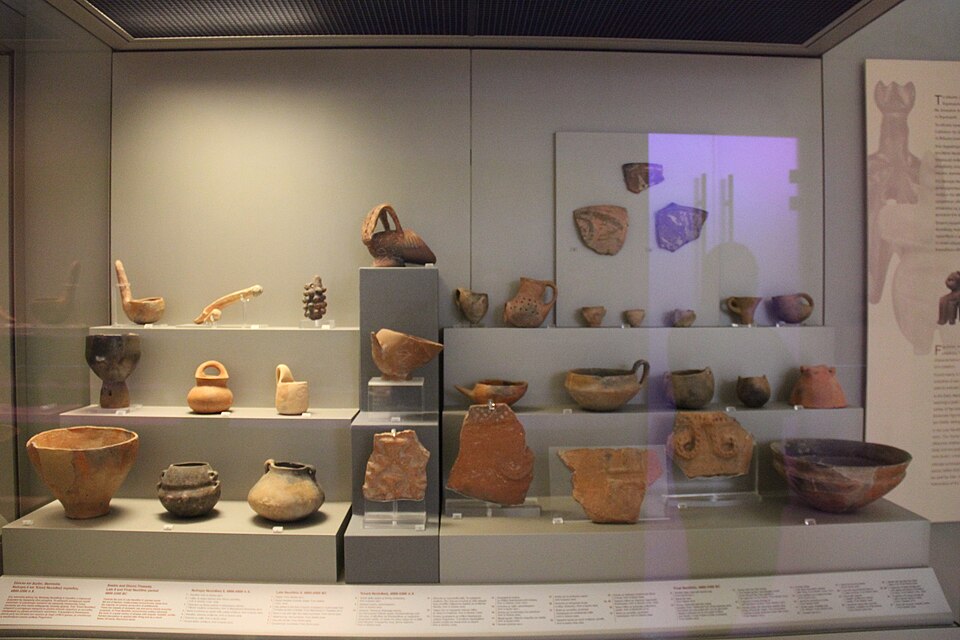
Contrary to popular belief, pottery is older than agriculture in several regions: Jōmon culture in Japan produced ceramics from ~16,000 years ago, and the oldest Chinese pottery (Xianrendong Cave) dates to ~20,000 BC. In the Near East, pottery did not appear until after agriculture, around ~7,000 BC. This Near Eastern 'Pre-Pottery NeolithicPre-Pottery NeolithicThe first phase of the Neolithic (c. 9,600–6,900 BC), before the invention of pottery.→' (PPNA, PPNB) lasted over 3,000 years without ceramics — Near Eastern peoples used containers of wood, stone, or basketry.
Architecture and the village
Sedentarisation triggered an architectural revolution. The shift was from circular semi-subterranean structures (Natufian type) to rectangular above-ground mudbrick buildings — a major technical advance, comparable in importance to the invention of agriculture itself: the right angle implies wall bonding and an entirely different conception of space. The use of lime plaster (obtained by burning limestone or gypsum) revolutionised construction: floor and wall renders, and the modelling of deceased persons' skulls with plaster to recreate their features (ancestor cult at Jericho and 'Ain Ghazal).
The iconic archaeological sites
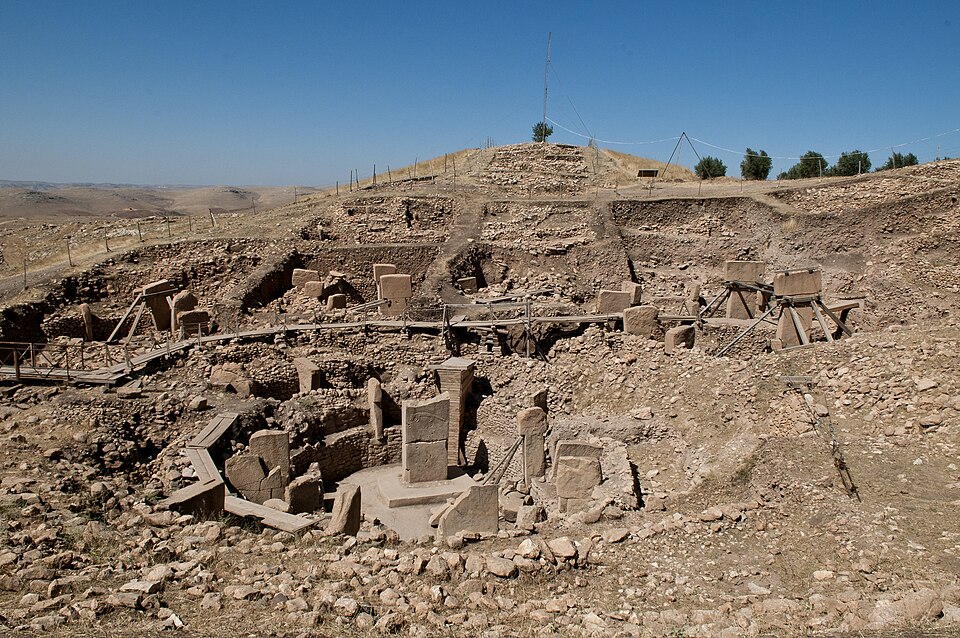
Göbekli Tepe (Turkey, ~9,600 BC)
The most revolutionary site discovered in a century. Located in south-eastern Anatolia, it is the oldest known monumental complex in the world. At least seven stone circles covering 10 hectares, with T-shaped limestone pillars reaching 5 to 6 metres high, decorated with animals in bas-relief (foxes, scorpions, snakes, wild boars, vultures). Built by nomadic hunter-gatherers: Göbekli Tepe overturns the classical theory that agriculture preceded monumental structures. Here, the opposite is true. Inscribed on the UNESCO World Heritage List in 2018.
Çatalhöyük (Turkey, ~7,500–5,700 BC)
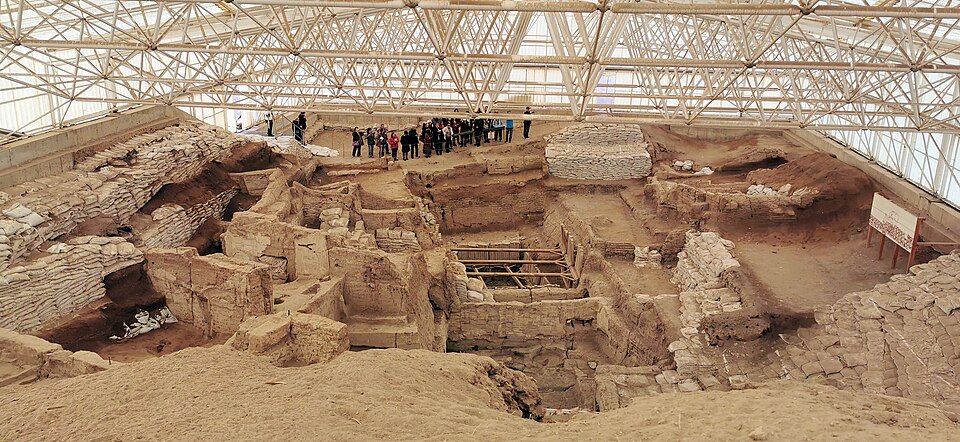
The Neolithic reference site in central Anatolia, covering 12 hectares and accommodating up to 8,000 inhabitants. Its architecture is distinctive: adjoining rectangular mudbrick houses with no streets — access was only via roofs by ladders. Interiors decorated with elaborate murals depicting humans and animals. The dead were buried beneath the floors of dwellings. A genetic study published in Science in 2025 detected a matrilineal structure — the oldest known example of a female-centred society confirmed by DNADNAThe molecule carrying genetic information, used to reconstruct kinship between species.→, over 9,000 years ago.
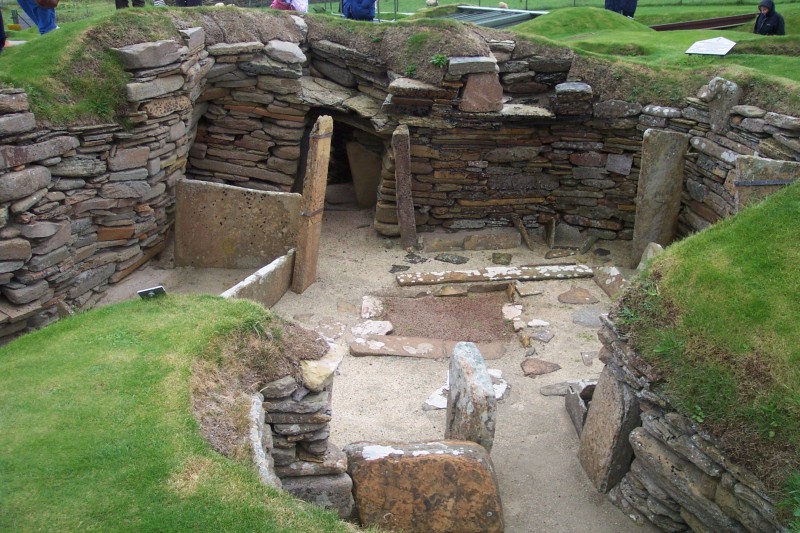
Skara Brae (Orkney, Scotland, ~3,500–3,100 BC)
An exceptionally well-preserved Neolithic village, discovered in 1850 after a storm. Eight dry-stone dwellings linked by covered passages, with built-in stone furniture (bed frames, dressers, hearths) — the only materials to have survived. Contemporary with the first phases of Stonehenge, Skara Brae shows that northern Europe was producing sophisticated domestic architecture in the Neolithic.
Jericho (West Bank, ~9,500 BC)
One of the world's oldest known settlements. The PPNA town could house 2,000 to 3,000 people, surrounded by a stone wall and a massive tower 8.5 metres high. In 2006, cultivated figs dated to ~9,400 BC were found there — the earliest evidence of deliberate plant cultivation, predating the first cereals by several centuries. Jericho is one of the oldest continuously inhabited cities in the world.
Malta's megalithic temples (~3,600–2,500 BC)
Malta's temples are the oldest freestanding stone structures in the world still standing. The Ġgantija temple (island of Gozo) dates to ~3,600 BC — over a thousand years older than Stonehenge and the Egyptian pyramids. The Ħal Saflieni Hypogeum (~2,500 BC) is the world's only prehistoric underground temple, carved into limestone on three levels.
Cucuteni-TrypilliaCucuteni-TrypilliaA vast Eneolithic culture of south-eastern Europe (c. 5000–3000 BC), spread across Romania, Moldova and Ukraine. Famous for its spiral-painted pottery, its figurines and its huge settlements of several thousand inhabitants, sometimes cyclically burned and rebuilt.→ culture (Ukraine/Romania, ~5,300–2,300 BC)
This late Neolithic culture of the Balkans produced the largest human settlements of the era: proto-cities of concentric elliptical layout reaching several km² and housing 10,000 to 20,000 people — the largest known before the emergence of Mesopotamian cities. It also developed a possible proto-writingProto-writingNotation systems preceding true writing (tokens, clay envelopes) that encode information without yet transcribing language.→ system (Vinča signs).
Social organisation: villages, hierarchies and wars
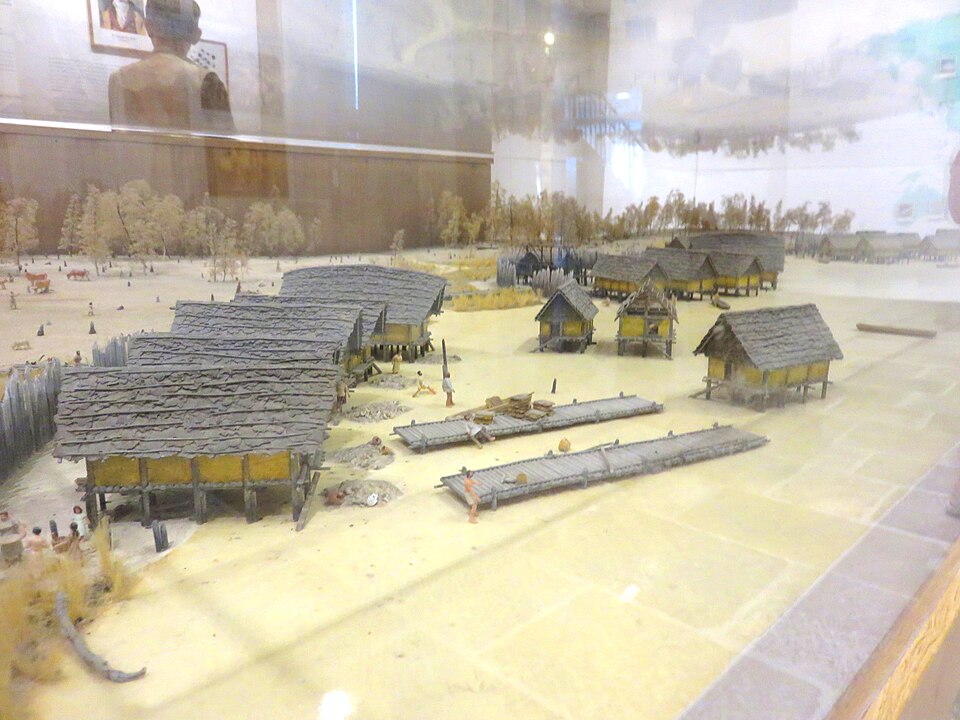
Sedentarisation and the village
Sedentarisation in many regions preceded the adoption of agriculture (as with the Natufians in the Near East). The village is the dominant form of social organisation in the Neolithic. Growing population density had profound effects: craft specialisation, division of labour, the emergence of distinct social roles (shamans, artisans, traders, warriors).
Trade and exchange networks
Neolithic exchange networks have long been underestimated. Obsidian from Turkey circulated over thousands of kilometres. Jadeite axes from the Alps reached Brittany and Poland. Baltic amber arrived in the Mediterranean. These exchanges testify to unsuspected long-distance social and commercial connections — a Neolithic 'world' far less isolated than once thought.
Religion and burialBurialThe intentional deposition of a body, sometimes with offerings; a marker of symbolic behaviour.→
The Neolithic saw the rise of elaborate funerary practices: burial beneath house floors (Çatalhöyük), skulls coated in plaster to reconstruct the features of the deceased (ancestor cult at Jericho and 'Ain Ghazal), collective megalithic tombs (dolmens, passage mounds). Göbekli Tepe, Stonehenge, and Newgrange testify to a remarkable ritual and astronomical monumental architecture.
Violence and war
The idea of a peaceful Neolithic has been definitively abandoned. Archaeological data show that inter-group violence was far more frequent in the Neolithic than in the Palaeolithic. The Talheim death pit (Germany, ~5,000 BC) contains the remains of 34 victims — men, women and children — of a collective massacre. The Roaix hypogeum (Vaucluse, ~2,900–2,600 BC) yields ~40 individuals with arrowheads in their bones. In the British Isles, between 8.5% and 24.5% of Neolithic skulls bear trauma marks. Sedentarisation, the accumulation of food stocks, and land ownership probably fuelled this increased violence.
What genetics reveals
Advances in palaeogeneticsPalaeogeneticsThe study of ancient DNA extracted from remains (bones, teeth, sediments, walls) to reconstruct the past of populations.→ since 2010 have transformed our understanding of European Neolithic. Neolithisation was primarily achieved through demic diffusion — population migration — rather than simple cultural transmission. The first European farmers (so-called Early European Farmers, EEF) formed a homogeneous population from Anatolia, genetically very close to present-day Sardinians. They had only 7 to 11% admixture with the MesolithicMesolithicThe period between the Palaeolithic and the Neolithic (c. 10,000–6,000 BC in Europe), still based on hunting and gathering.→ hunter-gatherers they encountered. Ötzi the Iceman (~3,300 BC), the first Neolithic individual fully sequenced (2012), perfectly illustrates this EEF profile.
A major genetic discontinuity followed in the Bronze AgeBronze AgeA protohistoric period following the Neolithic, defined by bronze metallurgy (a copper-tin alloy) and the rise of the first cities and states; in Egypt it corresponds to the age of the first pyramids.→: the arrival of the Yamnaya (steppeSteppeA vast semi-arid, treeless grassland of Eurasia, suited to nomadic herding and the horse; a corridor for the movement of peoples and technologies in later prehistory.→ nomads from the Pontic steppes), carrying haplogroup R1b, profoundly transformed the European genetic landscape — especially in the north and west.
Recent discoveries (2024–2026)
Stonehenge's Altar Stone comes from Scotland (2024)
A study published in Nature in August 2024 (⁴) revealed that Stonehenge's Altar Stone — its central monolith — does not come from Wales as had been believed for decades, but from north-east Scotland, over 750 km from the site. This 6-tonne stone was transported around 4,600 years ago — the longest recorded journey for any prehistoric building stone. The result, obtained through mineralogical dating and chemical analysis, implies logistical organisation of unsuspected complexity for the British Neolithic.
The submerged wall off Île de Sein (2025)
In 2025, marine archaeologists discovered off the coast of the Île de Sein (Brittany) a stone structure submerged at 9 metres depth: a wall 120 metres long, 20 metres wide, made of intentionally placed blocks and monoliths. Its construction is dated to 5,800 to 5,300 BC — several centuries before the oldest known Breton megaliths. At that time, the now-submerged plateau formed an inhabited coastal landscape. The study, published in the International Journal of Nautical Archaeology (⁵), overturns our understanding of Neolithic coastal societies and their capacity for organisation.
Karahantepe, Göbekli Tepe's 'twin' (2025)
Excavations at Karahantepe (Turkey, Şanlıurfa province), a site contemporary with Göbekli Tepe, yielded in 2025 a T-shaped pillar bearing for the first time a three-dimensionally sculpted human face, along with a group of animal statuettes (boar, vulture, fox) that may constitute the oldest known three-dimensional narrative. The site was ranked among the ten best archaeological discoveries of 2025 by Archaeology Magazine.
Çatalhöyük: a matrilineal society (2025)
A major genetic study published in Science in 2025 (⁶) analysed the DNA of several dozen individuals buried at Çatalhöyük over several generations. The results confirm that maternal lineages structured family groupings at this site — making Çatalhöyük the oldest known example of a matrilineally organised society attested by DNA, over 9,000 years ago.
The end of the Neolithic
The transition to the ChalcolithicChalcolithicThe "Copper Age": a transition between the Neolithic and the Bronze Age, marked by the first copper objects (Ötzi's era).→ (Copper Age) was gradual and highly variable regionally. In the Balkans, the first cast copper objects appear as early as ~5,500 BC (Pločnik site, Serbia). In the Near East, the Chalcolithic began around ~4,500 BC. The Bronze Age — copper-tin alloy, smelting metallurgyMetallurgyThe techniques of extracting and working metals (copper, bronze, gold); its rise in the Eneolithic and Bronze Age transformed tools, weapons and social hierarchies.→ — was established around ~3,500 BC in Anatolia and Mesopotamia, around ~2,000 BC in western Europe and China.
This transition coincided with the emergence of the first city-states (Sumer, Ur, Lagash), of cuneiformCuneiformThe oldest known writing, born at Uruk; its signs, impressed into clay with a reed stylus, are wedge-shaped (from Latin cuneus).→ and hieroglyphic writingWritingA system of conventional signs used to fix language or information durably; its appearance (c. 3300 BC) marks, by convention, the end of prehistory.→, of professional armies and the first dynasties. It is the end of prehistoryPrehistoryThe span of human history before the invention of writing, from the Palaeolithic to the Metal Ages, known mainly through material remains.→ — and of the Neolithic worlds.
Demographic studies reveal a paradoxical trajectory in Europe: rapid population growth at the start of the Neolithic, then a demographic collapse 'of enormous proportions' after ~5,000 BC, lasting some 1,500 years — possibly linked to epidemics, climatic conditions, or new incoming populations. Then recovery, and profound transformation with the influx of Bronze Age steppe migrationsMigrationsLong-distance movements of populations; a major driver of human history (the exit from Africa, the peopling of continents, Neolithic and steppe expansions).→.
Ultimately, the Neolithic is less a period of human history than a process: a long, uneven, regionally differentiated transition that invented, in fewer than 8,000 years, nearly all the structures on which contemporary civilisation still rests — agriculture, the city, the state, war — and that continues to shape our genomes, our landscapes, and our cultures.
J'apprécie que vous distinguiez les hypothèses des faits établis. C'est trop rare dans la vulgarisation.
Je partage souvent vos articles avec mes collègues médiateurs. Celui-ci va directement dans ma boite à outils.
Les migrations préhistoriques deviennent enfin lisibles quand on les relie à votre carte. Beau travail.
Ce dossier est une ressource précieuse pour qui s'intéresse aux racines de notre culture matérielle. En Bretagne, les monuments mégalithiques sont l'héritage visible du Néolithique mais il y a tellement d'autres aspects moins connus : l'agriculture, l'élevage, la céramique, le tissage. Merci pour ce panorama complet qui replace les mégalithes dans leur contexte culturel global.
Ce dossier complet sur le Néolithique est une excellente synthèse des recherches récentes. La mise à jour des chronologies grâce aux nouvelles datations au radiocarbone et aux analyses génétiques a profondément renouvelé notre compréhension de la néolithisation de l'Europe. On sait maintenant qu'il ne s'agit pas d'une diffusion simple mais d'un processus complexe mêlant migrations et transmissions culturelles.