About twelve thousand years ago, along an arc of hills and valleys stretching from the eastern Mediterranean to the foothills of the Zagros, human communities began a transformation whose consequences we still bear today. Within a few millennia, groups that had lived for hundreds of thousands of years by hunting, fishing and gathering started to sow seeds, to pen animals, to build houses of stone and mudbrick, and then to cluster them into dense villages. This shift, which the Australian archaeologist Vere Gordon Childe named in 1936 the "Neolithic revolutionNeolithic revolutionThe shift from hunter-gatherer societies to farming and settled life (c. 10,000 BCE in the Near East), giving rise to villages and then cities.→," was neither sudden nor linear, yet it represents arguably the most profound change in the history of our species since the mastery of fire [1].
The very word NeolithicNeolithicThe "New Stone Age": a period marked by farming, herding, settlement and pottery, from around 10,000 BC.→, "new stone age," coined by John Lubbock in 1865, originally referred to a technical innovation: the polishing of stone, which succeeded the flake-knappingknappingThe set of operations for fracturing a stone block to extract flakes or blades.→ of the PalaeolithicPalaeolithicThe oldest and longest period of prehistory (c. 3.3 Ma–12,000 BC), defined by chipped stone tools and a hunter-gatherer way of life.→. But polished stone is only the most visible symptom of a far broader revolution that touched the economy, social organisation, the relationship to territory, the bodies of men and women, and even their imagination. To adopt farming and herding was not merely to change one's diet: it was to change worlds. This article traces that metamorphosis, from its original cradle in the Fertile CrescentFertile CrescentAn arc-shaped region of the Near East (Levant, Mesopotamia) where farming and herding first emerged.→ to its spread into Europe, while also measuring its cost, for sedentary life carried a biological and social price that modern excavations reveal with ever greater precision.
Defining the Neolithic: beyond polished stone
What exactly do we mean by the Neolithic? The definition has shifted greatly. For nineteenth-century prehistorians it was essentially a technological fact, recognisable by its polished axes and its pottery. For contemporary scholars, the Neolithic is defined above all by a way of life resting on food production: instead of harvesting wild resources from nature, Neolithic communities cultivate plants and raise animals they have domesticated, that is, whose reproduction they control and which they have genetically transformed to their advantage [1].
This producing economy is usually, though not always, accompanied by a set of correlated traits: sedentismSedentismThe shift from a nomadic life to lasting settlement in one place, a precondition for the rise of villages.→, that is, lasting settlement in one place; the emergence of permanent villages built of durable materials; the storage of harvests; the development of pottery for keeping, cooking and carrying; and the polishing of stone to make resistant tools such as adzes and axes needed for clearing land. None of these traits, however, is indispensable or exclusive. Some societies became sedentary before they farmed; others made pottery while remaining hunters; still others farmed without ever making pots, as the "pre-pottery NeolithicPre-Pottery NeolithicThe first phase of the Neolithic (c. 9,600–6,900 BC), before the invention of pottery.→" of the Near EastNear EastA region of western Asia (Levant, Mesopotamia, Anatolia, Iran), cradle of the Neolithic revolution, agriculture, the first cities and writing.→ illustrates. The Neolithic is therefore not a checklist of boxes to tick, but a bundle of converging transformations whose hard core is farming and herding.
Above all, one must abandon the image of an "invention" that occurred at a single point and a precise moment. Domestication was a process, spread over centuries, made of back-and-forth, of experiments, of intermediate practices between intensive gathering and true cultivation. For a long time, groups protected, weeded and watered stands of wild cereals before deliberately sowing them; they hunted herds selectively, sparing the females, before controlling them entirely. The threshold between predation and production was crossed almost imperceptibly, at a pace that radiocarbon dating now lets us reconstruct with unprecedented fineness.
Why the Fertile Crescent?
While the Neolithic revolution had several independent hearths around the world, the Yellow and Yangtze river basins of China, Mesoamerica, the Andes, New Guinea, the African Sahel, it was in the Near East, in the crescent-shaped region linking the Jordan valley, inner Syria, south-eastern Anatolia and the Zagros foothills, that it appeared earliest and most fully [2]. Why there? The answer lies in a rare conjunction of ecological and human factors.
In its wild state, the Fertile Crescent held an exceptional concentration of species suited to domestication. Of the few dozen truly domesticable large-seeded plant species on the planet, a remarkable proportion grew spontaneously in this region: emmer wheat, einkorn, barley, but also legumes such as pea, lentil, chickpea and vetch, and fibre plants such as flax. To this flora was added an equally favourable fauna: the mouflon ancestor of the sheep, the bezoar goat, the aurochs ancestor of cattle and the wild boar ancestor of the pig all shared the same territory. Nowhere else was such a "starter kit" available so closely grouped.
To this biological wealth was added a decisive climatic context. The end of the last glaciation, around 12,000 years before our era, brought global warming but also abrupt oscillations. The cold, dry episode of the Younger Dryas, which interrupted the warming between roughly 10,800 and 9,600 before our era, is thought to have made wild resources scarcer and to have forced already semi-sedentary communities to intensify the management of the plants on which they depended. The return of warm, humid conditions in the HoloceneHoloceneThe current geological epoch, begun about 11,700 years ago at the end of the last ice age; the setting of all post-glacial history.→ then offered a favourable setting for the expansion of the first crops. The very relief of the region, layering environments from plain to mountain, multiplied ecological niches and wild varieties within reach. The meeting of this natural endowment with already inventive human societies, the NatufianNatufianA culture of semi-sedentary hunter-gatherers of the Levant (c. 12,500-9,500 BC) harvesting wild cereals and building the first round houses; it prepares the Neolithic.→ cultures of the LevantLevantA region of the eastern Mediterranean Near East (Israel, Lebanon, Syria, Jordan), a major crossroads of the first human migrations out of Africa.→, sedentary and great harvesters of wild grasses well before agricultureAgricultureThe cultivation of plants and production of food by working the soil, which emerged in the Neolithic in the Near East and independently elsewhere; it radically transformed human societies.→, explains the precedence of the Near Eastern hearth.
The domestication of plants: wheat and barley
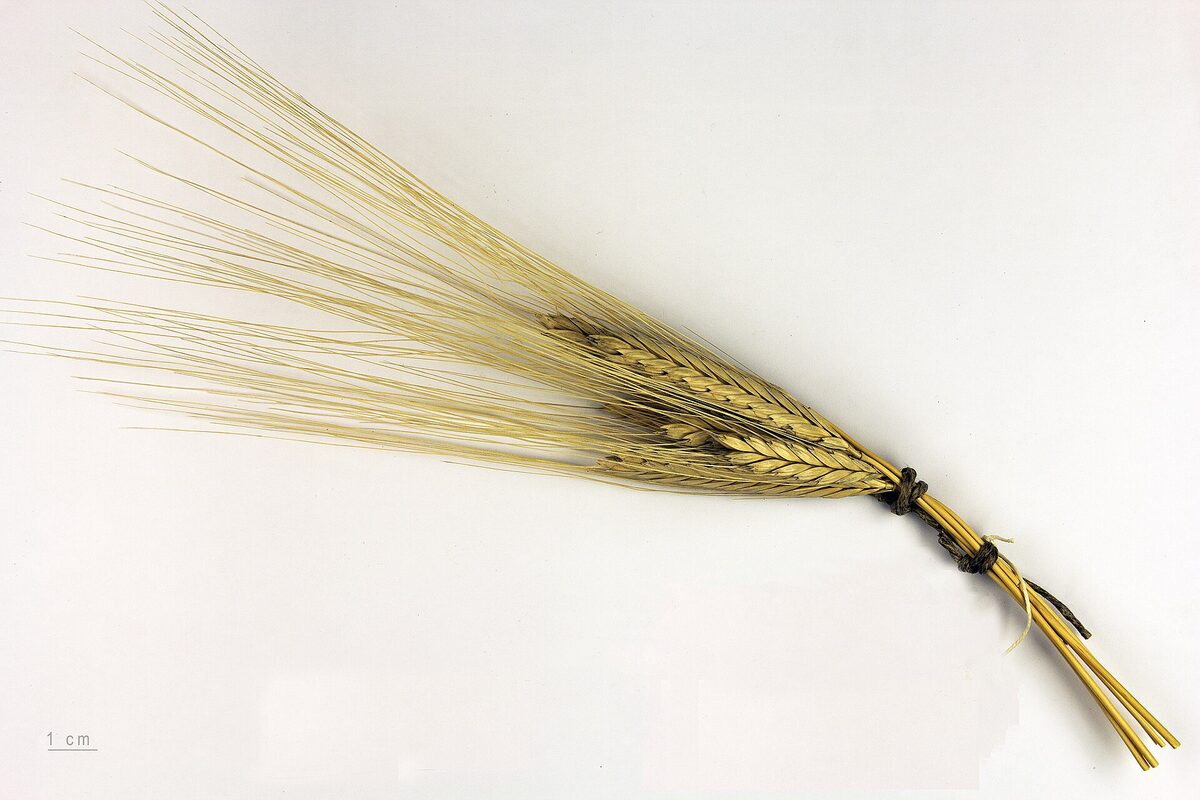
At the heart of the Neolithic revolution lies the transformation of a few wild grasses into cultivated plants. The first of these were the wheats: einkorn (Triticum monococcum) and emmer (Triticum dicoccum), joined very early by barley (Hordeum vulgare). These cereals offered a starch-rich grain, easy to store for several months, and a worthwhile yield for those willing to sow, protect and harvest them [2].
Domestication is not merely the transfer of a plant into a field: it involves genuine coevolution. In wild grasses, the ear is built to disperse its grains: at maturity the rachis, the central axis of the ear, becomes brittle and shatters, scattering the seeds onto the ground. This dispersal, advantageous for the plant, is disastrous for the harvester, whose crop scatters before the reaping. Yet, by mutation, there exist individuals with a tough rachis that does not shatter. In the wild these mutants are disadvantaged, since their seeds do not disperse; but under the human hand they are precisely the ones the sickle reaps and the sower replants. By selecting, generation after generation, these ears that stayed whole, the first farmers unknowingly fixed the "non-shattering" trait that distinguishes cultivated wheat from its wild ancestor. The same process produced larger grains, more uniform germination, and a reduction of protective husks.
The material traces of this domestication abound on Near Eastern sites: grain impressions in mudbrick, storage silos, grinding stones and handstones for reducing grain to flour, flintFlintA hard, brittle siliceous rock, knapped by prehistoric people to produce blades, points and sharp tools.→ sickle blades whose cutting edge bears a characteristic gloss, caused by repeated friction against the silica-rich stems of cereals. The analysis of this "harvest gloss" and of phytoliths, the micro-crystals of silica that plants produce, now allows us to reconstruct precisely which species were processed and at what pace the domestic morphology took hold. The sites of TellTellAn artificial mound formed by the accumulation of successive layers of settlement remains at the same spot, typical of the Near East. Each destruction-rebuilding event adds a stratum.→ Aswad, Çayönü, Abu Hureyra and Jericho document this long apprenticeship, in which the cultivation of cereals still morphologically wild preceded by several centuries the appearance of fully domestic forms.
The domestication of animals: sheep, goat, cattle and pig
Alongside the plants, and sometimes with a slight lag, Neolithic communities domesticated the first livestock. The dog, derived from the wolf, had preceded them by several millennia, as far back as the Palaeolithic, but as a hunting aid and companion, not as a food source. With the Neolithic, it is farm animals that enter the human sphere: goat and sheep first, around 8,500 to 8,000 before our era, followed by cattle and pig.
Animal domestication rests, like that of plants, on control of reproduction and on directed selection. By capturing and rearing the young, by slaughtering young males preferentially while keeping females for breeding, herders reshaped the composition of their flocks and, in time, the morphology of the beasts. Domestic animals become on average smaller than their wild ancestors, their horns shrink or change shape, their behaviour grows calmer. Archaeozoologists read this domestication in the bones: decreasing size, slaughter profiles revealing herd management oriented towards milk, wool or meat, the sudden over-representation of one species at a given site.
Herding brought far more than meat. It offered a reserve of protein "on the hoof," available in case of a poor harvest; milk, which would open a long biological and cultural history; hides, wool, horn, sinew; traction power and the dung that fertilises the fields. The mouflon yielded the sheep, whose fleece, at first coarse, was gradually transformed by selection into spinnable wool. The bezoar goat yielded the goat, hardy and able to thrive in the poorest environments. The aurochs, that imposing wild bovine, was domesticated into cattle, probably in several places; it provided the motive force that would much later revolutionise ploughing. The wild boar, finally, became the pig, an omnivorous and prolific animal ideally suited to village life. With these species, humanity built up a livestock that still accompanies it.
Fixed to the land: sedentism and the first villages
Sedentism, the lasting settlement of a group in one place, is often presented as the consequence of agriculture. The reality is more subtle: in several regions, and notably in the Levant, communities became sedentary before they farmed, because the wealth of wild resources, spontaneous cereals and game, sufficed to feed them on the spot all year round. The Natufians, between 12,500 and 10,000 before our era, were already building semi-buried dwellings with stone foundations, burying their dead within the settlement and accumulating querns and mortars. Sedentism therefore sometimes preceded and fostered agriculture as much as it resulted from it.
Once the step was taken, agriculture made sedentism almost compulsory. One does not sow only to leave before the harvest; one does not store crops one would have to abandon; one does not build granaries in order to desert them. The permanent village became the normal frame of existence. The first Neolithic houses, round and then rectangular, were built of stone, of sun-dried mudbrick, of daub on wattle. They were organised around hearths, grinding areas, silos. The village now concentrated what had previously been dispersed: population, reserves, know-how, the dead. This concentration had considerable demographic effects. Freed from the constraint of nomadism, which imposed spacing births so as not to carry several small children at once, sedentary women could bear children more often. The Neolithic population grew, slowly at first, then in accelerating fashion: this is the "Neolithic demographic transition," humanity's first great surge.
Çatalhöyük, a town without streets
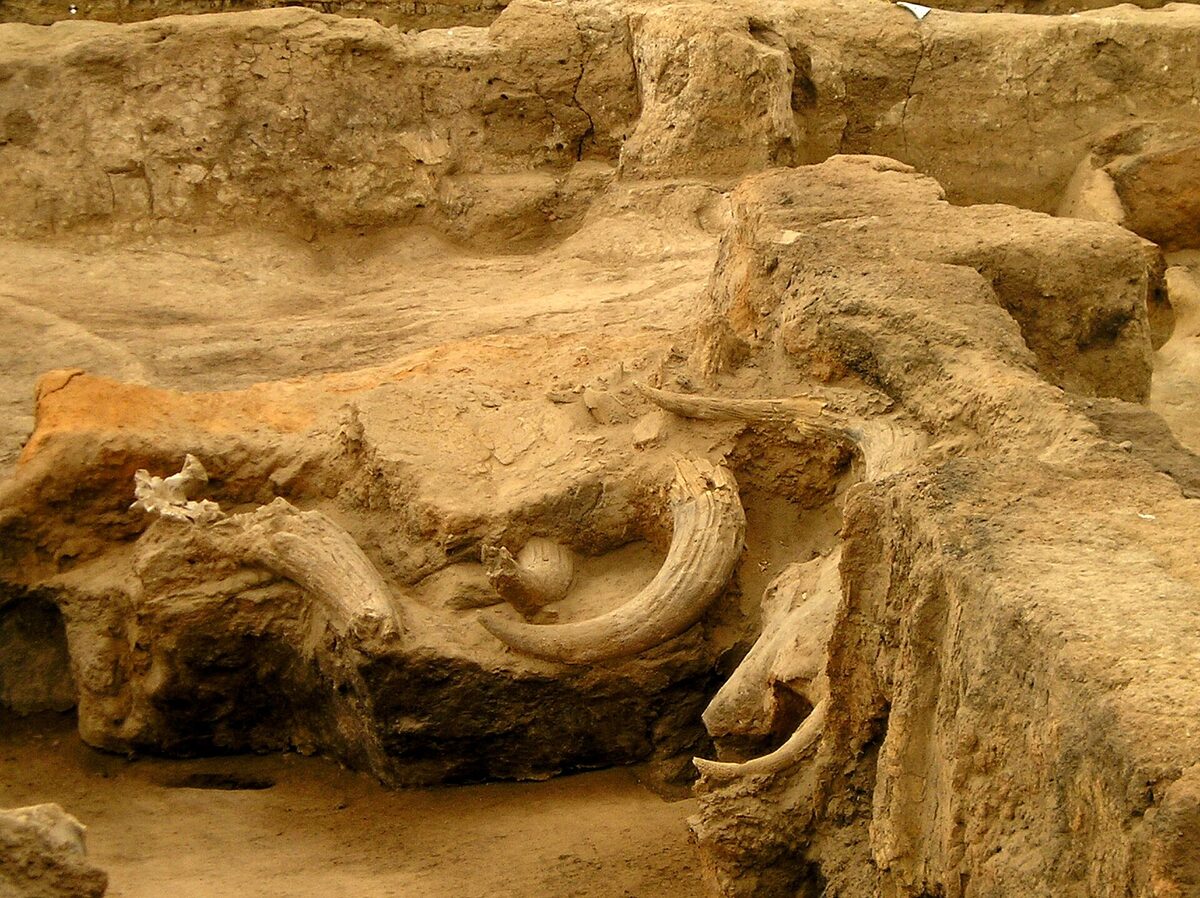
No site embodies the accomplished Neolithic village better than Çatalhöyük, in central Anatolia. Occupied from the early eighth to the sixth millennium before our era, this vast mound, or tell, formed by the accumulation of settlement layers, housed several thousand inhabitants at its peak. A UNESCO World Heritage Site, it offers, through its exceptional state of preservation and the scale of the excavations carried out there, an unparalleled testimony to the daily life, social organisation and symbolic universe of the first farming communities [3].
The peculiarity of Çatalhöyük strikes at once: it is a settlement without streets. The houses, rectangular and built of mudbrick, abut one another, wall against wall, forming a compact urban fabric devoid of ground-level thoroughfares. One entered through the roof, climbing down a ladder through an opening that also served as a chimney. People moved from one dwelling to another by walking on the terraces, that network of roofs which constituted the community's true public space. Each house reproduced a remarkably stable plan: a main room equipped with a hearth and an oven, raised platforms along the walls used for sleeping and working, benches and niches. When a house aged, it was carefully filled in and another, often identical, was rebuilt on the same spot, so that the dwellings stack up over generations [3].
More striking still is the relationship between the living and the dead. At Çatalhöyük, the deceased were buried beneath the very floors of the houses, under the platforms where the living slept. The bodies, sometimes previously exposed and defleshed, were laid folded in pits and then covered over; some graves yielded several individuals, deposited over time. Skulls were sometimes removed, kept, even plastered and painted, in an ancestor cult that wove a carnal bond between the generations and domestic space. The interior walls were adorned with paintings, hunting scenes, geometric motifs, figures of vultures carrying off decapitated bodies, and with modelled reliefs, bulls' heads with jutting horns, set into the benches. This entanglement of dwelling, grave and sanctuary shows that, for these communities, the domestic, the funerary and the sacred did not form separate spheres but a single fabric of meaning.
Çatalhöyük also intrigues by its apparent egalitarianism. The houses resemble one another, with no palace or monumental temple standing out from the common fabric; one discerns there neither a wealthy quarter nor a chief's residence. Equality seems to have been, if not a perfect reality, at least a structuring ideal. This homogeneity, which contrasts with the marked hierarchies of later urban societies, makes Çatalhöyük a precious laboratory for understanding how large human communities could, for a time, live densely grouped without a centralised apparatus of power.
Göbekli Tepe and the role of the sacred
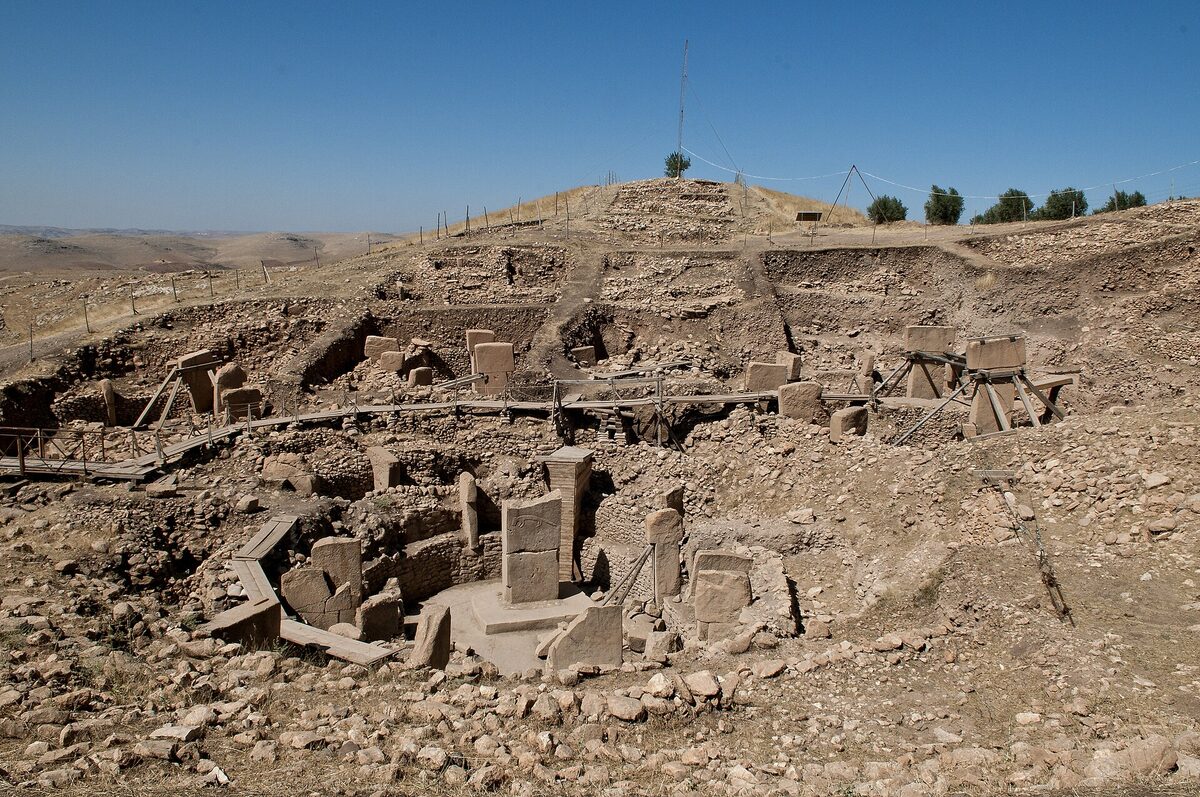
The discovery, from the 1990s onward, of the site of Göbekli Tepe, in south-eastern Anatolia, overturned our understanding of the Neolithic sequence. On this hill, hunter-gatherersHunter-gatherersA way of life based on hunting, fishing and gathering wild resources, without farming or herding; it dominated almost the whole of human history.→ erected, as early as the tenth millennium before our era, therefore before the appearance of farming and herding, vast circular enclosures made of monolithic limestone pillars in the shape of a T, several metres high and each weighing several tonnes. These pillars, raised and joined by walls, are covered with bas-reliefs depicting a veritable bestiary: snakes, foxes, boars, aurochs, scorpions, birds, accompanied by abstract signs. Some pillars, anthropomorphic, bear stylised arms and items of clothing, as though they were supernatural beings.
What makes Göbekli Tepe so disconcerting is that such a monument, which presupposes the coordination of hundreds of people to quarry, transport and raise these blocks, was the work of societies still predatory, non-agricultural. It was long believed that only farming societies, freed by their surpluses, could build the monumental. Göbekli Tepe reverses the expected order: here, the sacred seems to have preceded the granary. Hence a seductive hypothesis: it would not be agriculture that made great ritual gatherings possible, but the reverse, the need to feed periodically the crowds who came to build and celebrate would have driven the intensification of wild cereal exploitation, and then their cultivation. The sanctuary would have been the engine, the field the consequence. Without settling this debate definitively, Göbekli Tepe forcefully reminds us that the Neolithic revolution was not only economic: it had a decisive spiritual and social dimension, and that beliefs, rites and the need to gather may have counted as much as hunger in the great shift.
The price of grain: bodies and health
For a long time, agriculture was seen as an unshadowed progress, a liberation from the precariousness of the hunter. Skeletal archaeology and palaeopathologyPalaeopathologyThe study of diseases, injuries and trauma on ancient human or animal remains.→ have qualified, even reversed, this picture. The Neolithic transition, on the biological plane, was anything but an immediate gain in health for individuals. In many respects, the first farmers were in worse shape than their hunter-gatherer ancestors.
The diet first deteriorated in diversity. The hunter-gatherer consumed a wide range of plants, fruits, roots, game and fish; the farmer based his food on a few cereals rich in carbohydrates but poor in certain vitamins and quality proteins. This monotony fostered deficiencies. The teeth bear cruel witness: Neolithic populations show an explosion of cavities, almost absent before, a direct consequence of a diet rich in sticky, sugary starches. Dental wear also changes in nature, the enamel eroding in contact with the mineral particles released by grinding stones into the flour.
The crowding of villages and close cohabitation with domestic animals also opened a new era of infectious disease. Many major human pathogens are so-called zoonotic diseases, passed from animal to human: measles, tuberculosis, influenza and many others have their roots in this Neolithic proximity between people and livestock. Population density, the accumulation of waste, the contamination of water and the storage of grain, which attracts rodents, multiplied opportunities for transmission. Iron deficiencies leave characteristic lesions in the bones, witnesses to frequent anaemia. Average stature, finally, decreased in several regions with the shift to agriculture, a sign of heightened nutritional and sanitary stress during childhood. Paradoxically, agriculture, which allowed far more humans to live, made each one, on average, a little more fragile: it produced numbers at the expense, at times, of individual health.
Inequality, property and demography
The Neolithic revolution transformed not only bodies and landscapes: it reconfigured the social fabric. The storage of harvests introduced a new, or at least amplified, notion: that of accumulable wealth. A herd, a full granary, a cleared and improved field constitute transmissible goods, which can grow, be lent, inherited, coveted. Where the mobile hunter-gatherer could scarcely hoardHoardA set of deliberately buried objects: a metal reserve, hoarding or offering; common in the Bronze Age.→ and widely shared the product of the hunt, the sedentary farmer could build up and keep a surplus. This possibility of accumulation is the ferment of material inequality.
The ownership of land and herds, the transmission of these goods from one generation to the next, the control of reserves by certain lineages or individuals: all these phenomena, which do not appear at once, develop gradually over the course of the Neolithic. Burials eventually reveal these gaps, when some graves stand out by the richness of their furnishings, ornaments, weapons, exotic objects, while others remain bare. The specialisation of tasks, the rise of craft, the trade in distant raw materials, such as Anatolian obsidian distributed over hundreds of kilometres, weave networks of exchange and dependence. Little by little the conditions are set in place that, at the end of a long process and in certain regions only, will lead to the first chiefdoms, then to the cities and states of the age of metals. Growing demographic density, by multiplying contacts and frictions, also made necessary new forms of authority and conflict regulation. The egalitarian village of the Çatalhöyük type appears in hindsight as a transitional balance, which the very dynamic of production would gradually destabilise.
The spread into Europe
Born in the Near East, the Neolithic did not remain confined to its hearth. From the seventh millennium before our era, the farming way of life spread in all directions: towards Central Asia and the Indus, towards the Nile valley and the Maghreb, and towards Europe, which it reached along two great axes. The first, Mediterranean, hugged the northern Mediterranean coasts from east to west, carried by seafarers who fanned out from Greece to Italy, then to southern France and the Iberian Peninsula, leaving as a signature a pottery decorated with the impression of a shell, called Cardial. The second, continental, ascended the Danube and its tributaries, then spread across the loess plains of central and northern Europe, associated with the so-called Linear Pottery culture, recognisable by its long timber houses and its pottery decorated with ribbon patterns.
How did this spread come about? By the migration of farming populations, or by the adoption of techniques by local hunter-gatherers? The debate was long fierce, pitting the partisans of demic diffusion against those of mere cultural diffusion. PalaeogeneticsPalaeogeneticsThe study of ancient DNA extracted from remains (bones, teeth, sediments, walls) to reconstruct the past of populations.→ has largely settled it: the analysis of ancient DNAAncient DNAGenetic material preserved in old remains, often degraded, sequenced with cutting-edge techniques.→ shows that the Neolithisation of Europe came about, for the most part, through the arrival of populations from Anatolia and the Near East, who brought plants, animals and know-how with them, and mixed in varying proportions with the MesolithicMesolithicThe period between the Palaeolithic and the Neolithic (c. 10,000–6,000 BC in Europe), still based on hunting and gathering.→ hunter-gatherers they encountered. Around 6000 before our era, the first farmers are firmly settled in Greece and the Balkans; a few centuries later they reach Central Europe, then attain the shores of the Atlantic and the North Sea around the fifth millennium. The Europe we know is, genetically and culturally, in large part the daughter of this Neolithic wave from the East, fused with Mesolithic legacies and, later, those of the steppeSteppeA vast semi-arid, treeless grassland of Eurasia, suited to nomadic herding and the horse; a corridor for the movement of peoples and technologies in later prehistory.→ pastoralists.
Megaliths, monuments of a new humanity
Among the most spectacular expressions of Neolithic Europe are the megaliths, those monuments of enormous stones, from the Greek megas, large, and lithos, stone, that dot the Atlantic façades, from the Iberian Peninsula to Scandinavia by way of Brittany, the British Isles and Ireland. Dolmens covering burialBurialThe intentional deposition of a body, sometimes with offerings; a marker of symbolic behaviour.→ chambers, long barrows, alignments of menhirs such as those of Carnac, cromlechs and stone circles like Stonehenge: these structures, erected mostly between the fifth and third millennia before our era, attest to societies able to mobilise a considerable workforce and to transmit architectural projects across several generations.
Many of these monuments had a funerary and collective function: dolmens and passage tombs sheltered the remains of numerous dead, deposited over time, in a logic of common ancestors that anchored the living to a territory. Others, such as the great circles and alignments, seem to have served as gathering places and as sites for observing celestial cycles, certain orientations coinciding with sunrise or sunset at the solstices. At the northern edge of this megalithic area, the Orkney archipelago, off Scotland, preserves with the village of Skara Brae an exceptional ensemble of Neolithic stone houses, whose furniture, beds, dressers, hearths, is itself carved from stone, for want of wood, and has reached us almost intact. Megaliths and stone villages remind us that the European Neolithic was not a mere passive reception of an Eastern model, but an original flowering, endowed with its own monumental grandeur.
A legacy written into our genes
The Neolithic revolution is not read only in archaeological remains: it is engraved even in our genetic heritage. The most famous example is that of lactose tolerance. All mammals, at birth, digest lactose, the sugar of milk, thanks to an enzyme, lactase. But, in most humans as in other mammals, the production of this enzyme normally ceases after weaning: the adult becomes unable to digest fresh milk. Now, with the dairy herding born in the Neolithic, milk became a precious resource available all year round. In several herding populations, a mutation maintaining lactase activity into adulthood, lactase persistence, was powerfully favoured by natural selection, for it allowed people to draw caloric and hydric benefit from milk without suffering digestive trouble.
This mutation, which appeared independently several times, notably among European herders and certain African pastoralists, spread at a remarkable speed, a sign of the considerable advantage it conferred. The present-day map of lactose tolerance, high in northern Europe, lower in East Asia, thus preserves the imprint of the economic choices of our Neolithic ancestors. Other genetic adaptations accompanied this transition: changes in starch metabolism, adjustments of the immune system in the face of the new pathogens of villages and herds, evolutions linked to new living conditions. The Neolithic was thus, in the literal sense, a powerful engine of biological evolution for our species, accelerating natural selection through the radical transformations it imposed on our ways of life, our food and our environment.
From the Natufians to the first farmers: the long gestation
To grasp the Neolithic revolution, one must go back to those who carried it across: the hunter-gatherers of the Levant at the end of the Palaeolithic. Even before agriculture, the Natufian culture, flourishing between roughly 12,500 and 10,000 before our era, shows a remarkable intensification of the exploitation of wild resources. The Natufians harvested spontaneous grasses on a large scale using hafted flint sickles, ground the grain in mortars carved into the rock, and built semi-buried dwellings that they occupied for long periods. Their burials, sometimes richly adorned with shells and dentalia, already suggest a particular attention paid to the dead and, perhaps, nascent social distinctions.
This early sedentism, founded not on cultivation but on the abundance of natural resources, created the conditions for the next leap. By settling down, communities changed their relationship to time and space: they could store, anticipate, invest in a place over the long term. When the cold spell of the Younger Dryas made resources scarcer, these already settled societies, dependent on a few cereals, had every interest in securing their supply by sowing. The so-called Pre-Pottery Neolithic, or PPN, which opens around 9,600 before our era, then sees the generalisation of cereal cultivation still morphologically wild, followed by the gradual appearance of domestic forms. One classically distinguishes a PPNA, marked by villages of round houses and by the first crops, and a PPNB, in which rectangular houses, caprine herding and a clear demographic surge take hold. This entire process spreads over nearly two millennia: the revolution was a slow germination.
Mastering water, fire and earth
To become a farmer is not only to sow and reap: it is to learn a whole set of new techniques. The mastery of water imposed itself very early in regions where rainfall was irregular. While the first crops of the Fertile Crescent rested on rain-fed agriculture, profiting from winter precipitation, the extension of farming towards the drier plains of Mesopotamia later required recourse to irrigation, that is, to systems of canals and diversion to lead river water to the fields. This hydraulic mastery, which presupposed a collective organisation of labour and the shared upkeep of works, prepared the great territorial societies of the Bronze AgeBronze AgeA protohistoric period following the Neolithic, defined by bronze metallurgy (a copper-tin alloy) and the rise of the first cities and states; in Egypt it corresponds to the age of the first pyramids.→.
Fire too was harnessed to new ends. The cooking of plant foods, indispensable to make cereals and legumes digestible, became a daily gesture around the domestic hearth. The firing of clay gave birth to pottery, which transformed the storage, preparation and preservation of food; the first pots allowed boiling, fermenting, keeping food safe from pests. Later, the mastery of kilns able to reach high temperatures would open the way to metallurgyMetallurgyThe techniques of extracting and working metals (copper, bronze, gold); its rise in the Eneolithic and Bronze Age transformed tools, weapons and social hierarchies.→. Earth, finally, was worked as never before: cleared with axe and fire, turned with the hoe, amended with livestock dung, sometimes cleared of stones and bounded. The landscape itself became a human work, gridded with fields, fallows, pastures and paths, marked by this new grip of humankind on the living and the mineral.
Feasts, exchange and social bonds
It would be a mistake to reduce the Neolithic to a matter of subsistence. The food surpluses that agriculture made possible enabled social practices of a new scale, foremost among them the collective feast. Several Near Eastern sites have yielded traces of great gatherings where meat and fermented drinks were consumed in abundance, in manifestly ritual contexts. These feasts, by bringing together sometimes scattered communities, sealed alliances, settled symbolic debts, asserted the prestige of those who could offer food. The capacity to produce and redistribute a surplus became a lever of power and cohesion.
Exchanges of goods, too, developed and wove networks over long distances. Obsidian, that sharp and sought-after volcanic glass, circulated from its Anatolian sources to hundreds of kilometres away; marine shells, precious rocks and ornaments travelled from hand to hand. These circulations presupposed stable relations between communities, shared languages, common conventions. Through gift, exchange and feast, the Neolithic invented new ways of making society on a large scale, far beyond the circle of the extended family that sufficed for hunter-gatherer bands. It is this densification of the social bond, as much as the plough, that prepared the advent of the first cities.
Reading time in the layers of the tell
One of the most powerful tools the Neolithic has given archaeology is the tell itself, that artificial mound formed by the slow accumulation of mudbrick settlements rebuilt on the same spot for centuries. Because the inhabitants of sites such as Çatalhöyük or Jericho demolished and rebuilt their houses in place, layer upon layer, the resulting stratigraphyStratigraphyThe study of the superimposed layers (strata) of an archaeological site; each layer corresponds to a phase of occupation and yields a relative chronology.→ reads almost like the pages of a book: the deeper one digs, the further back in time one travels. This vertical archive allows researchers to follow, across many generations, the evolution of building techniques, of diet, of ritual practices and of the size of the community. Each occupation level can be dated by radiocarbon, and the changes from one to the next sketch a fine chronology of the Neolithic.
This continuity of place reveals something essential about Neolithic mentalities: an attachment to the ancestral dwelling, to the precise spot consecrated by earlier generations and by the dead buried beneath the floor. To rebuild identically on the ruins of the parental house was to affirm a lineage, to inscribe the family in a stable territory, to bind the living to their forebears. Where the hunter-gatherer measured belonging by mobility across a vast range, the farmer rooted his identity in a single point of the landscape, made sacred by memory and by the bones of the ancestors. The tell is thus not only a stratigraphic curiosity: it is the very signature of a new relationship between human beings, their dead and their soil.
The Neolithic package and its variations
Archaeologists often speak of a "Neolithic package" to designate the bundle of elements that travelled together as farming spread: a set of domestic plants and animals, polished stone tools, pottery, sedentary villages, particular funerary practices. Yet this package was never rigid. As it diffused from its Near Eastern hearth towards Europe, AfricaAfricaThe cradle of humankind: the continent where the first hominins appeared, then Homo sapiens around 300,000 years ago, before the expansion to the rest of the world.→ and Asia, it was unpacked, recomposed, adapted to local environments and traditions. Some communities adopted cereals but kept hunting; others took up herding while continuing to gather wild plants; still others borrowed pottery long before they farmed. The encounter between incoming farmers and resident hunter-gatherers produced, region by region, original syntheses rather than a uniform replication.
This plasticity explains the astonishing diversity of the Neolithic world, from the painted houses of Anatolia to the long timber halls of the Danube, from the stone villages of Orkney to the lakeside dwellings of the Alps. It also cautions against any simple, triumphal narrative of progress marching in a single direction. The Neolithic was a field of experiments, of dead ends and reversals as much as of advances; in some places agriculture was even temporarily abandoned when conditions changed. What unites this mosaic is not a fixed recipe but a shared horizon: the growing reliance of human communities on the species they had taken under their control, and the deep transformations of life that flowed from it.
Conclusion: the world we have inherited
The Neolithic revolution was less a revolution, in the sense of a brief and sudden event, than a slow tipping spread over millennia; but its cumulative effects were indeed revolutionary. By domesticating a few plants and a few animals, by fixing themselves to the land, by building villages, the communities of the Fertile Crescent and their heirs set in motion a mechanism that transformed everything: demography, which began to grow; landscapes, cleared and shaped; bodies, marked by new diseases and new deficiencies; societies, traversed by unprecedented hierarchies; beliefs, monumentalised in stone; and even our genes.
This legacy is ambivalent. The Neolithic made possible everything that followed, cities, writingWritingA system of conventional signs used to fix language or information durably; its appearance (c. 3300 BC) marks, by convention, the end of prehistory.→, states, civilisations, and finally the modern world with its billions of inhabitants. But it also inaugurated lasting fragilities: dependence on a small number of cultivated species, exposure to epidemics, inequalities tied to accumulation, pressure on natural environments. To understand the Neolithic is therefore not only to contemplate a distant chapter of prehistoryPrehistoryThe span of human history before the invention of writing, from the Palaeolithic to the Metal Ages, known mainly through material remains.→: it is to grasp the very roots of the world we inhabit, with its promises and its perils. On the threshold of these first villages, in the smoke of the hearths of Çatalhöyük and the shadow of the pillars of Göbekli Tepe, the essence of the human adventure as it continues today is already, in embryo, being played out.
Je l'ai projeté en cours et les élèves ont posé beaucoup de questions. Très bon support.
Les objets rituels et les premières représentations humaines sont ma spécialité. Cet article est parfait.
J'avais des doutes sur des infos lues ailleurs. Votre article clarifie tout parfaitement.
En tant que passionné de mégalithes, je ne peux pas penser au Néolithique sans penser aux milliers de monuments qui ponctuent le paysage de l'Europe atlantique. Ces constructions colossales témoignent d'une organisation sociale et d'une force de travail collective qui supposent des sociétés bien plus structurées qu'on ne l'imaginait. Le Néolithique n'est pas une préhistoire simple.
Ce dossier sur le Néolithique offre une synthèse accessible et scientifiquement rigoureuse d'une période fondamentale. La révolution néolithique reste l'une des transformations les plus profondes de l'histoire humaine : agriculture, élevage, sédentarisation, hiérarchisation sociale. Les travaux récents montrent que ces transitions ont été beaucoup plus progressives et variables géographiquement qu'on ne le supposait.