A boomerang carved from mammoth ivoryMammoth ivoryMammoth tusk worked by Palaeolithic craftspeople to carve figurines, beads, points and ornaments.→ between 39,000 and 42,000 years ago has been confirmed as the oldest object of its kind ever found anywhere in the world. Discovered in 1985 in Oblazowa Cave in the Podhale basin of the Polish Carpathians, the artefact had been radiocarbon-dated in 1996 to around 18,000 years -- but that result was skewed by contamination from conservation materials applied after excavation. An international team led by chemist Sahra Talamo of the University of Bologna has now corrected the record in a study published in PLOS ONE: the boomerang is twice as old as previously thought, and belongs to the earliest known symbolic horizon of European Homo sapiensHomo sapiensThe present-day human species, which emerged in Africa around 300,000 years ago, the only surviving human lineage after the extinction of Neanderthals and Denisovans.→.1
Oblazowa Cave and the first excavations
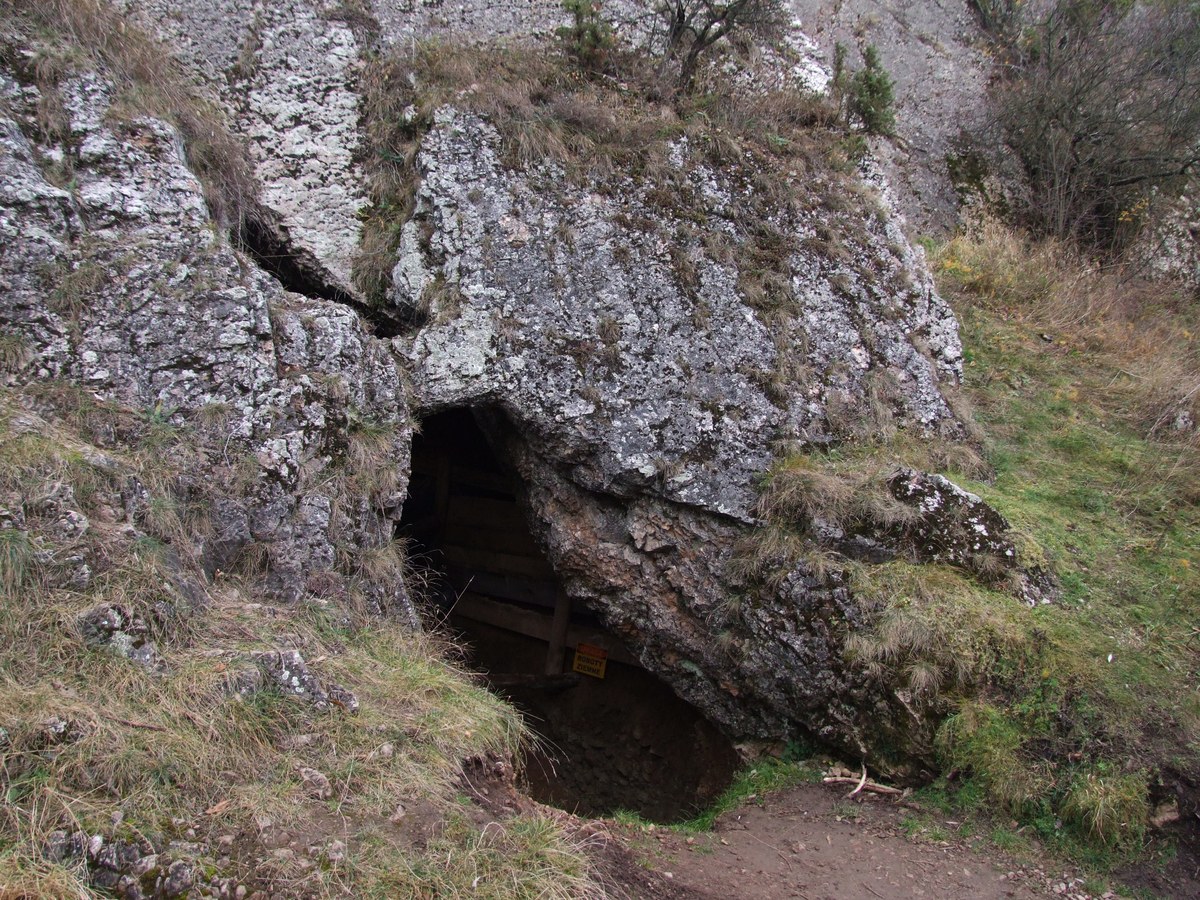
Oblazowa Cave lies in the Podhale region of southern Poland, at the foot of the Western Tatras. It is one of the very few Early Upper Paleolithic sites known in the Podhale Basin, and its stratigraphic sequence covers more than 300,000 years, from MousterianMousterianThe stone-tool industry typical of Neanderthals, based on the Levallois flaking technique.→ (Neanderthal) layers to the Epigravetian. In 1985, a team led by archaeologist Pawel Valde-Nowak of Jagiellonian University in Krakow began systematic excavation of Layer VIII, a brown-red clay deposit corresponding to the earliest AurignacianAurignacianThe earliest culture of the European Upper Palaeolithic (c. 43,000–33,000 BC), tied to the arrival of Homo sapiens and the first artworks.→, one of the first cultures of the Upper Paleolithic.
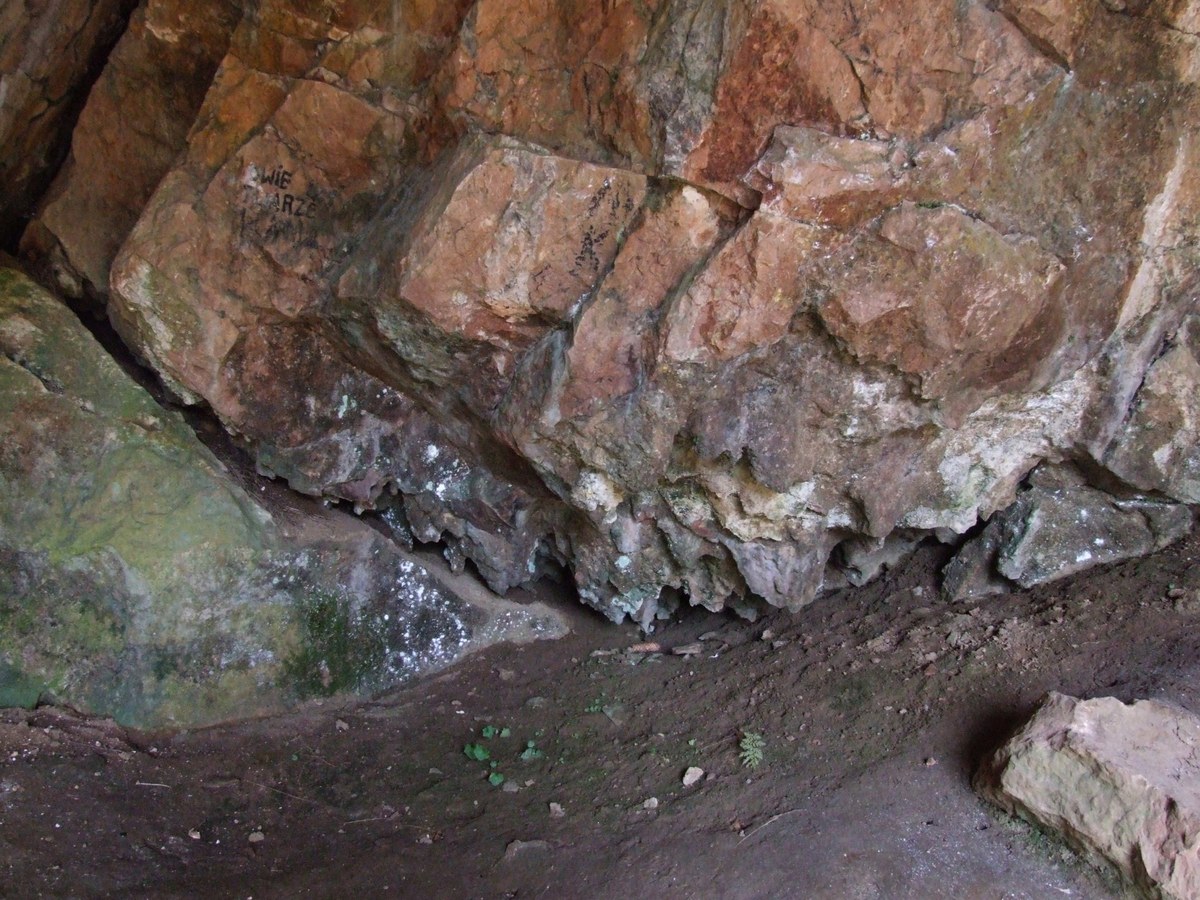
Among the objects recovered from this layer, a crescent-shaped artefact carved from mammoth tusk immediately attracted attention. Measuring 72 centimetres in length, it has a regular plano-convex cross-section -- flat on one side, convex on the other. This aerodynamic morphology is exactly that of a traditional Australian non-returning boomerang. Around it, the excavators found a human bone (a thumb phalanx), antler tools, pendants made from fox teeth, a bone bead, and ochreOchreA red or yellow mineral pigment (iron oxides), used from prehistory for adornment, funerary rites and art.→-covered fragments. The assemblage was arranged in a circle of stones, suggesting an intentional deposit and possibly a ceremonial function.
A dating compromised by conservation materials
In 1996, a first attempt at direct radiocarbon dating of the boomerang returned a result of approximately 18,000 years. This figure puzzled the researchers: it was far more recent than the other objects found in the same layer, and inconsistent with the stratigraphyStratigraphyThe study of the superimposed layers (strata) of an archaeological site; each layer corresponds to a phase of occupation and yields a relative chronology.→ of the site. The researchers suspected contamination from restoration and conservation materials applied to the artefact after its discovery -- synthetic glues, varnishes, consolidants -- of which even a tiny amount of modern carbon can shift a radiocarbon date by tens of thousands of years.
Talamo, a specialist in the most advanced decontamination protocols, underscores the lesson: "When you find something extraordinary, you should not cover it with glue or other restoration materials before completing all your analyses." Rather than risk damaging the fragile artefact with another direct dating attempt, her team opted for an indirect approach: dating the objects found in the same sedimentary layer.2
An indirect dating method and its results
The researchers sampled thirteen animal bones and the human phalanx, all extracted from Layer VIII. Ancient DNAAncient DNAGenetic material preserved in old remains, often degraded, sequenced with cutting-edge techniques.→ preserved in the phalanx confirmed that it belonged to a Homo sapiens individual -- not a Neanderthal, even though the lower layers of the cave had been occupied by Neanderthals. Radiocarbon dating of this human bone gives a minimum age of 31,000 years. The thirteen animal bones yield an average age of approximately 41,500 years. Bayesian statistical modelling, combining all these data with stratigraphic information, produced a range of 39,355 to 42,365 years before present for the layer in which the boomerang was found.
Valde-Nowak is categorical about the identity of the maker: "It is absolutely clear evidence of behaviours unknown to us, of practices of early Homo sapiens in the Upper Paleolithic that contrast sharply with everything we found in the deeper cultural layers of Oblazowa, left by Neanderthals." The Neanderthal occupants had never produced objects with deliberate aerodynamic morphology, nor systematic ornamental pendants of animal teeth.
The world's oldest boomerang -- and a ritual object
The Oblazowa boomerang is now recognised by the Guinness Book of Records as the oldest boomerang in the world. It predates the earliest known Australian wooden boomerangs by at least 30,000 years; those date to around 10,000 years ago. Depictions of boomerangs in Australian rock art go further back -- to around 20,000 years -- but these are painted images, not physical artefacts.
Morphological analysis of the object indicates it was almost certainly a "non-returning" boomerang: unlike modern sport boomerangs which return to their thrower through their specific curvature, a non-returning boomerang follows a taut linear trajectory and does not come back. Used traditionally by Aboriginal Australians for hunting or ceremonial purposes, these implements can reach considerable speeds and are formidable projectiles against birds or small mammals. But the material evidence from Oblazowa points more toward a ceremonial or symbolic function: the object bears regular decorative incisions, traces of red pigment (ochre), and signs of careful surface polishing. There are no traces of intensive projectile use.
A witness to Aurignacian "behavioural modernity"
The discovery context is itself revealing. Around 40,000 years ago, the Homo sapiens populations entering Europe for the first time represent a remarkable cultural rupture relative to the Neanderthals who preceded them: this is the Aurignacian, characterised by the appearance of the first three-dimensional figurines (the Paleolithic Venus figurines of the Swabian Jura, including the Venus of Hohle Fels dated to roughly the same period), the first known musical instruments (bone flutes), the first systematic ornamental beads, and a sophisticated artistic expression on rock and plaquettes. The Oblazowa boomerang belongs to this symbolic explosion: utilitarian in form, it is above all testimony to these hunters' capacity to conceive and manufacture complex tools from ivory, a rare and precious material.3
The discovery also raises questions about the circulation of ideas and technologies in Aurignacian Europe. A boomerang is not an implement one invents easily: its plano-convex cross-section, which generates the lift necessary for stable flight, implies an intuitive empirical grasp of aerodynamic principles. How did the Podhale hunters of 40,000 years ago develop or acquire this knowledge -- through independent experimentation, through exchange with other groups, or through transmission of a still older tradition? The Oblazowa boomerang opens as many questions as it closes.
No comments yet. Be the first.